

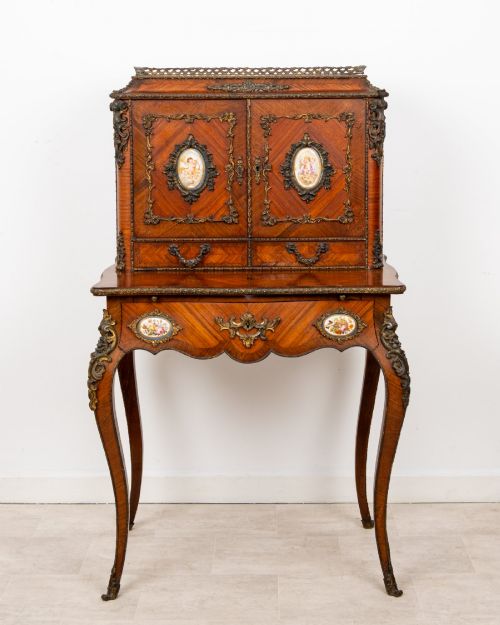


Sevres Style Porcelain Desk
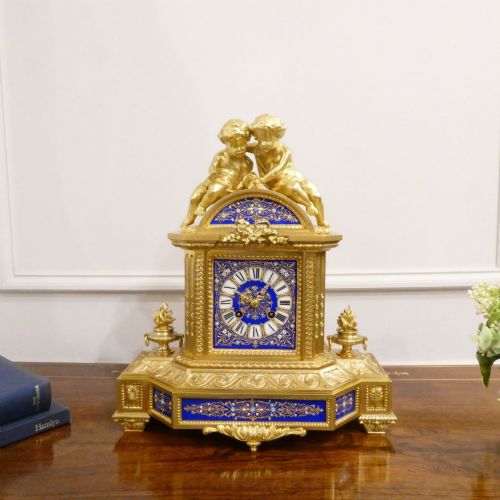
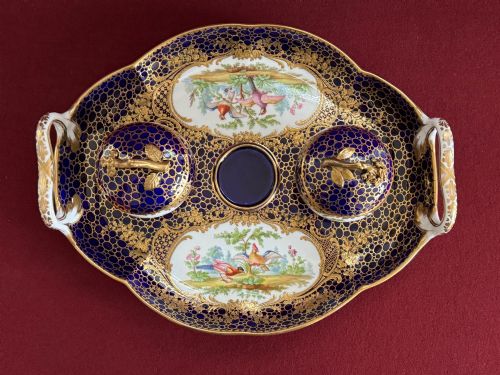
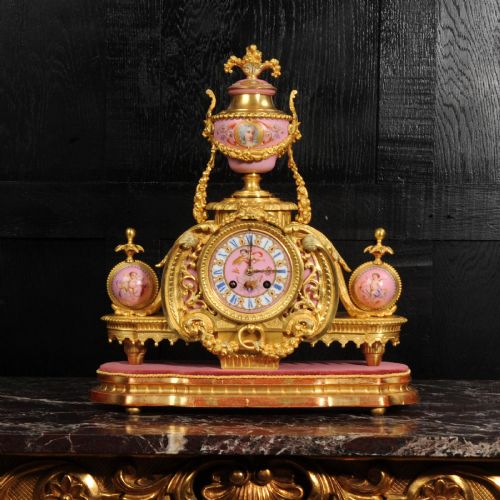
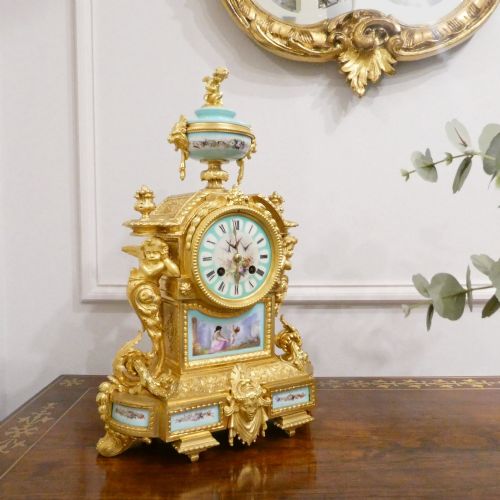
These sevres style porcelain desk items unite glazed ceramic panels with ormolu mounts to deliver French 19th century decorative elegance.
Sevres Style Porcelain Desk
A sevres style porcelain desk brings together nineteenth century French cabinetmaking and decorative ceramic plaques. Buyers seeking these works encounter pieces built from kingwood or amboyna, outfitted with hinged writing surfaces and small drawers.
The desks appearing here span writing tables and bonheur du jour forms decorated with glazed panels. These surfaces mirror the royal factory output of earlier decades through painted scenes and gilt borders.
Makers integrated porcelain plaques directly into timber frames alongside cast bronze fittings. This combination defines the visual character of the writing furniture available in this selection.
Materials and construction methods
Cabinetmakers constructed the foundational carcase from hardwoods like kingwood and rosewood before applying veneer. Ormolu mounts, cast from bronze and finished with fire gilding, edge the timber framework and secure the ceramic panels.
Ceramic plaques receive hand-painted decoration featuring pastoral subjects or floral reserves against coloured grounds. Kiln firing sets these pigments beneath a glossy glaze before metal mounts lock the plaques into place on the furniture.
Sevres Style Porcelain Desk Retail Price Guide 2026
Typical asking prices for sevres style porcelain desk among the pieces listed under this phrase on Sellingantiques today, from the lower quarter to the upper quarter. They describe what is for sale here now, not the wider market.
Several pieces conceal tiny porcelain plaques within hidden desk compartments, offering a private flourish for secret letters.
Markers of distinction and build
Quality rests upon the precision of the bronze casting and the crispness of the hand-painted ceramic details. Superior examples exhibit finely chased ormolu mounts that fit flush against the timber carcase.
The depth and clarity of the porcelain painting distinguish finer items from standard production. Artisans who achieved subtle tonal gradations and careful enamel application produced pieces that command greater attention.
Achille Brocot·Japy Freres
The Sevres Style Porcelain Desk Glossary
- Ormolu
- A gilded bronze technique used for decorative mounts and fittings on furniture and clocks. The process involves applying a mercury and gold amalgam to cast bronze before heating.
- Bonheur du jour
- A small, light ladies writing desk featuring a raised cabinet or tier of drawers above the main writing surface. This form gained popularity during the nineteenth century.
- Kingwood
- A dense tropical timber prized for its rich violet-brown grain and contrasting lighter stripes. Cabinetmakers utilised this wood extensively for high-grade French furniture veneer.
- Bleu celeste
- A bright turquoise blue glaze colour prominent on ceramic plaques and vessels. This shade imitates the distinctive ground colours developed by the eighteenth-century French porcelain manufactory.
Sevres Style Porcelain Desk: Frequently Asked Questions
What is a bonheur du jour desk?
A bonheur du jour is a small ladies writing desk featuring an upper tier with small drawers or a cabinet. These pieces provide a compact surface for correspondence alongside concealed storage.
Craftsmen often incorporated porcelain plaques and ormolu mounts into the structure, aligning utility with ornate display.
How do you date sevres style pieces?
Dating relies upon timber selection, mount construction styles, and the mechanical assembly of associated hardware. Nineteenth-century pieces frequently display revival aesthetics drawing from Louis XVI motifs.
Examining the construction methods inside drawers and carcases clarifies the manufacturing period without relying solely on decorative marks.
Where were porcelain plaques manufactured?
These ceramic plaques are produced in the decorative manner of the French royal factory, utilising hand-painted enamel scenes and rich ground colours. Many nineteenth-century workshops adopted this aesthetic for mounted furniture.
Independent potteries and studios created these panels to satisfy demand for eighteenth-century revival furnishings.
What timber appears on these desks?
Kingwood, rosewood, and amboyna form the primary timbers utilised across these writing desks and cabinets. Cabinetmakers selected these exotic hardwoods for their striking grain patterns and warm tones.
These veneers provide a dark, rich backdrop that contrasts with the bright gilding of ormolu mounts and porcelain.