



Sevres Style Ceramic Urn
A sevres style ceramic urn brings decorative French presence to a room through painted porcelain and gilt mounts.
Sevres Style Ceramic Urn
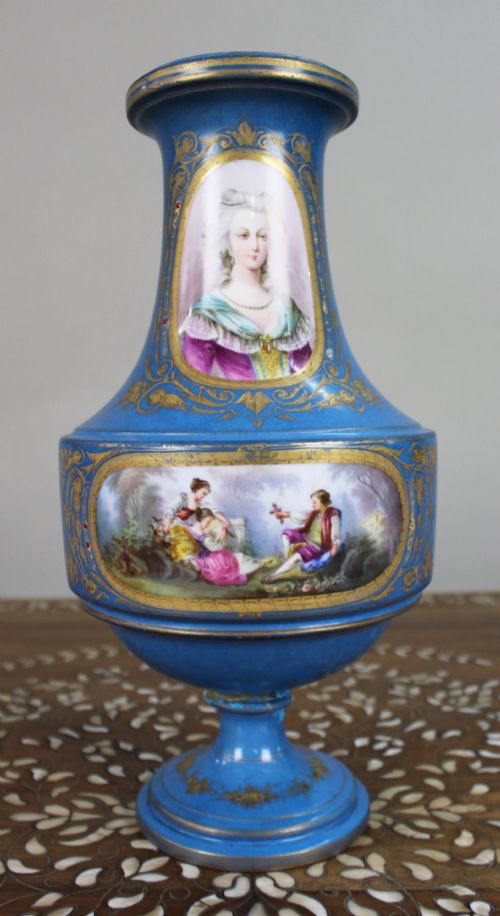
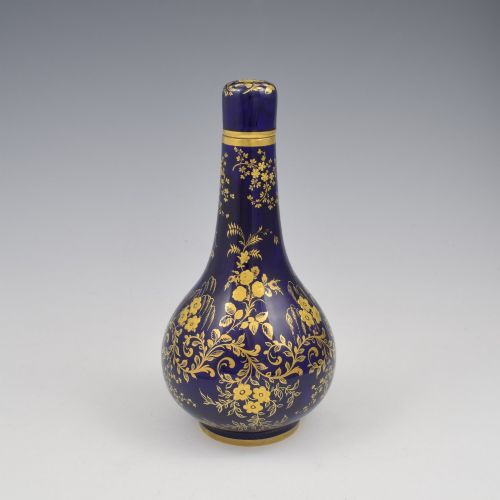
A sevres style ceramic urn draws on the traditions of the royal French porcelain factory, interpreted by 19th century makers across Europe. These decorative objects take the form of lidded vases, garnitures, jardinières, and comports rather than functional vessels.
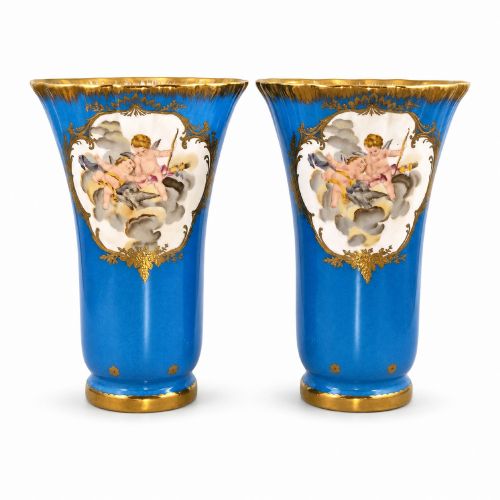
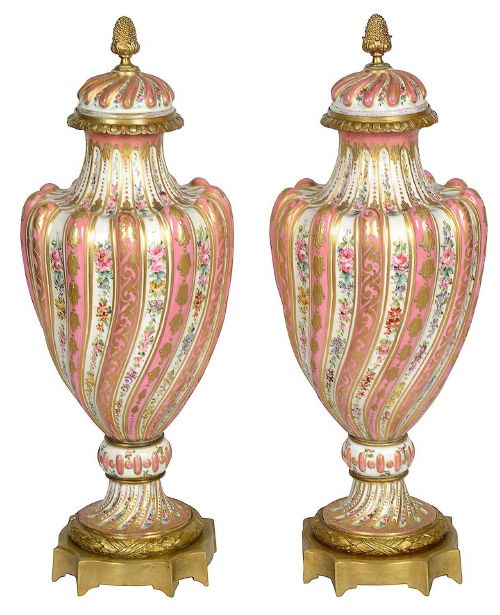
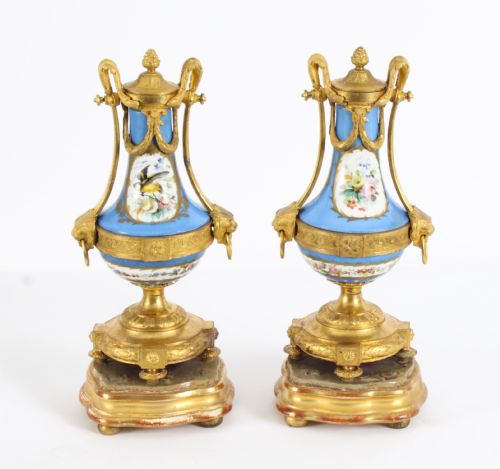
Most pieces encountered on this page date from the 19th century, spanning periods from the 1860s through 1920. They frequently appear as matched pairs intended for mantelpieces or side tables, rendered in colour palettes such as bleu céleste and pink.
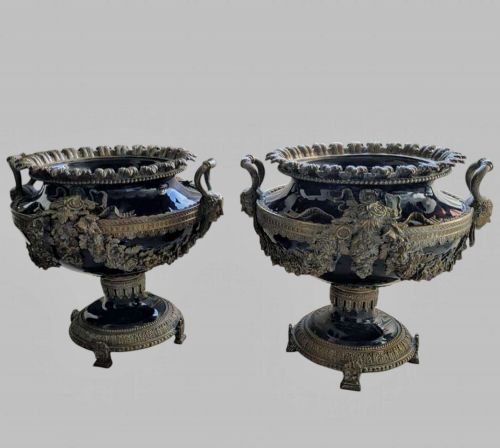
Makers such as Samson Paris and Derby produced these pieces alongside anonymous French factories. The forms range from cabinet vases to monumental urns mounted in ormolu, reflecting French Rococo Revival and Empire styles.
Materials and construction
The body of each piece consists of fired porcelain, often glazed in intense colours like bleu céleste before receiving hand-painted enrichment. Gilding in gold leaf or gilt is applied to highlight the moulded contours and panel borders.
Metal mounts in ormolu, gilt bronze, gilt metal, and brass provide structural support and ornamental handles, collars, and bases. These cast metal elements are secured to the ceramic bodies with threaded rods and nuts.
Sevres Style Ceramic Urn Retail Price Guide 2026
Typical asking prices for sevres style ceramic urn among the pieces listed under this phrase on Sellingantiques today, from the lower quarter to the upper quarter. They describe what is for sale here now, not the wider market.
Current listings feature pieces primarily from the 19th century, incorporating porcelain, ormolu, and gilt bronze in French Rococo Revival and Empire styles.
Factors of quality
Quality rests in the precision of the hand-painted decoration and the crispness of the gilt work upon the porcelain surface. Superior examples exhibit finely detailed figural or floral scenes set within cartouches, executed by skilled hands.
The execution of the ormolu mounts dictates the standing of the piece, with heavier, finely chased gilt bronze indicating superior manufacture compared to lighter gilt metal or brass fittings.
Samson Paris·Derby Porcelain
The Sevres Style Ceramic Urn Glossary
- Bleu céleste
- A bright sky-blue porcelain ground colour associated with Sèvres porcelain. It provides a vibrant backdrop for gilt framing and hand-painted reserves.
- Ormolu
- Gilt bronze mounts used to ornament the exterior of porcelain urns and vases. The technique involves applying a gold amalgam to cast bronze before firing.
- Garniture
- A set of three or more matching decorative vases or urns designed to be displayed together on a mantelpiece or cabinet.
- Jardinière
- A decorative ceramic container designed to hold potted plants or floral arrangements. These pieces share the same porcelain body and glaze techniques as the urns.
- Comport
- An ornamental pedestal dish or bowl used for display on a table or sideboard. They often feature matching porcelain bowls and gilt metal or ormolu stems.
Sevres Style Ceramic Urn: Frequently Asked Questions
What is a sevres style ceramic urn?
A sevres style ceramic urn is a decorative porcelain vessel modelled on pieces from the historic French Sèvres factory. These ornamental objects date predominantly from the 19th century and incorporate painted reserves and metallic mounts.
They were created purely for display in wealthy interiors, often taking the form of lidded vases or garnitures set upon mantelpieces and tables.
How do I style a porcelain urn at home?
Place a matched pair of urns on a substantial mantelpiece, sideboard, or console table where their height and gilt mounts catch the light. Ensure they have adequate clearance from daily traffic so the delicate painted surfaces and ormolu mounts remain undisturbed.
Let them stand alone as sculptural focal points without crowding them with smaller decorative objects.
How can I tell the period of a sevres style urn?
Examine the composition of the porcelain body, the style of the hand-painted scenes, and the casting quality of the ormolu mounts. Pieces from the 19th century often display Victorian interpretations of French Rococo Revival or Empire aesthetics.
Look closely at the gilding wear and construction methods where the ceramic meets the metal mounts to gauge age.