

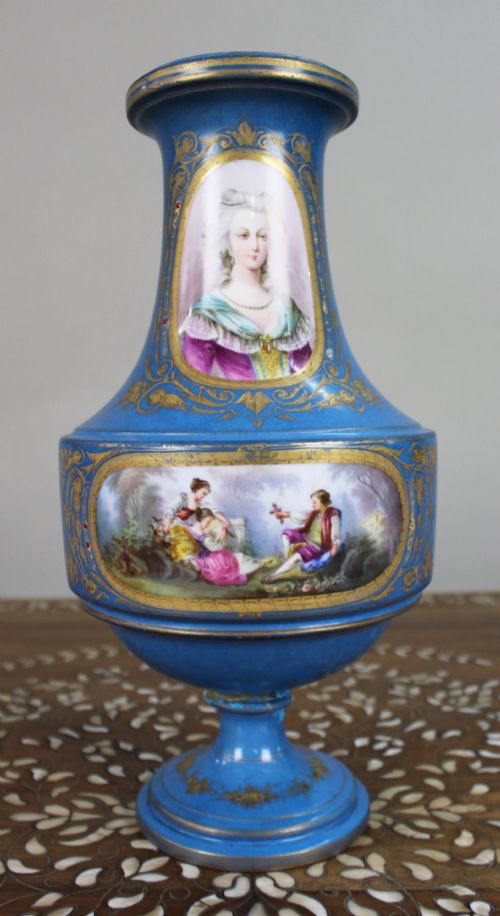


Late 19th Century Sevres
Late 19th century sevres pieces bring French Rococo Revival and Louis XVI style porcelain, ormolu, and enamel into your rooms.
Late 19th Century Sevres
Late 19th century sevres items encompass decorative trays, comports and centrepieces, and vases and urns styled after French models of the 1880s and 1890s. Buyers searching for late 19th century sevres encounter porcelain decorated with gilt bronze, ormolu mounts, and intricate enamel work.
The selections on this page lean heavily towards table lamps, writing desks, and decorative bowls and dishes finished in the Louis XV and Louis XVI revivals. Pieces range from monumental lidded urns to delicate oval porcelain dishes bearing bleu céleste ground colours.
Most examples originate from French workshops adhering to the aesthetic tastes of the Napoleon III period and the late nineteenth century. These objects served both ornamental and practical functions in period interiors, combining rich gilding with hand-painted ceramic bodies.
How they were made
Makers shaped these objects using hard-paste porcelain combined with cast ormolu, gilt bronze, and gold leaf mounts. Artisans applied enamel and pate sur pate techniques directly to the ceramic surface before firing.
Cabinetmakers incorporated porcelain plaques into kingwood furniture frames alongside gilt metal mounts and fabric components such as silk. Bronze mounts were cast, chased, and gilded to frame the porcelain elements securely.
Late 19th Century Sevres Retail Price Guide 2026
Typical asking prices for late 19th century sevres among the pieces listed under this phrase on Sellingantiques today, from the lower quarter to the upper quarter. They describe what is for sale here now, not the wider market.
Several pieces combine writing desks with porcelain plaques, proving that a desk can look remarkably like a mantelpiece.
What varies in quality
Quality rests in the crispness of the ormolu casting and the depth of the gilding applied to the porcelain body. Superior pieces display finely detailed pate sur pate work and meticulously hand-painted scenes rather than transfer prints.
The weight and finish of the gilt bronze mounts separate finer examples from simpler decorative wares. The integration of porcelain plaques into kingwood structures demonstrates the skill of the cabinetmaker or metalworker involved.
Moreaux
The Late 19th Century Sevres Glossary
- Ormolu
- Gilded bronze used for mounts and decorative accents on furniture and porcelain. This technique involves applying a mercury and gold amalgam to cast bronze.
- Pate sur pate
- A ceramic technique where successive layers of slip are built up on a porcelain body to create a low relief cameo effect. The method requires immense skill from the ceramic artist.
- Bleu céleste
- A brilliant turquoise blue enamel ground colour developed at the Sevres factory. It forms the backdrop for painted panels and gilded scrollwork on nineteenth century pieces.
- Bonheur du jour
- A small lady's writing desk featuring a tiered superstructure with drawers, shelves, or a cabinet above the writing surface. These desks often incorporate porcelain plaques and gilt metal mounts.
- Comport
- A decorative pedestal dish or bowl used for serving fruit or sweets on a dining table. They frequently feature ormolu mounts and painted porcelain bowls.
Late 19th Century Sevres: Frequently Asked Questions
What is late 19th century sevres porcelain?
Late 19th century sevres refers to decorative porcelain and mounted works produced in France during the 1880s and 1890s in the style of the historic Sevres factory.
These pieces draw on Louis XVI and French Rococo Revival designs, featuring ornate ormolu mounts, rich enamel, and painted details.
How were sevres style lamps made?
Lamp conversions utilise nineteenth century porcelain vases and urns fitted with electrical components while retaining their original ormolu bases and handles.
The ceramic bodies often feature pate sur pate decoration or bleu céleste glazes mounted on gilt bronze.
Where do these decorative items originate?
The pieces originate from France during the late nineteenth century, reflecting the revival styles popular under Napoleon III and the Third Republic.
Workshops in Paris and surrounding regions produced these porcelain and gilt bronze objects for international markets.
How do I style a porcelain dish?
Oval porcelain dishes and decorative bowls work well displayed on sideboards, tables, or within period cabinet settings.
Their gilt bronze mounts and painted surfaces complement traditional interiors and eclectic spaces alike.