

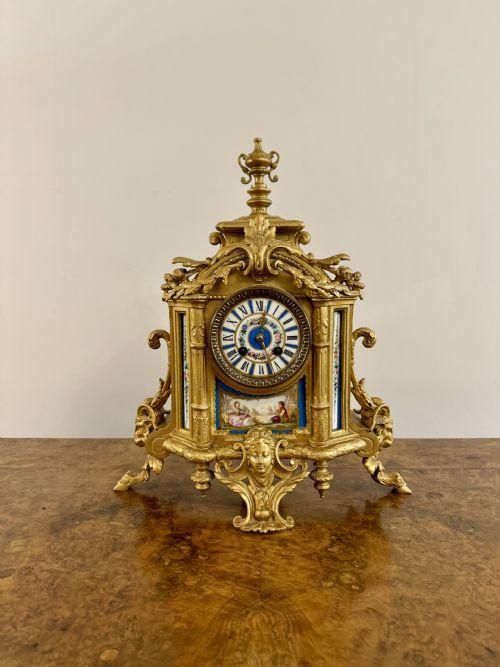


Sevres Porcelain Desk
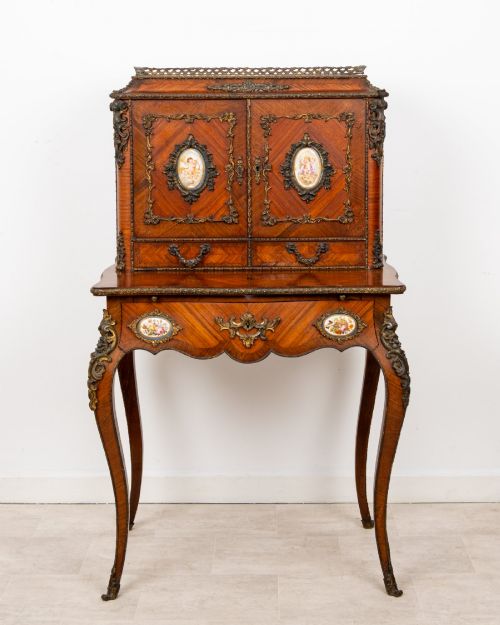
A sevres porcelain desk brings together rich hardwoods and hand-painted ceramic plaques set in gleaming ormolu mounts.
Sevres Porcelain Desk
A sevres porcelain desk generally takes the form of a nineteenth-century writing table, a bonheur du jour, or a tabletop cartonnier originating from France. These pieces serve as refined writing furniture incorporating ceramic plaques into wooden cabinetry.
The versions most commonly found here feature kingwood, rosewood, or walnut frames accented with gilt bronze mounts and inset porcelain panels. Such items date predominantly from the Victorian era and the mid to late nineteenth century.
Makers integrated ceramic plaques depicting pastoral scenes or floral motifs directly into the wooden surfaces of desks, cabinets, and writing drawers. These surfaces often include leather writing inserts alongside compartments for correspondence.
How they were made
Cabinetmakers utilised hardwoods such as kingwood, tulipwood, and amboyna as the structural foundation for writing furniture. They veneered these timbers onto solid secondary woods before applying varnishes to highlight the natural grain.
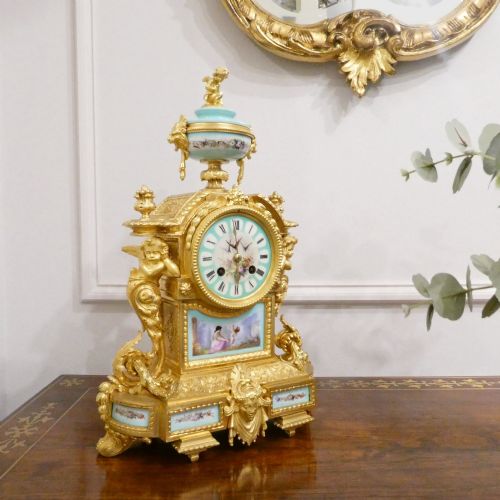
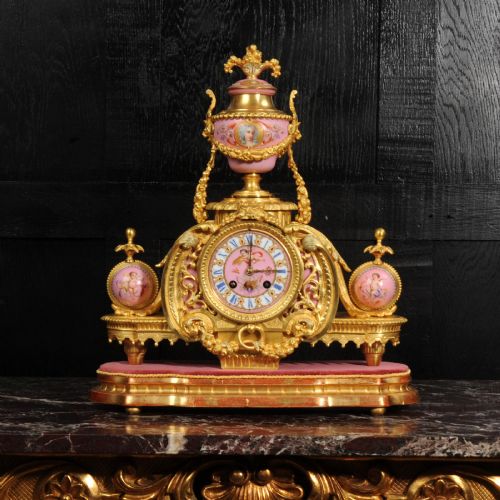
Ormolu mounts, cast in bronze and subsequently gilded, were shaped to frame porcelain plaques and reinforce the corners of desks. These metal fittings were secured with small brass screws following the contours of the woodwork.
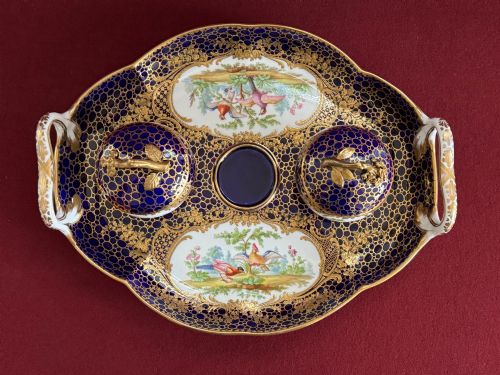
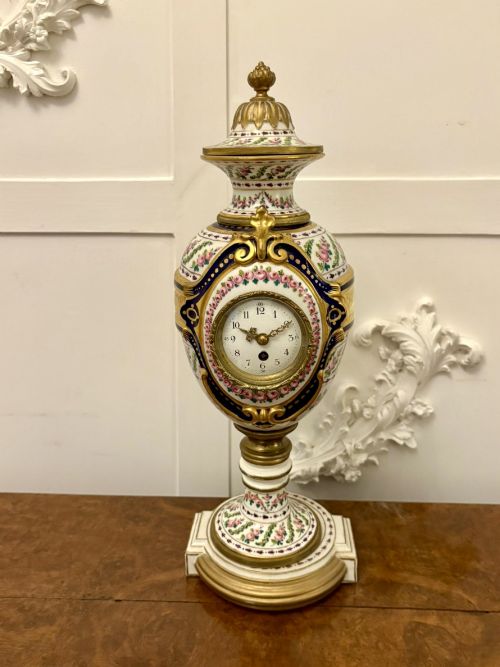
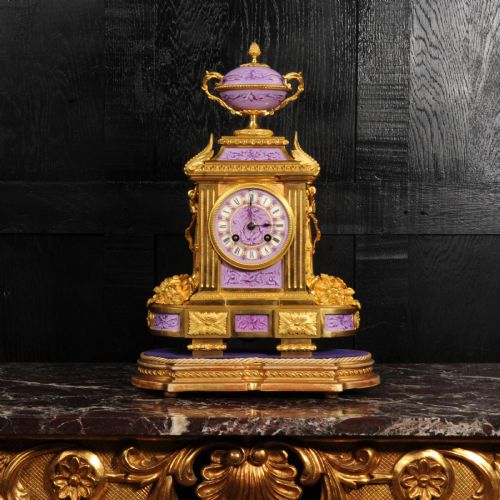
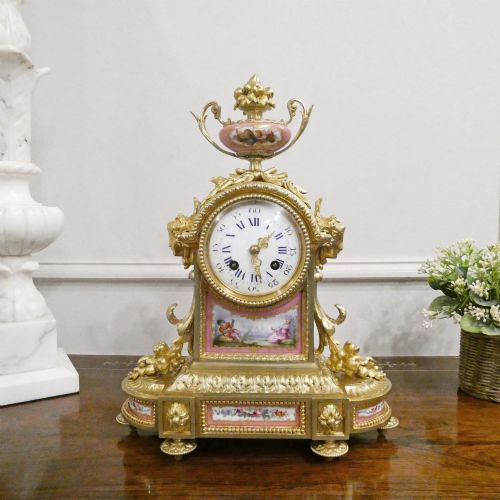
Porcelain plaques featured hand-painted decorations fired at high temperatures before mounting into recessed channels within the desk bodies. Enamel dials and gilt metal bezels completed the decorative program on integrated clock components.
Surviving pieces combine hand-painted porcelain plaques with cast ormolu mounts and gilt bronze.
What varies in quality
The precision of the ormolu casting largely determines the standard of a piece, with finer examples displaying crisp chasing and deep gilding. Lesser pieces often exhibit softer metal details and less defined surface textures.
The artistry of the hand-painted porcelain plaques distinguishes finer writing furniture from standard production. Detailed brushwork and careful kiln firing produce vibrant ceramic surfaces that elevate the overall composition.
The choice of cabinet timbers and the complexity of the veneering influence the distinction of these desks. Matched burr walnut or figured kingwood indicates careful material selection by the maker.
Achille Brocot·Japy Freres
The Sevres Porcelain Desk Glossary
- Ormolu
- Gilt bronze mounted onto furniture and clocks. This technique involves applying a gold amalgam to cast bronze before heating to vaporise the mercury.
- Bonheur du jour
- A small lady's writing desk featuring a small cabinet or set of drawers on the upper writing surface. These pieces gained popularity during the nineteenth century.
- Kingwood
- A dense, dark timber featuring pale golden streaks utilised extensively in fine French cabinetry. Cabinetmakers prized this wood for its decorative grain pattern.
- Cartonnier
- A decorative desktop cabinet designed to hold papers, documents, and letters. These containers often incorporate porcelain plaques and ormolu mounts to match writing tables.
- Bureau plat
- A flat-topped writing table freestanding in a room, typically fitted with drawers in the frieze. This form developed in France during the eighteenth century and continued through later revivals.
Sevres Porcelain Desk: Frequently Asked Questions
How do you date these desks?
Dating relies upon examining the timber construction, the style of the ormolu mounts, and the integration of the porcelain plaques. Mid-nineteenth-century examples often follow Louis XV or Louis XVI revival aesthetics.
Cabinetry techniques and secondary woods provide further clues to the manufacturing period, typically pointing toward the Victorian era or the Second Empire.
Where were porcelain plaques placed?
Porcelain plaques typically appear inset into the drop-front panels, drawer fronts, and upper cabinet doors of writing desks. They act as central decorative focal points surrounded by gilt bronze frames.
Craftsmen recessed these ceramic elements securely into the wooden framework to prevent movement while protecting the painted edges.
How should I care for the wood?
Maintenance involves keeping the furniture away from direct sunlight and extreme humidity fluctuations to protect the delicate veneer and wood joints. Regular dusting with a soft, dry cloth preserves the polished finish.
Harsh chemical cleaners should be avoided in favour of traditional wax polishes appropriate for antique hardwoods and gilt bronze surfaces.