


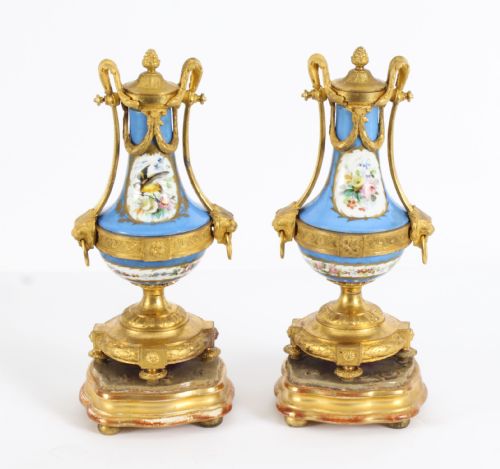
Sevres Blue Ceramic Urn
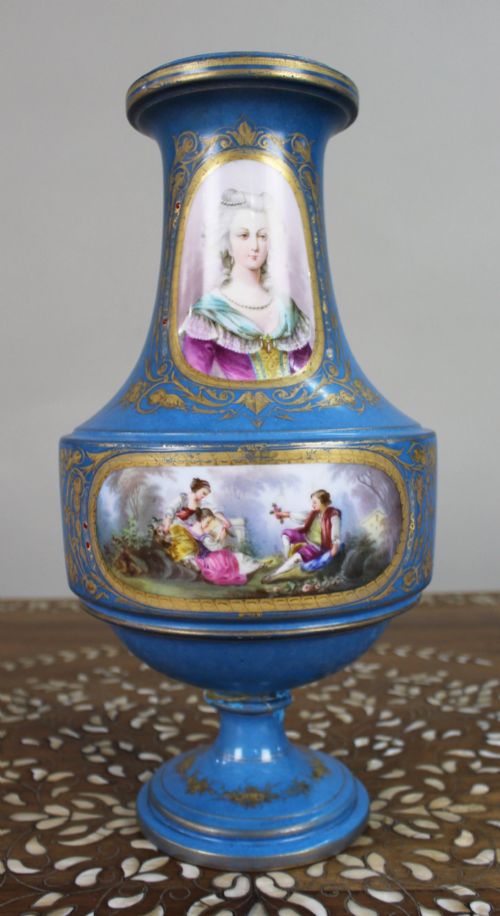
These sevres blue ceramic urn pieces bring nineteenth-century French elegance to a room through rich cobalt grounds and gilt mounts.
Sevres Blue Ceramic Urn
A sevres blue ceramic urn typically dates from the nineteenth century, spanning decades such as eighteen eighty, eighteen ninety, and nineteen twenty. The selection centres on French styles including Rococo Revival, French Empire, and French Neoclassical.
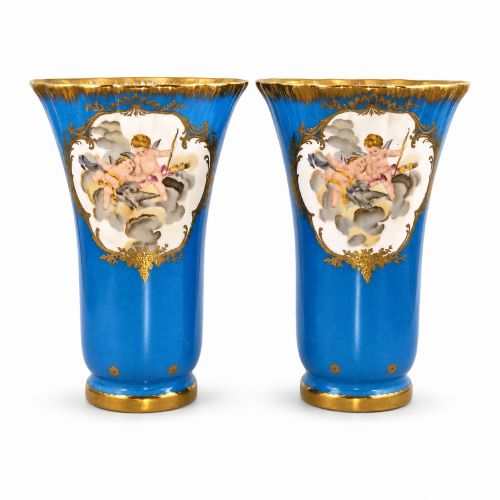
Buyers encounter forms ranging from lidded vases and garnitures to table lamps, comports, and jardinieres. Most examples follow the sevres style or bleu celeste tradition, often created in pairs for symmetrical display.
Materials and construction methods
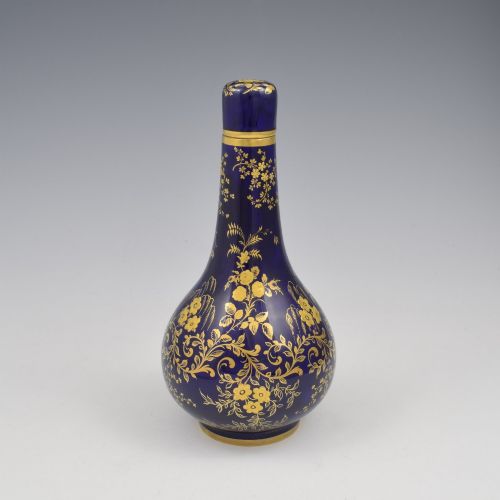
The foundation rests on porcelain and glazed ceramic, painted in distinctive blue tones and finished with gold leaf or enamel details. Hand-painted panels frequently decorate the body alongside intricate coloured grounds.
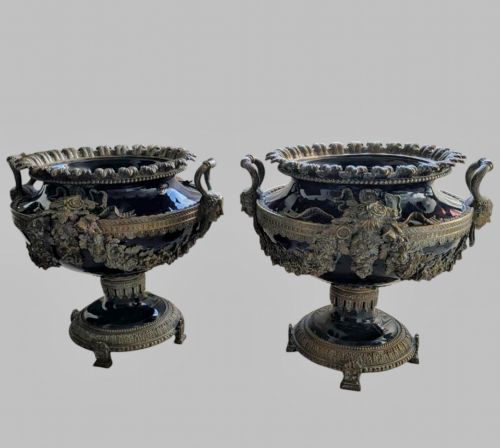
Mounts utilise ormolu, gilt bronze, brass, and occasionally fabric components. Metalwork is cast and chased to frame the ceramic body securely, uniting the porcelain with classical architectural details.
Listings feature nineteenth century periods, utilising porcelain, ormolu, and gilt bronze across vases, urns, and table lamps.
Distinctions in craftsmanship
Quality reveals itself in the crispness of the ormolu casting and the depth of the hand-painted decoration upon the porcelain surface. Finer examples display meticulous brushwork within the pictorial panels and secure, substantial metal mounts.
Proportion and scale dictate the visual presence of the piece, with monumental pairs requiring precise firing techniques to maintain form. The richness of the bleu celeste ground and the integrity of the gilding set superior pieces apart.
Derby Porcelain·Samson Paris
The Sevres Blue Ceramic Urn Glossary
- Bleu Celeste
- A bright turquoise or sky-blue ceramic ground colour associated with French porcelain production. It provides a vivid backdrop for gilt highlights and hand-painted scenes.
- Ormolu
- Gilt bronze or brass mounts applied to furniture and ceramics. This technique involves coating metal with a finely ground gold-mercury amalgam.
- Garniture
- A set of three or more matching decorative objects, typically vases or urns, designed to sit together on a mantelpiece or sideboard.
- Comport
- A decorative dish or bowl raised on a stem, used for display on a table or sideboard. These pieces often feature porcelain bowls supported by metal or ceramic pedestals.
- Majolica
- A type of glazed pottery known for its colourful enamel decoration. It appears on certain nineteenth-century classical French urns.
Sevres Blue Ceramic Urn: Frequently Asked Questions
How were sevres blue ceramic urn pieces originally displayed?
These decorative objects typically stood upon mantelpieces, console tables, or large sideboards within nineteenth-century drawing rooms. Pairs and garnitures created a balanced, symmetrical focal point for formal interiors.
Their rich blue glazes and gilded mounts caught the candlelight or daylight of high-ceilinged reception rooms, signaling taste and refinement.
Can I use a sevres blue ceramic urn as a lamp?
Certain nineteenth-century pieces are adapted as table lamps while retaining their original porcelain bodies and ormolu mounts. These conversions combine historical aesthetics with functional lighting.
Buyers should examine how the wiring integrates with the existing mounts to ensure the structural integrity of the ceramic remains undisturbed.
How do I care for nineteenth century porcelain and ormolu?
Dust the porcelain and gilt bronze gently with a soft, dry cloth to prevent accumulation. Avoid chemical cleaners or excessive moisture, which can damage the delicate gold leaf and enamel.
Keep the pieces away from direct sunlight to preserve the vibrancy of the blue glaze and painted panels over time.
What is the difference between an urn and a vase?
Urns traditionally feature a covered vessel form often elevated on a pedestal or foot, frequently incorporating architectural or classical handles. Vases encompass a broader range of open-topped or lidded decorative vessels.
In nineteenth-century French design, the terms often overlap, particularly for large decorative pieces intended purely for visual display.