


Seventeenth Century Dining Table
A seventeenth century dining table anchors a room with solid oak timbers, heavy plank tops and centuries of utilitarian history.
Seventeenth Century Dining Table
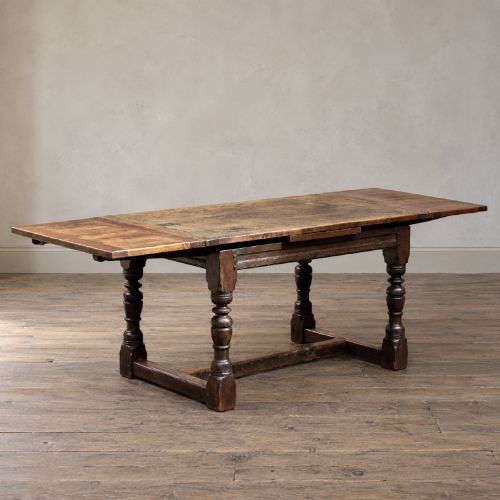
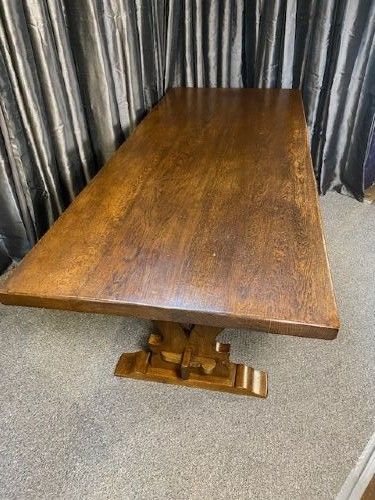
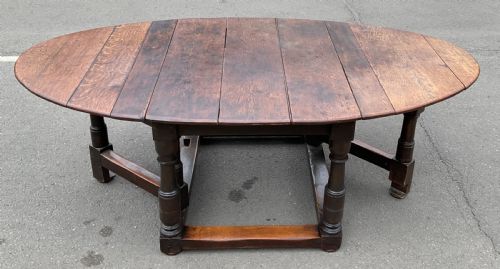
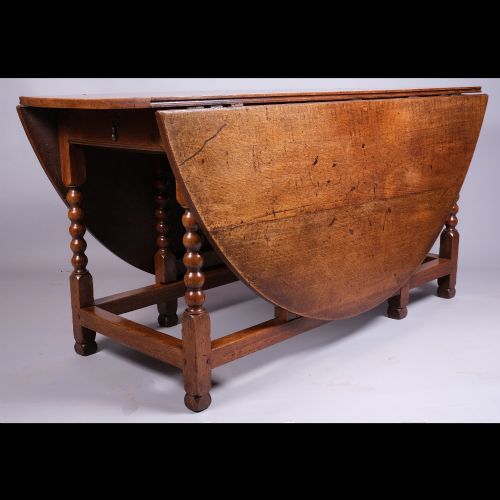
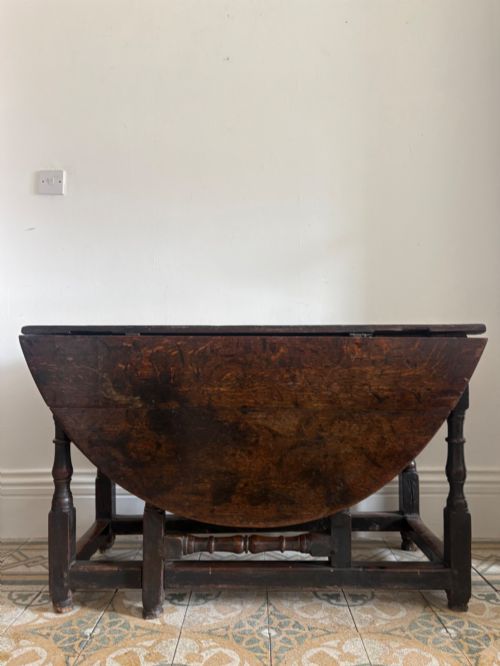
A seventeenth century dining table brings heavy timber construction and practical centuries-old engineering into modern domestic spaces. Buyers searching for this phrase encounter sturdy refectory forms with fixed plank tops alongside adaptable gateleg designs that expand on hinged flaps.
The pieces on this page span the seventeenth century itself, alongside later interpretations from the eighteenth and nineteenth centuries, plus revival pieces from nineteen twenty. Oak dominates the selection, joined by walnut, iron, and brass fittings.
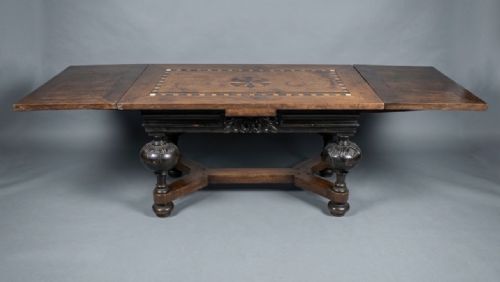
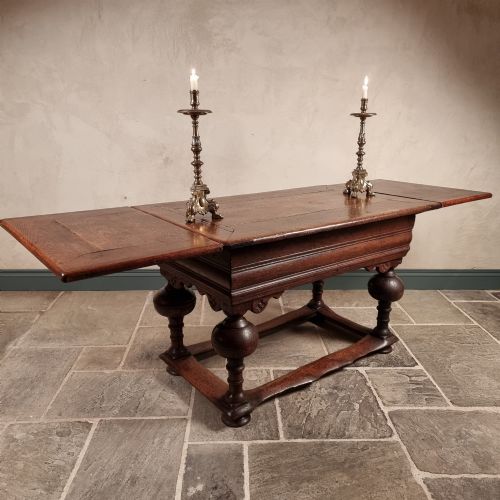
Jacobean styles and Dutch Renaissance influences shape the heavy frames, turned legs, and draw leaf mechanisms. Buyers are most likely to meet substantial oak tables designed to seat multiple diners for communal meals.
Proportion and Timber
The distinction between ordinary and exceptional examples rests on the integrity of the timber and the harmony of the proportions. Heavy plank tops that retain their original thickness and rich surface grain carry more authority than heavily restored boards.
Turned legs and underframe stretchers show varying levels of crispness in the hand-carved or lathe-turned details. Original hardware and sound structural joinery elevate a piece above examples that have undergone extensive timber replacement.
Materials recorded across the selection include solid oak, walnut, iron, brass, and wood inlay.
The Seventeenth Century Dining Table Glossary
- Refectory table
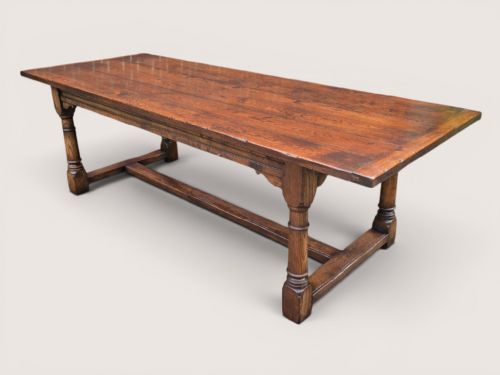
- A long, narrow dining table traditionally used in monastic or communal dining halls. These pieces feature substantial trestle or four-legged bases connected by floor-level stretchers.
- Gateleg table
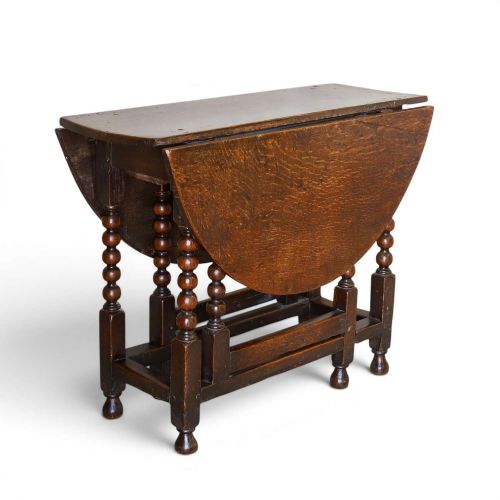
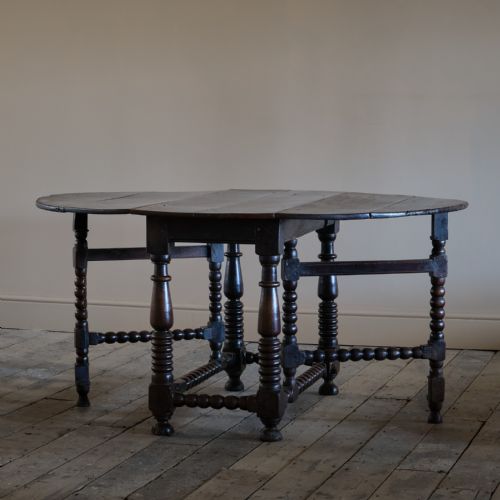
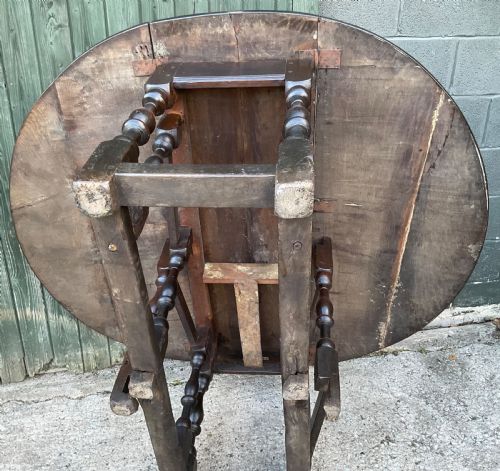
- A table with hinged leaves supported by one or more legs that swing outward on a gate-like framework. This design allows the table surface to expand or fold down compactly.
- Draw leaf table
- An extending table equipped with two concealed leaves beneath the main top that slide outward to lengthen the surface. This mechanism provides extra dining space without removing the primary boards.
- Bobbin turning
- A form of woodturning that produces a series of spherical or spool-shaped swellings along the length of a leg or stretcher. The technique was widely utilised during the seventeenth century.
- Plank top
- A table surface constructed from several wide boards laid edge to edge rather than a single sheet of timber. These boards often display visible grain patterns and pegged construction.
Seventeenth Century Dining Table: Frequently Asked Questions
How do I seat six people comfortably?
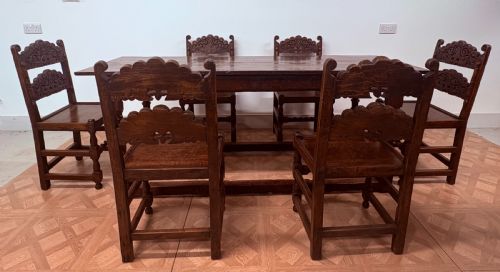
Look toward larger gateleg or draw leaf variants that expand outward when hosting guests. These folding and extending mechanisms alter the footprint of the table as needed.
Refectory forms offer fixed lengths with unobstructed legroom underneath for benches or chairs. Check the clearance beneath the apron to ensure dining chairs slide in properly.
How do I tell an original from a revival?
Examine the timber shrinkage, tool marks left by hand planes, and the composition of the joints. Seventeenth century construction methods display hand-cut peg holes and natural wear patterns accumulated over centuries.
Revival pieces from later periods often feature uniform machine sawing and cleaner, less weathered surfaces. Hardware and fasteners also provide clues to the actual manufacturing era.
Can I use these daily?
Solid oak and walnut construction provides the robust structural integrity required for daily domestic use. These heavy tables were originally built for rigorous, practical utility.
Protect the surface from excessive moisture and heat using appropriate mats. Regular maintenance preserves the finish without diminishing the historical character.