

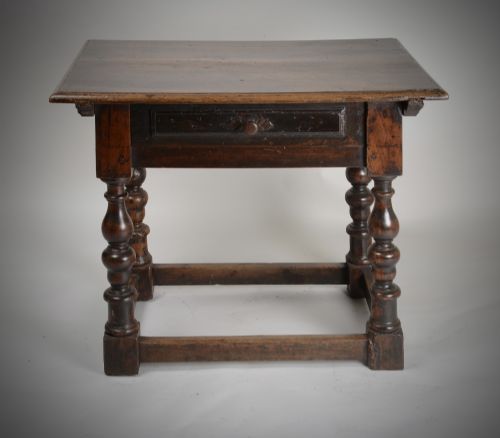
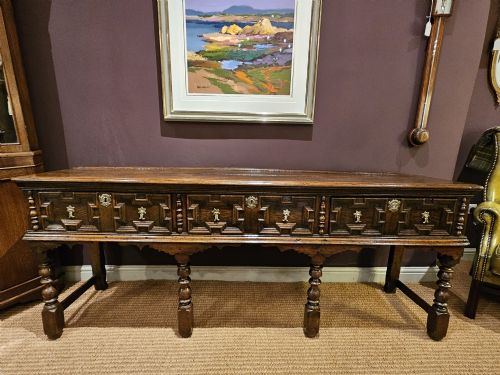
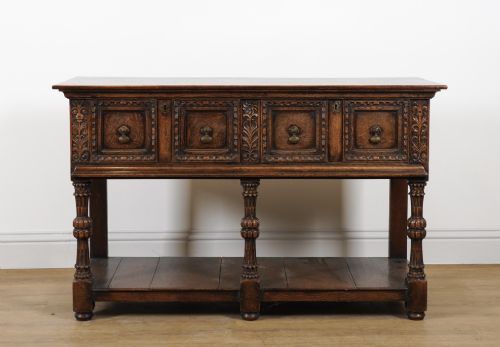
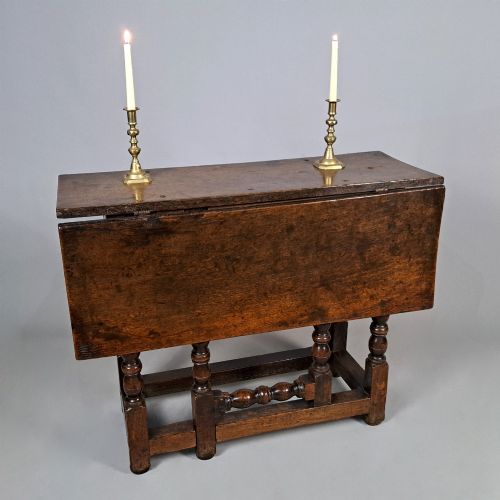




Seventeenth Century Console Table
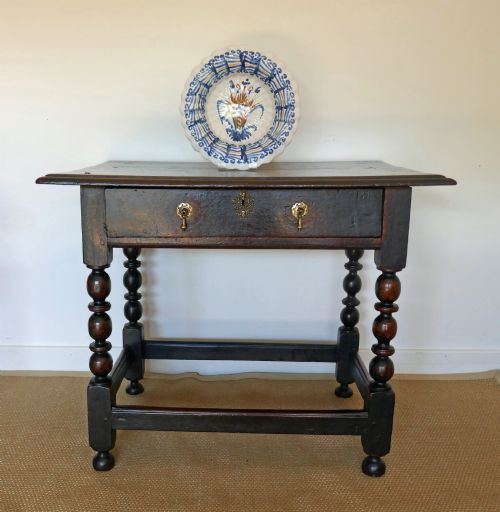
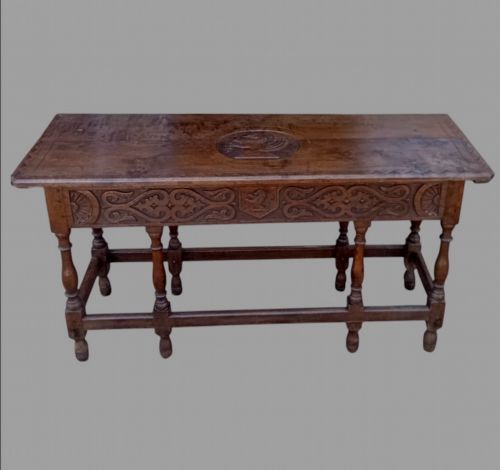
A seventeenth century console table offers heavy timber construction and dark patination, bringing period presence and practical surface space to a modern room.
Seventeenth Century Console Table
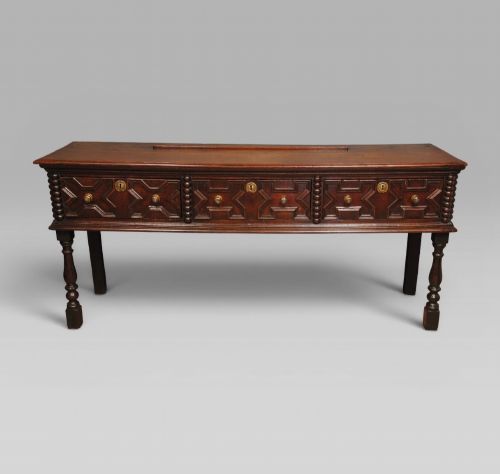
A seventeenth century console table and its close relatives, such as side tables, dresser bases, and servers, provide heavy wooden surface furniture rooted in early periods. Buyers seeking a seventeenth century console table will frequently encounter pieces grouped alongside sideboards, dresser bases, and low servers from the same era.
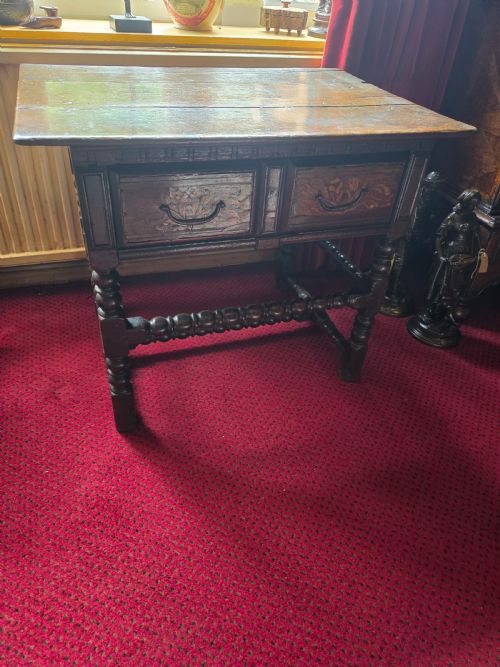
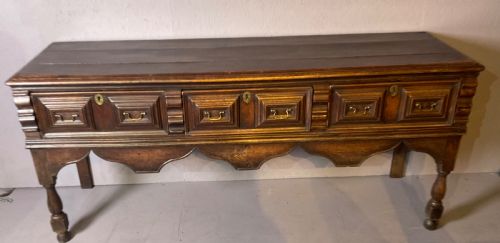
The material record shows a strong reliance on solid timber frames, predominantly oak and walnut, occasionally augmented by rosewood or painted surfaces. Forms span simple side tables with geometric mouldings to larger dresser bases fitted with multiple drawers.
Origins stretch across English, Italian, and Spanish workshops, reflecting diverse regional tastes in carving and joinery. Revival pieces from later centuries also appear, repeating the heavy proportions and dark timbers of the original period.
How they were made
Construction relies heavily on sturdy hardwoods, principally oak and walnut, joined with traditional framing techniques suited to supporting weight. Secondary materials like iron, brass, and wood inlay add structural support and surface decoration.
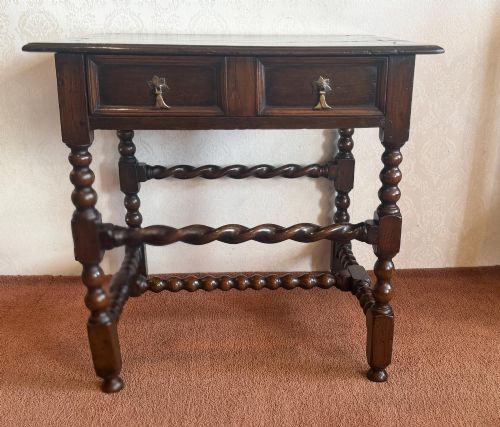
Surface treatments range from plain waxed timber and painted oak to intricate geometric mouldings and carved details. Turnery methods create distinctive legs, utilising bobbin turned and barley twist profiles.
Seventeenth Century Console Table Retail Price Guide 2026
Typical asking prices for seventeenth century console table among the pieces listed under this phrase on Sellingantiques today, from the lower quarter to the upper quarter. They describe what is for sale here now, not the wider market.
Materials recorded across the selection include solid oak, walnut, rosewood, painted oak, brass, and wrought iron.
What varies in quality
The standard of timber selection and the crispness of hand-carved or geometrically moulded drawer fronts set finer examples apart from simpler utilitarian pieces. Bold proportions and well-executed joinery demonstrate superior cabinetmaking skill.
The integrity of the structural elements, including turned legs and original hardware like brass handles, influences the overall character and historical weight of the piece.
The Seventeenth Century Console Table Glossary
- Credence table
- A folding table with a semicircular top, often associated with ecclesiastical or domestic serving use in the seventeenth century.
- Barley twist
- A form of wood turnery resembling a spiral rope, popular on seventeenth century furniture legs and stretchers.
- Dresser base
- A low wooden sideboard fitted with drawers, used historically for storage and serving in the dining room or hall.
- Geometric moulding
- Raised decorative wooden strips applied in symmetrical patterns to drawer fronts, typical of late seventeenth century joinery.
- Gateleg table
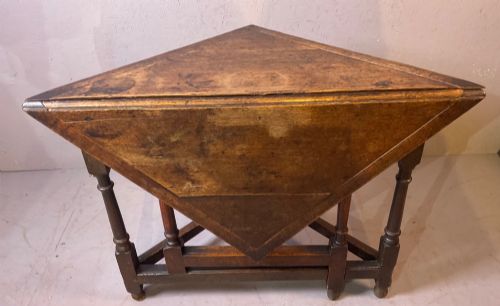
- A drop-leaf table supported by hinged legs that swing out like gates to hold up the folding flaps.
Seventeenth Century Console Table: Frequently Asked Questions
What is a seventeenth century console table?
These pieces are sturdy wooden tables designed for display and utility, often featuring drawers and heavy turned supports. They serve well as hallway tables or side surfaces in living areas.
Historically, similar forms functioned as serving tables or low dressers. Today, they bring historic character and practical surface area to contemporary interiors.
Where should I place a low dresser base?
A low dresser base suits dining rooms, hallways, or spacious living rooms where its surface and drawer storage can be utilised daily. Positioning it against a solid wall allows the wood grain and moulded fronts to stand out.
Keep the piece away from direct heat sources to protect the historic timber from drying out or splitting.
What woods were commonly used?
Oak and walnut dominate the construction of these tables, providing dense and durable frames that survive centuries of use. Rosewood and painted oak appear less frequently in specific regional variants.
Metal elements like brass and wrought iron provide structural reinforcement and decorative handles.