



Renaissance Style Walnut Table
A renaissance style walnut table brings sixteenth-century architectural presence and rich dark timber into a modern interior.
Renaissance Style Walnut Table
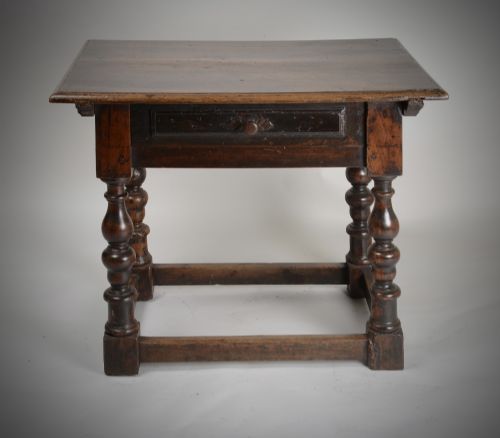
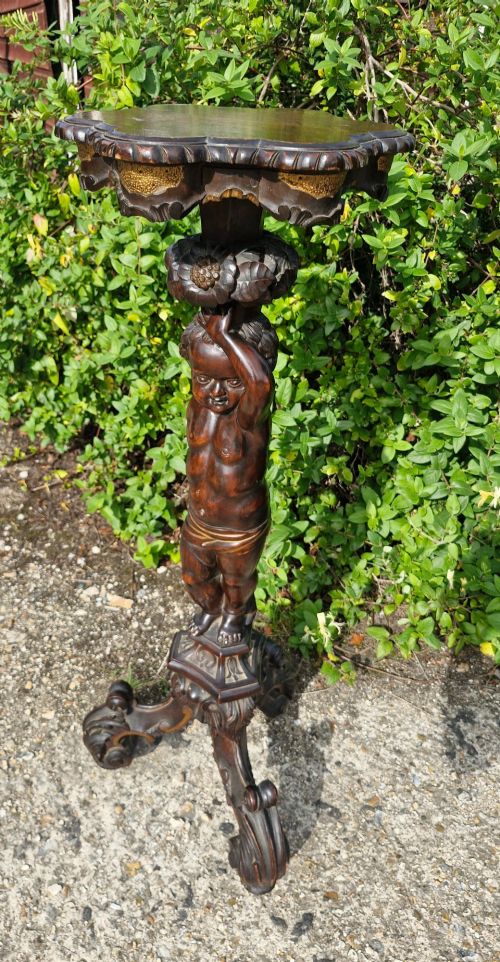
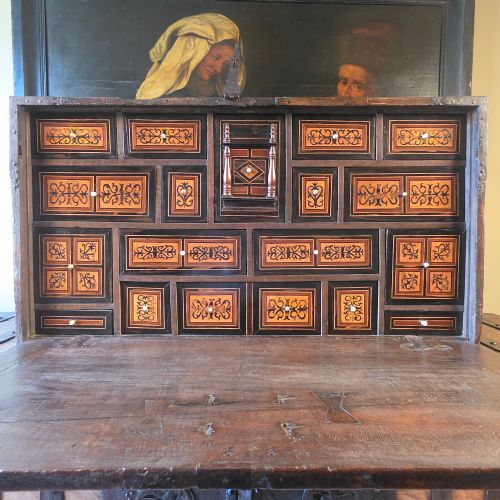
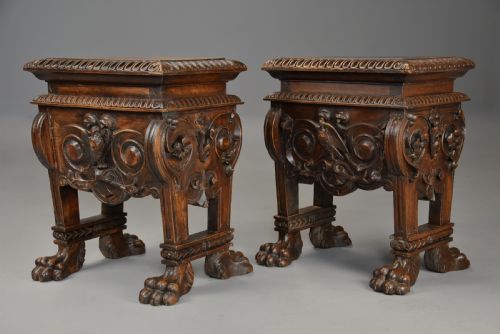
The selections available here lean heavily toward nineteenth-century revival side tables and centre tables, alongside occasional seventeenth-century examples and sideboards. Forms include rectangular side tables, centre tables, pedestals, and inlaid caskets.
Makers and workshops of the nineteenth century frequently looked back to earlier Italian and Flemish precedents, applying rich carving and marquetry to traditional walnut structures.
How they were made
Construction relies primarily on solid walnut, frequently paired with secondary woods like fruitwood and ebony to create tonal contrast in geometric borders and panels. Joinery is robust, designed to support heavy tops and substantial underframe stretchers.
Detailed inlay work incorporates bone, marble, and gold leaf into the walnut carcass, particularly on Italian and Flemish pieces. Carved ornamentation draws directly from sixteenth-century architectural vocabulary, featuring figures, foliage, and mouldings.
Renaissance Style Walnut Table Retail Price Guide 2026
Typical asking prices for renaissance style walnut table among the pieces listed under this phrase on Sellingantiques today, from the lower quarter to the upper quarter. They describe what is for sale here now, not the wider market.
Listings span the sixteenth, seventeenth, eighteenth, and nineteenth centuries, featuring walnut, bone, fruitwood, ebony, marble, and gold leaf.
What varies in quality
Depth and crispness of the carved detail separate standard production from superior examples, as seen in the treatment of figures and relief ornament. The precision of bone and fruitwood inlay also dictates the grade of the piece.
Choice of timber grain and the integrity of the structural joinery determine the longevity and visual weight of the furniture. Eighteenth and nineteenth-century interpretations depend heavily on the carver's adherence to sixteenth-century proportions.
The Renaissance Style Walnut Table Glossary
- Renaissance Revival
- A nineteenth-century architectural and decorative movement that drew inspiration from sixteenth-century Italian and French design. It manifested in heavy walnut furniture with classical motifs and rich carving.
- Marquetry
- The art of applying decorative pieces of veneer to a structural structure to form intricate designs. In these listings, fruitwood and bone are frequently utilised in this manner.
- Stretcher
- A horizontal support connecting the legs of a table for structural stability. These components are often moulded or turned in sixteenth-century and revival furniture.
- Casket
- A small decorative box or chest designed for valuables, often highly ornamented. Examples from the late nineteenth century combine walnut with bone inlay.
Renaissance Style Walnut Table: Frequently Asked Questions
What is a renaissance style walnut table?
A renaissance style walnut table is a heavy timber furnishing inspired by sixteenth-century European design, featuring classical carving and dark wood tones.
These pieces include both period originals and nineteenth-century revival interpretations built in Italy, France, Spain, and Flanders.
How do I date a walnut table?
Dating relies on examining construction marks, timber wear, and the specific characteristics of the revival period versus earlier centuries.
Nineteenth-century revival pieces often exhibit machine assistance or specific regional interpretations of sixteenth-century motifs.
Where were these tables made?
Surviving examples originate primarily from Italian, French, Spanish, and Flemish workshops across the sixteenth, seventeenth, and nineteenth centuries.
Regional preferences influenced whether a piece utilised bone inlay, heavy relief carving, or contrasting fruitwood timbers.
How do I care for antique walnut?
Antique walnut requires stable indoor humidity levels and protection from direct sunlight to prevent timber shrinkage and finish degradation.
Gentle dusting with a dry cloth maintains the surface without stripping the traditional polish or aged patina.