

Seventeenth Century Blanket Trunk
When you search for a seventeenth century blanket trunk, you are looking at solid timber storage pieces built to hold linens and valuables in early homes.
Seventeenth Century Blanket Trunk
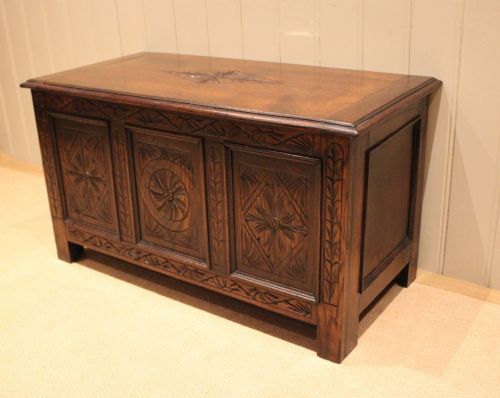
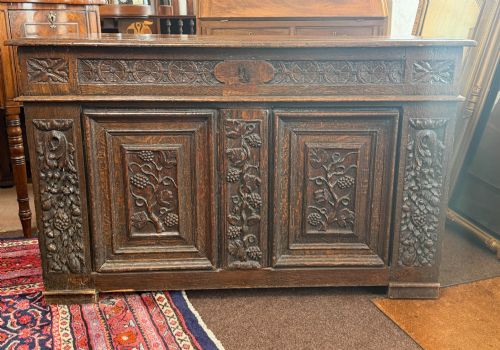
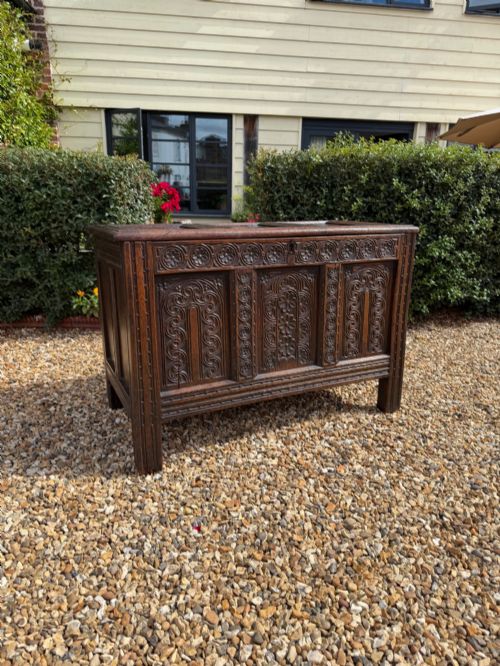
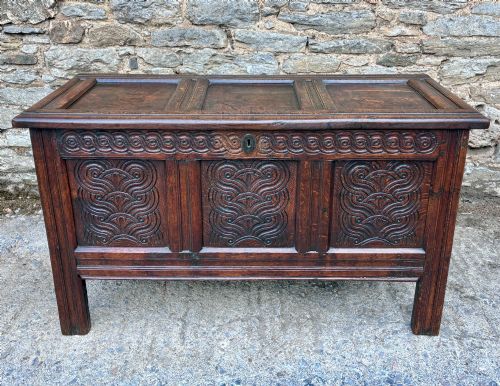
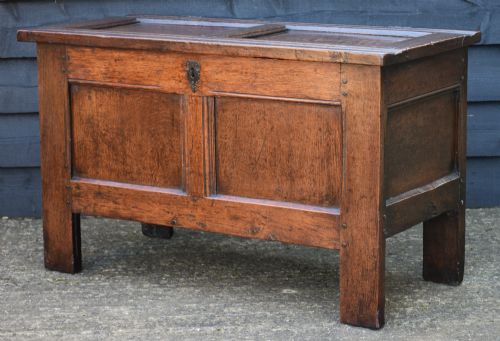
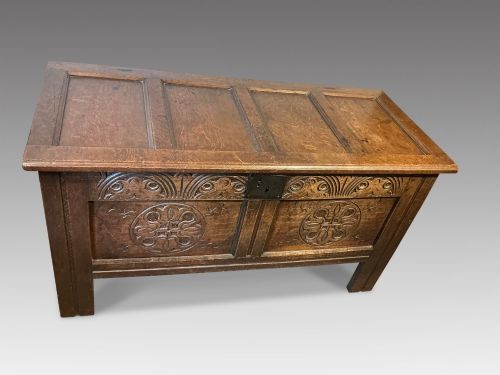
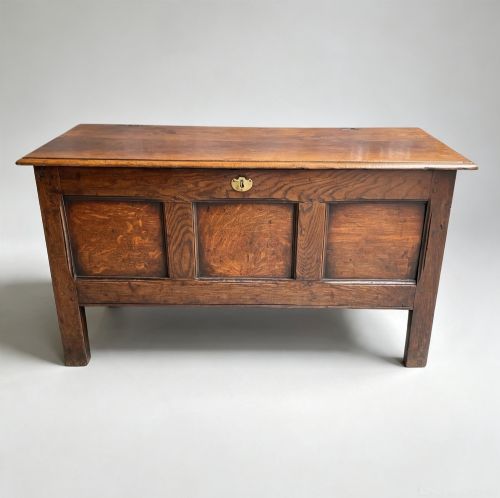
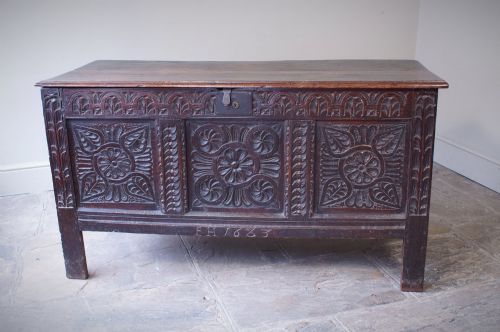
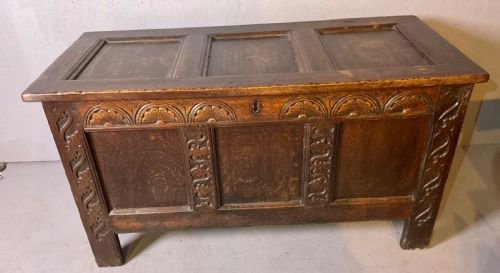
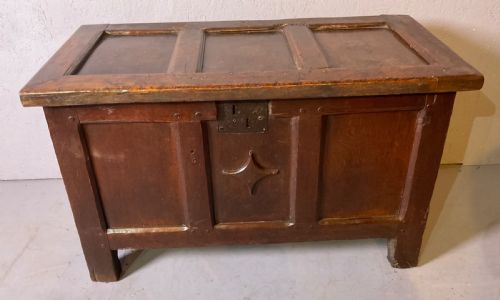
A seventeenth century blanket trunk primarily appears as a joined oak coffer or chest designed for heavy household storage. These pieces take the form of rectangular boxes with hinged lids, sometimes incorporating drawers at the base in later mule chest variants.
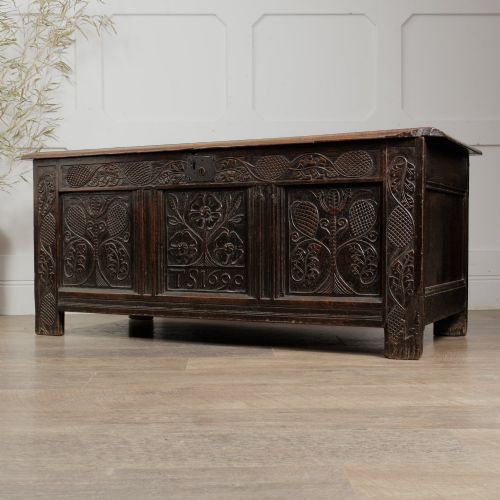
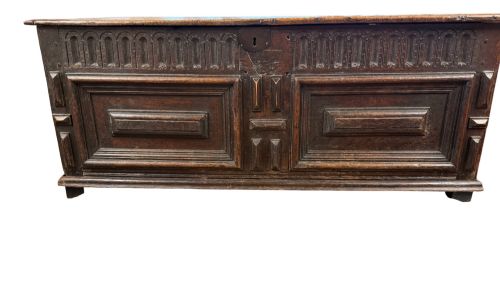
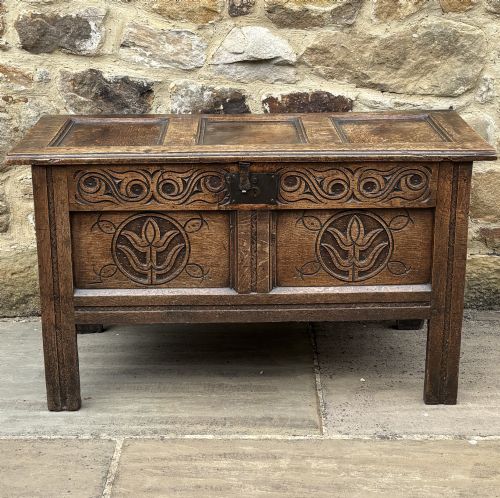
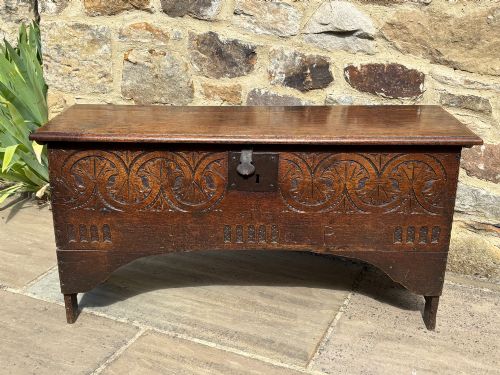
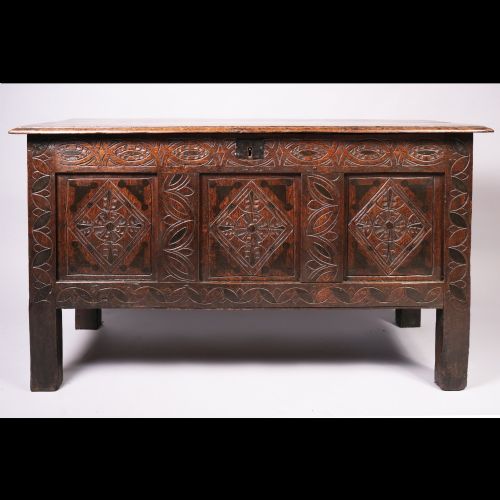
Most examples originate from English regional workshops, including Welsh, Dorset, and Lakeland centres, alongside continental pieces such as Spanish leather-covered trunks. Regional variations reveal distinct carving traditions, from arcaded panels to geometric inlays.
While many date strictly to the 17th century and the Jacobean or Charles I periods, revival items from later centuries also populate the selection. The primary forms remain sturdy boarded or panelled wooden chests intended for domestic utility.
What varies in quality
Quality rests heavily on the integrity of the original construction and the depth of the hand carving. Pieces retaining their original floor timbers, boarded lids, and wrought iron hardware sit at the upper end of the scale.
Proportion and regional character also dictate distinction, with smaller proportions or unusual localized details like specific West Country or Welsh motifs marking out superior examples from plain utility boxes.
Some Welsh grain arks came equipped with built-in hiding spots for contraband.
Thomas Dennis
The Seventeenth Century Blanket Trunk Glossary
- Coffer
- A heavy wooden chest traditionally used for storing valuables, documents, or garments. These sturdy boxes form the primary category of early domestic furniture.
- Mule chest
- A chest featuring one or more drawers built into the base beneath the main storage compartment. This form bridges the evolution between the simple coffer and the modern chest of drawers.
- Arcaded
- A decorative carving style mimicking a series of arches supported by columns. This motif frequently decorates the front panels of Jacobean furniture.
- Linenfold
- A style of wood carving that resembles folded parchment or fabric. Craftsmen used this technique to ornament panels on 17th century furniture.
- Joined oak
- Furniture constructed using mortise and tenon joints held together by wooden pegs rather than metal nails. This method defines the primary carpentry of the period.
Seventeenth Century Blanket Trunk: Frequently Asked Questions
What did people store in a seventeenth century blanket trunk?
These trunks held household textiles, heavy woolen blankets, winter garments, and valuable family documents. The sturdy timber construction protected contents from dampness and pests in drafty early homes.
Over time, families also used them to store church plate, silver, and trading goods. Their heavy lids and iron locks provided essential security before fitted closets existed.
How do I tell a Jacobean piece from a revival copy?
Original 17th century pieces show genuine tool marks, hand-split oak boards, and period construction methods like pegged tenons. The timber displays centuries of oxidation, shrinkage, and wear appropriate to its age.
Revival items, such as those made around nineteen-ten, often use machine-cut timber and lack the deep patina built up through centuries of handling. Inspecting the underside and interior boards reveals the consistency of the tool work.
Where were these trunks placed in a 17th century home?
In early domestic spaces, these chests stood primarily against walls in bedchambers or principal living halls. They functioned both as furniture for sitting on and as secure storage units.
Because they were portable, families loaded them onto carts when moving house or travelling between estates. Their robust build allowed them to withstand heavy daily use across generations.
Why do some chests have drawers at the bottom?
Chests with drawers at the base are known as mule chests, representing an evolution in storage design. Adding a drawer allowed access to smaller items without lifting the heavy top lid.
This form emerged as homes required more organised storage for linens and clothing. The drawer construction utilised standard dovetail joints characteristic of the period's cabinet work.