
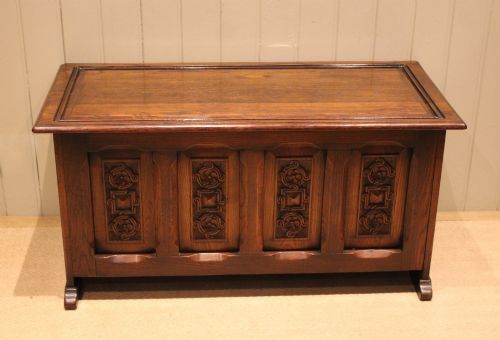
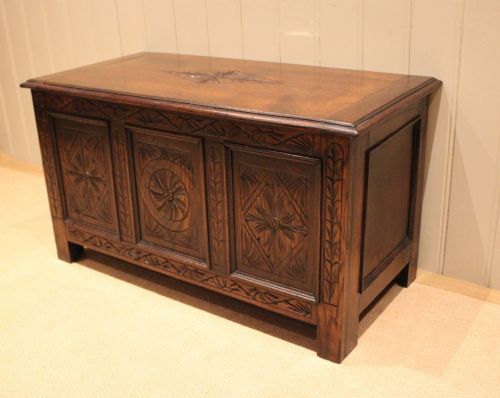
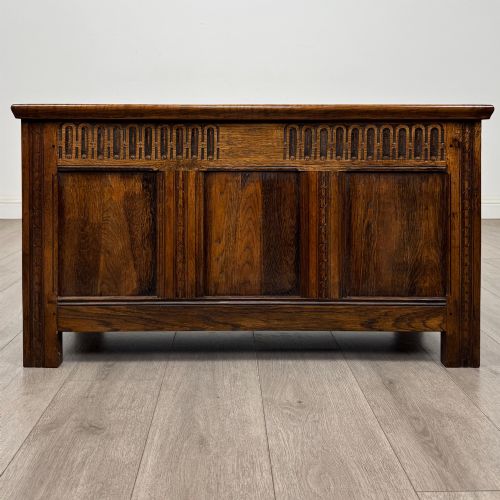
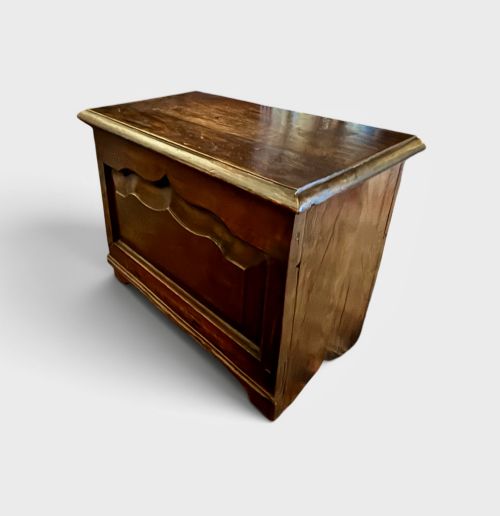
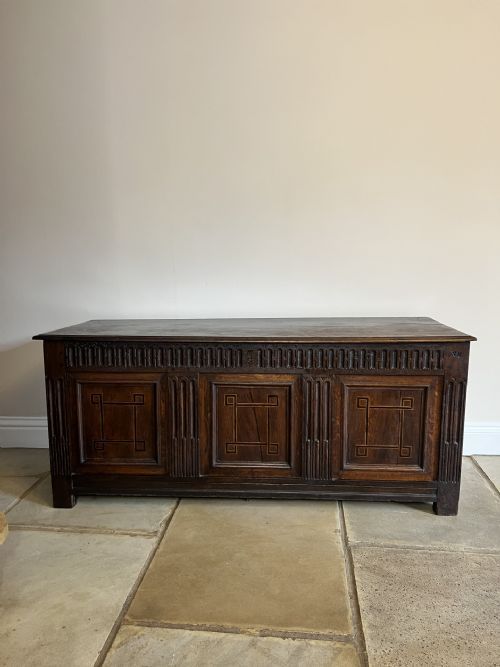
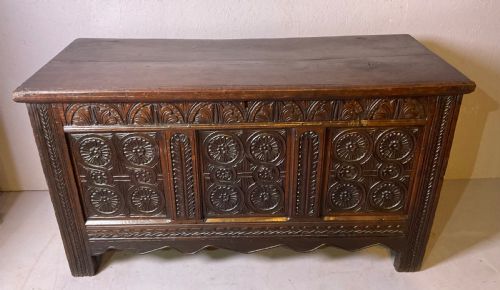

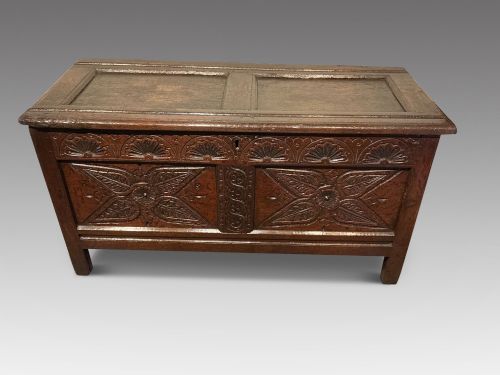
Antique Carved Bedding Chest
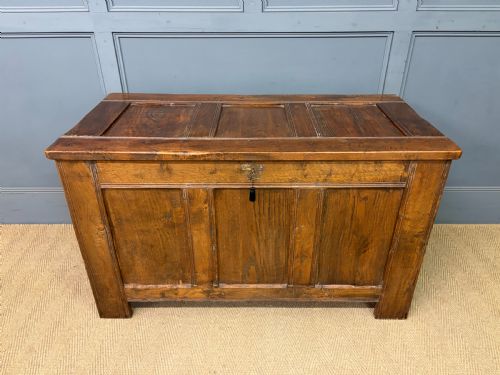
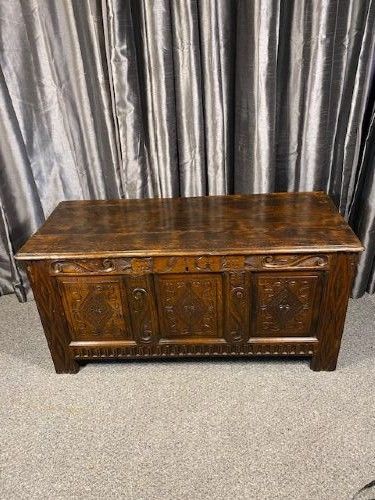
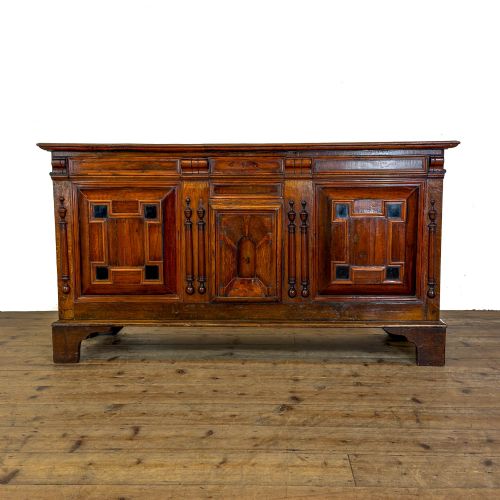
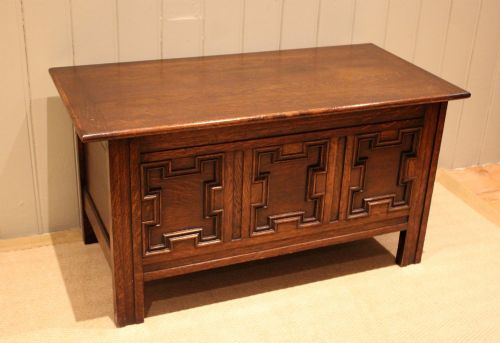
An antique carved bedding chest brings robust utility into a room, offering sturdy storage anchored in centuries of English and European craftsmanship.
Antique Carved Bedding Chest
An antique carved bedding chest encompasses heavy storage forms such as coffers, blanket boxes, mule chests, and kists. These sturdy items served primary household functions for linens, clothing, and valuables across generations.
The pieces on this page emerge predominantly from the seventeenth and eighteenth centuries, alongside later revivals from the twentieth century. Solid timber construction dominates the selection, reflecting durable domestic use.
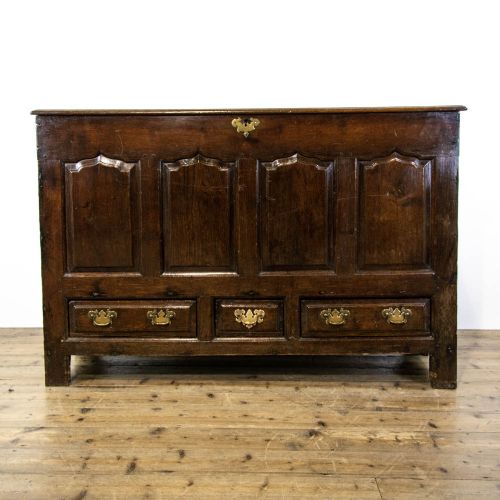
Mule chests introduce lower drawers beneath the main lidded compartment, while standard coffers provide a single deep well. Oak stands as the primary material, shaped through joined and panelled carpentry techniques.
Assessing quality and character
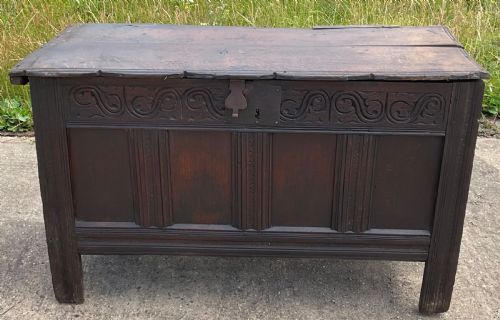
The distinction between ordinary utility items and superior examples lies in the depth and crispness of the timber carving. Original surfaces and untouched patination elevate a piece above later revivals or heavily restored items.
Proportion and timber selection dictate the visual balance of each chest. Dense, well-figured oak boards paired with integrated panel construction represent the higher tiers of regional joinery.
Listings feature robust storage forms spanning the seventeenth, eighteenth, and nineteenth centuries, constructed predominantly in solid oak with occasional chestnut and iron hardware.
The Antique Carved Bedding Chest Glossary
- Coffer
- A large wooden chest traditionally used for holding valuables, documents, or garments. These boxes feature heavy lids and robust frame construction.
- Mule chest
- A storage chest fitted with one or more drawers beneath the primary compartment. This form bridges the traditional blanket box and the chest of drawers.
- Kist
- A regional term for a wooden chest or box used for domestic storage. These pieces appear frequently in northern and Scottish traditions.
- Panelling
- A method of framing thin wooden boards within structural stiles and rails to accommodate timber shrinkage. This technique prevents warping in large furniture surfaces.
- Marquetry
- The art of applying decorative veneer pieces onto a structural surface to create pictorial patterns. This decorative technique appears on select regional chests.
Antique Carved Bedding Chest: Frequently Asked Questions
What is an antique carved bedding chest used for?
These robust chests function primarily as deep storage repositories for household blankets, heavy linens, and winter clothing. Placed at the foot of a bed or along a hallway wall, they double as substantial surface furniture.
Their heavy lids and sturdy timber construction also allow them to serve as occasional window seats or low benches within traditional interiors.
How do I date a seventeenth century oak coffer?
Dating relies heavily on examining the joinery marks, hinge types, and the style of the hand-carved panels. Early seventeenth-century examples typically display pegged mortise and tenon joints with simpler, deeper relief carving.
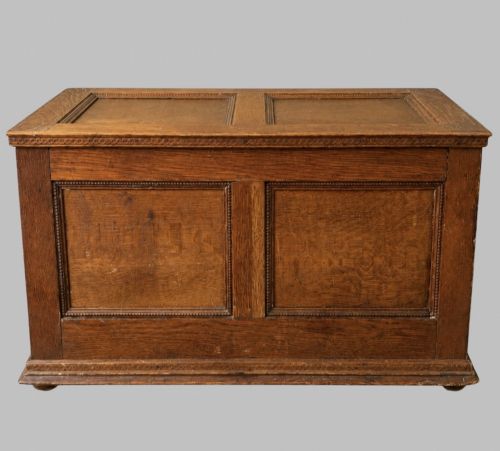
Later revivals from the twentieth century often utilise machine-cut elements or softer timber beneath the surface decoration, distinguishing them from original period pieces.
What is the difference between a coffer and a mule chest?
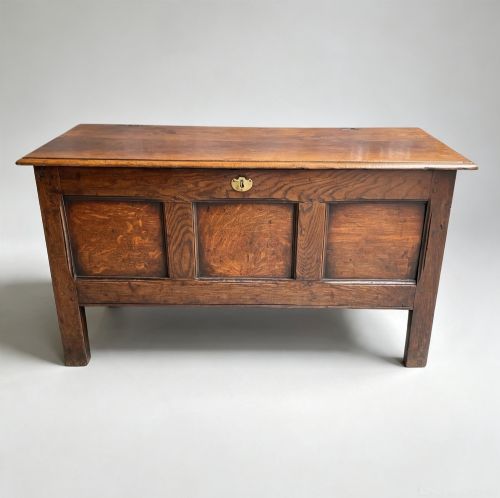
A standard coffer consists of a single lidded compartment opening from the top to reveal a deep interior well. It represents the oldest and simplest form of domestic box storage.
A mule chest incorporates one or more functional drawers beneath the main upper compartment, combining trunk storage with accessible drawer space.
Where were these wooden chests originally made?
The pieces originate primarily from English, Welsh, and French domestic workshops. Regional carpenters utilised locally sourced timber such as oak and chestnut to construct durable furniture for rural and urban homes.
Specific regional styles, such as Breton lit-clos elements or Welsh mule chests, reflect the distinct domestic traditions of their originating regions.
How do I care for an antique oak blanket chest?
Maintain the timber by keeping the chest away from direct heat sources and sudden humidity changes to prevent wood splitting. Regular dusting with a dry, soft cloth preserves the natural patination of the surface.
Avoid modern liquid polishes or silicone sprays, opting instead for traditional beeswax when the dry wood requires mild conditioning.