
Country Oak Coffer Chest
A country oak coffer chest provides sturdy domestic storage built from robust timber during the seventeenth and eighteenth centuries.
Country Oak Coffer Chest
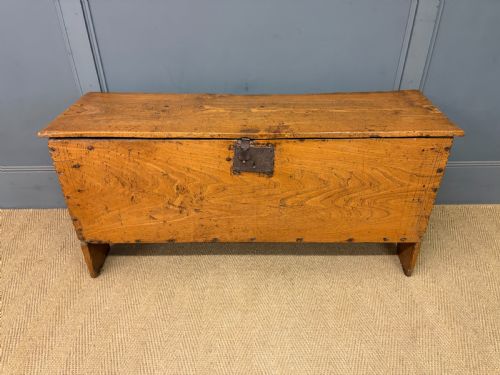
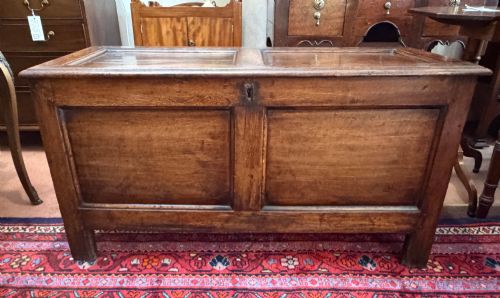
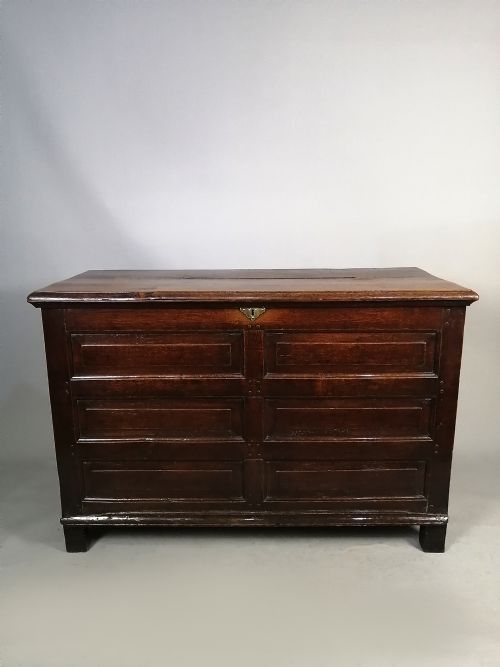
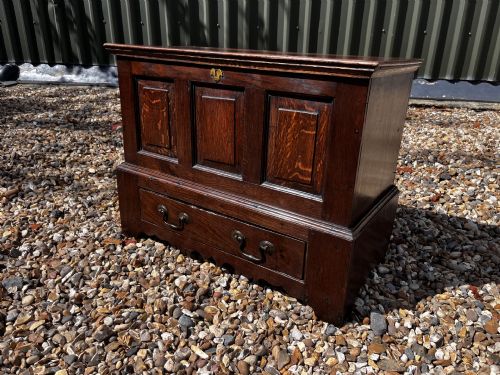
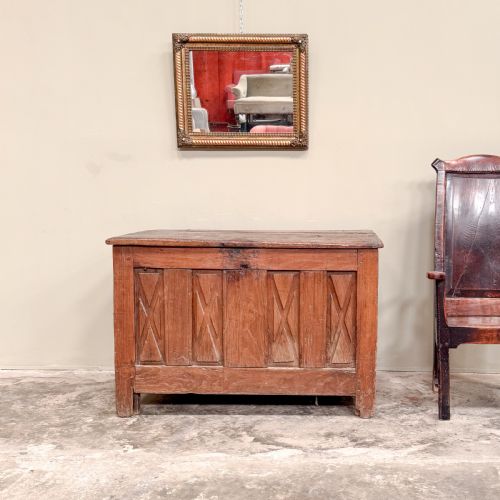
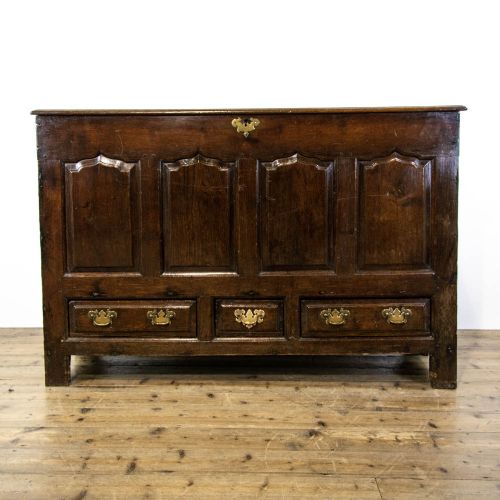
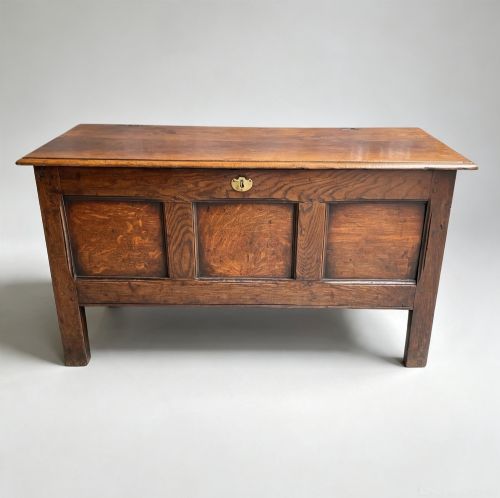
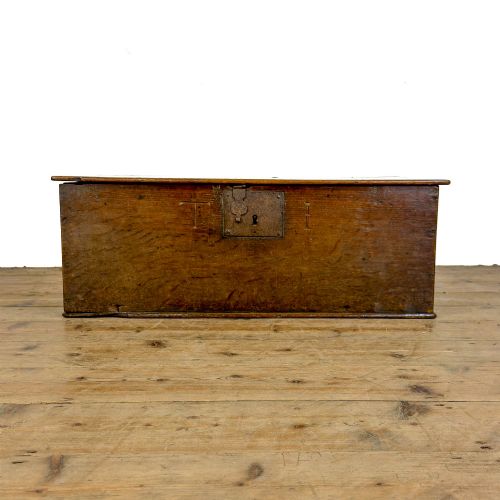
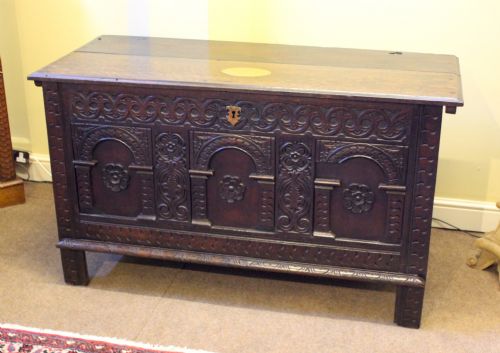
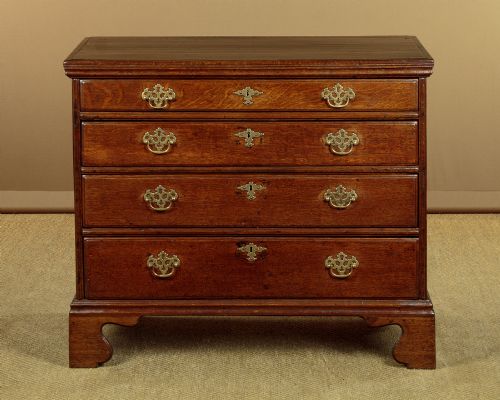
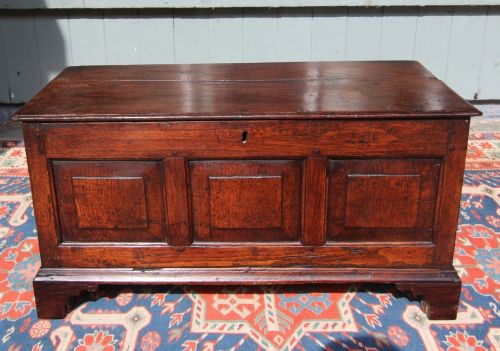
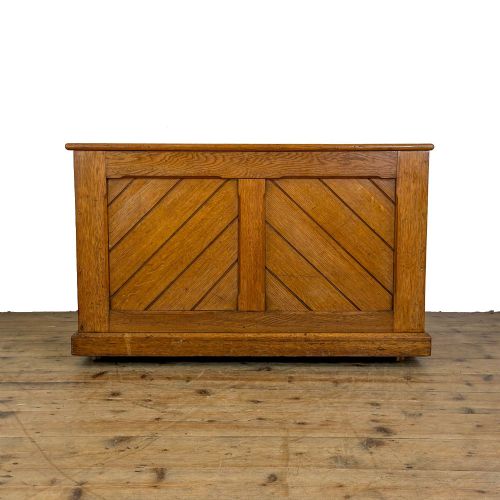
A country oak coffer chest serves as a traditional storage trunk or blanket box rooted in rural vernacular traditions. Pieces range from straightforward boarded blanket boxes to panelled constructions and mule chests featuring lower drawers. Examples span the sixteenth, seventeenth, and eighteenth centuries, reflecting regional English and Welsh craftsmanship.
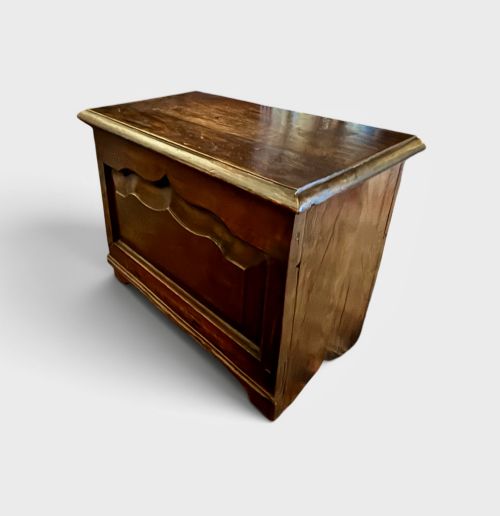
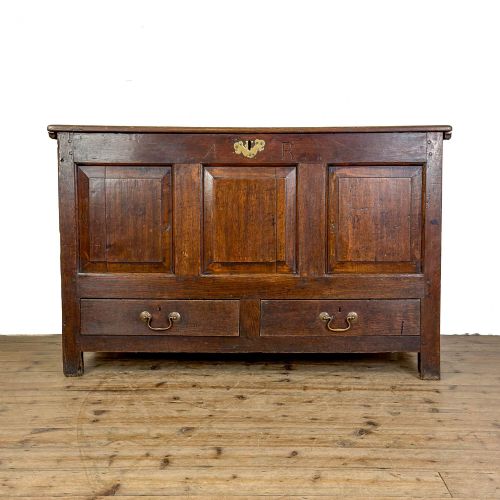
The version most commonly encountered on this page is the eighteenth-century panelled oak coffer or mule chest. These domestic pieces often display simple pegged joints, rectangular lids, and natural timber surfaces developed over centuries of household use. Smaller variants such as the coffer bach and miniature boxes also appear alongside standard storage chests.
Materials and construction methods
Makers utilised native British timbers, predominantly oak supplemented by elm and pine for secondary parts or regional variants. Joinery relied on mortise and tenon frames secured with wooden pegs, while earlier examples employed simple six-plank boarded construction. Wrought iron hinges, straps, and brasses provide structural reinforcement and functional hardware.
Surface decoration on these chests typically involves carved panels, linen fold details, or plain panelled construction relying on the natural figuring of the wood. Peg joining allowed timber to expand and contract naturally with environmental changes. Internal compartments sometimes included small till boxes for documents or valuables.
Many early lids still bear the secret notches where generations of family members hastily hid spare tavern tokens.
Assessing quality in regional chests
Quality in a country oak coffer chest depends upon the integrity of its original construction and the preservation of its timber surfaces. Pieces retaining their original peg joints, boarded lids, and floorboards demonstrate superior craftsmanship compared to those heavily restored or altered. Untouched timber displays depth of tone and authentic wear developed through domestic service.
Thomas Dennis
The Country Oak Coffer Chest Glossary
- Coffer
- A heavy wooden chest traditionally used for storing valuables, linen, or documents. Most examples feature a hinged lid and solid timber construction.
- Mule chest
- A storage chest featuring one or more drawers set beneath the main compartment. This form bridges the traditional coffer and the modern chest of drawers.
- Coffer bach
- A small Welsh box or coffer traditionally made as a presentation piece or dowry item. These miniature chests typically sit on short feet.
- Peg joined
- A method of framing where mortise and tenon joints are secured using wooden dowels rather than metal nails. This technique accommodates seasonal timber movement.
- Linen fold
- A carved wooden panel motif resembling folded cloth, frequently found on seventeenth-century panels. It provides subtle surface texture to flat boards.
Country Oak Coffer Chest: Frequently Asked Questions
What is a mule chest?
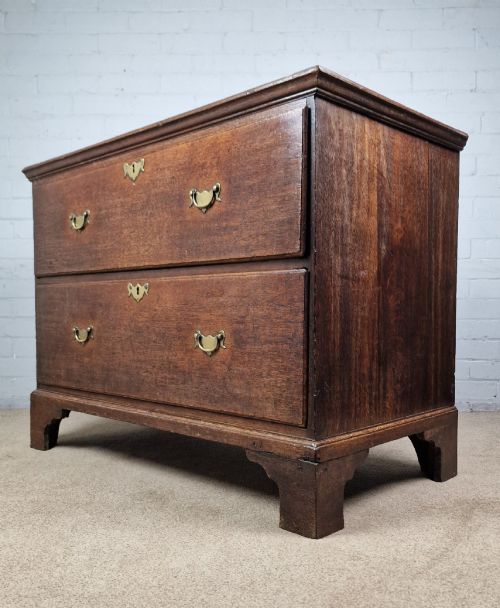
A mule chest combines a traditional lift-lid coffer with one or more drawers placed at the base. This layout allowed easier access to everyday items without requiring objects stored on top to be moved.
Craftsmen produced these hybrid pieces extensively throughout the eighteenth century in regional workshops across England and Wales.
How old is my oak coffer?
Dating relies upon examining construction methods, timber preparation, and stylistic clues. Six-plank boarded chests often point to the seventeenth century or earlier, while pegged frame and panel construction spanned the seventeenth and eighteenth centuries.
Tool marks, hinge types, and regional design traits help narrow the period of manufacture.
How do I care for antique oak?
Antique oak requires stable indoor humidity away from direct heat sources and strong sunlight. Feeding the timber occasionally with traditional beeswax helps maintain the finish and protects the surface.
Avoid modern liquid polishes containing silicones, which can penetrate open-grain oak and damage the patina.
What was a coffer used for?
Historically, coffers served as secure storage for household valuables, woollens, church plate, and important documents. Before fitted wardrobes existed, families relied on these chests to transport and protect their main possessions.
Smaller boxes functioned as bible boxes or miniature presentation chests for dowries.