
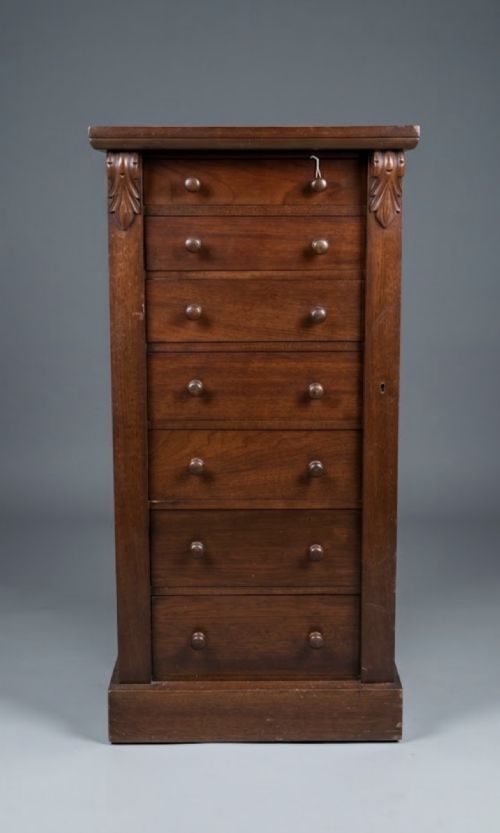
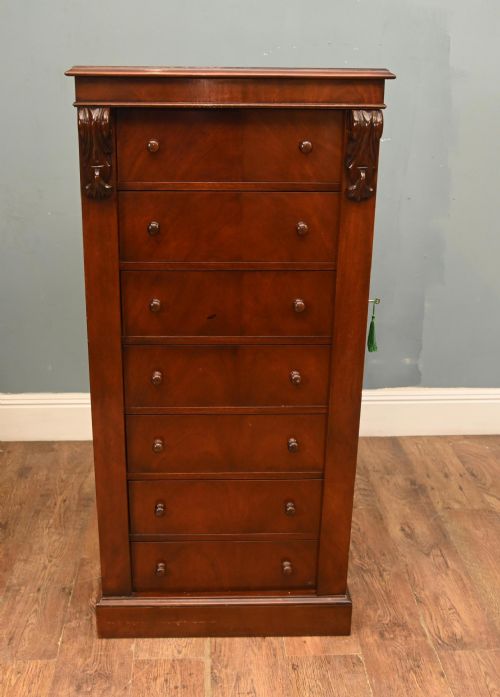


Seven Drawer Wellington Chest
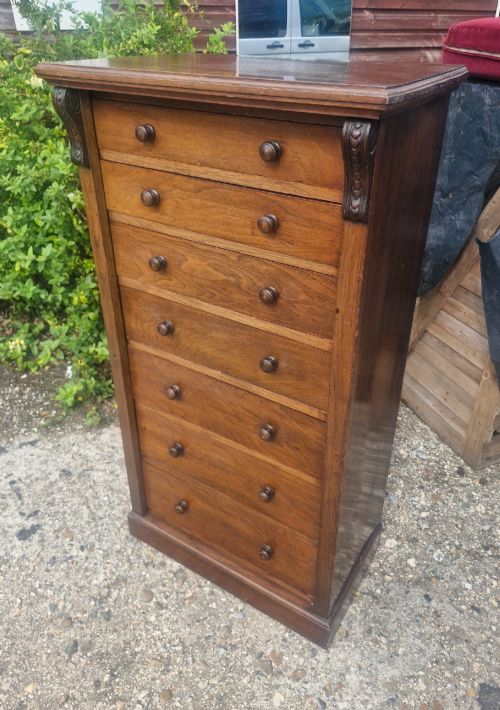
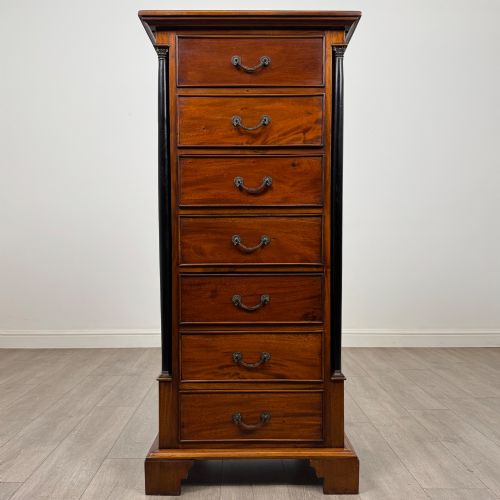
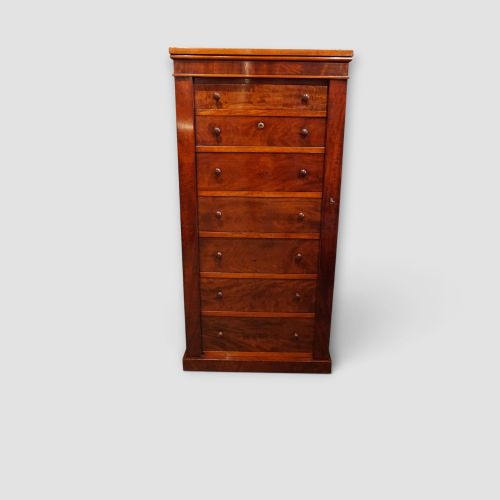
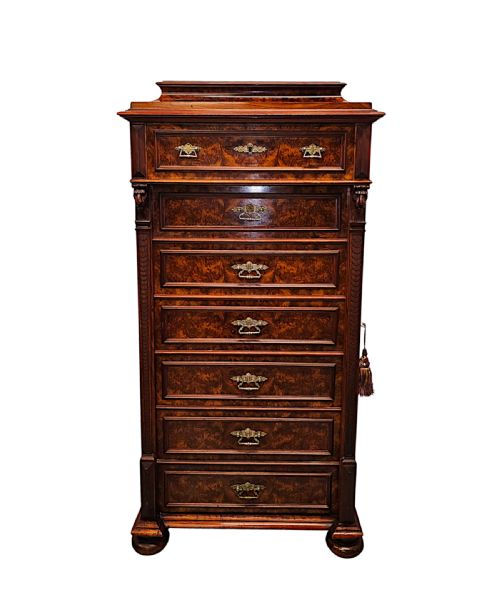
A seven drawer wellington chest is a tall, slender marvel of Victorian cabinet-making, offering deep storage within a remarkably compact footprint.
Seven Drawer Wellington Chest
When you search for a seven drawer wellington chest, you encounter a distinctive form defined by its narrow proportions and tall stack of graduated drawers. The vast majority of examples you meet on this page belong to the Victorian era, spanning the mid to late nineteenth century, though earlier Regency and later Edwardian pieces also appear.
Materials and construction methods
Cabinet-makers relied heavily on solid timber and choice veneers to build these tall chests. Mahogany is the most frequent choice, complemented by rich walnut, burr walnut, oak, and occasionally exotic woods like satinwood or rosewood.
Construction relies on precise joinery to ensure the vertical locking mechanism operates smoothly alongside the closely fitted drawers. Drawer linings are typically constructed from secondary woods, while the exterior surfaces showcase the distinct grain patterns of flame mahogany or figured walnut.
Legend connects the seven drawers to a week's worth of freshly starched cravats, keeping a gentleman entirely prepared for every single day.
Distinctions in craftsmanship
The standard of a seven drawer wellington chest is largely defined by the choice of timber figure and the crispness of its details. Pieces featuring highly figured burr walnut, flame mahogany veneers, or delicate marquetry inlay sit firmly at the upper end of the scale.
Another measure of quality lies in the execution of the locking mechanism and the stability of the tall, narrow frame. Refined examples integrate the side locking flap seamlessly with concealed hinges and working locks that secure the entire stack without binding.
Maple & Co.
The Seven Drawer Wellington Chest Glossary
- Wellington Chest
- A tall, narrow chest of drawers traditionally featuring seven tiers and a hinged locking stile on one side. The name often links the furniture style to the Duke of Wellington, though historical provenance remains debated among collectors.
- Locking Flap
- A hinged vertical wooden bar on the side of the chest that covers the drawer edges. When locked in place with a key, it prevents any of the drawers from being opened.
- Flame Mahogany
- A wood veneer cut from the fork of the mahogany tree to produce a dramatic, flame-like pattern. Cabinet-makers utilised this decorative grain on the drawer fronts for high-visual impact.
- Secretaire
- A piece of furniture incorporating a writing drawer with a fall-front desk. Some variations of this chest include a secretaire drawer fitted with small compartments and writing surfaces.
- Burr Walnut
- A specialised wood grain obtained from the wart-like growths on walnut trees, yielding highly swirled patterns. This material was prized by nineteenth-century makers for luxury veneering.
Seven Drawer Wellington Chest: Frequently Asked Questions
Why are there seven drawers?
The standard design traditionally incorporates seven shallow drawers stacked vertically to maximise storage while maintaining a narrow footprint.
This specific count gives the chest its signature tall and slender profile, distinguishing it from standard chest of drawers designs.
How does the locking flap work?
A hinged vertical wooden stile on the right or left edge of the chest swings over the ends of the drawer fronts.
Turning a key in the integrated lock secures this flap in place, effectively barring all seven drawers from opening simultaneously.
Where should I place it?
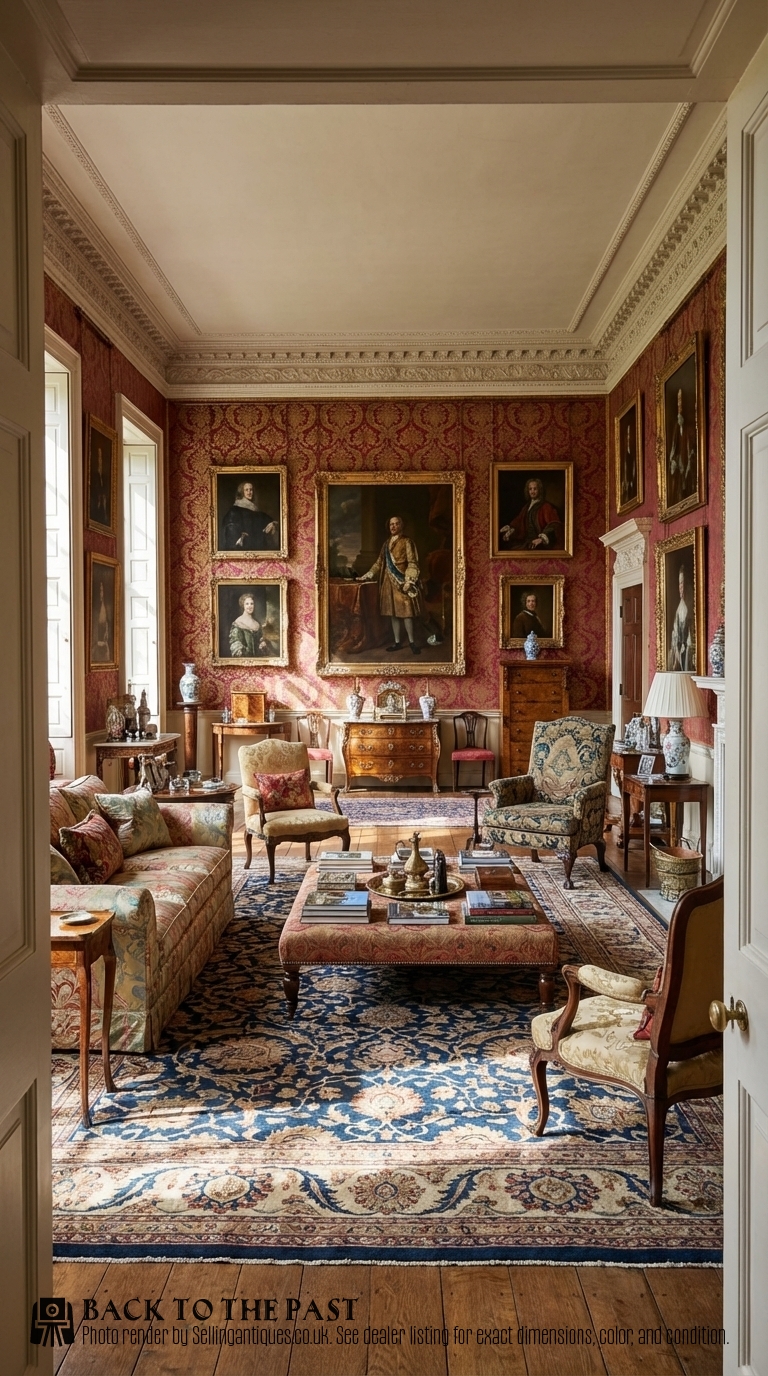
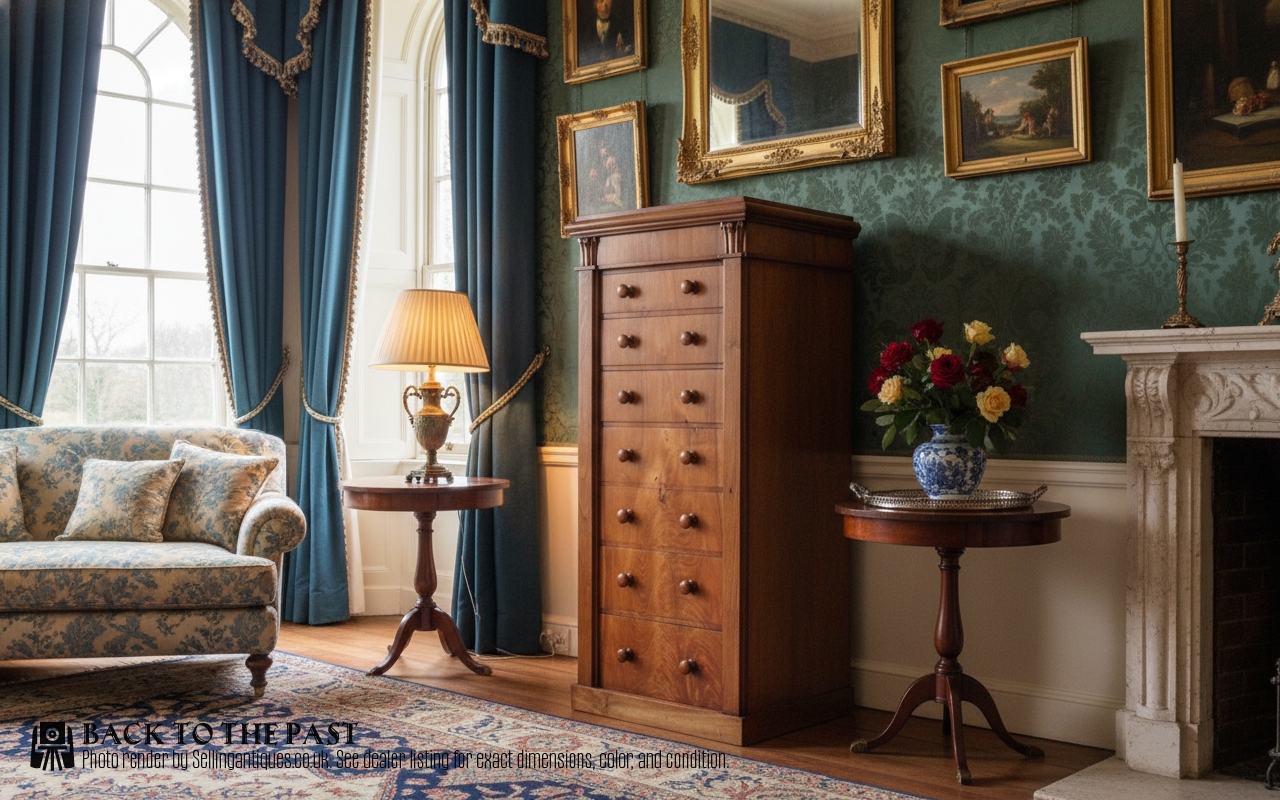
Because of their narrow footprint, these chests fit comfortably into alcoves, tight bedroom corners, or narrow hallways where space is at a premium.
Ensure you leave enough clearance beside the chest for the vertical locking flap to swing open fully when you need access.
How do I date a piece?
You can estimate the age by examining the secondary timbers, drawer construction techniques, and the primary wood veneers used across the exterior.
Victorian pieces usually feature mahogany or walnut, while Edwardian examples often incorporate fine inlay work and lighter satinwood details.