

Set Six Oak Chairs
A set six oak chairs brings immediate architectural weight to a room, offering sturdy utility paired with centuries of regional design variety.
Set Six Oak Chairs
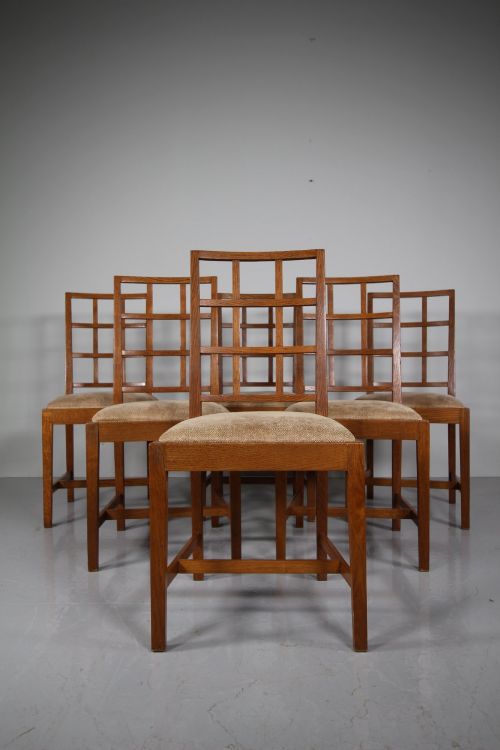
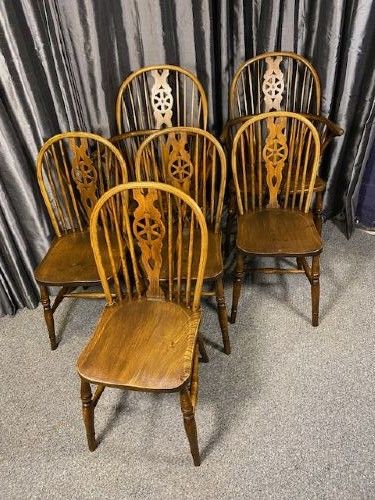
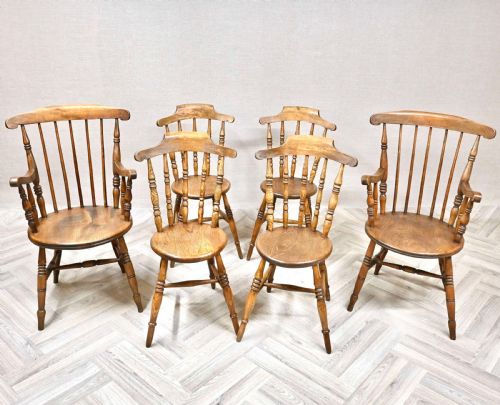
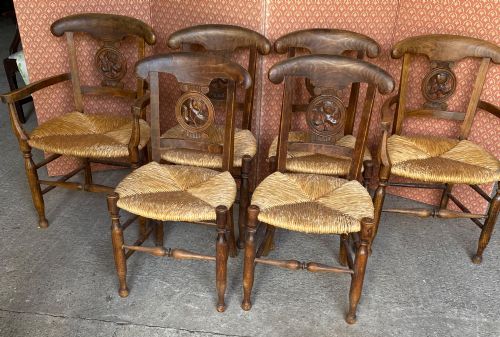
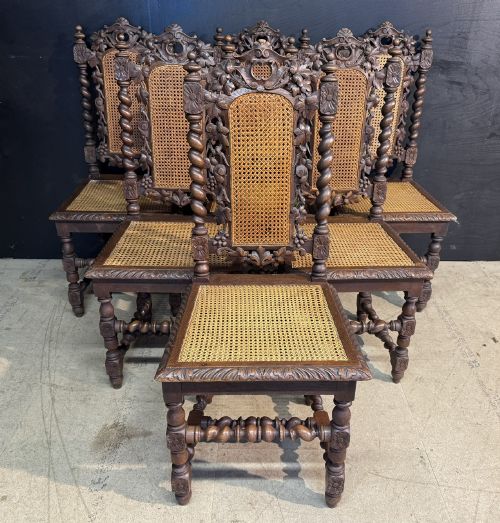
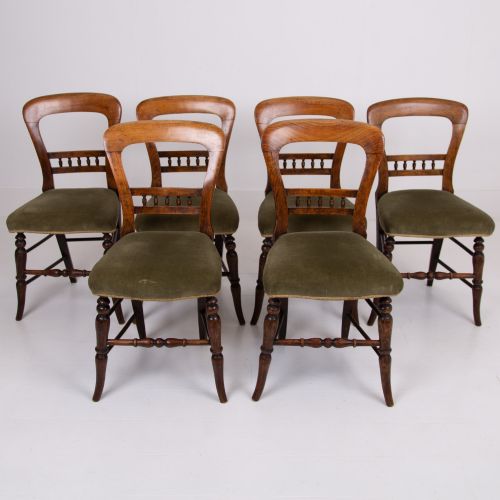
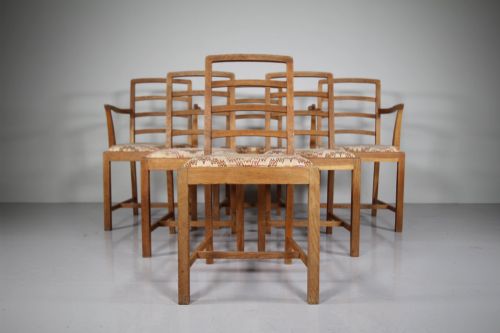
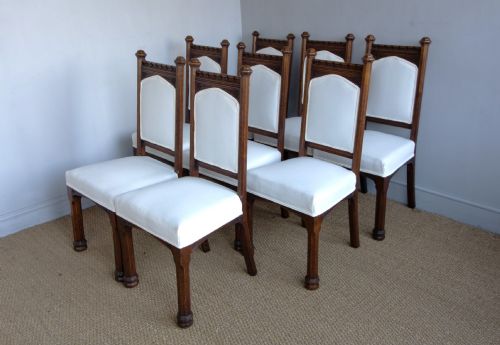
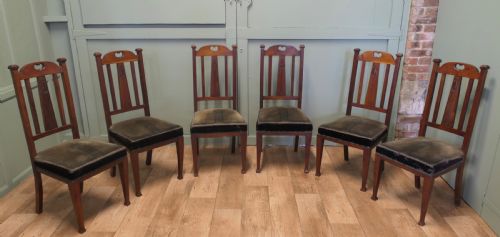
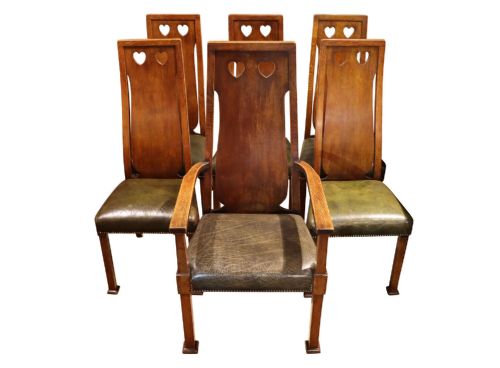
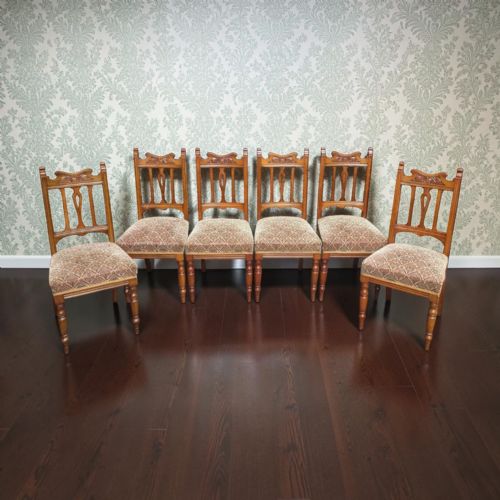
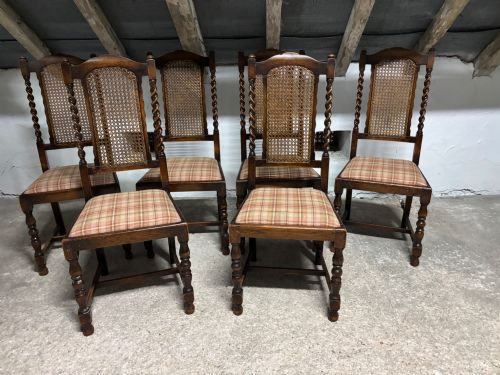
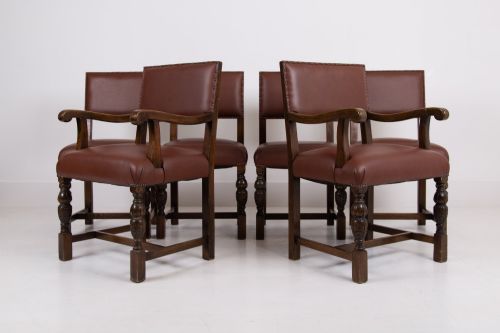
A set six oak chairs comprises seating unified by material and count, spanning robust farmhouse Windsors, ladder-backs, and revival dining suites. Buyers exploring this category encounter everything from 19th-century Welsh cottage seating to 1930s modernist designs.
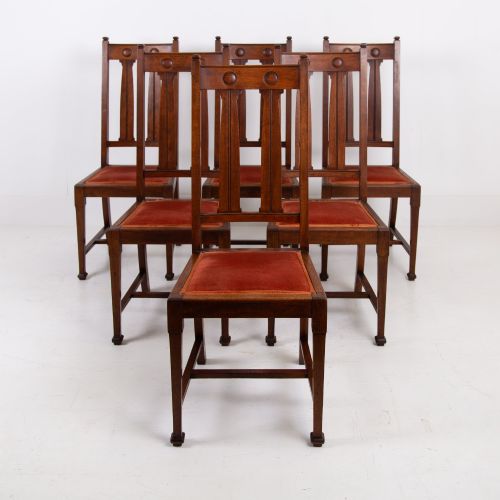
The most prevalent examples on this page are country kitchen and Windsor chairs alongside Arts and Crafts dining seats. These forms reflect both vernacular regional traditions and progressive early 20th-century craftsmanship.
Origins stretch across English, Welsh, French, and Scottish workshops, utilising local timber traditions. Surviving sets range from matched family groups to harlequin collections gathered over decades.
Materials and construction
The primary timber is oak, frequently paired with secondary woods like elm, beech, and ash for structural stretchers or seats. Artisans utilised traditional joinery, including turned spindles, pegged mortise and tenon joints, and steam-bent components.
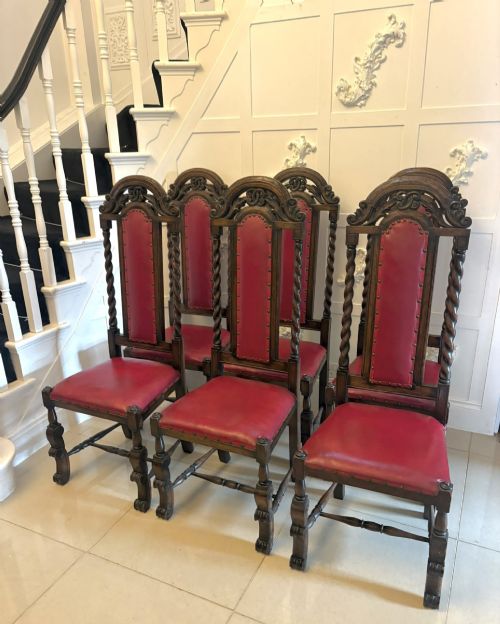
Seating surfaces vary from solid timber planks to woven rush, cane, leather, and upholstered fabric or velvet pads. Metal elements appear primarily as brass fixings or decorative studwork on leather panels.
Set Six Oak Chairs Retail Price Guide 2026
Typical asking prices for set six oak chairs among the pieces listed under this phrase on Sellingantiques today, from the lower quarter to the upper quarter. They describe what is for sale here now, not the wider market.
Listings feature oak alongside elm, beech, rush, and leather across Victorian, Edwardian, and 1930s periods.
Distinctions in standard
Quality rests upon the integrity of the original construction and the consistency of the timber matching across all six pieces. Sets sharing uniform grain patterns and untouched original joinery represent the upper tier of survival.
Maker attribution and documented labels elevate standing significantly, particularly with workshop-identified pieces from notable early 20th-century designers. The degree of carved detail and the survival of original surface finishes, such as limed or bleached treatments, also separate standard production from exceptional examples.
Heals of London·Mouseman·Gordon Russell·William Morris·Fritz Hansen·Charles Bevan·Lethaby
The Set Six Oak Chairs Glossary
- Ladder-back
- A chair back constructed with horizontal slats or rails between two upright posts. This traditional design frequently incorporates rush or woven seating.
- Jacobean Revival
- A style emulating 17th-century furniture characteristics, featuring turned supports, geometric carving, and high rectangular backs. It became particularly popular during the 19th and early 20th centuries.
- Harlequin set
- A collection of chairs sharing general period or style characteristics rather than originating from a single workshop batch. Such groups are assembled to match visually around a table.
- Bergere
- An upholstered chair featuring an enclosed cane or wicker back and sides. This French-influenced style often includes a drop-in seat cushion.
Set Six Oak Chairs: Frequently Asked Questions
What defines a true set of six?
A true set shares identical timber selection, turning details, and workshop origins, having been manufactured together for a single dining table. Matched or harlequin groups combine individual chairs from the same era that share compatible heights and silhouettes.
Identifying markers include uniform tool marks, matching timber grain patterns, and consistent wear patinas across all six frames. Mix-and-match sets offer historical charm, while unified sets provide formal symmetry.
How do I care for oak and leather seats?
Solid oak benefits from occasional treatment with appropriate natural waxes to nourish the timber grain and prevent drying out. Leather inserts require gentle cleaning and conditioning to maintain flexibility without damaging the original surface.
Keep these chairs away from direct heat sources and strong sunlight to prevent timber splitting and leather shrinkage. Regular dusting with a soft, dry cloth preserves the historic patina.
How can I tell a 19th century chair from a 1930s revival?
Nineteenth-century vernacular pieces often display hand-dug saddle seats and irregular hand-turned spindles showing individual tool signatures. 1930s revival and Arts and Crafts pieces typically exhibit cleaner mechanical turning, lighter oak finishes, and distinct modernist proportions.
Examining the underside reveals construction methods, such as modern machine-cut screws versus hand-carved pegs and traditional wedges. Style cues also point to the era, with Gothic and Jacobean revivals leaning heavy, while 1930s designs favour simplified linear forms.
Were these chairs meant only for dining rooms?
While many served around dining tables, numerous heavy oak and Windsor forms functioned as kitchen, hall, or library seating. Country farmhouse chairs were everyday utilities used throughout the domestic interior rather than purely formal furniture.
Sturdy construction allowed them to withstand heavy daily use across bedrooms, studies, and cottage parlours. Their robust nature ensures they adapt easily to contemporary multi-use living spaces.