

Set of Walnut Chairs
A set of walnut chairs brings rich, dark timber grain and historic character to a dining room or salon.
Set of Walnut Chairs
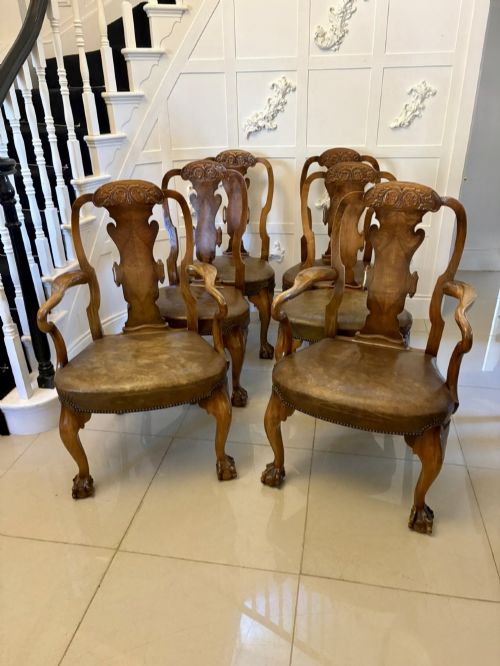
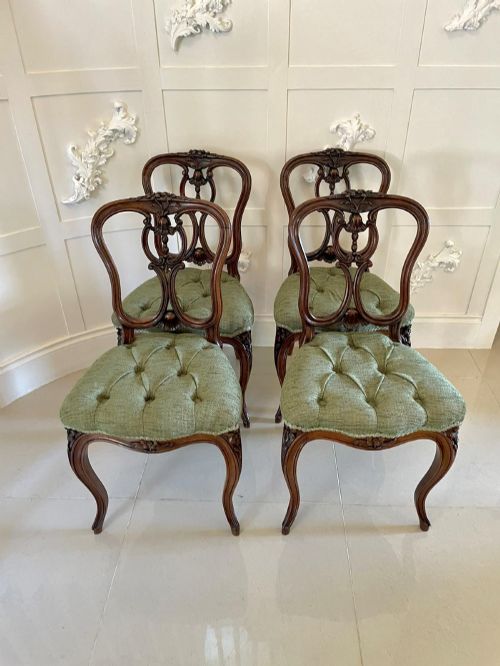
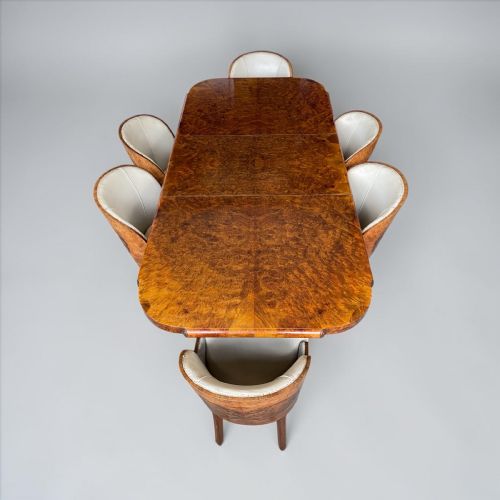
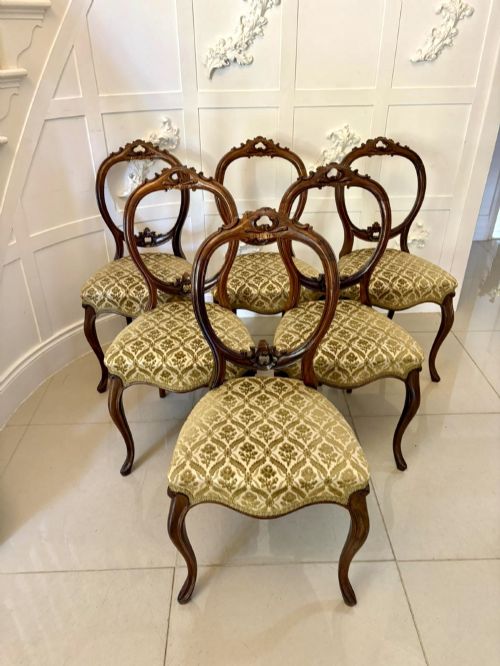
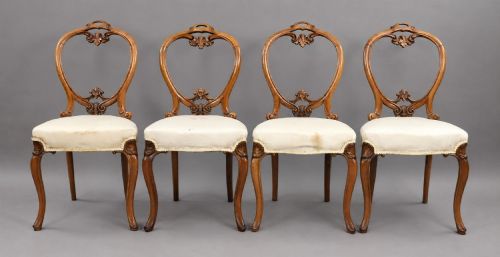
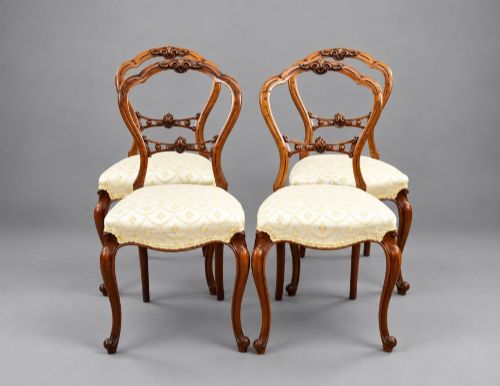
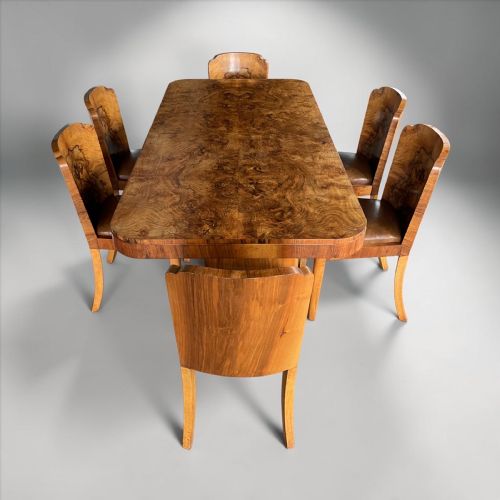
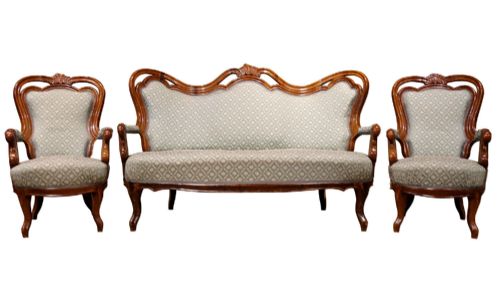
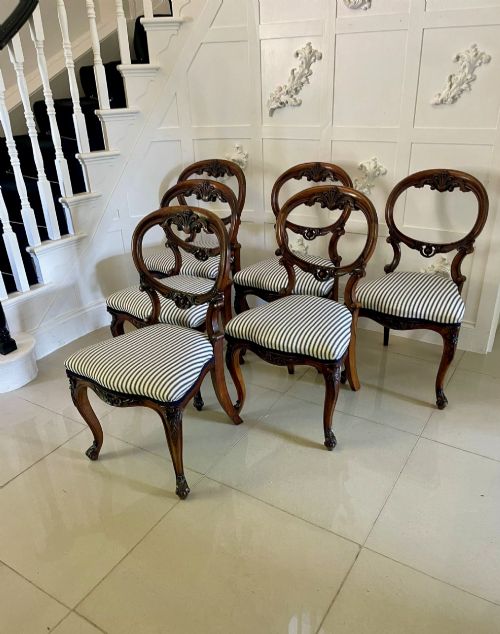
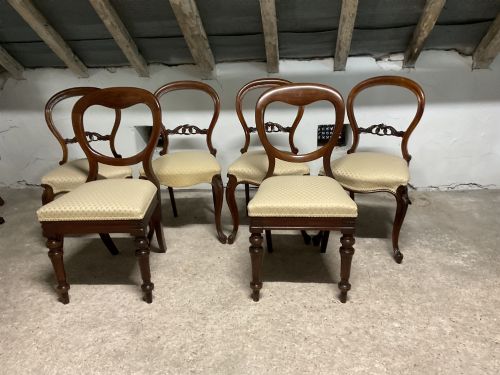
A set of walnut chairs spans formal dining suites, parlour groups, and salon arrangements originating from the nineteenth and early twentieth centuries. Buyers frequently encounter Victorian balloon back designs alongside Edwardian and Art Deco seating groups.
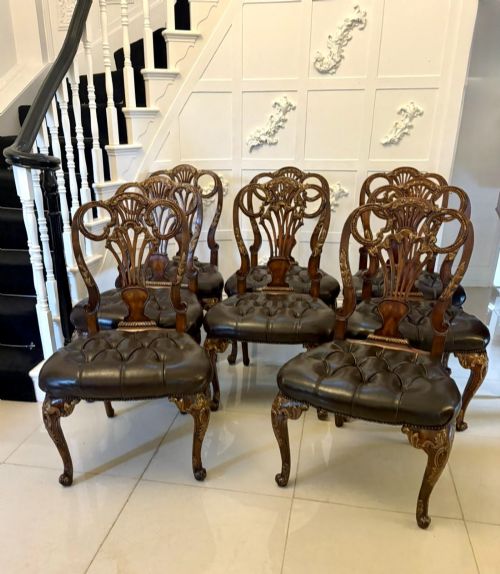
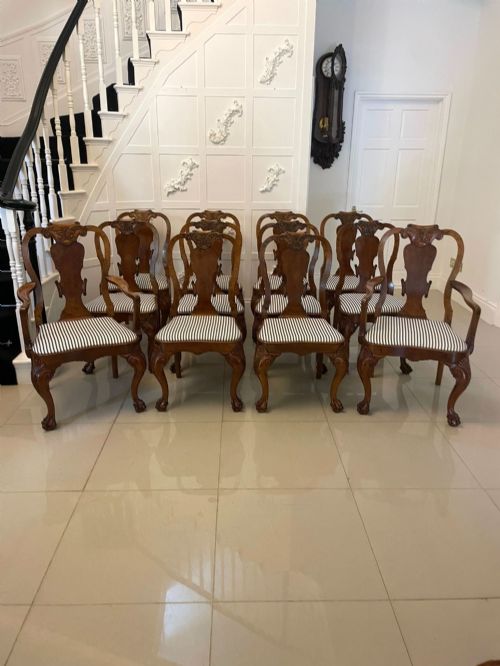
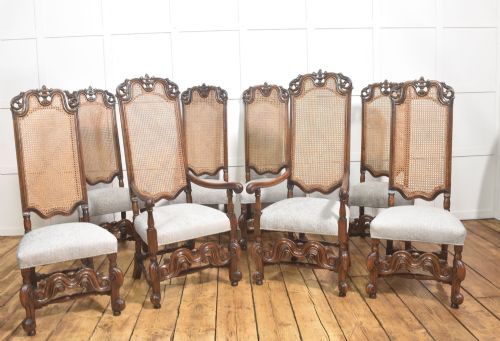
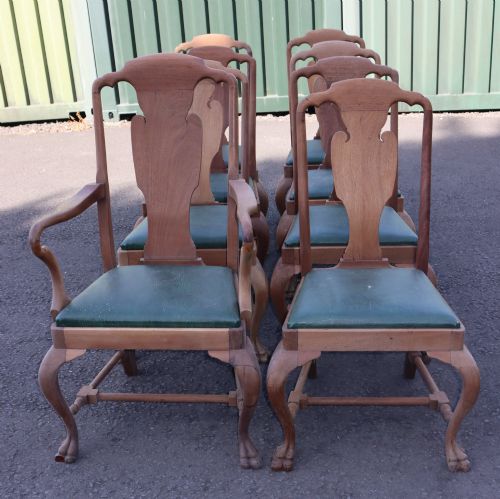
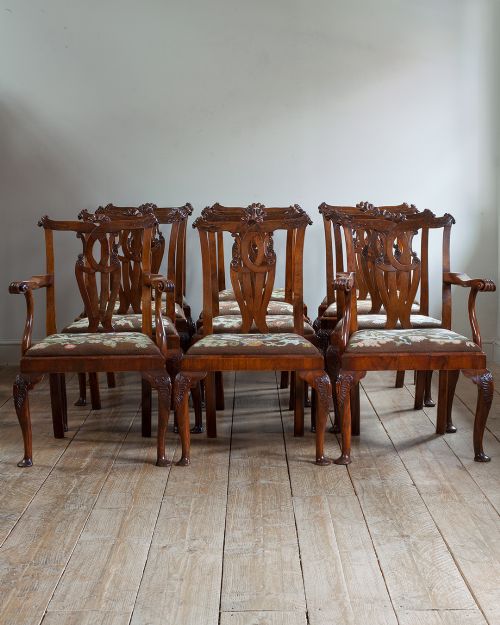
The evidence shows groupings ranging from intimate quartets to extensive sets of twelve dining chairs, sometimes accompanied by matching carvers or salon sofas. Styles stretch from Rococo Revival curves to Queen Anne and Carolean revivals featuring high backs and cabriole legs.
Materials and construction
Cabinet makers utilised solid walnut and decorative burr walnut veneers to construct frames, often selecting figured timber for the backsplats and seat rails. Carved elements like scrolls, foliage, and parcel-gilding reveal the hand-chiseled detail applied to formal frames.
Upholstery materials recorded in the archive include velvet, embossed leather, and various woven textiles secured over traditional webbing and stuffing. Brass details and cane panels appear on specific high-back and continental variations.
Listings feature walnut dining chairs spanning the Victorian, Edwardian, and Art Deco periods, alongside 18th-century revival forms.
Determining quality in walnut seating
The depth and crispness of carved ornamentation distinguish standard production from exhibition-grade pieces. Hand-carved scrolling and deeply moulded frames demand greater skill than simplified, machine-finished equivalents.
Timber selection governs visual appeal, with richly figured burr veneers commanding higher regard than plain dark boards. Frame stability and the preservation of original joinery dictate the structural integrity of older seating.
Maurice Adams·Harry and Lou Epstein·Hille·Daniel Marot
The Set of Walnut Chairs Glossary
- Balloon back
- A rounded, oval-shaped chair back popular during the Victorian period. It provides ergonomic support while presenting a graceful silhouette.
- Cabriole leg
- A furniture leg that curves outward and then tapers inward, typically ending in a pad or claw foot. This form derives from ancient Chinese designs and gained prominence in Queen Anne revival pieces.
- Burr walnut
- A specialised timber cut from a tree growth or burl, yielding intricate, swirling grain patterns. It was frequently applied as a veneer on high-status Victorian and Edwardian furniture.
- Carver
- An armchair designed with armrests, traditionally placed at the heads of a dining table. They match the aesthetic of the smaller side chairs in a dining set.
- Bergere
- An enclosed upholstered armchair with wooden framing, often featuring cane sides. Originating in France, these pieces appear in late nineteenth-century salon suites.
Set of Walnut Chairs: Frequently Asked Questions
How do I clean antique walnut wood?
Dust the timber regularly with a soft, dry cloth to prevent particulate buildup on the finish. Apply appropriate beeswax periodically to nourish the grain without damaging historic patinas.
Avoid commercial silicone sprays and excessive moisture, which can degrade old polish and loosen veneer joints over time.
Are these chairs suitable for daily use?
Many sturdy Victorian and Edwardian dining sets remain robust enough for regular seating around a modern table. Checking frame joints and ensuring stable internal webbing will safeguard against unexpected structural strain.
Lighter salon chairs or delicate antique cane models require more careful treatment and are better suited to lighter daily activities.
How can I tell Victorian chairs apart from Edwardian ones?
Victorian examples frequently display ornate carving, dark polished finishes, and balloon back profiles influenced by earlier revival movements. Edwardian designs tend to favour lighter walnut tones, understated stringing, and eighteenth-century revivals like Queen Anne styles.
Examining the construction methods underneath the seat rail often reveals the manufacturing shifts between these two eras.
What is the difference between a side chair and a carver?
Side chairs lack armrests and have narrow profiles designed to tuck neatly around the sides of a dining table. Carver chairs feature integrated armrests to provide added comfort for diners seated at the table ends.
Traditional dining sets typically combine a majority of side chairs with a matched pair of carvers.