





Set of Lamp Tables
These pieces for a set of lamp tables bring together stacking nests of tables and matched lighting forms designed to sit beside seating.
Set of Lamp Tables
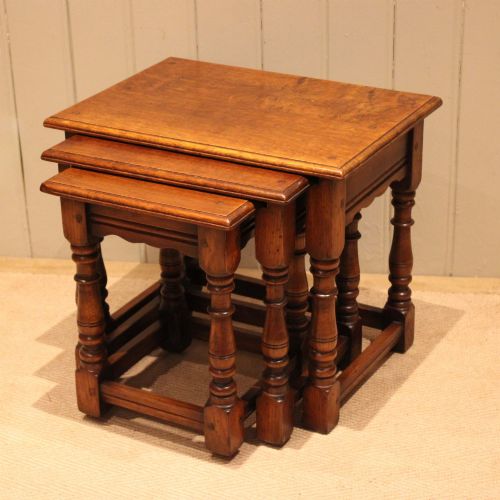
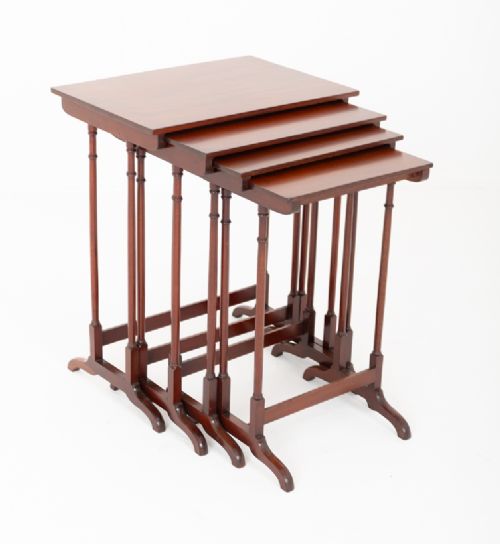
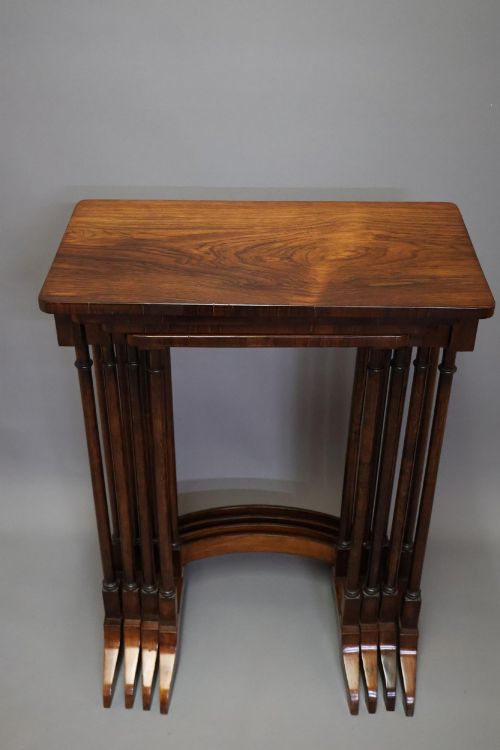
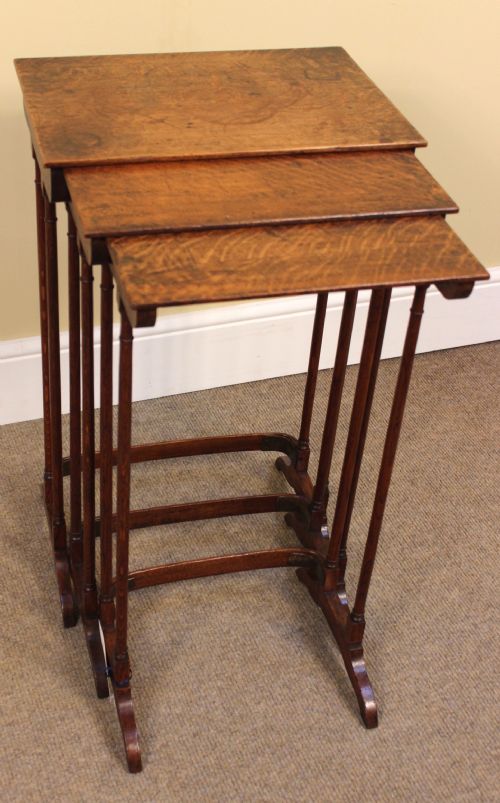
A set of lamp tables typically appears in the evidence as a nest of tables, often formed of three or four stacking pieces in varying timbers. These designs serve as flexible surfaces beside seating areas in living rooms and reception spaces.
The material record spans the nineteenth and twentieth centuries, featuring periods such as the Edwardian era, the Regency period, and the 1920s and 1930s. Mahogany and oak dominate the standard forms, while rosewood, burr walnut, and hardwood appear in more decorative examples.
Alongside timber nesting tables, related lighting sets also emerge under this search phrase, including brass candlestick lamps, bronze lights, and gimbal lights. Buyers seeking a cohesive arrangement will most frequently meet Edwardian and early twentieth-century mahogany nests.
Materials and Construction
Cabinetmakers utilised solid timbers and selected veneers such as mahogany, oak, rosewood, and burr walnut, applying grain patterns to table tops. Inlaid satinwood and lacquer decoration further enrich specific Edwardian and Chinoiserie examples.
Metal components in the evidence rely on solid brass, bronze, and glass, particularly within the lighting sets and gimbal fixtures. These materials demand precise assembly to ensure stacking stability in nests and structural integrity in metal light fittings.
The listings combine wooden nesting tables from the Edwardian and Regency periods with solid brass and bronze lighting sets.
Design and Execution
Quality rests in the precision of the timber selection and the refinement of the stacking mechanism, where superior sets fit together flush without binding. Finer examples display detailed satinwood inlay, hand-painted Chinoiserie motifs, or rich burr walnut grains rather than plain commercial surfaces.
The integrity of the construction dictates the longevity of the pieces, separating standard utility furniture from exceptional cabinet work. Well-executed joints and sturdy brass fittings demonstrate the maker's hand in both the tables and the matched lighting sets.
William McGeoch & Co·Gillows
The Set of Lamp Tables Glossary
- Quartetto
- A matched set of four stacking tables designed to fit neatly beneath one another. This term appears frequently in Edwardian and Regency records.
- Nest of tables
- A group of graduated occasional tables that stack into the footprint of the largest single piece. They provide surface space without occupying a permanent floor area.
- Chinoiserie
- European decorative style employing Chinese artistic motifs, often rendered in lacquer and gilt decoration. This technique surfaces on decorative nineteenth and early twentieth-century sets.
- Gimbal
- A pivoted ring mounting that allows a lamp or light to remain level regardless of the motion of its support. These fittings appear on brass ship or wall lights from the early twentieth century.
- Hongmu
- A category of dense, dark Asian hardwoods used in traditional Chinese furniture construction. Items in this material occasionally feature inset marble panels.
Set of Lamp Tables: Frequently Asked Questions
What is a quartetto nest of tables?
A quartetto nest consists of four graduated tables designed to slide neatly beneath one another to save space when not in use.
Cabinetmakers of the nineteenth and early twentieth centuries produced these stacking sets in mahogany and satinwood for drawing rooms and parlours.
How were lamp tables used historically?
These small surfaces provided convenient places to rest portable lighting, drinks, or books beside chairs and sofas in reception rooms.
Nesting designs allowed extra tables to be drawn out only when guests visited.
Are all these items tables?
The search results encompass both stacking furniture nests and matched sets of contemporary lighting such as brass candlesticks and gimbal lamps.
Buyers searching this term often combine surface furniture with appropriate period illumination.
How do I distinguish Edwardian from Regency examples?
Edwardian pieces date from around 1900 to 1910 and frequently display lighter mahogany frames with delicate satinwood inlay or revival styling.
Genuine Regency items date to the early nineteenth century, featuring heavier rosewood grains and distinct period cabinet-making techniques.