
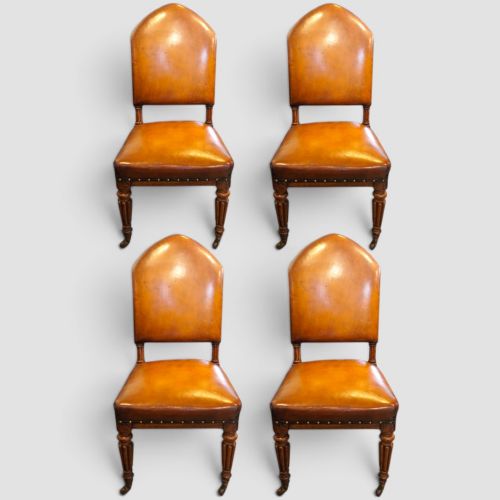
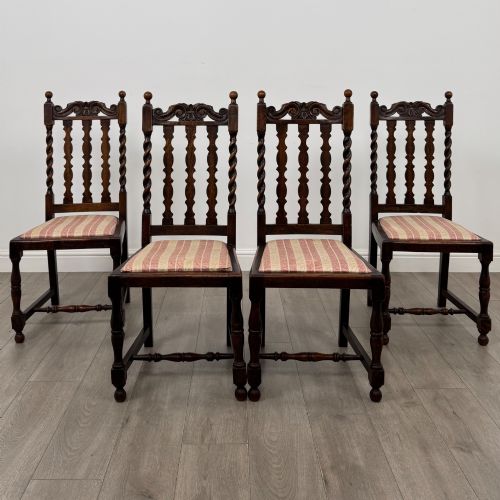
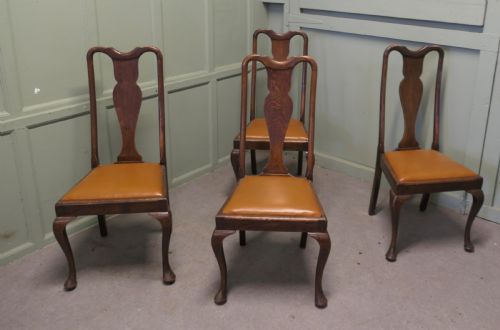
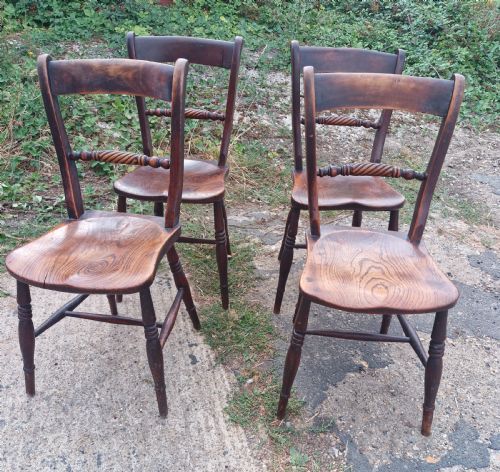
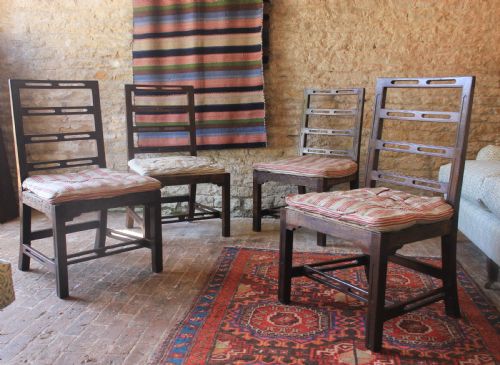
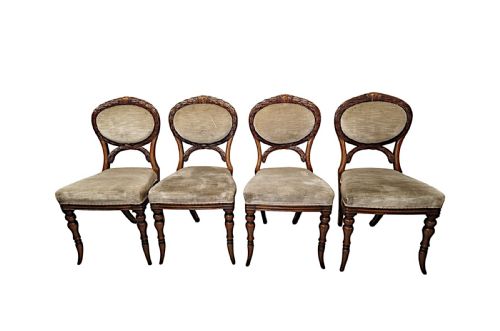
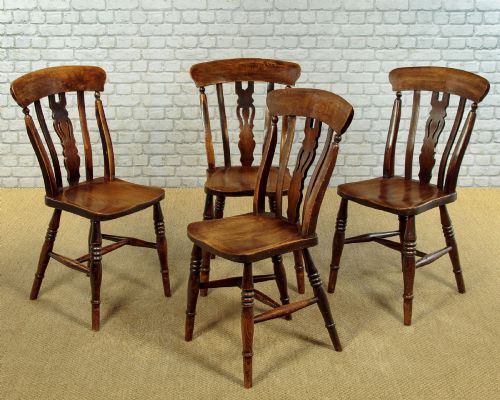
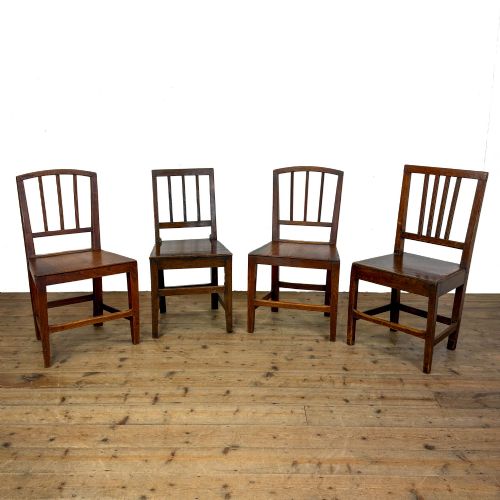
Set of Four Oak Chairs
A set of four oak chairs brings sturdy domestic utility and centuries of regional craftsmanship straight to the family table.
Set of Four Oak Chairs
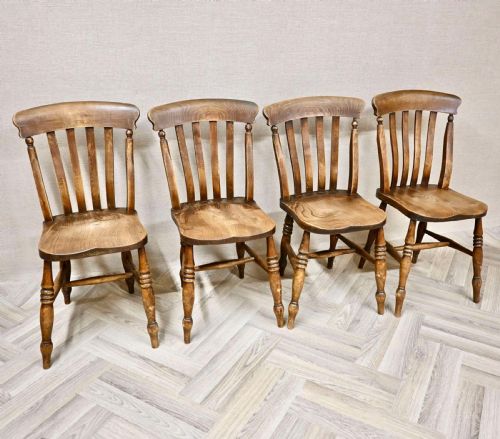
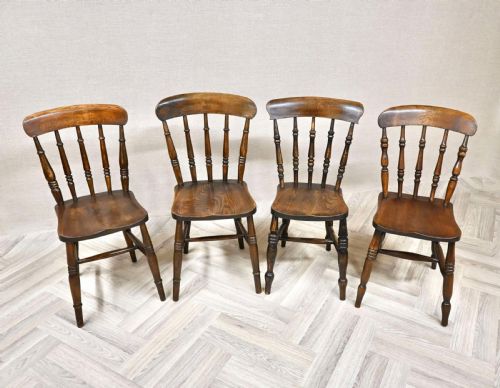
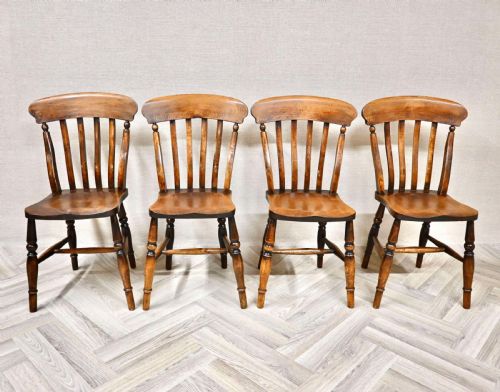
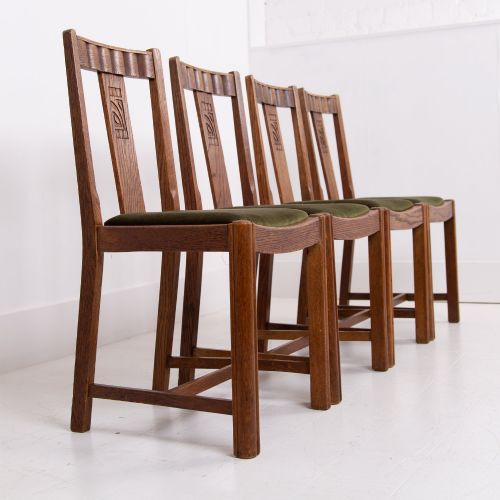
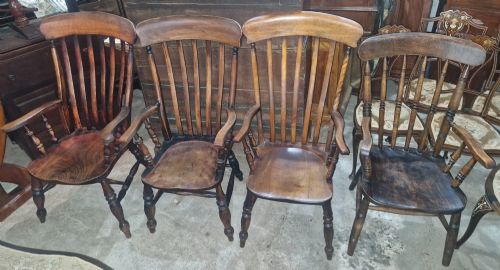
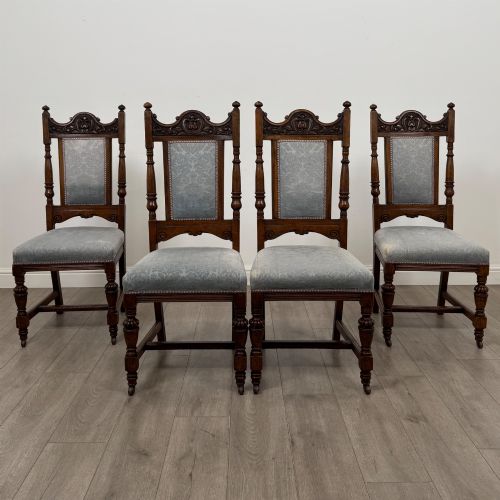
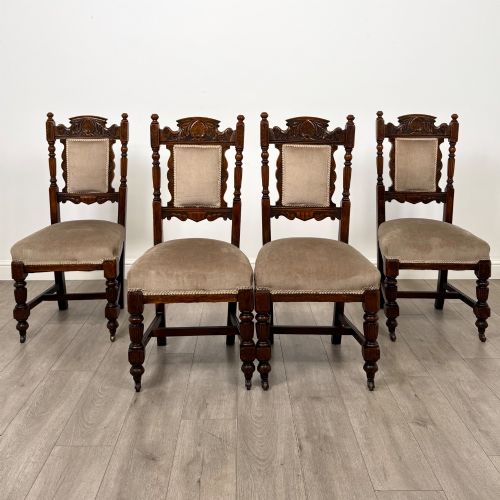
A set of four oak chairs covers a broad sweep of domestic seating, from rustic 19th century farmhouse Windsor designs to formal Victorian dining suites and 1930s modernist oak pieces. Buyers seeking a matching quartet most frequently encounter country kitchen chairs with solid wood seats alongside highback and barley twist dining variants spanning the 18th, 19th and early 20th centuries.
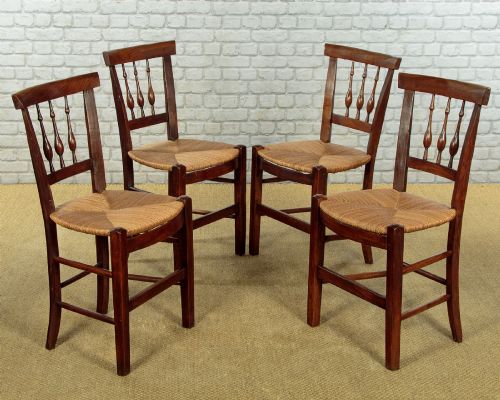
Regional variations feature strongly in the available selections, with Welsh, Irish and Scottish country workshops contributing distinct regional vernaculars to standard English forms. Dining chairs and captain's armchairs dominate the inventory, accompanied by occasional desk chairs and rush seat configurations.
Gradations of Quality
The distinction between standard utility seating and superior examples rests on the depth of hand-carving, the integrity of the timber selection, and the presence of maker's stamps or labels from known workshops. Matched sets displaying uniform grain patterns and original surface patination command greater attention than assembled harlequin groupings gathered over time.
Structural robustness, the retention of original turning details without excessive timber replacement, and sophisticated stylistic execution - such as highback crestings or integrated leather work - set the finer parlour and dining suites apart from everyday kitchen furniture.
The listings show a strong presence of 19th century oak farmhouse Windsor chairs alongside formal Edwardian and Victorian dining sets.
Strahan·Shapland and Petter·Heals
The Set of Four Oak Chairs Glossary
- Harlequin set
- A collection of chairs that match in general style and material but were gathered from different sources or made at slightly separate times. These sets often share similar heights and proportions despite minor variations in turning or carving.
- Windsor chair
- A timber chair constructed with a solid wooden seat into which the legs and back spindles are separately bored and wedged. Country variants frequently include lathbacks, bowbacks, and saddle seats shaped for comfort.
- Barley twist
- A type of furniture turning resembling a twisted rope, cut into wooden legs, uprights, or stretchers. This decorative technique appears frequently on 17th century revival and Edwardian seating.
- Smoker's bow
- A low-backed wooden armchair with a continuous curved armrail supported by turned spindles above a saddle seat. These pieces often served as desk chairs or smoking room seating.
- Backstool
- An early form of upholstered or wooden chair without arms, serving as a precursor to the standard dining chair. Examples often date to the 17th century.
Set of Four Oak Chairs: Frequently Asked Questions
What is a harlequin set of chairs?
A harlequin set consists of four individual chairs that share a common period, timber, and general vernacular design without having been manufactured together as an original matched suite. They offer a cohesive appearance around a dining table while retaining subtle individual characteristics.
Collectors often assemble these groupings over time, valuing the distinct grain patterns and slight variations in vernacular turning found across country workshops.
How do I care for antique oak chairs?
Antique oak benefits from stable indoor humidity levels and protection from direct heat sources that can dry out the timber and loosen traditional pegged joints. Regular dusting with a dry cloth and occasional application of appropriate natural wax preserves the surface patination.
Avoid commercial liquid polishes containing silicones, as these can build up on older wooden surfaces and alter the natural finish over time.
Are Windsor chairs comfortable for daily use?
Windsor chairs feature solid saddle-shaped wooden seats and supportive steam-bent back rails designed for extended sitting during meals and domestic tasks. Their ergonomic contours provide natural support without requiring thick upholstery.
Adding loose seat cushions can increase comfort for modern dining while preserving the exposed wood of the original seat.
How do I distinguish 17th century style from original pieces?
Seventeenth century style revival pieces, particularly those from the late Victorian and Edwardian periods, utilise machine-assisted turning and standardised timber preparation methods alongside historical joinery styles. Original 17th century examples display hand-cut joinery marks, iron nail construction details, and centuries of handling wear.
Examining the underside of the seat and the wear patterns on the foot stretchers helps clarify the true age of the timber and construction.