




Set of Four Nesting Tables
A set of four nesting tables offers practical surface space that tucks neatly away when not in use.
Set of Four Nesting Tables
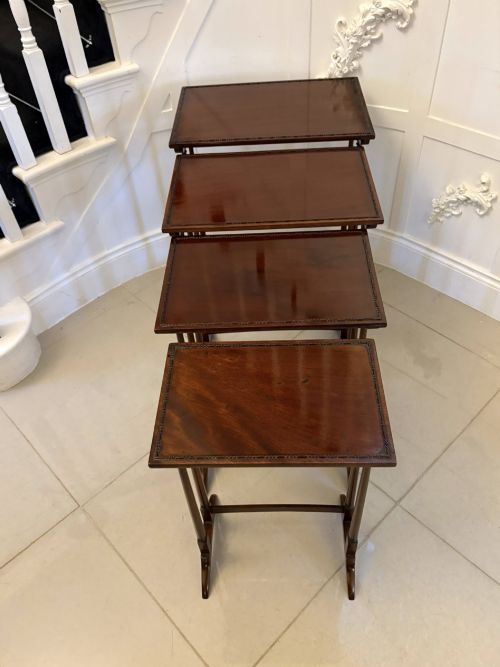
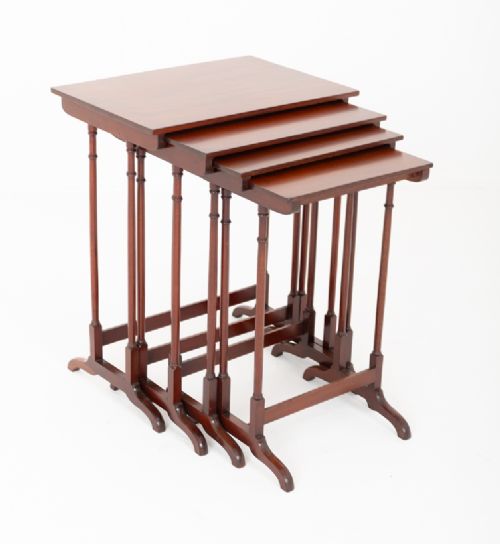
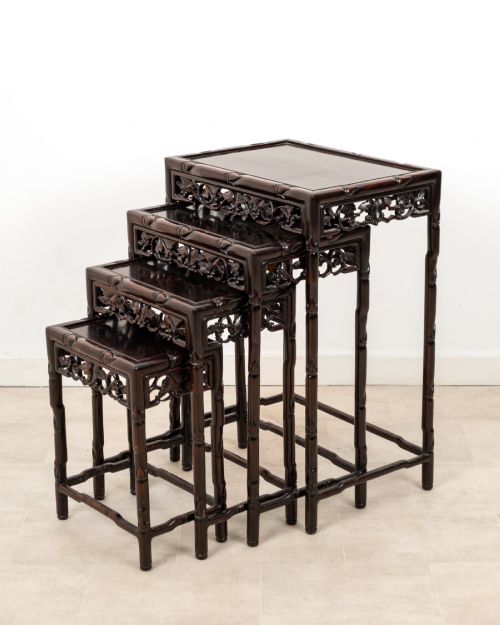
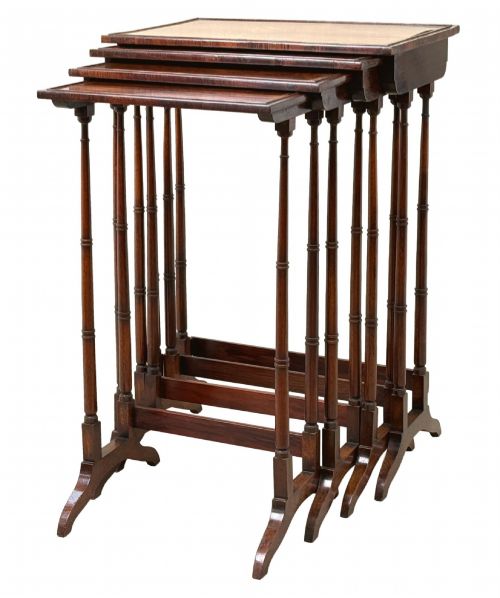
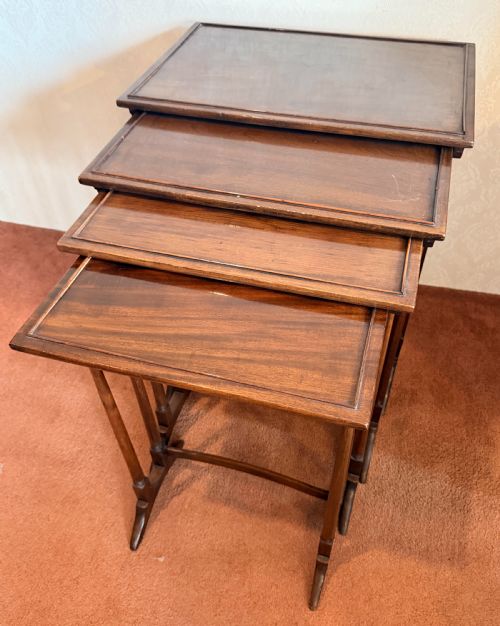
A set of four nesting tables comprises four graduated occasional tables designed to slide beneath one another into a single compact footprint. These clever space-saving units appear frequently in Edwardian and nineteenth-century forms, alongside later interpretations from the Art Deco period.
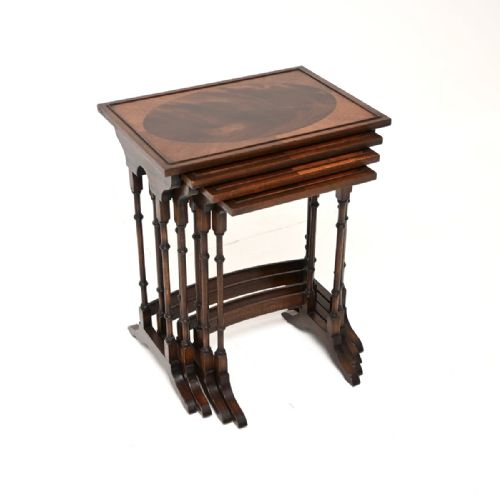
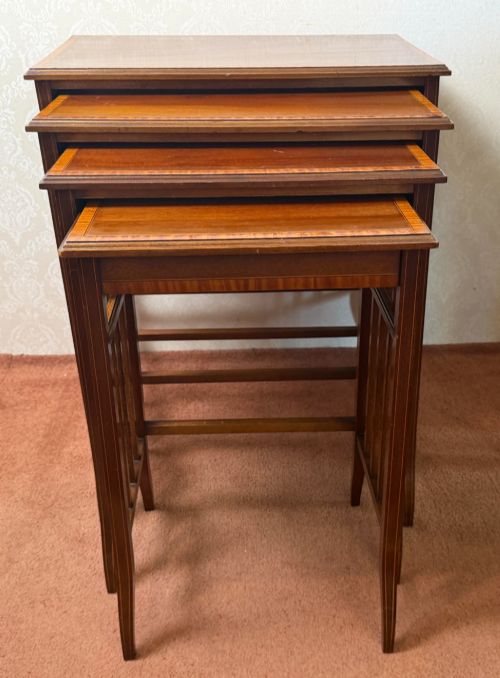
The most common version met on this page is the Edwardian mahogany nest of tables, often enhanced with satinwood crossbanding or inlay. Alongside these English iterations, oriental hardwood and Chinese carved examples appear regularly across the listings.
Forms range from traditional rectangular occasional tables to round oak coffee tables and French walnut parquetry designs. Each piece within the set scales down incrementally to fit snugly inside the frame of the next larger table.
How they were made
Cabinetmakers utilised a variety of dense timbers including mahogany, walnut, rosewood, and hardwood, often applying decorative veneer and boxwood stringing to the primary surfaces. Crossbanding in contrasting satinwood frames the top panels of many nineteenth-century and Edwardian pieces.
Construction techniques combine traditional joinery with intricate carving on oriental hardwood models and delicate inlay work on European tables. Lacquer and parquetry further distinguish specific regional styles such as Chinoiserie and French Art Deco.
Some tables slide together so snugly they whisper secrets as they close.
What varies in quality
The standard of a set of four nesting tables depends heavily on the crispness of the timber selection and the precision of the graduated sizing. Superior examples maintain structural stability and smooth sliding action across all four graduated tiers without excessive looseness in the joints.
Refinement in secondary details such as square tapered legs, floral inlay, or hand-carving elevates certain specimens above simpler utilitarian versions. Timber figuring in the mahogany or walnut surfaces also plays a significant role in distinguishing finer workshop output.
The Set of Four Nesting Tables Glossary
- Quartetto
- A traditional term for a set of four nesting tables, originating from musical terminology for a group of four. These matching tables scale down progressively to slide together.
- Crossbanding
- A decorative border of veneer laid around the perimeter of a table top with the grain running perpendicular to the centre panel. This technique highlights the geometric form of the surface.
- Chinoiserie
- European artistic style reflecting Chinese motifs and decorative techniques, frequently featuring hand-painted lacquered surfaces. These designs appear on specific early twentieth-century sets.
- Parquetry
- Geometric mosaic woodwork arranged in decorative patterns such as chequers or diagonals. French walnut tables often employ this technique on the primary surface.
- Satinwood
- A durable, lustrous yellow-brown timber utilised for contrasting inlay and banding on mahogany furniture. Cabinetmakers favour it for crisp decorative lines.
Set of Four Nesting Tables: Frequently Asked Questions
What is a quartetto nest of tables?
A quartetto nest of tables is simply the historical name for a set of four graduated occasional tables designed to fit inside one another.
These pieces gained immense popularity during the Edwardian era and the nineteenth century for their practical space-saving ability.
How were these tables used originally?
Originally deployed in sitting rooms and parlours, these tables provided convenient surfaces for tea, writing, or holding lamps when entertaining guests.
When not in use, the smaller tables slid completely beneath the largest one to save floor space.
How do I date an Edwardian nest?
Edwardian nests typically feature lightweight mahogany frames, often decorated with satinwood inlay, square tapered legs, and subtle Edwardian styling cues.
Comparing the timber quality and secondary woods helps distinguish these early twentieth-century pieces from later reproductions.
Are Chinese hardwood nests antique?
Many Chinese hardwood nests found on the market date from around nineteen hundred or the late nineteenth century, featuring characteristic carved details.
These oriental pieces often utilise dense native hardwoods rather than European mahogany or walnut.
Can these tables be used daily?
These tables adapt easily to modern living as side tables, lamp stands, or coffee table alternatives that expand when extra surface area is required.
Their modular design makes them exceptionally versatile in compact contemporary spaces.