


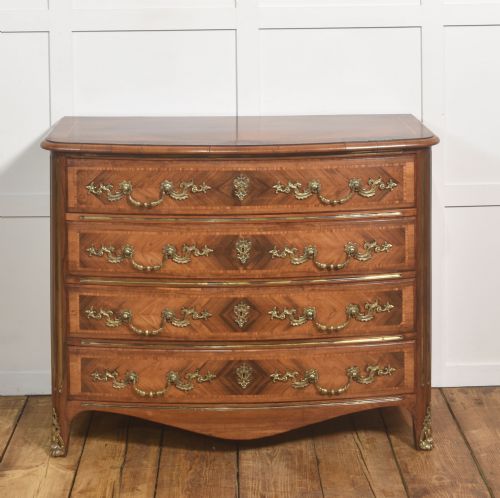
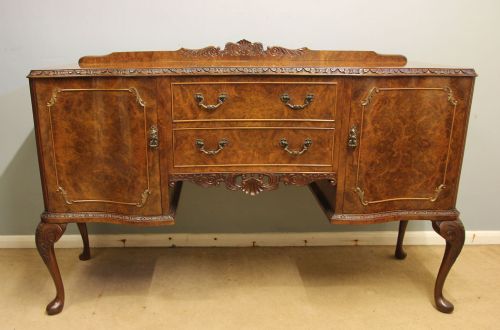
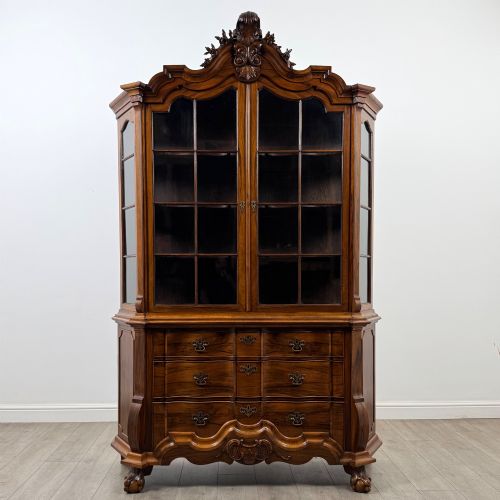
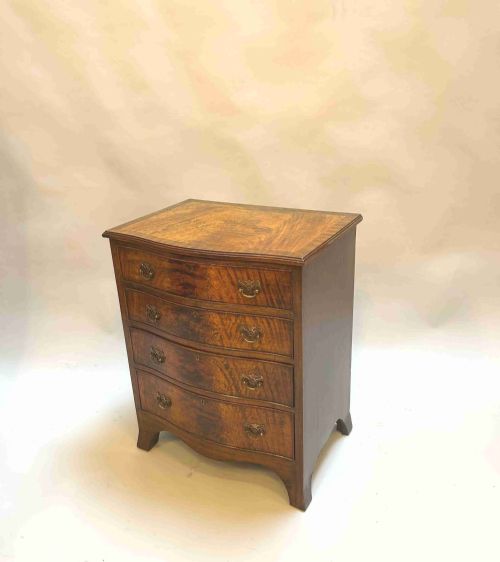
Serpentine Walnut Cabinet
A serpentine walnut cabinet brings sweeping, undulating lines and rich timber grain to an interior.
Serpentine Walnut Cabinet
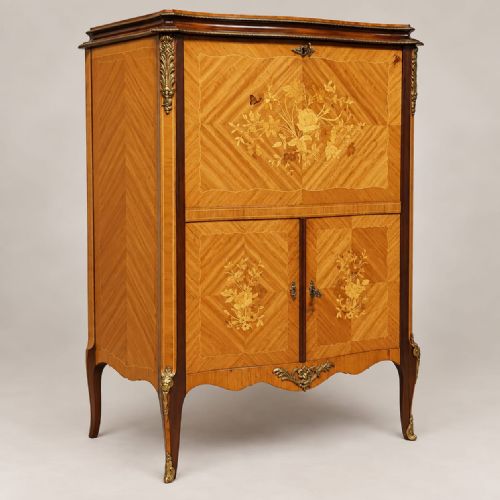
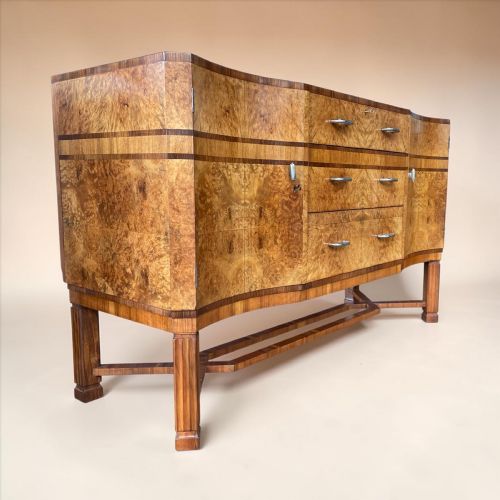
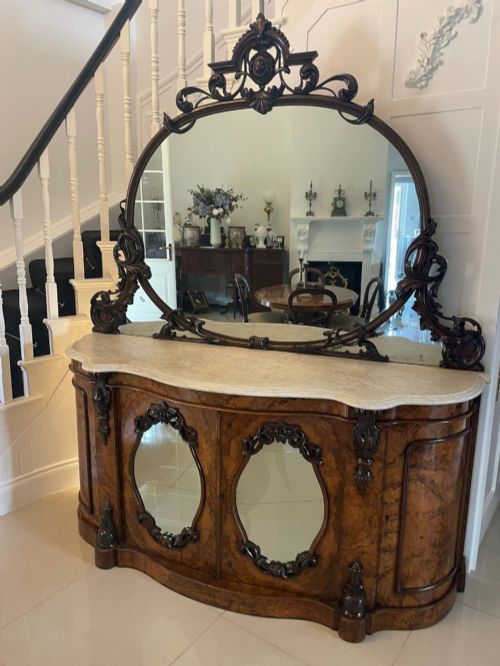
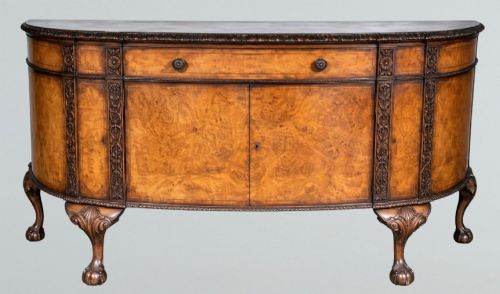
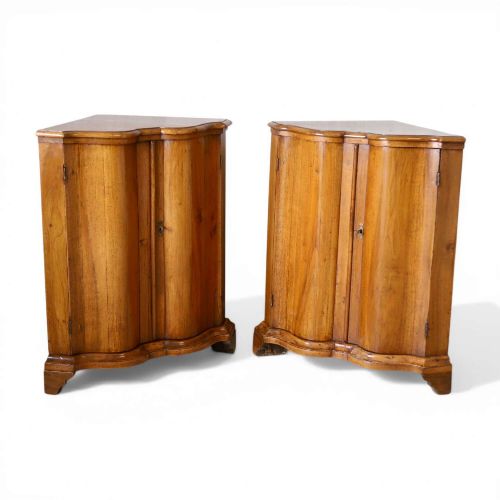
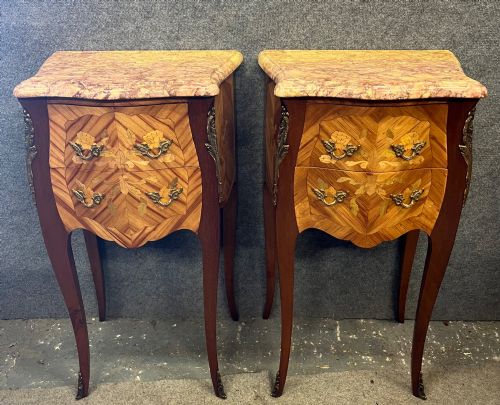
A serpentine walnut cabinet presents a distinctively curved front that flows in a gentle wave, combining convex and concave contours. When searching for a serpentine walnut cabinet, buyers encounter varied forms spanning credenzas, sideboards, bedside tables, and display cabinets.
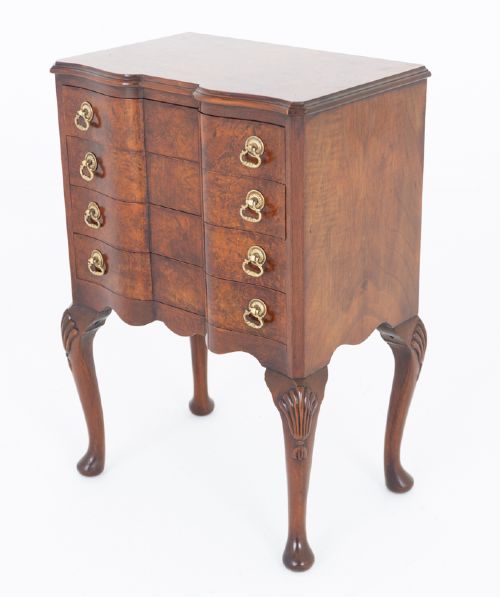
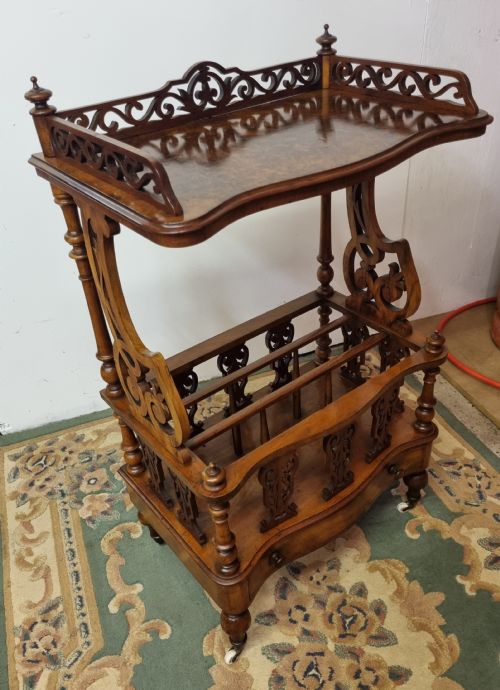
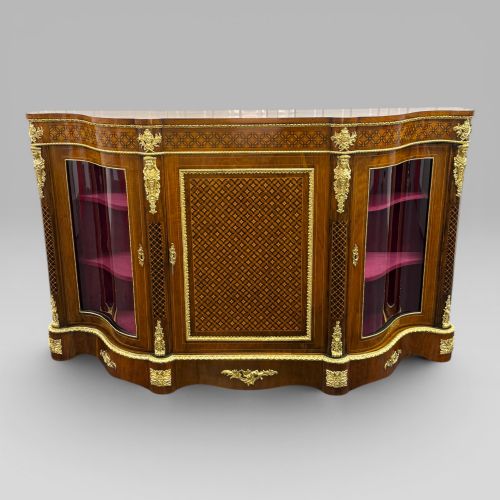
The selection ranges from mid-nineteenth-century Victorian credenzas to twentieth-century cocktail cabinets and bedside chests. Pieces often incorporate rich burr walnut veneers, marble tops, and marquetry details across diverse revival styles.
Materials and construction methods
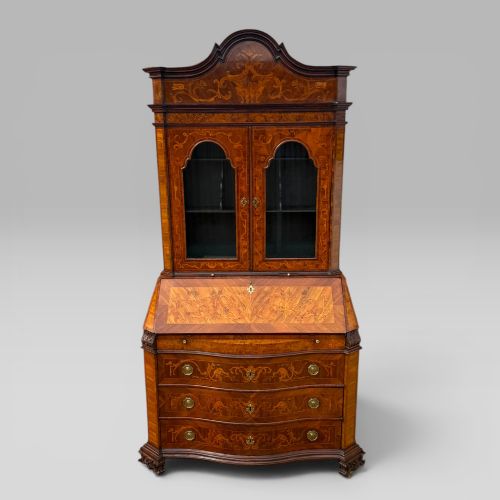
Cabinet makers utilised figured walnut and burr walnut veneers applied over solid carcassing to achieve intricate grain patterns across curved drawer fronts and doors. These timber surfaces were frequently enhanced with marquetry or parquetry inlays using contrasting woods.
Mounts in cast brass and ormolu add decorative accents to corners, friezes, and feet, while glass panels feature in display cabinets and credenza doors. Marble slabs serve as durable, polished tops on commodes and certain side cabinets.
Object forms span credenzas, cocktail cabinets, bedside chests, bureau bookcases, and display cabinets.
Assessing craftsmanship and finish
Quality depends heavily on the selection and matching of the veneer, particularly how the figured grain mirrors across the undulating contours of a serpentine front. Superior examples display seamless marquetry work and precise alignment of drawers and doors.
The integration of mounts, the weight of the cast ormolu, and the finesse of hand-carved wooden details distinguish standard production from exhibition pieces. Interior construction, such as solid secondary timbers and original fitted hardware, further indicates grade.
Maison Gagneau·Maple and Co
The Serpentine Walnut Cabinet Glossary
- Serpentine
- A curved architectural or furniture line featuring a convex centre flanked by concave ends. This shape requires advanced woodworking skill to veneer accurately.
- Burr walnut
- Timber harvested from walnut tree growths, producing swirling, highly figured grain patterns. It is sliced into thin veneers for decorative cabinet surfaces.
- Ormolu
- Gilded bronze mounts and ornaments applied to furniture. It provides metallic contrast against dark walnut surfaces.
- Marquetry
- Decorative patterns formed by fitting together small pieces of veneered wood. Makers arrange contrasting timbers to create floral or geometric motifs.
- Credenza
- A low cabinet enclosed by doors, originating as a dining room side table. Victorian iterations frequently incorporate glass display sections and mirrored backs.
Serpentine Walnut Cabinet: Frequently Asked Questions
What is a serpentine front?
A serpentine front is a cabinet profile shaped with an outward-curving convex middle section bordered by inward-curving concave ends. This undulating design creates a sense of movement across the piece.
Crafting this shape demanded high levels of joinery skill, particularly when applying delicate veneers around the tight curves.
Where were these cabinets used?
These cabinets served multiple domestic functions depending on their specific form, from dining rooms to drawing rooms and bedrooms. Credenzas and sideboards stored dining accessories and displayed decorative objects.
Smaller bedside tables and chests offered functional storage for personal items while introducing curved woodwork into private quarters.
How do I date a walnut cabinet?
Dating relies on examining construction techniques, hardware, and stylistic revival influences evident in the piece. Victorian examples often feature mirror backs and heavy marquetry, whereas later twentieth-century items lean towards cocktail cabinets or streamlined bedside chests.
Secondary woods inside drawers and the composition of handles and hinges provide further chronological clues.
How do I care for walnut veneer?
Walnut furniture benefits from stable indoor humidity levels away from direct sunlight and heat sources to prevent veneer lifting or fading. Regular dusting with a soft, dry cloth preserves the polished surface.
Applications of wax polish maintain the lustre of the timber without building up heavy residue.