


Serpentine Rosewood Table
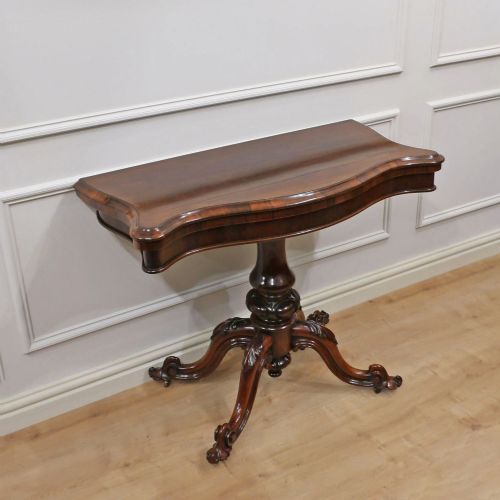
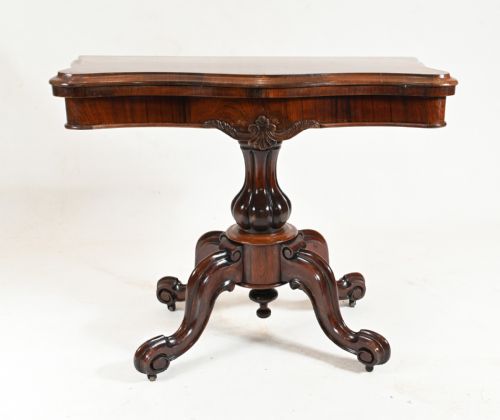
A serpentine rosewood table brings fluid, undulating curves and rich timber grain to a room, uniting functional surface space with decorative presence.
Serpentine Rosewood Table
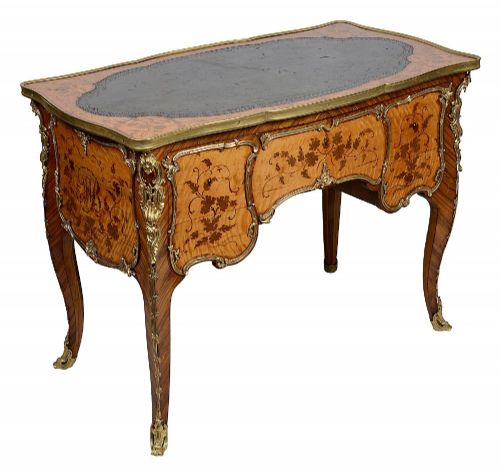
Victorian examples from the mid-nineteenth century frequently appear, often exhibiting the characteristic curved top supported by pedestals or carved legs. Alongside British production, French revivals of the period incorporate similar rhythmic outlines with marquetry and gilt metal mounts. These tables functioned as social focal points in drawing rooms, serving tea, holding lamps, or providing surfaces for card games.
Materials and construction methods
Makers utilised rosewood as the primary visible timber, selected for its deep colour and pronounced grain patterns, frequently applied as veneers over a stable structural timber. To achieve the undulating profile of a serpentine top, craftsmen shaped solid timber edges or carefully bent laminated layers before applying veneer. Brass hardware, ormolu mounts, and leather inserts frequently supplemented the timber construction on refined examples.
Marquetry inlay utilising contrasting woods such as kingwood and walnut embellishes many of the revival pieces, creating floral or geometric motifs across the surface. Pedestal bases often employ heavy central timber pillars fixed to platform feet, sometimes reinforced with concealed iron brackets for stability. Tilt-top mechanisms on breakfast and loo tables rely on iron catches and wooden blocks to secure the heavy rosewood top in a horizontal position.
Serpentine Rosewood Table Retail Price Guide 2026
Typical asking prices for serpentine rosewood table among the pieces listed under this phrase on Sellingantiques today, from the lower quarter to the upper quarter. They describe what is for sale here now, not the wider market.
Some nineteenth-century tables hide a screw mechanism beneath the top, originally designed to steady a piano stool or adjust height.
Distinctions in execution and finish
The execution of the curved edge dictates the visual success of the piece, separating standard production from superior craftsmanship. Finer tables display crisp, continuous shaping along the serpentine line without distortion in the veneer or lifting at the tight radiuses of the curves. The depth and definition of carved foliage on the pedestal or skirt reflect the hand of a skilled carver rather than mechanical replication.
The selection and book-matching of the rosewood veneer define the aesthetic tier of the table, with superior examples showing symmetrical grain patterns across the entire top surface. Secondary timbers used in the internal framing, such as mahogany or oak, indicate the original workshop's commitment to durability. Ormolu mounts and brass inlays on higher-quality French revival pieces demonstrate sharper chiselling and more secure pinning into the wood.
The Serpentine Rosewood Table Glossary
- Serpentine
- A shaped furniture edge characterised by a concave central recess flanked by two convex sweeps. This curving contour requires precise woodworking to maintain structural integrity along the grain.
- Rosewood
- A dense, heavily figured timber prized for its dark purple-brown coloration and oily lustre. It takes a high polish and was extensively utilised in high-status nineteenth-century furniture.
- Marquetry
- The art of applying decorative pieces of veneer to a structure to form ornamental patterns or pictures. Craftsmen cut contrasting timbers like kingwood and walnut together to ensure tight joints.
- Ormolu
- Gilded bronze ornamentation applied to furniture, popular in French revival pieces. The metal is cast, chased, and coated with a gold amalgam to provide bright decorative accents.
- Foldover table
- A dual-surface table featuring a hinged top that opens to double the surface area, commonly found on card and tea tables. The folding leaf is often supported by a swing leg or rotating mechanism.
Serpentine Rosewood Table: Frequently Asked Questions
How do I care for a rosewood surface?
Keep nineteenth-century rosewood away from direct sunlight and strong heat sources to prevent the timber from drying out and the veneers from lifting. Apply a quality beeswax periodically and buff gently with a soft cloth to maintain the natural sheen.
Avoid using modern liquid polishes or silicone sprays, as these can penetrate through old finishes and attract dust. Lift objects rather than sliding them across the serpentine top to protect the polished surface from scratching.
What is a loo table?
A loo table is a large nineteenth-century occasional table designed originally for the nineteenth-century card game of 'loo'. These pieces feature tilting tops that could be swung vertically when not in use to save space in the drawing room.
They typically stand on a heavy central pedestal with multiple carved feet and incorporate the serpentine edge to soften their substantial footprint. Today, buyers use them as generous centre tables or informal dining surfaces.
Are these tables suitable for daily dining?
Many nineteenth-century examples, particularly larger pedestal dining tables and breakfast tables, provide robust surfaces suited to everyday use. The structural stability of solid timber underframes and sturdy pedestals supports regular domestic employment.
Protect the antique polish with table mats and coasters to guard against moisture rings and heat damage from hot dishes. The sensitive nature of rosewood veneer means that heavy wear requires mindful management.
How can I distinguish French revival from Victorian pieces?
French revival tables often incorporate ornate ormolu mounts, delicate marquetry inlays, and cabriole legs influenced by Louis styles. They lean toward decorative display in formal rooms rather than the heavier domestic utility associated with standard Victorian pieces.
Victorian pieces tend to rely on the natural grain of the rosewood and deep-relief carving for visual interest. The construction methods in the internal framing also point to the workshop origins of British versus continental production.