
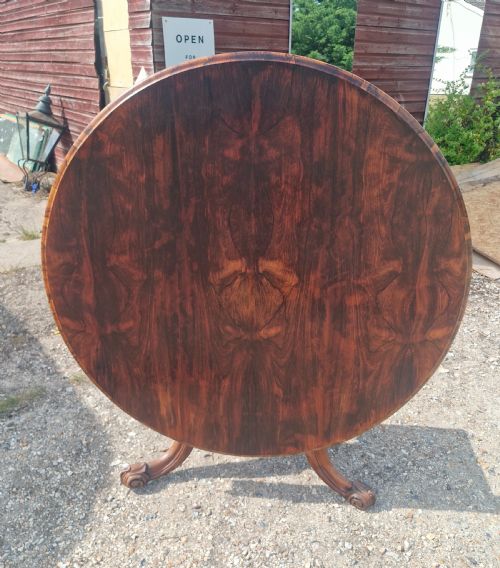


Mid Victorian Tilt Table
A mid victorian tilt table brings clever engineering and rich timber together into a compact space, making it a practical centrepiece for any traditional room.
Mid Victorian Tilt Table
A mid victorian tilt table is a flexible piece of nineteenth-century furniture designed to save space when not in use. These tables feature a clever mechanism beneath the top that allows the surface to tilt vertically, resting flat against the pedestal for storage.
The versions you meet on this page span the years from eighteen fifty to eighteen eighty, encompassing the Victorian era alongside specific styles such as Victorian Rococo Revival and Anglo-Indian. They appear in forms ranging from occasional tables and breakfast tables to loo tables and dining tables.
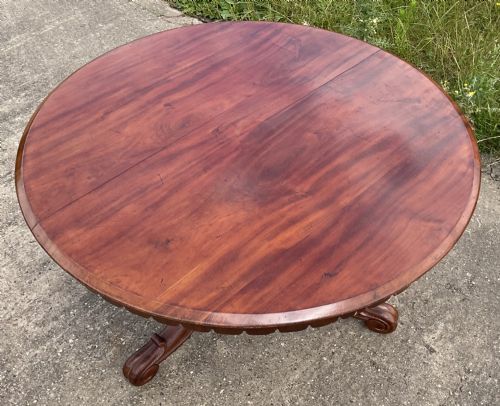
Makers of the period utilised various formats, including circular, oval, and octagonal tops supported by central pedestals. Whether you select a diminutive miniature table or a large country house example, each piece demonstrates the versatility demanded by nineteenth-century households.
How they were made
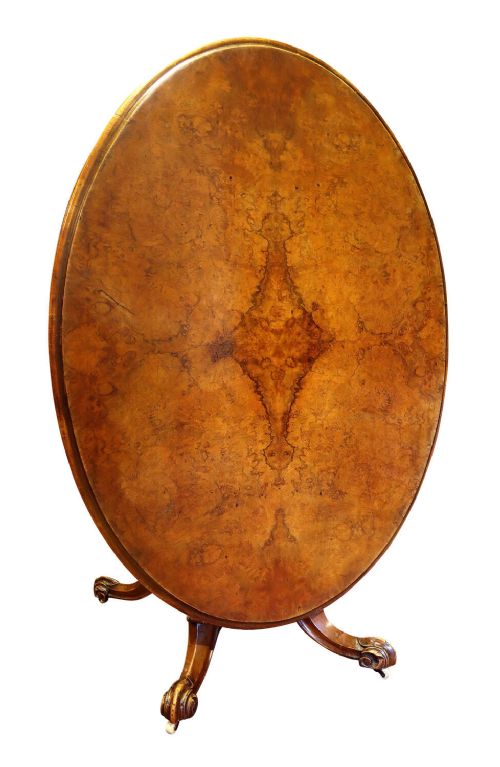
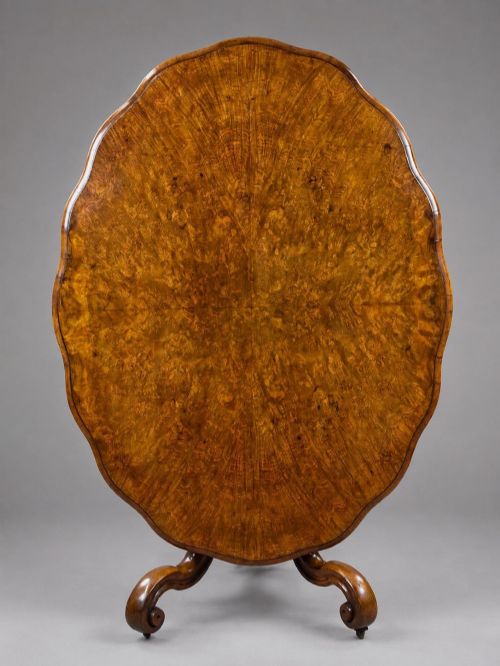
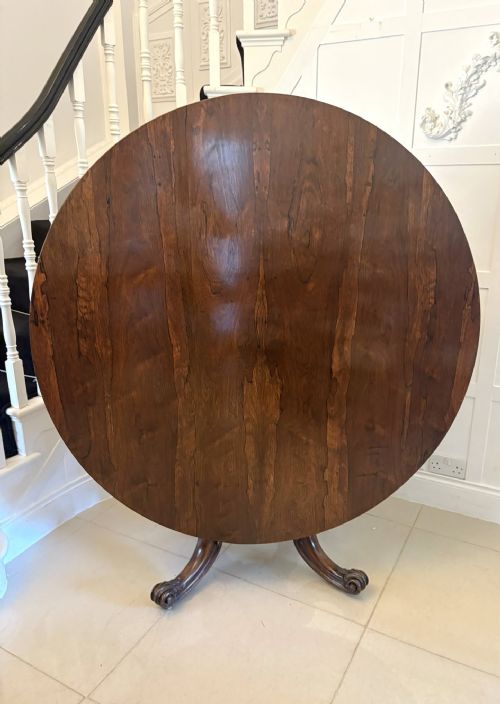
Cabinet makers built these tables using dense timbers such as mahogany, walnut, rosewood, and padouk, often selecting burr walnut veneer or figured rosewood to create striking visual patterns on the top. Solid walnut and exotic woods like palm wood and satin birch also appear, giving each piece a distinct weight and colour.
The construction relied upon sturdy central pedestals, frequently equipped with brass mechanisms for the tilting action, joined to shaped or carved bases. Craftsmen applied intricate inlay work and carved details to the timber, uniting structural stability with refined ornamentation.
The table forms recorded span centre tables, dining tables, occasional tables, breakfast tables, side tables, and miniature tables.
What varies in quality
The standard of a mid victorian tilt table rests upon the choice of timber and the complexity of its execution. Pieces displaying finely figured burr walnut, satin birch, or elaborate inlay demonstrate a higher tier of craftsmanship than plain or utilitarian examples.
The sophistication of the carving and the smoothness of the mechanical tilt action distinguish finer workshops from standard production. Superior examples integrate the pedestal and the top with seamless joinery and balanced proportions.
Jackson & Graham·James Winter
The Mid Victorian Tilt Table Glossary
- Tilt top
- A table mechanism featuring a hinged block that allows the top to pivot upright when not in use. This clever design enabled nineteenth-century households to push tables against walls to reclaim floor space.
- Loo table
- A large round or oval parlour table originating in the Georgian era and remaining popular through the Victorian period. It earned its name from the card game loo, which families played around its surface.
- Centre table
- A freestanding table finished on all sides, designed to sit in the middle of a room rather than against a wall. These pieces often served multiple domestic functions in drawing rooms and country houses.
- Pedestal table
- A table supported by a single central column rising from a stable base rather than four corner legs. This configuration allowed maximum legroom for diners and card players seated around the edge.
Mid Victorian Tilt Table: Frequently Asked Questions
How were these tables used?
These tables served multiple domestic purposes in nineteenth-century drawing rooms, parlours, and dining spaces. Families used them for dining, taking breakfast, writing letters, or playing card games.
When the room needed to be cleared for entertaining or dancing, the mechanism was released to tilt the top upward, dramatically reducing the table's footprint.
How do I live with one?
Living with a mid victorian tilt table involves appreciating its dual nature as both a decorative centrepiece and a functional surface. You can position one in the middle of a room to hold lamps, books, or flowers.
While the tilting mechanism permits compact storage against a wall, many owners prefer to leave the top flat to display the figured grain of rosewood, walnut, or maple veneers.
How do I tell periods apart?
Distinguishing periods among these tables relies on observing the shifts in timber preference, decorative style, and structural form. Pieces from eighteen fifty often showcase simpler mahogany or rosewood circular tops.
As the decades progress toward eighteen eighty, you encounter more elaborate burr walnut veneers, inlaid sycamore, and revival styles such as Victorian Rococo or Anglo-Indian padouk constructions.