

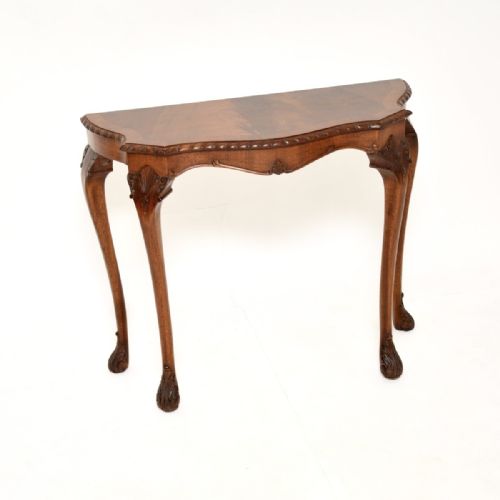
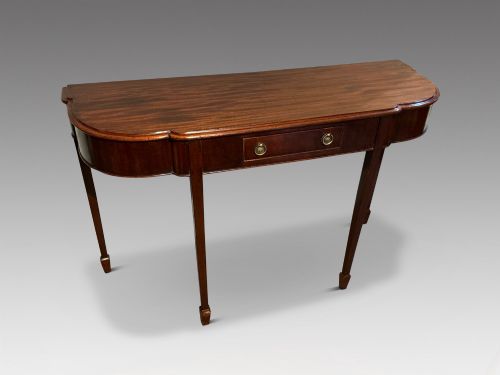
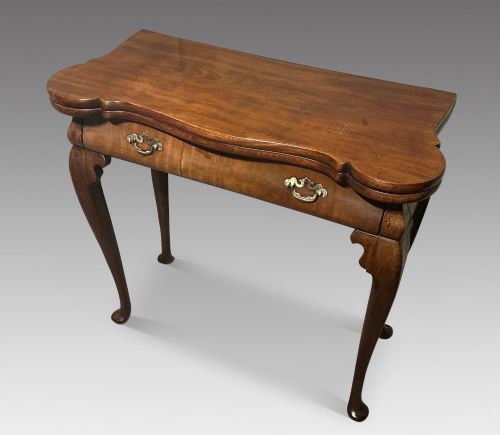
Serpentine Mahogany Console
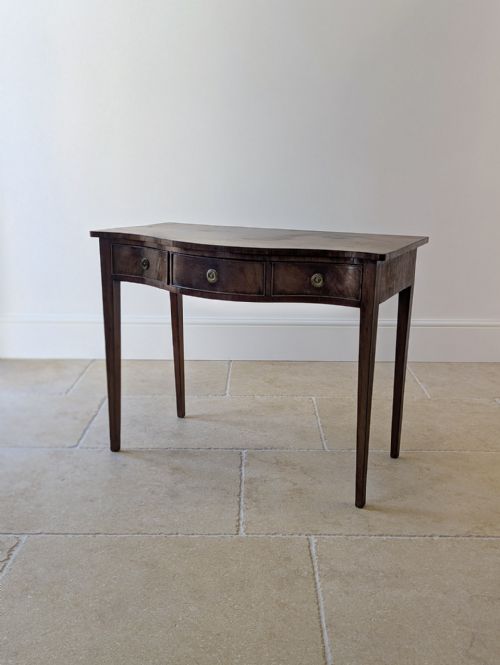
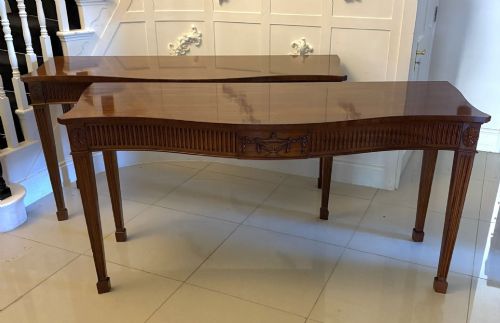
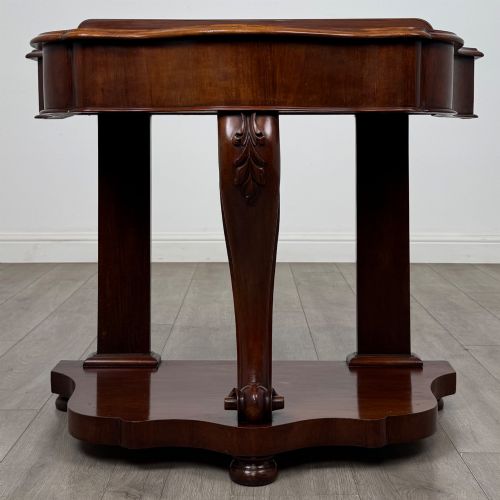
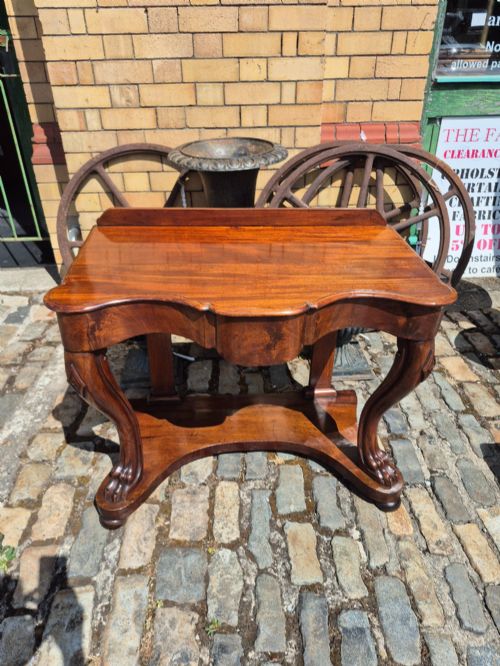
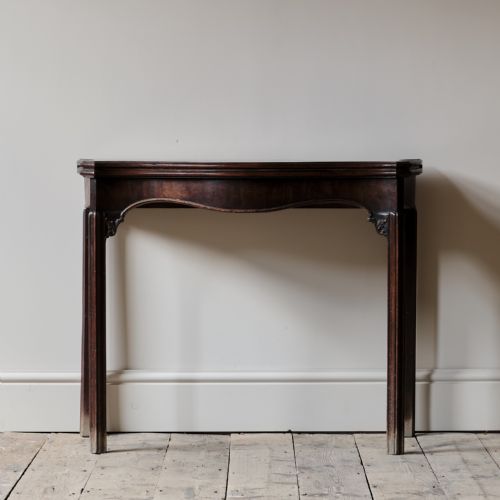
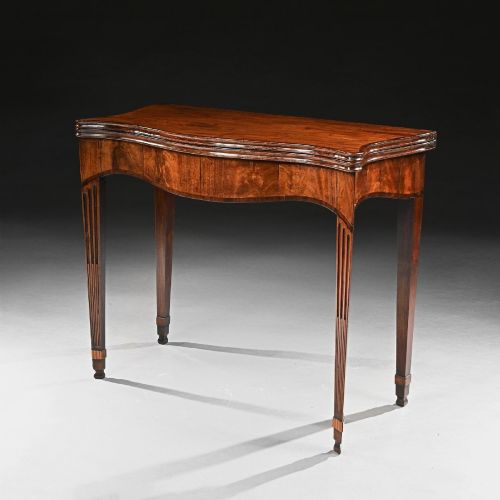
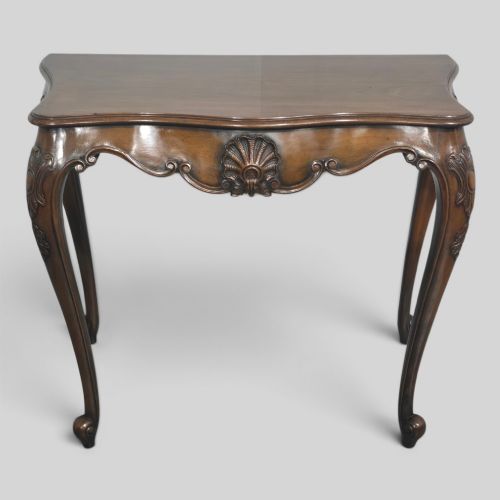
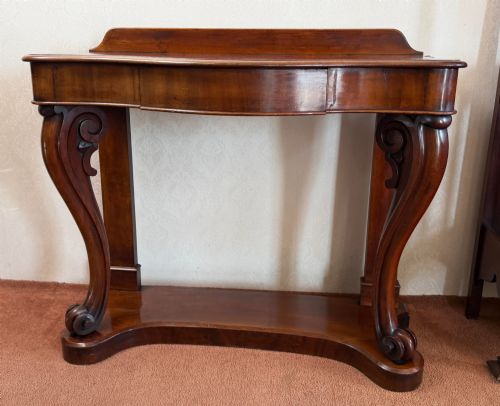
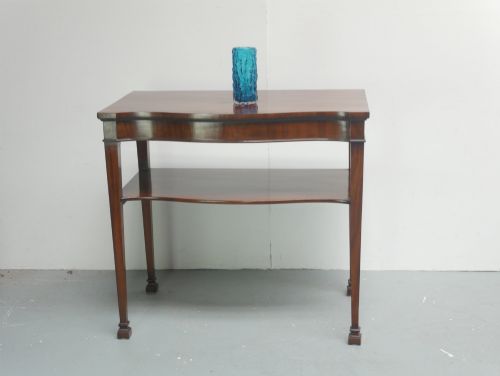
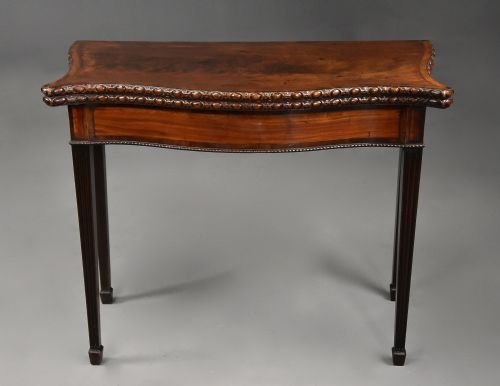
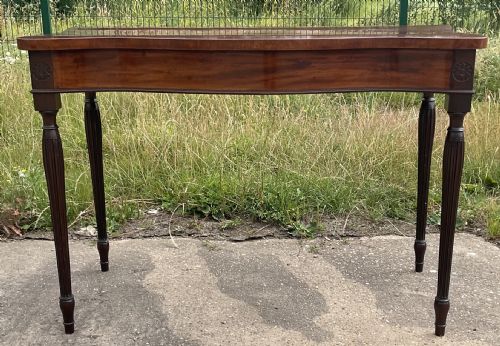
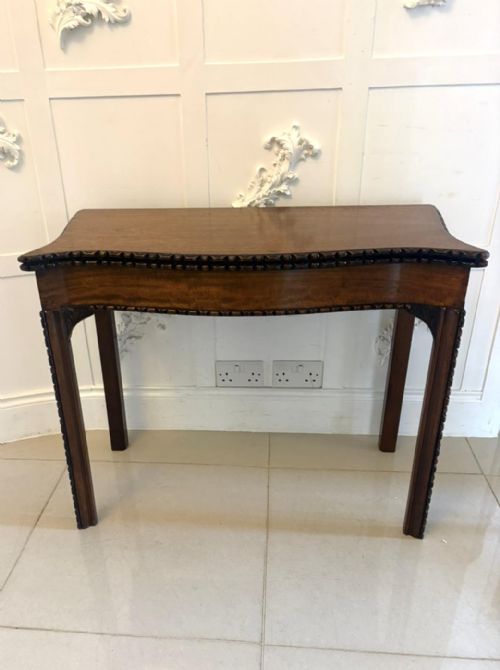
A serpentine mahogany console combines a sweeping curved front with deep timber grain, functioning as both a practical surface and a sculptural focal point.
Serpentine Mahogany Console
When you search for a serpentine mahogany console, you encounter a refined group of tables and servers defined by their undulating fronts. The form spans the Georgian and Victorian periods, alongside later twentieth-century interpretations, appearing most frequently as console tables, card tables, and serving tables.
Makers shaped these pieces to sit flat against a wall while offering a dynamic visual rhythm through their curved timber profiles. The selection ranges from folding card tables with intricate games surfaces to grand serving consoles designed for formal dining rooms.
How they were made
Cabinetmakers constructed these tables using solid mahogany frameworks paired with flame mahogany veneers to accentuate the natural grain patterns. Workshops often incorporated secondary timbers alongside boxwood and satinwood stringing to create sharp inlaid contrasts along the borders and aprons.
Curving the timber required skilled sawing and bending techniques to maintain structural integrity across the undulating front edge. Master craftsmen applied hand-rubbed finishes that built up a deep, warm patina over the centuries.
Listings feature mahogany, satinwood, and marble across Georgian, Victorian, and Edwardian periods.
What varies in quality
The distinction between ordinary and exceptional pieces lies in the choice of timber and the precision of the carved details. Tables featuring figured flame mahogany veneer and crisp neoclassical carving display a superior level of workshop execution.
Proportion and original surface paturation dictate the standing of a piece within the range. Examples that retain their depth of colour without heavy modern restoration demonstrate greater fidelity to their period of origin.
Gillow
The Serpentine Mahogany Console Glossary
- Serpentine
- A curved furniture front characterised by a convex centre flanked by concave sides. This flowing line creates a sense of movement across the timber.
- Console
- A table designed to stand against a wall, traditionally supported by legs at the front while relying on wall brackets or rear legs for stability.
- Patina
- The surface sheen and colour developed by wood over years of handling, exposure to light, and polishing. It serves as a visual indicator of age.
- Marquetry
- The art of applying pieces of veneer to a structure to form decorative patterns and pictorial designs. Craftsmen use contrasting timbers like satinwood for this work.
- Stringing
- Thin lines of contrasting wood inlay used to outline drawers, edges, and table tops. This technique adds linear definition to mahogany surfaces.
Serpentine Mahogany Console: Frequently Asked Questions
How do I date a serpentine mahogany console?
Dating relies on examining the construction methods, timber choice, and decorative vocabulary visible in the piece. Georgian examples often display hand-cut dovetails and restrained carving, whereas Victorian iterations favour heavier proportions and burr walnut or figured mahogany veneers.
Secondary woods and hinge types also provide clues to the era of manufacture. Later reproductions from the Edwardian period adopt earlier styles while utilising machine-cut components.
Where should I place a console table?
These tables suit hallways, living rooms, and dining spaces where their shallow depth allows them to sit neatly against a wall. Their decorative fronts make them effective focal points beneath mirrors or artwork.
Card and games versions function well as occasional tables when folded closed. Serving consoles provide ample surface area for display without obstructing room flow.
How do I care for antique mahogany?
Maintain the finish by dusting with a dry, soft cloth and avoiding placement near direct heat sources or strong sunlight. These precautions prevent the timber from drying out or the veneer from lifting over time.
Applying a traditional wax polish occasionally helps nourish the wood and preserve the surface sheen. Avoid silicone-based sprays, which can damage the historic patina.
What is the difference between a console and a serving table?
Console tables were traditionally designed as decorative fixtures placed against walls, sometimes accompanied by matching wall mirrors. Serving tables served a more utilitarian function in dining rooms for holding dishes during meals.
Over time, the terms began to overlap as makers adapted similar serpentine forms for both domestic roles. Many surviving examples share comparable proportions regardless of their original designation.