

Serpentine Inlaid Table
A serpentine inlaid table combines flowing, curving lines with intricate contrasting wood details.

Serpentine Inlaid Table
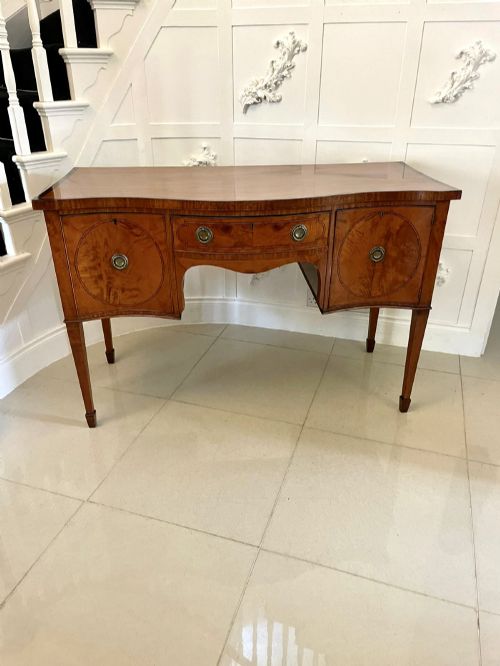
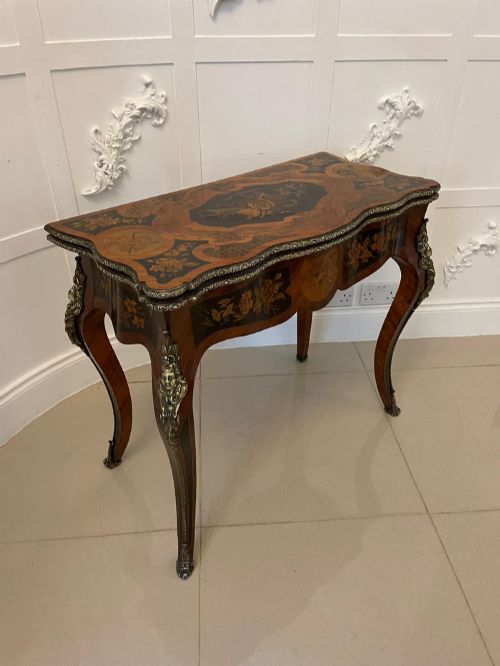
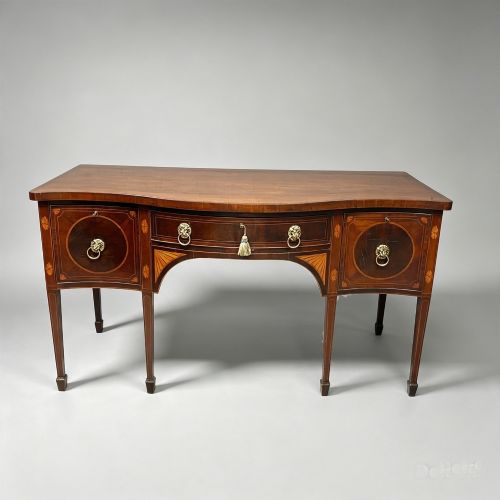
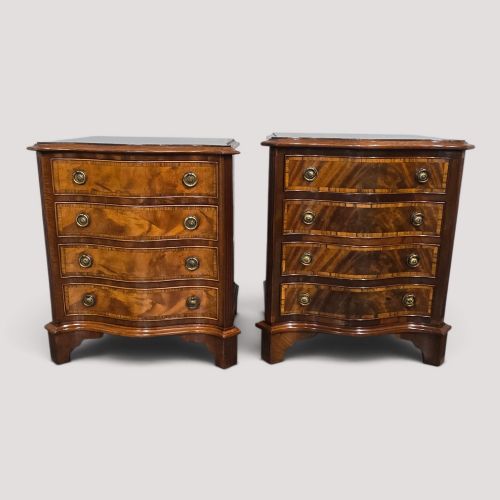
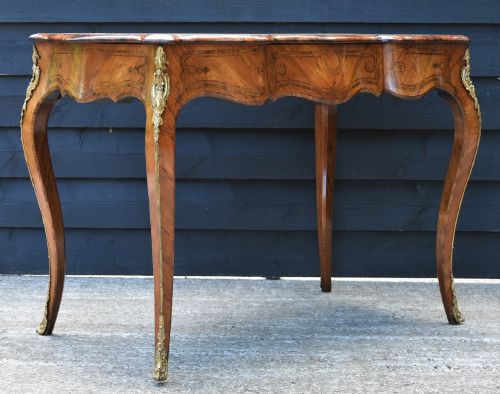
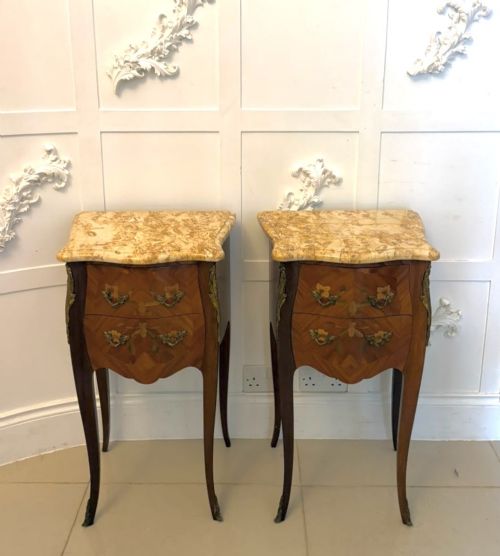
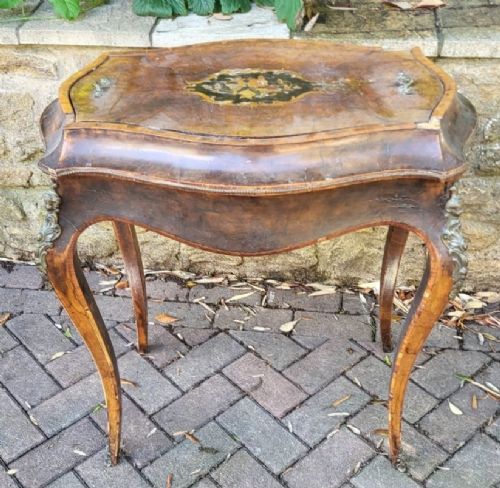
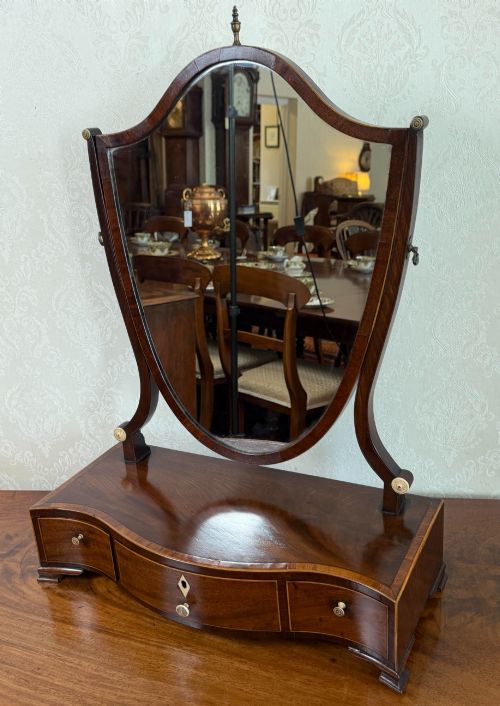
A serpentine inlaid table typically takes the form of a card table, side table, or centre table, distinguished by a gently undulating front edge. The curve itself defines the silhouette, sweeping outward at the centre and inward toward the corners or vice versa. These items appear across Georgian, Victorian, and Edwardian periods, reflecting changing domestic requirements for entertaining and display.
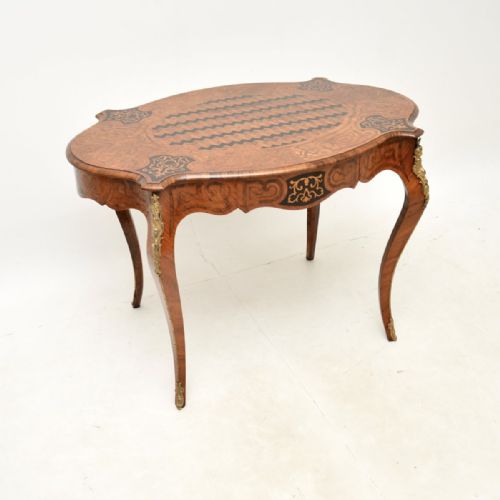
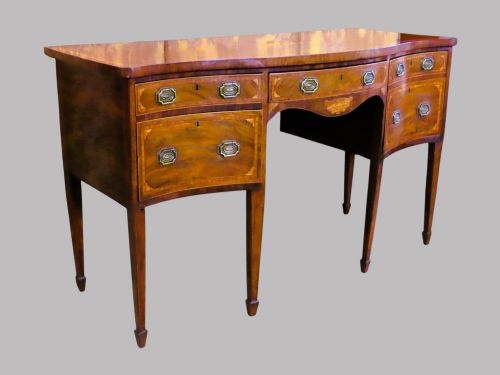
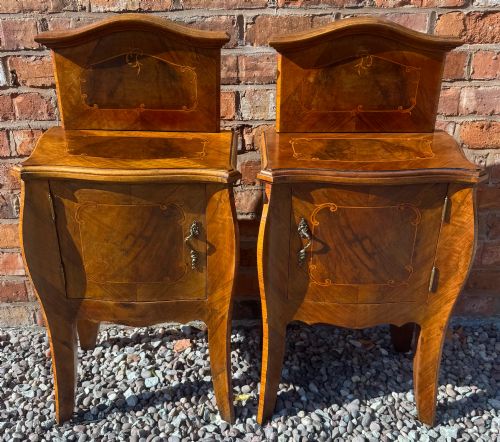
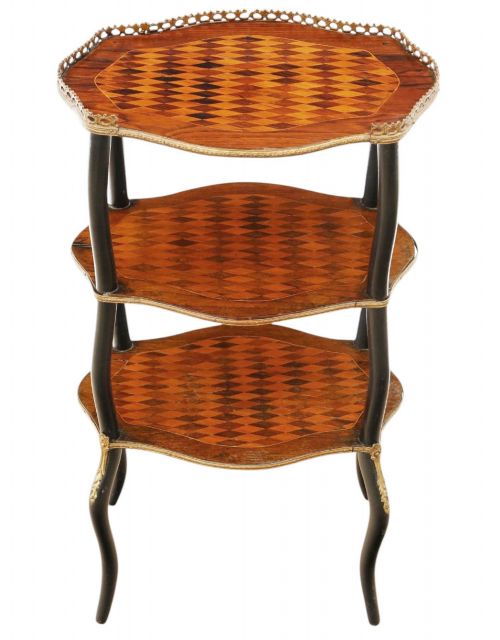
On this page, the most frequent iterations include mahogany and satinwood card tables alongside walnut centre tables. Georgian examples lean toward robust mahogany construction with restrained stringing, while Victorian and Edwardian pieces frequently utilise lighter satinwood or burr walnut panels enhanced by elaborate marquetry.
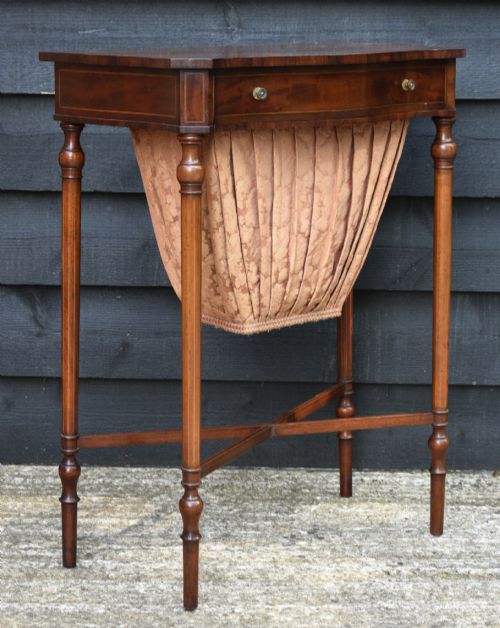
Beyond occasional and card tables, the broader category encompasses serving tables, writing desks, and small chests where the serpentine line unifies storage with decorative ambition. Each period brings its own interpretation of the curved edge, linking eighteenth-century proportion with nineteenth-century decorative display.
How they were made
Cabinet makers built the undulating carcasses of a serpentine inlaid table using solid timbers like mahogany or walnut for structural integrity, often applying fine veneers to the visible exterior curves. Satinwood, kingwood, and boxwood provided the contrasting tones necessary for detailed surface decoration.
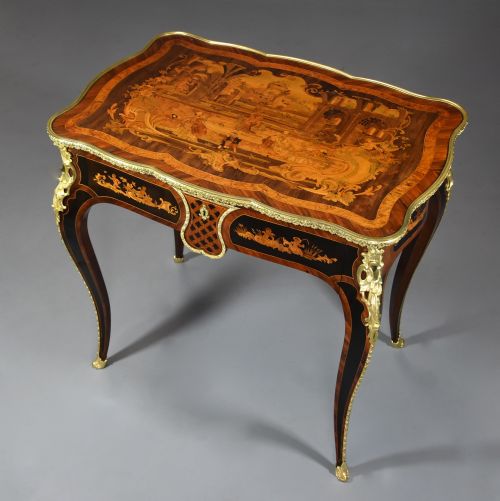
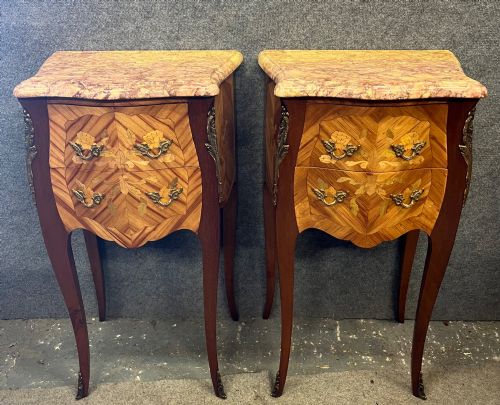
Marquetry and parquetry techniques involved cutting thin veneers of various coloured woods by hand and fitting them together within precise channels carved into the primary wood. Secondary elements such as cast brass mounts, ormolu, and boxwood stringing finished the edges and structural corners.
Listings feature mahogany, satinwood, and burr walnut across eighteenth, nineteenth, and early twentieth-century periods.
What varies in quality
The standard of a serpentine inlaid table rests primarily on the precision of the curved joinery and the integration of the wood grains. Superior examples maintain crisp lines along the undulating edge without revealing shrinkage or misalignment in the underlying carcase.
Makers achieved distinction through the intricacy and tightness of the marquetry, where floral or geometric motifs fit seamlessly without excessive filler. The choice of secondary timbers and the crispness of cast ormolu mounts further separate standard production from exceptional workshop output.
Maison Millet·Edwards and Roberts
The Serpentine Inlaid Table Glossary
- Serpentine
- A curved architectural line resembling a snake's movement, featuring a convex centre flanked by concave wings. This contour requires skilled carpentry to shape both the solid timber and the veneered top.
- Marquetry
- The art of forming decorative patterns by fitting together thin veneers of contrasting woods, metals, or shells. Artisans assemble these pictorial elements on paper before gluing them to the structural surface.
- Ormolu
- Gilt bronze ornamentation applied to furniture, particularly popular during revival periods referencing French eighteenth-century designs. It provides metallic contrast against dark kingwood or burr walnut surfaces.
- Stringing
- Narrow strips of contrasting wood inlaid into channels cut into the furniture's surface to create fine border lines. This technique frames table tops and drawer fronts in geometric harmony.
- Parquetry
- Geometric mosaic woodwork formed by small veneer blocks arranged in repeating patterns such as cubes or chequers. It differs from marquetry by relying on abstract repeating geometry rather than pictorial scenes.
Serpentine Inlaid Table: Frequently Asked Questions
What is a serpentine inlaid table used for?
These tables served various domestic functions depending on their top configuration. Card tables featured fold-out surfaces lined with baize for evening games, while centre tables stood freestanding in principal rooms for display.
Smaller occasional and writing tables provided functional surfaces for correspondence or holding decorative objects. The curved front ensured they occupied less visual weight in a room while offering maximum surface utility.
How do I tell Georgian from Victorian pieces?
Georgian versions typically rely on solid mahogany with minimal, precise stringing and architectural restraint. Their proportions follow classical rules, focusing on timber quality and subtle edge moulding rather than dense surface decoration.
Victorian and Edwardian examples introduce exotic veneers such as satinwood, kingwood, and burr walnut, often accompanied by extensive marquetry and ormolu mounts. The revival styles borrow heavily from French models, resulting in lighter, more decorative structures.
Where should I place this table at home?
Centre tables function best freestanding in an open hall or large reception room where their decoration can be appreciated from all sides. Side and card tables suit placement against a flat wall, where the curved front softens the room's geometry.
Ensure the piece avoids direct sunlight and consistent heat sources to protect delicate veneers and stringing from drying out or lifting over time.
How do I care for antique wood surfaces?
Maintain the finish by dusting regularly with a soft, dry cloth and applying high-quality beeswax sparingly when the wood appears dry. Avoid silicone-based polishes, which can penetrate old finishes and damage the underlying patina.
Keep indoor humidity stable to prevent the wooden carcase and inlaid veneers from expanding or contracting at different rates, which causes warping.