
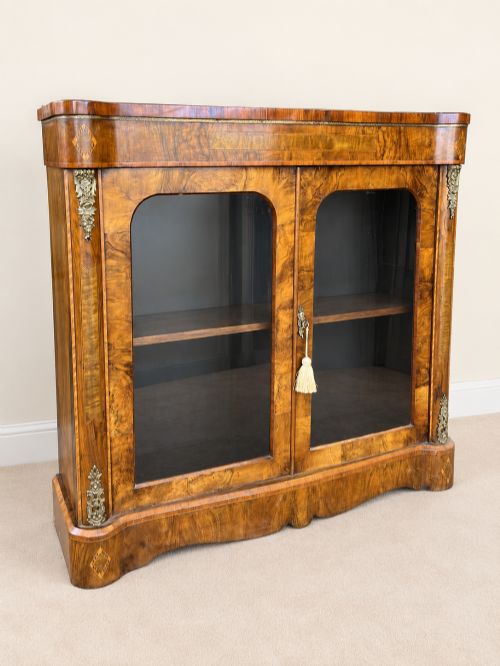
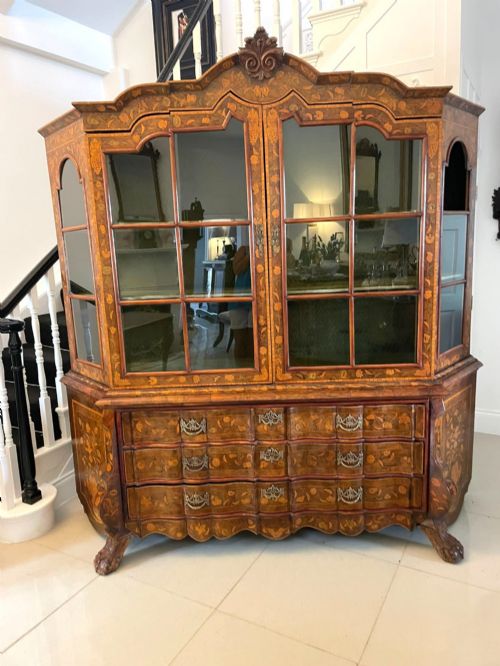
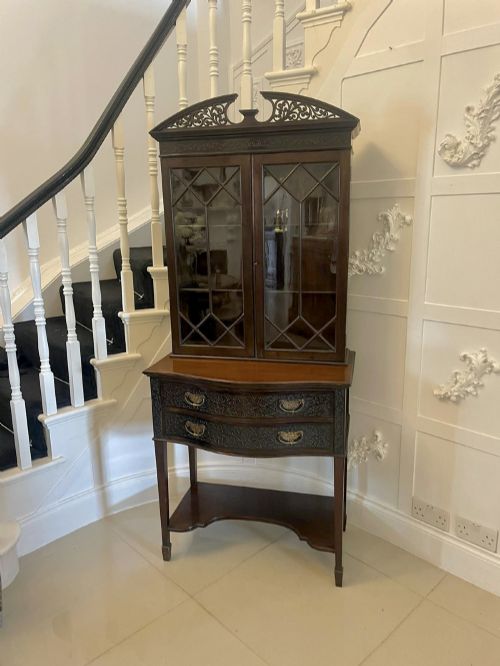
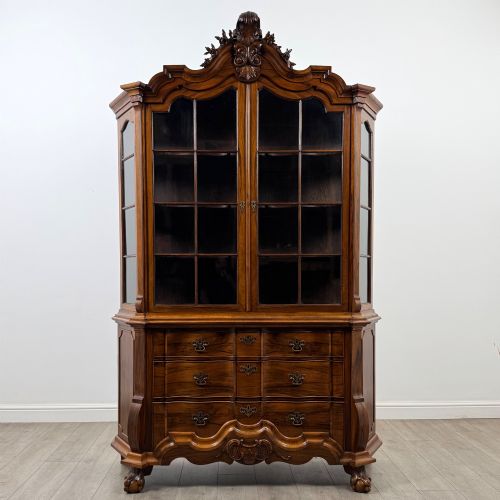
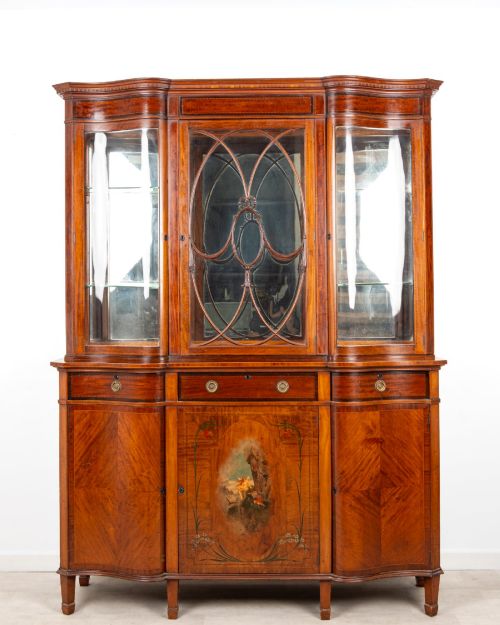
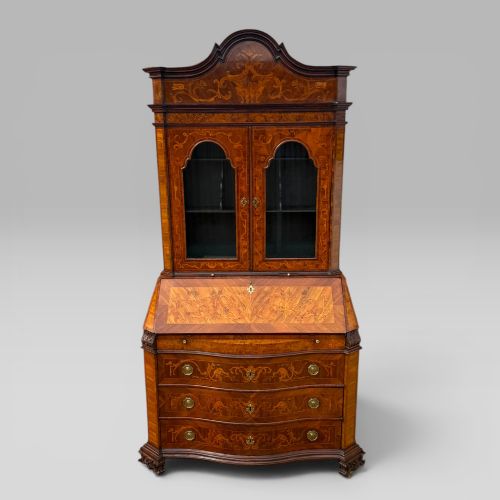
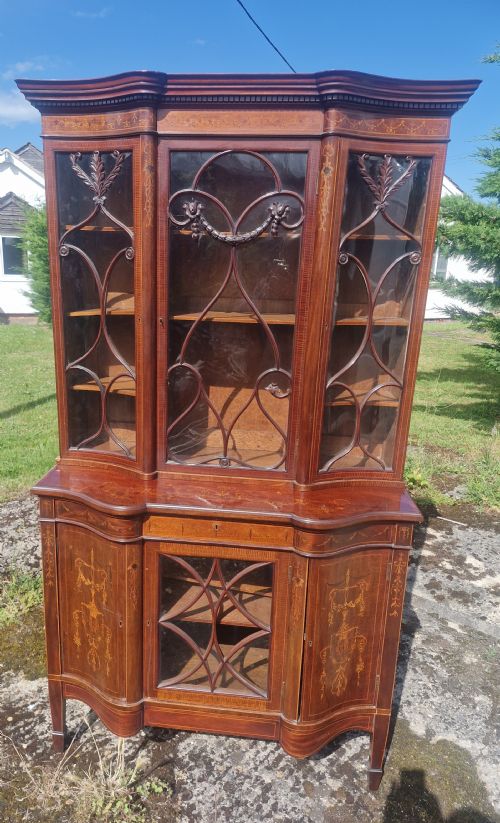
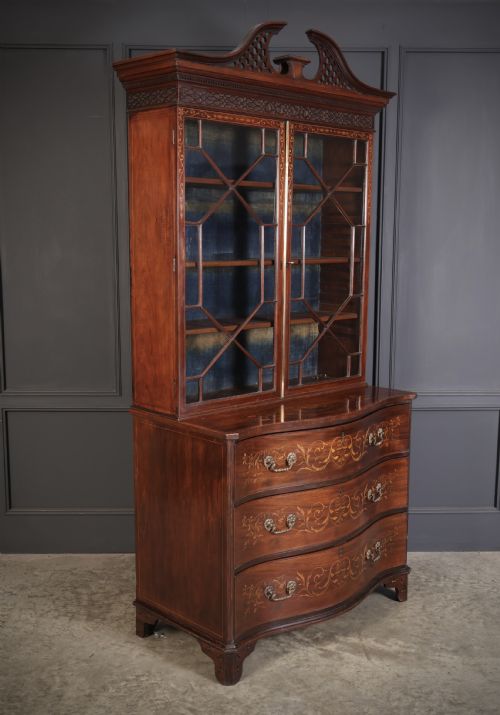


Serpentine Glazed Bookcase
These serpentine glazed bookcase designs offer curved fronts and glazed doors, housing books or display items with distinctive elegance.
Serpentine Glazed Bookcase
A serpentine glazed bookcase presents a curved, undulating front profile combined with glass-fronted upper sections for displaying volumes or cabinet wares. You will encounter these pieces spanning the Georgian, Victorian, and Edwardian periods, frequently executed in revival styles such as Sheraton and Chippendale.
The dominant forms on this page include tall display cabinets, bureau bookcases, and standing corner cupboards. Makers utilised mahogany, walnut, and satinwood, often incorporating intricate marquetry and inlay to accentuate the sweeping curves of the timber.
Distinctions in construction and design
The sophistication of the timber selection and the precision of the curved joinery determine the standing of each piece. Elaborate marquetry work, fine brass or ormolu mounts, and documented maker attributions elevate certain cabinets above standard production items.
Proportion and the handling of the serpentine sweep dictate the visual balance. Pieces retaining original glass panes and harmonious secondary timbers demonstrate superior craftsmanship.
Listings feature mahogany, walnut, satinwood, and kingwood across Georgian, Victorian, and Edwardian periods.
Edwards And Roberts
The Serpentine Glazed Bookcase Glossary
- Serpentine
- A front profile characterised by a convex centre flanked by concave curves, creating an undulating wave shape. This contour requires specialised woodworking skill to execute properly across drawers and doors.
- Marquetry
- Decorative patterns formed by fitting together small pieces of veneered wood of different colours and grains. Artisans applied these designs to furniture surfaces for pictorial or geometric effect.
- Vitrine
- A glass-fronted cabinet or display case designed specifically for showing porcelain, curiosities, or fine books. These pieces often feature glass on the sides as well as the front.
- Bureau bookcase
- A dual-purpose piece featuring a sloping writing flap that drops down to reveal compartments, surmounted by a glazed bookcase section. They appeared in various woods throughout the eighteenth and nineteenth centuries.
- Ormolu
- Gilt bronze ornamentation applied to furniture mounts and decorative hardware. The technique involves coating bronze objects in a mercury and gold amalgam.
Serpentine Glazed Bookcase: Frequently Asked Questions
What is a serpentine glazed bookcase?
A serpentine glazed bookcase is a cabinet featuring glass doors and a distinctively curved front that undulates inward and outward. They were designed to store books while displaying prized volumes or decorative objects behind glass.
These pieces range from tall standing units to bureau forms with fitted writing compartments. Their curved timber framing distinguishes them from standard flat-fronted bookcases.
How do I date a serpentine glazed bookcase?
Dating relies on examining the timber species, construction techniques, hardware, and stylistic revival cues. Georgian examples show different timber preparation compared to Edwardian or late Victorian revivals.
Secondary woods inside drawers and the style of the inlay provide further clues to the period of manufacture. Documented makers also help narrow down the production timeline.
Where should I place a serpentine bookcase?
These cabinets suit studies, drawing rooms, or libraries where their curved fronts can be viewed without obstruction. Ample floor space allows the undulating lines to catch the light effectively.
Positioning them away from direct sunlight protects the polished mahogany, walnut, or satinwood surfaces from fading. Stable room humidity preserves the integrity of the veneered timber and glass frames.
How do I clean and maintain the wood?
Maintenance involves dusting with a soft, dry cloth and applying appropriate wax polish sparingly to nourish the timber. Avoid using modern silicone sprays or harsh chemical cleaners on antique finishes.
Checking the stability of the glass panes and brass hardware periodically ensures the doors remain secure. Keeping the cabinet away from sudden temperature changes prevents the wood from warping.