

Serpentine Games Table
A serpentine games table combines a sinuous outline with a fold-over top designed for cards and social play.
Serpentine Games Table
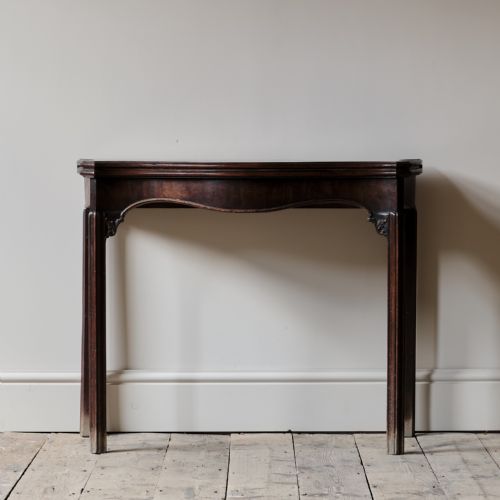
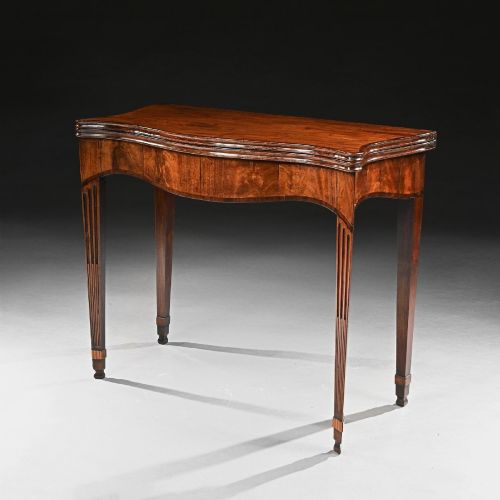
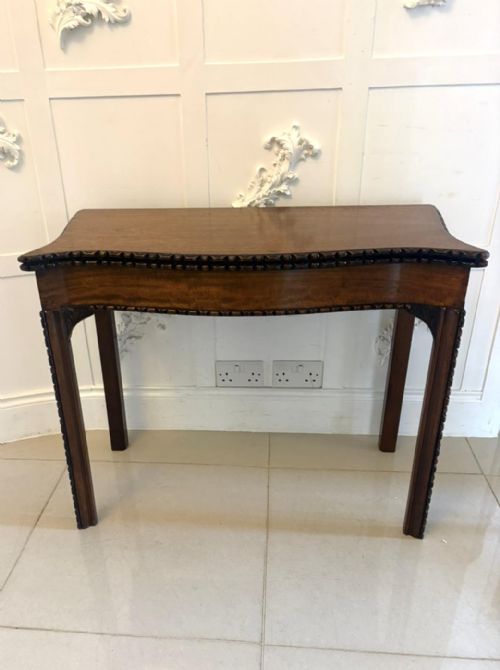
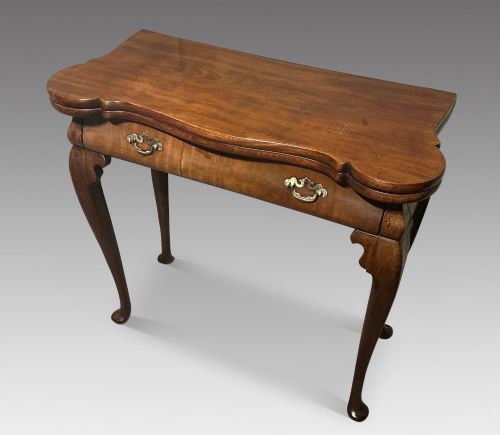
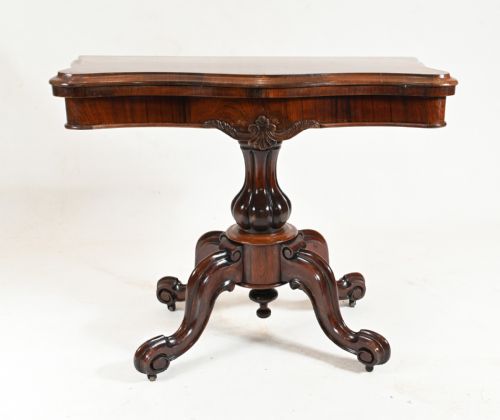
A serpentine games table is a distinctive form of antique furniture defined by its undulating, curving front edge. When you search for a serpentine games table, you encounter pieces designed primarily for social card playing, tea, or display in the principal rooms of a house.
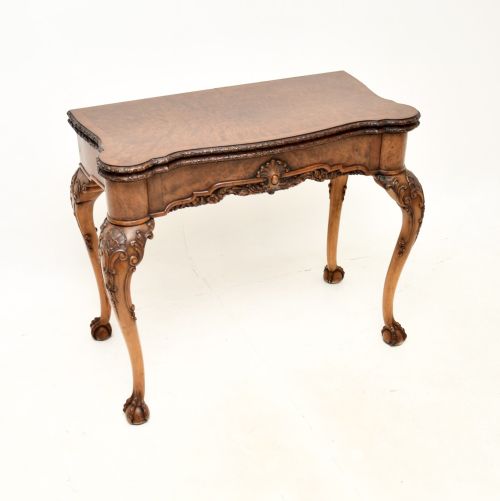
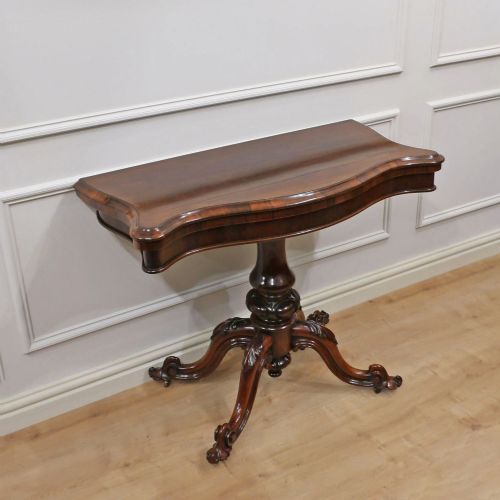
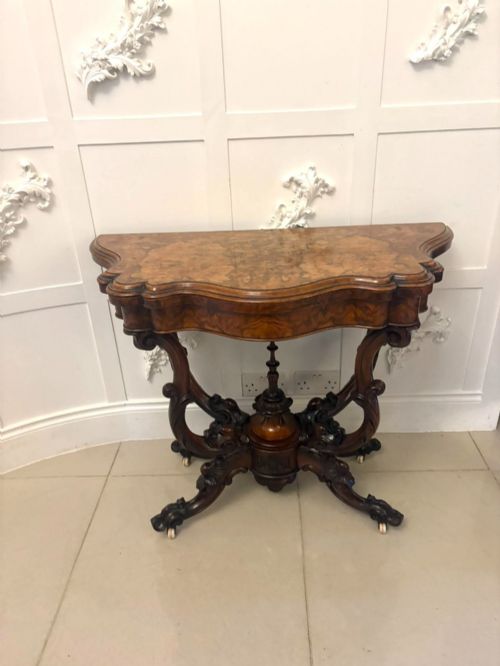
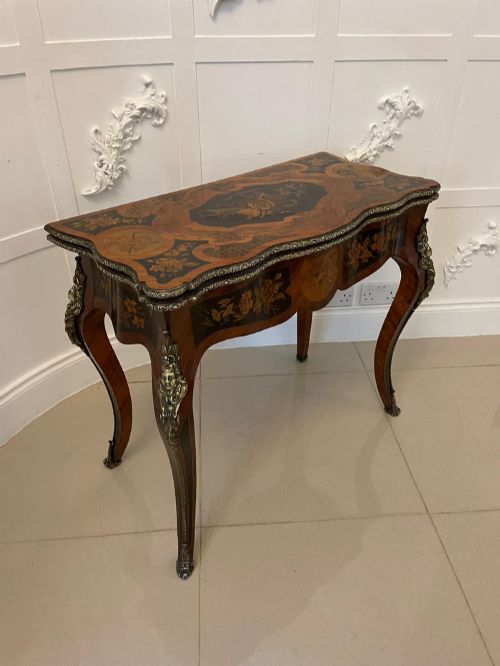
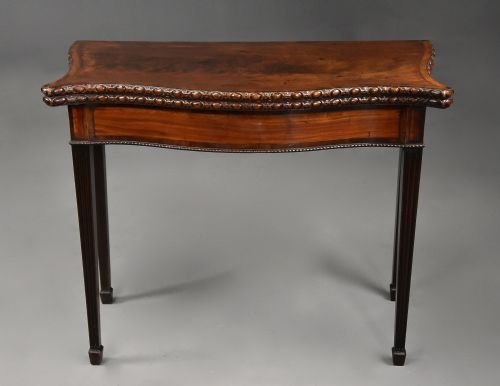
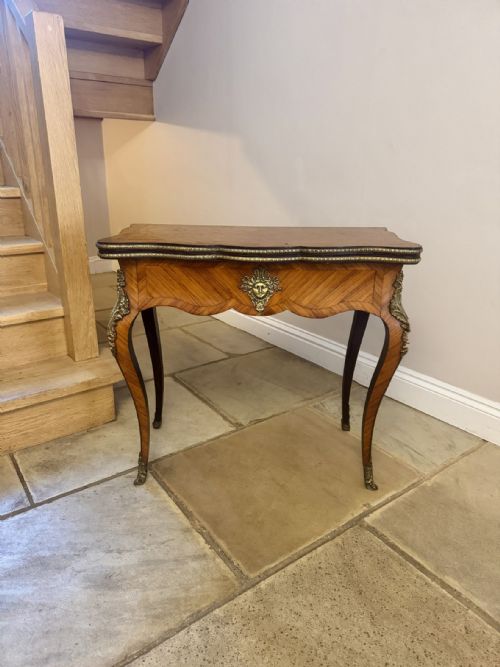
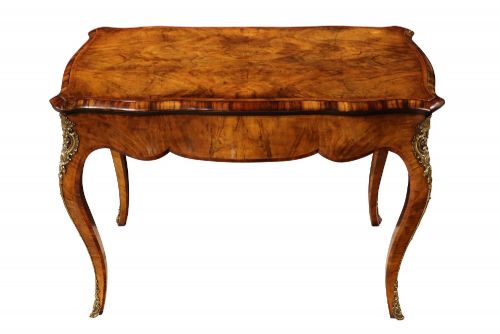
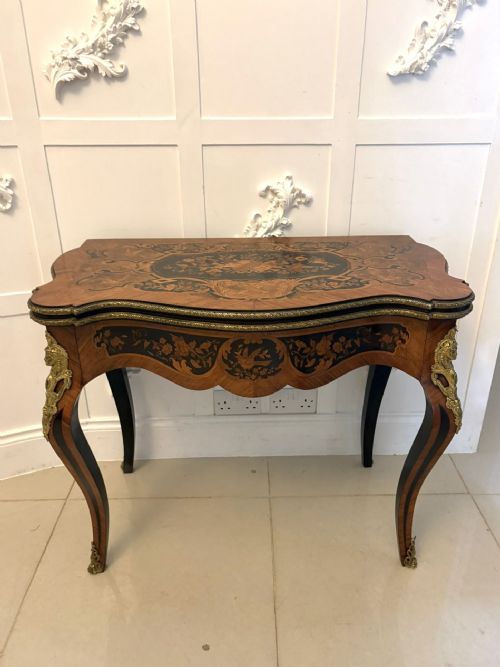
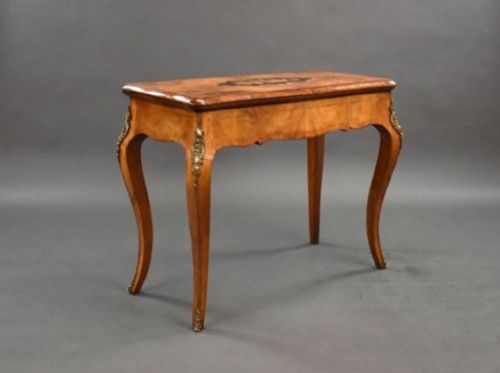
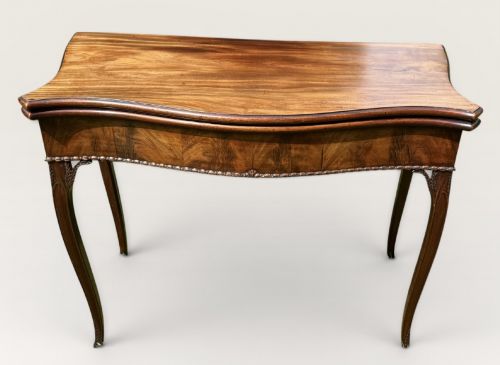
The versions you meet most frequently on this page belong to two distinct design traditions. The 18th-century examples lean towards Georgian mahogany, often following Chippendale or Hepplewhite tastes with concertina or folding actions. The 19th-century examples turn to Victorian burr walnut and French Kingwood, frequently styled with Louis XV revival curves or marquetry inlay.
How they were made
Cabinet makers constructed these pieces using solid timbers like mahogany for the earlier Georgian frames, or applied rich veneers such as burr walnut, kingwood, and satinwood over stable carcases for the later Victorian and continental examples. Achieving the characteristic undulating front required precise cutting and steam-bending or shaping of the solid wood rails and veneered aprons.
The folding tops utilised specialised hinges and internal pivoting mechanisms, including concertina actions on 18th-century pieces to support the open leaf without straining the frame. Metal mounts in ormolu and brass edge-banding were often added to French-influenced designs to accentuate the complex curves.
Serpentine Games Table Retail Price Guide 2026
Typical asking prices for serpentine games table among the pieces listed under this phrase on Sellingantiques today, from the lower quarter to the upper quarter. They describe what is for sale here now, not the wider market.
Some nineteenth-century makers concealed gaming wells beneath the folding top, waiting to surprise guests with hidden compartments for counters.
What varies in quality
The quality of a serpentine games table rests heavily on the crispness of its shaping and the choice of surface timbers. Superior examples display a continuous, flowing curve along the front rail without awkward flat spots, paired with richly figured burr veneers or finely carved mahogany details such as acanthus leaf knees or gadrooned borders.
Construction methods also separate standard pieces from the finest work. Tables with robust concertina actions that maintain a flush, level surface when opened demonstrate superior craftsmanship compared to simpler swivel or fold-over tops.
Maison Millet·Edwards & Roberts
The Serpentine Games Table Glossary
- Serpentine
- A shape characterised by a curving front edge that bows outward in the centre and recesses inward at the sides. This contour requires skilled carpentry to execute smoothly across solid timber or veneered aprons.
- Concertina action
- An expanding frame mechanism used on tables with a fold-over top. When the table opens to play cards, the wooden frame extends outward like an accordion to support the extra weight.
- Burr walnut
- A prized timber harvested from the gnarled growths of walnut trees. It yields complex, swirling grain patterns highly favoured by Victorian cabinet makers.
- Ormolu
- Gilded bronze mounts applied to furniture for decoration. It appears frequently on French revival pieces from the nineteenth century.
- Marquetry
- The art of applying small pieces of veneer to form decorative patterns and pictures on a furniture surface. Craftsmen used various exotic woods to create contrasting floral or geometric designs.
Serpentine Games Table: Frequently Asked Questions
What were serpentine games tables used for?
These tables served as multifunctional furniture for the home parlour or drawing room. The folded top provided a side or console table surface against the wall during the day.
When evening arrived, the top unfolded to reveal a baize-lined surface for card games, chess, or social entertainment.
How do I tell Georgian from Victorian examples?
Georgian examples from the eighteenth century typically utilise solid mahogany with clean architectural lines, carved details, and restrained proportions. Their serpentine curves follow classical cabinet-making traditions.
Victorian versions from the mid to late nineteenth century often feature burr walnut veneers, elaborate marquetry inlay, and French revival styling with gilt-metal mounts.
How do the folding mechanisms work?
Most serpentine tables use a fold-over leaf that rests upon the rotating or sliding body of the table when closed. Opening the leaf requires swinging the top over to reveal a hidden storage well for cards and counters.
Some eighteenth-century versions use a concertina frame that pulls outward to support the expanded top evenly on all four corners.
Where should I place a games table at home?
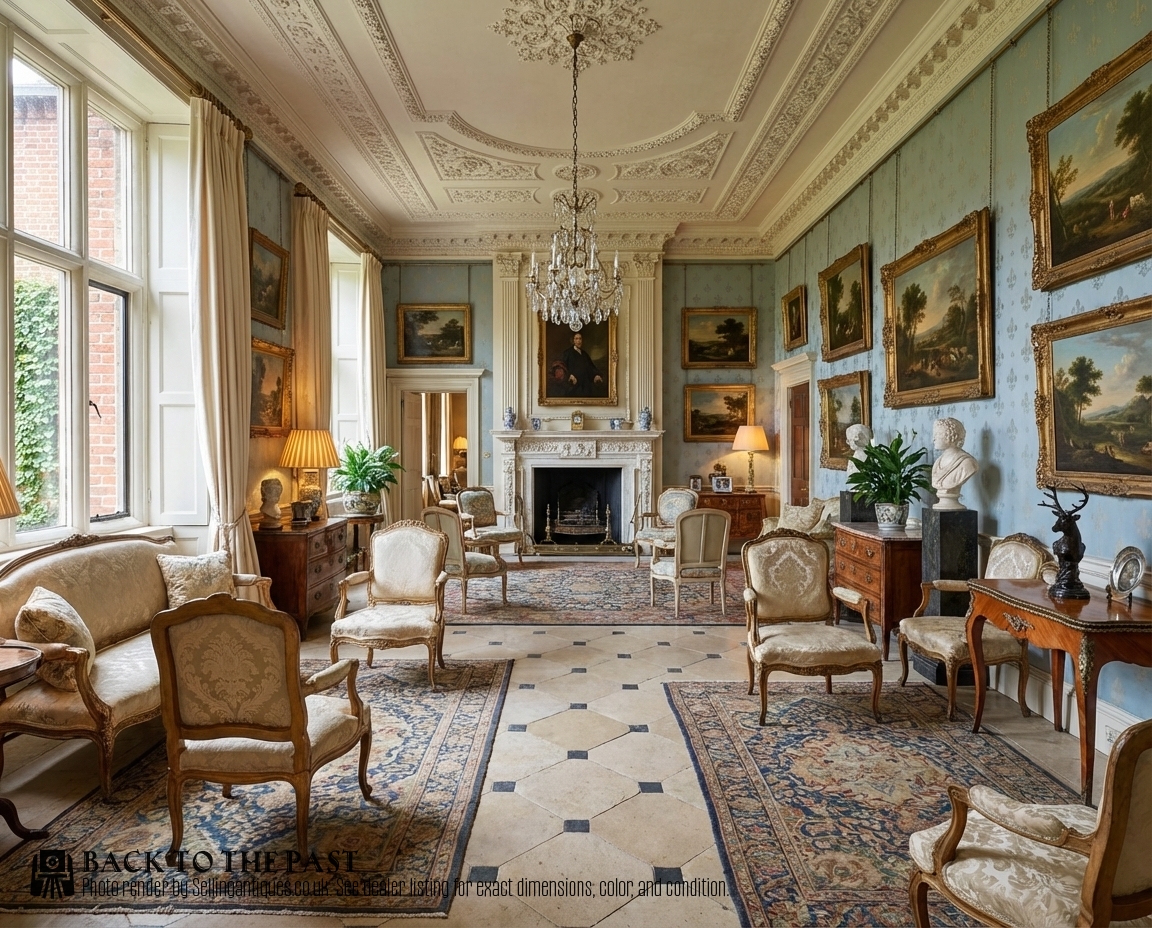
A serpentine games table sits well against a hallway or drawing-room wall in its closed position, displaying its figured wood and shaped front. Placing it away from direct sunlight and heat sources protects the polished veneer and internal hinges.
Opening the leaf occasionally for display or use allows the piece to function as it did in historic interiors.