
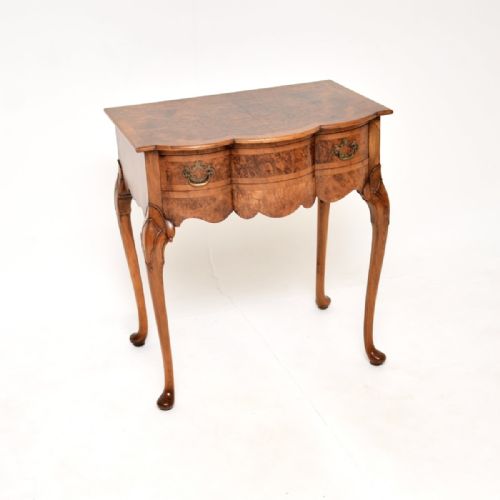
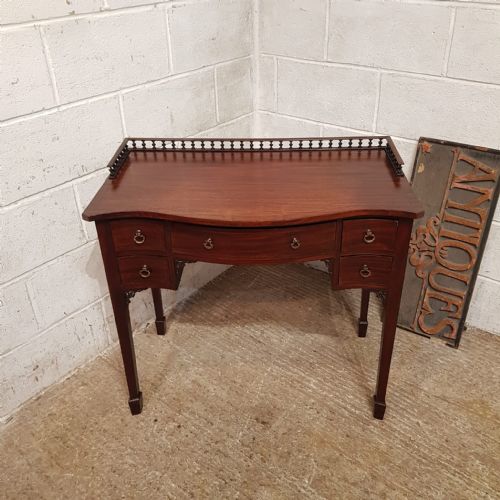

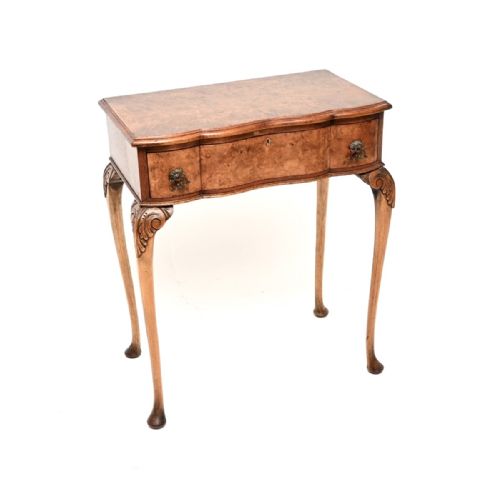


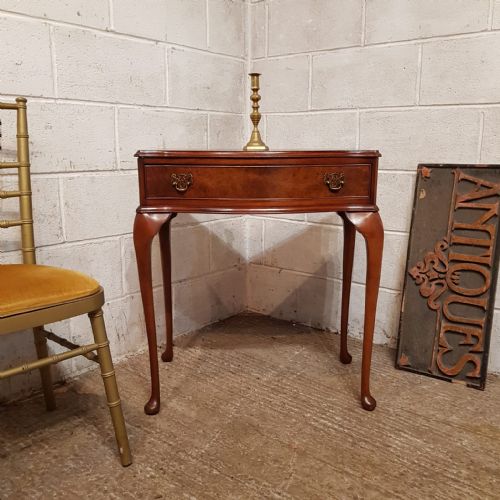


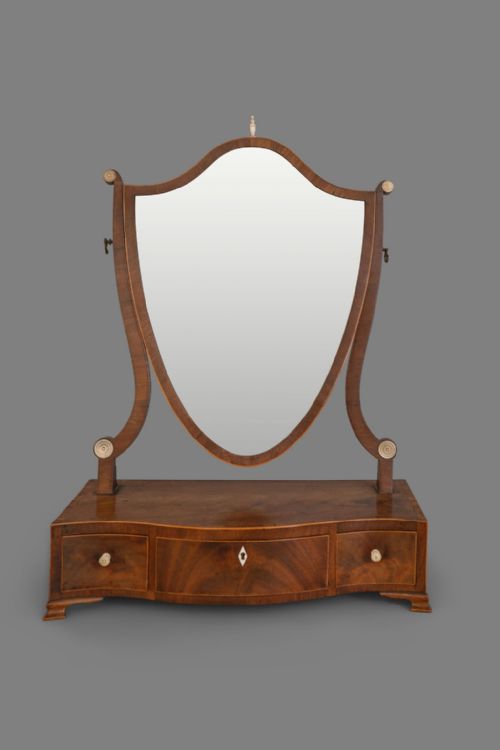
Serpentine Front Dressing Table
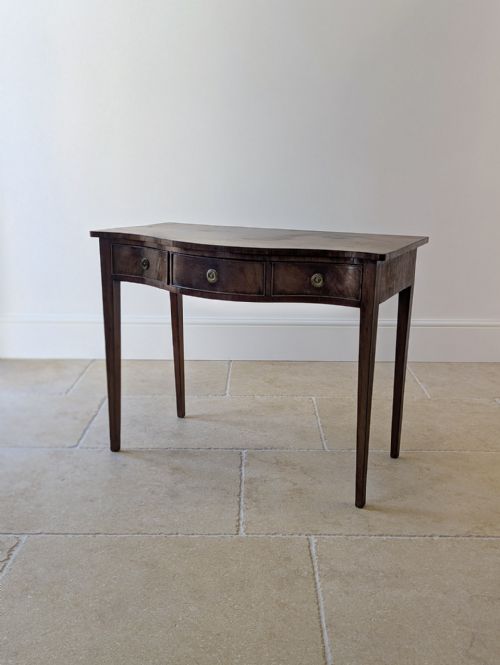
A serpentine front dressing table brings a fluid, undulating silhouette to a bedroom, combining curved timber with functional surface space.
Serpentine Front Dressing Table
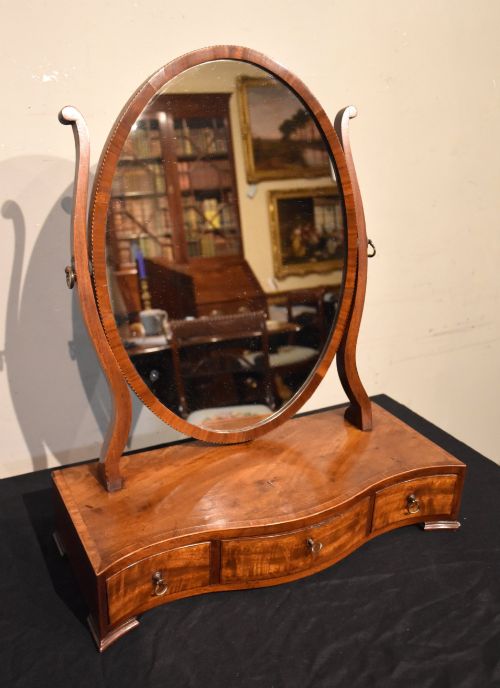
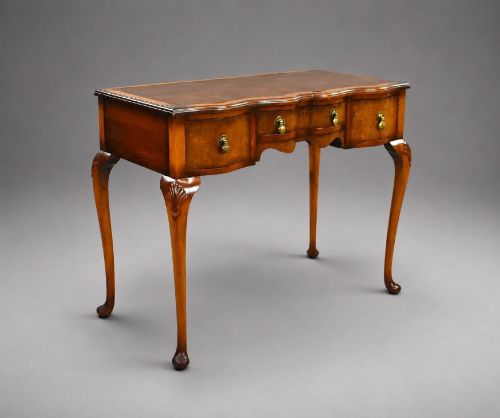
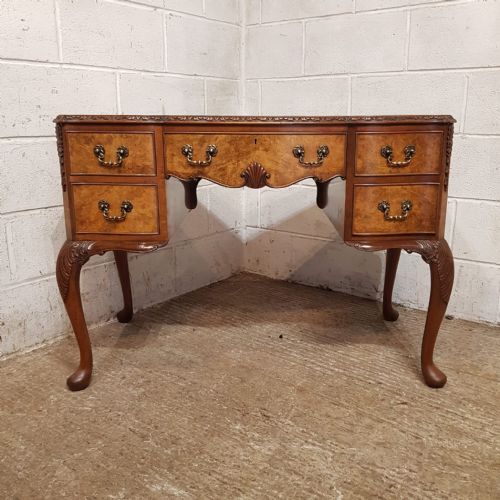
The materials and styles range from eighteenth-century mahogany and walnut to Edwardian and later burr walnut revivals, often incorporating drawers and fitted compartments. Alongside full-sized dressing tables, the selection includes related serpentine forms such as side tables, writing desks, and toilet mirrors that share the signature undulating profile.
How they were made
Cabinet makers constructed these undulating forms using dense hardwoods such as mahogany and walnut, frequently applying figured veneers like burr walnut or satinwood to the curved drawer fronts to emphasise the grain. Brass handles, escutcheons, and occasional bone or leather details complete the construction, demanding precise joinery to ensure drawers follow the complex convex and concave curves without binding.
Mirrors associated with these tables utilise pivoting frames supported by upright arms, often resting on box bases containing small drawers. The glass is hand-silvered and set within shaped wooden surrounds that mirror the contour of the table below.
Listings include mahogany, walnut, burr walnut, and satinwood pieces spanning from the eighteenth century to the 1930s.
What varies in quality
The distinction between ordinary and superior pieces lies in the fluidity of the curves and the selection of the timber veneers. A master cabinet maker achieved a balanced, symmetrical wave across the front that integrates smoothly with the frame, whereas lesser examples display abrupt transitions or stiff, clumsy bends.
Subtleties in the hardware, secondary woods used in drawer linings, and the crispness of any inlaid stringing or crossbanding separate standard workshop production from finer, more accomplished commissions.
Maple and Co
The Serpentine Front Dressing Table Glossary
- Serpentine
- A curved furniture front characterised by a convex centre flanked by concave wings, or the reverse. This undulating shape requires advanced woodworking skill to execute properly.
- Burr walnut
- A veneer sliced from the grotesque growths on a walnut tree, yielding a swirling, highly figured grain pattern. It was favoured for high-end furniture surfaces during the Georgian and later revival periods.
- Toilet mirror
- A small mirror mounted on a stand, historically placed on a dressing chest or table for personal grooming. These often incorporate small drawers in the base.
- Crossbanding
- A strip of veneer applied to the border of a table top or drawer front with the grain running perpendicular to the main panel. It creates a neat, contrasting frame effect.
- Kneehole desk
- A writing table or dressing desk featuring a central recessed space for the legs, flanked by pedestals of small drawers. This form allows the user to sit comfortably close to the surface.
Serpentine Front Dressing Table: Frequently Asked Questions
What is a serpentine front?
A serpentine front is a shaped furniture profile that curves outward in the middle and inward at the sides, creating a wave-like appearance.
This contour was difficult to build and indicates skilled cabinet work, appearing frequently on tables, desks, and mirrors from the eighteenth century onward.
How do I date a dressing table?
Dating relies on timber choices, construction methods, and hardware styles. Earlier pieces utilise solid mahogany or walnut with hand-cut dovetails, while twentieth-century revivals often feature burr walnut veneers.
Secondary woods and drawer linings also provide clear clues to the period of manufacture.
Where should I place a dressing table mirror?
These mirrors are designed to sit on top of a chest of drawers, sideboard, or dressing table. They provide a movable glass surface for personal grooming while adding height and architectural interest to a wall or corner.
Ensure the supporting surface is deep enough to bear the weight of the box base safely.
How do I care for antique walnut?
Antique walnut surfaces benefit from gentle cleaning with a soft, dry cloth to remove dust. Avoid harsh chemical polishes and keep the timber away from direct sunlight and heat sources to prevent the wood from drying out or splitting.