

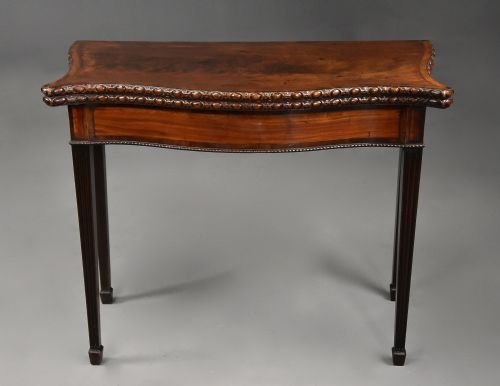
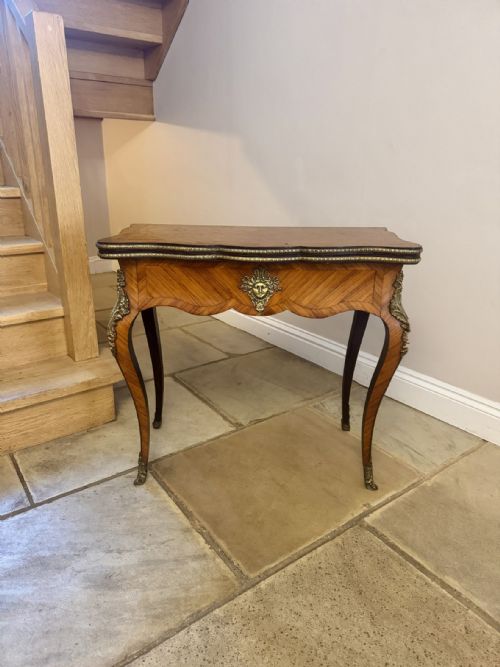
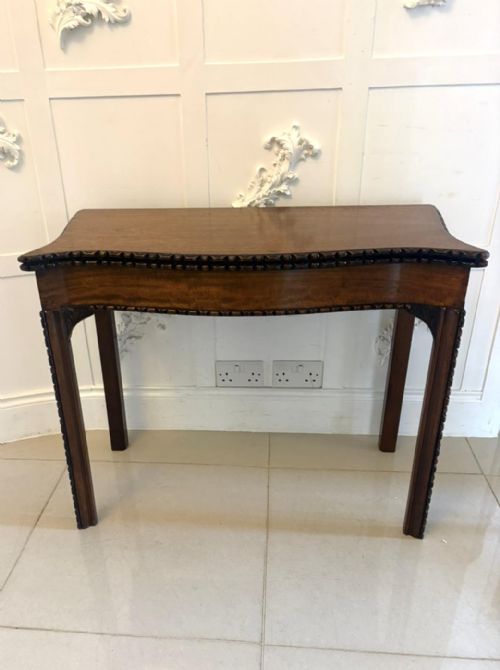
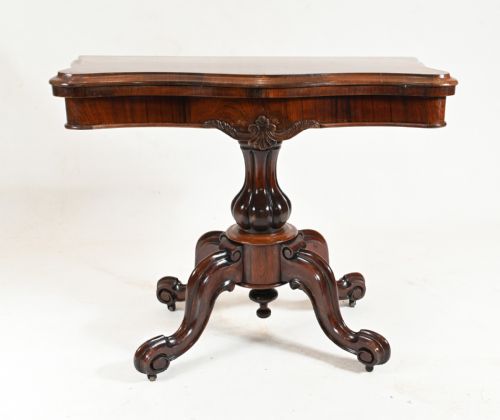


Serpentine Fold Over Table
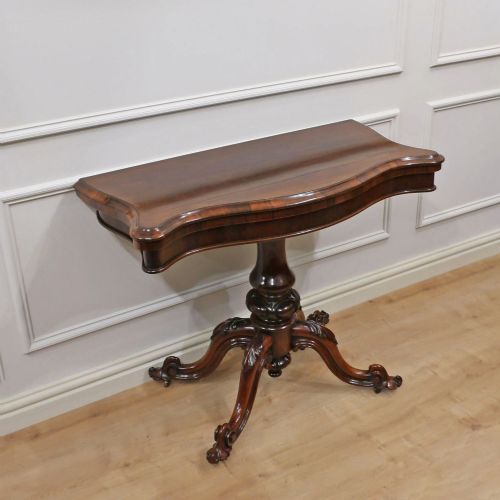
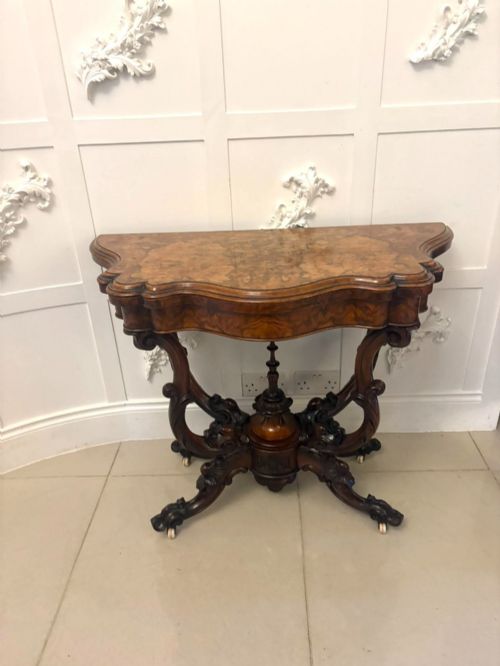
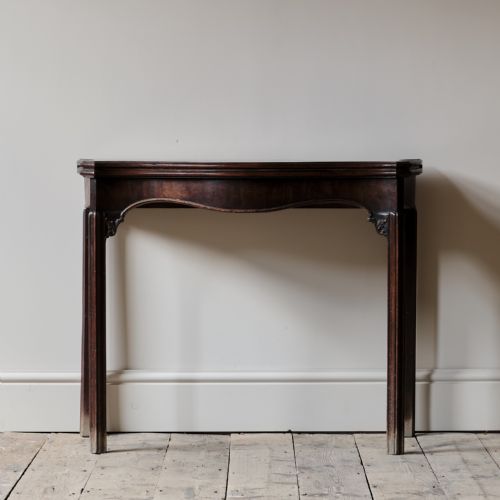
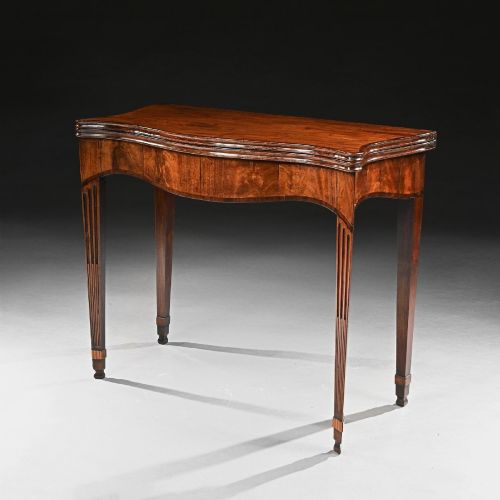
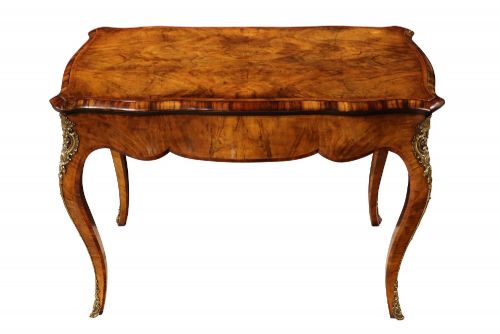
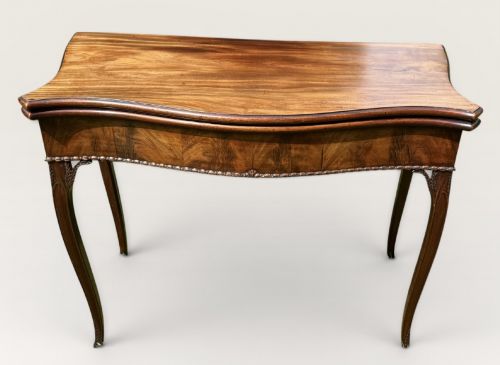
These serpentine fold over table pieces offer undulating timber tops that double their surface area when opened for cards or tea.
Identifying serpentine fold over table examples
A serpentine fold over table presents an undulating curved front edge that sweeps inward and outward in a continuous line. These pieces function primarily as card tables, tea tables, or console tables, transforming from a slim profile against a wall into a stable surface when the hinged top opens.
The versions most commonly met across these listings date from the eighteenth century through the Victorian era. Mahogany and burr walnut dominate the selection, often taking form within George III, Victorian, or Louis XV Revival aesthetics.
Makers shaped these designs to serve polite society, providing versatile furniture that shifted easily from a decorative console into a games surface. Surviving examples demonstrate how cabinet-makers balanced complex curved timber with practical hinges and rotating supports.
Materials and construction
Cabinet-makers constructed these pieces using solid timbers like mahogany alongside decorative veneers such as burr walnut and satinwood. Shaping the signature wavy edge required careful sawing and timber selection to follow the grain along the curved perimeter without splitting.
Metal components played a structural role, utilising brass and ormolu for hinges, swing-leg pivots, and decorative mounts. Craftsmen joined the primary frame using traditional joinery before securing the folding top to allow smooth rotation and level extension.
Retail Price Guide 2026
Typical UK retail prices for serpentine fold over table, calculated from the Sellingantiques database of over a million retail prices indexed since 2003. This retail price guide relies exclusively on Sellingantiques data; no external sources or auction records are used, so the figures do not describe the wider market.
Some nineteenth-century card tables hide shallow wells beneath their folding tops to store stray dice and counters.
Assessing quality and execution
Quality rests upon the fluency of the curved timber and the precision of the timber matching across the folding top. Superior examples maintain a harmonious grain pattern that flows seamlessly when the leaf opens, showing disciplined hand-shaping along the undulating edge.
The integrity of the hinge mechanism and the stability of the swing leg separate fine workshop production from simpler output. Better pieces retain tight joints and smooth action, ensuring the extended leaf bears weight without sagging or straining the pivot points.
The Serpentine Fold Over Table Glossary
- Serpentine
- A curved architectural line that curves inward then outward in a continuous wave. This shape defines the characteristic front elevation of the tables.
- Fold over
- A hinged top design where the surface doubles in area by rotating or flipping open onto a support frame. This mechanism conceals a well or creates a larger table surface.
- Burr walnut
- A prized timber harvested from walnut tree growths that produces intricate, swirling grain patterns. It appears frequently as veneer on Victorian and mid-nineteenth century tops.
- Ormolu
- Gilded bronze used for decorative mounts and accents, particularly visible on French revival pieces. It adds metallic contrast to the dark timber surfaces.
Frequently Asked Questions
What is a serpentine fold over table?
A serpentine fold over table is a piece of furniture featuring a curved, wave-like front edge and a hinged top that opens to double its surface area. These items functioned historically as compact console tables that transformed into larger surfaces for card games or tea.
Surviving examples showcase various historical periods from the eighteenth century onward, utilising woods like mahogany and burr walnut. Their dual nature made them practical for entertaining in period drawing rooms.
How were these tables used originally?
Households used these tables against drawing room walls as decorative console surfaces when closed. When guests arrived for social gatherings, the top folded open to accommodate card games, tea service, or conversation.
The clever pivoting mechanisms allowed servants or hosts to quickly reconfigure the room's layout without moving heavy furniture. This versatility explains their enduring popularity in historic interiors.
How do I live with one today?
Living with one of these tables involves placing it in a hallway, living room, or study where its curved profile can be appreciated. Keeping the top closed preserves the timber and provides a convenient surface for lamps or decorative objects.
When guests visit, the table easily opens to serve drinks or act as a temporary desk. Care should be taken to protect the polished wood surfaces from moisture and direct heat.
How do I tell periods apart?
Distinguishing between periods relies on examining timber choices, leg styles, and construction details. Eighteenth-century pieces often feature solid mahogany with straightforward cabriole or straight legs, while Victorian and later revival examples frequently employ burr walnut veneers and elaborate shaping.
French revival pieces display distinctive ormolu mounts and softer, more exuberant curves reminiscent of Louis XV designs. Comparing the interior hinges and secondary woods also helps establish the approximate decade of manufacture.