



Serpentine Dressing Mirror
A serpentine dressing mirror brings fluid lines and practical elegance to a chest or table.
Serpentine Dressing Mirror
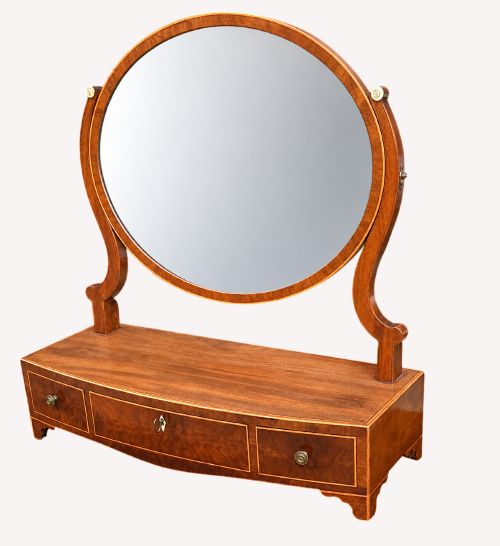
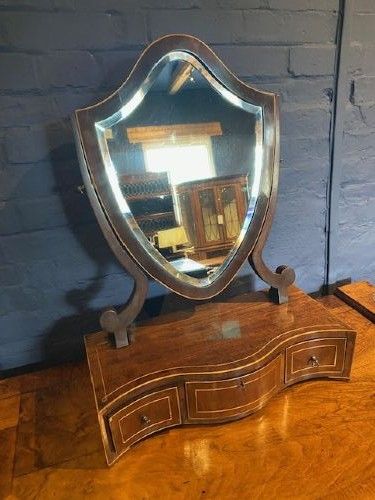
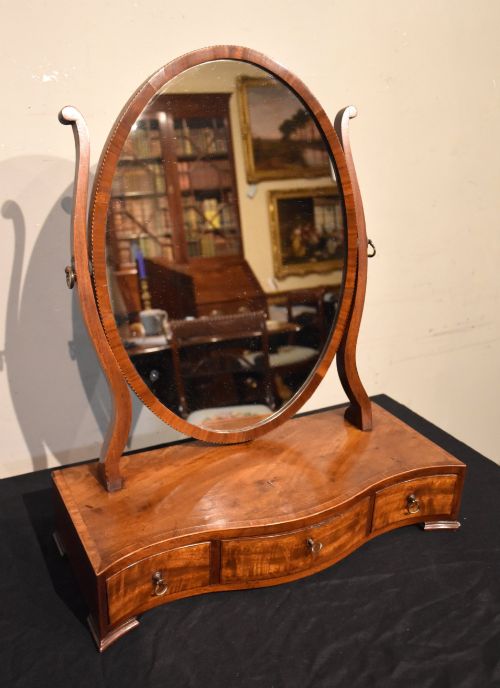
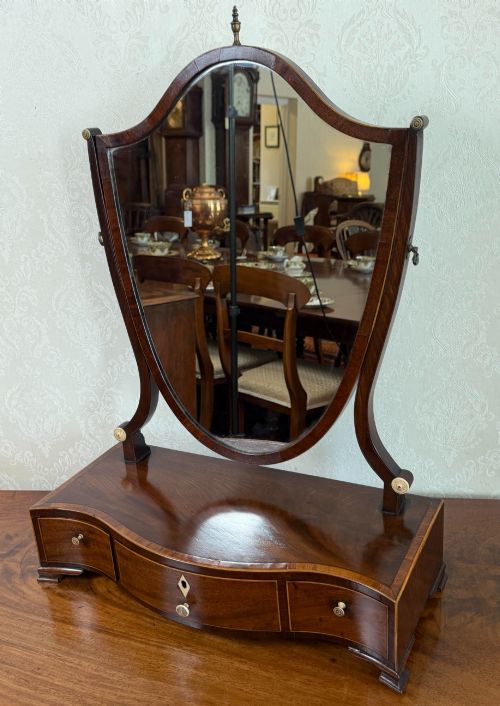
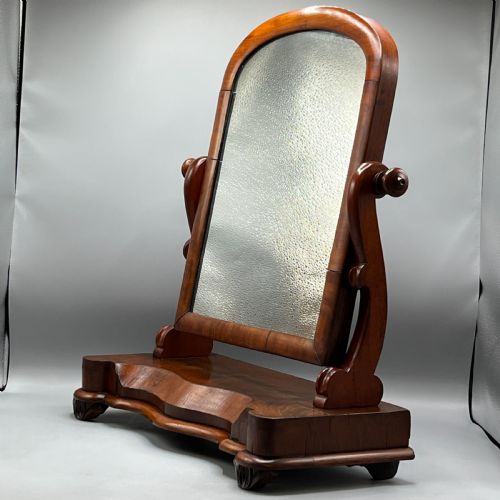
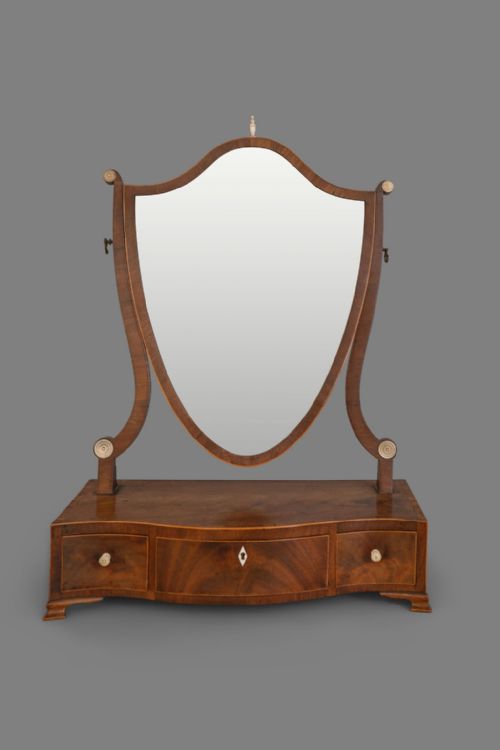
A serpentine dressing mirror is a tabletop looking glass framed by an undulating wooden base, designed for a dressing table or chest of drawers. These pieces date principally from the eighteenth and nineteenth centuries, spanning Georgian, Regency, and Victorian periods.
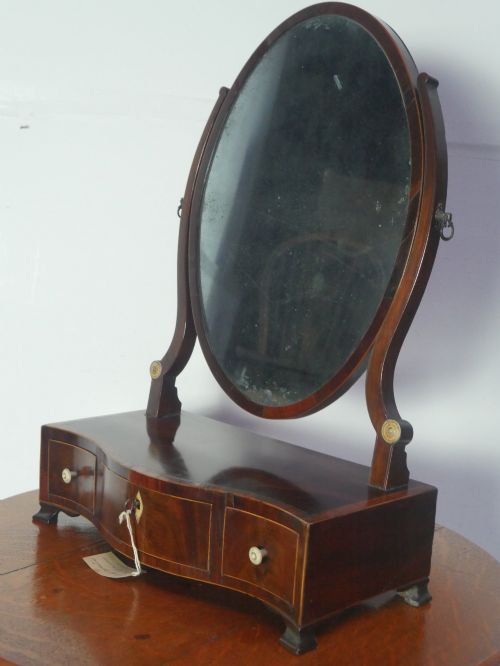
The form typically combines a pivoting frame holding the mirror glass with a small box base containing one to three small drawers. Mahogany is the predominant timber, often enhanced by walnut, boxwood inlay, or satinwood details.
Most examples found on this page display the characteristic curved serpentine front profile. They serve as functional dressing accessories while introducing traditional craftsmanship to a room.
Materials and construction
Cabinet makers constructed these mirrors primarily using solid timbers like mahogany and walnut, selected for their grain and durability. Frames and box bases often incorporate carefully fitted joints to support the weight of the pivoting glass.
Decorative touches such as boxwood stringing and inlay provide contrast against the darker wood surfaces. Mirror glass is set within shaped wooden surrounds, connected by brass pivots that allow the angle of reflection to be adjusted.
Listings feature mahogany, walnut, and satinwood, spanning the Georgian, Victorian, and Edwardian eras.
Evaluating craftsmanship and proportion
Quality rests in the precision of the serpentine curve across the timber base and the harmony of proportions between the glass frame and the drawers below. Finer examples display clean joinery, subtle stringing, and well-figured wood veneers.
The integrity of the brass hardware and the retention of the original mirror glass contribute to a piece's authenticity. Superior execution is evident when the drawers move smoothly within finely dovetailed compartments.
The Serpentine Dressing Mirror Glossary
- Serpentine front
- A furniture front characterised by a sweeping convex centre flanked by concave curves, or vice versa.
- Toilet mirror
- A traditional term for a smaller dressing mirror designed to sit upon a table or chest.
- Swing mirror
- A looking glass mounted on pivots within a vertical frame, allowing the glass to tilt.
- Boxwood inlay
- Contrasting light wood inserted into the surface of a darker timber for decorative effect.
- Shield shape
- A mirror glass cut into the form of a heraldic shield, popular during the late eighteenth century.
Serpentine Dressing Mirror: Frequently Asked Questions
What is a serpentine dressing mirror?
A serpentine dressing mirror is a tabletop looking glass featuring a curved, undulating wooden base with small drawers. They were designed to sit upon dressing tables or chests.
These pieces provide both a functional reflecting surface and a compact display of period cabinet making.
How were these mirrors used?
People placed them on bedroom furniture for personal grooming and styling. The small drawers held personal items like jewellery and cosmetics.
The pivoting mechanism allowed users to adjust the viewing angle as needed.
How do I date a dressing mirror?
Dating relies on observing the timber types, structural joinery, and the shape of the mirror frame and base. Georgian pieces often feature rich mahogany and boxwood stringing, while Victorian examples tend to be heavier in scale.
Examining the backboards and the type of mirror glass provides further clues to the period of manufacture.
Where should I place a dressing mirror?
These mirrors suit placement on top of a solid chest of drawers, a sideboard, or a dedicated dressing table. Their compact footprint allows them to fit comfortably in bedrooms or hallways.
Positioning them near a light source enhances their reflective qualities while displaying the wood grain.