
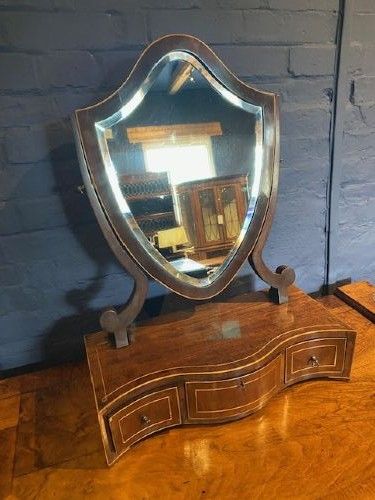

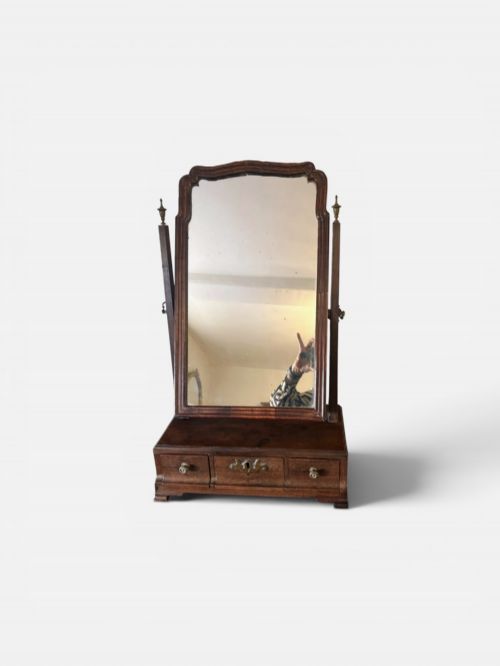


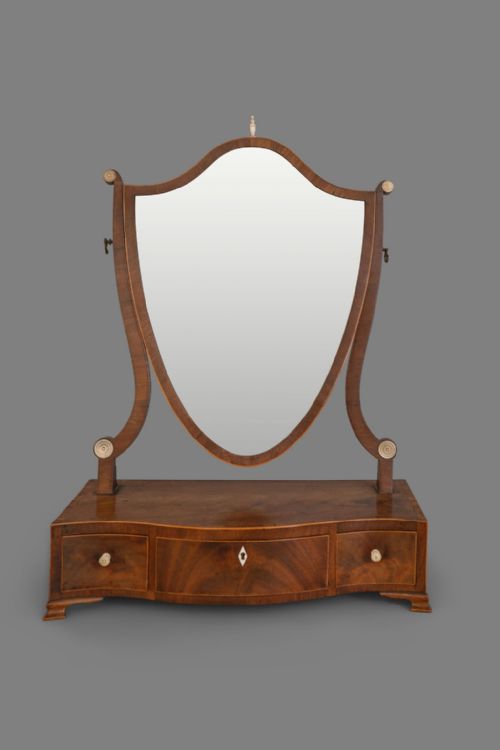


George III Swing Glass
George iii swing glass pieces are traditional dressing mirrors designed for the vanity, offering adjustable reflection for daily grooming.
George III Swing Glass
When you search for george iii swing glass, you encounter functional table and floor mirrors designed to tilt within a wooden frame. These pieces serve as practical dressing table accessories or standing cheval mirrors used for personal grooming.
The selections available on this page lean heavily towards Georgian forms, predominantly toilet mirrors and dressing table mirrors fashioned from timber. You will also find related silver sugar baskets listed alongside the mirrors.
Most examples date to the eighteenth century or around eighteen hundred, though occasional Edwardian interpretations appear in the listings. These objects range from compact box-base toilet mirrors to tall cheval frames.
How they were made
Cabinetmakers constructed these frames using solid and veneered hardwoods such as mahogany, satinwood, harewood, walnut, and burr maple. Mirror glass plates are set within adjustable pivots supported by upright arms.
Many dressing mirrors incorporate small drawers beneath the glass for storage, sometimes enhanced with decorative wood inlays. Metal components like brass hardware and sterling silver fixtures provide structural support and decorative detail.
Some eighteenth-century dressing mirrors included hidden compartments behind the small drawers for concealing personal letters and trinkets.
What varies in quality
The standard of a george iii swing glass piece depends on the choice of timber figure, such as burr maple or finely grained mahogany. Superior examples display refined proportions, sophisticated serpentine shaping, and delicate inlay work.
The George III Swing Glass Glossary
- Toilet mirror
- A small mirror designed to sit atop a dressing table or chest of drawers, usually featuring a box base with small drawers.
- Cheval mirror
- A tall, freestanding mirror supported in a frame that allows the entire glass plate to swing.
- Serpentine
- A curved line of furniture fronts, featuring a convex centre flanked by concave sides.
- Harewood
- Sycamore wood that has been stained to resemble a greyish-brown timber, often utilised in fine eighteenth-century marquetry and inlay.
- Sugar basket
- A small open container, often fashioned from pierced silver, designed to hold sugar lumps on the dining or tea table.
George III Swing Glass: Frequently Asked Questions
What is a swing glass?
A swing glass is a pivoting mirror suspended between two upright posts, allowing the user to adjust the angle of reflection.
These pieces were essential furnishings on eighteenth-century dressing tables before full-length wall mirrors became common.
Where were these mirrors placed?
Tabletop toilet mirrors sat upon dressing chests, sideboards, or dedicated vanity tables in bedrooms and dressing rooms.
Larger cheval mirrors stood directly on the floor to provide a full-length view for checking complete outfits.
How do I care for antique glass?
Clean mirror glass gently with a soft cloth and mild cleaning solution, avoiding harsh chemicals that might damage silvered backs.
Protect wooden frames from direct sunlight and extreme humidity changes to prevent warping and veneer lifting.
Are all these mirrors Georgian?
While the majority of pieces date from the Georgian period or the eighteenth century, the selection also includes Edwardian reproductions.
Examining the construction methods, timber types, and hardware styles helps distinguish original eighteenth-century work from later interpretations.