




Secretary Desk Glazed Top
A secretary desk glazed top combines a writing compartment with a shelved upper cabinet, giving you both a workspace and display storage in one piece of furniture.
Secretary Desk Glazed Top
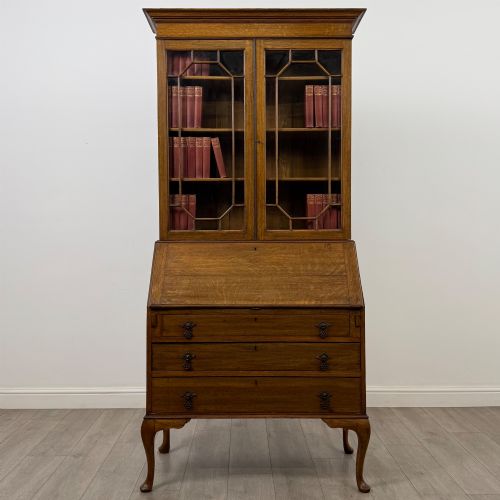
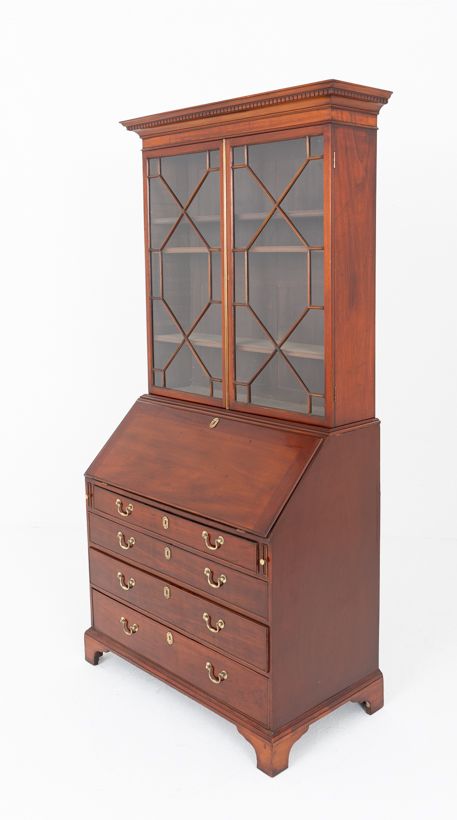
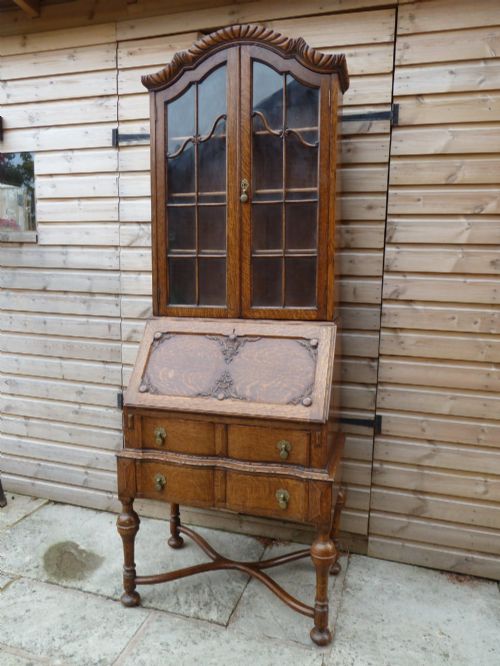
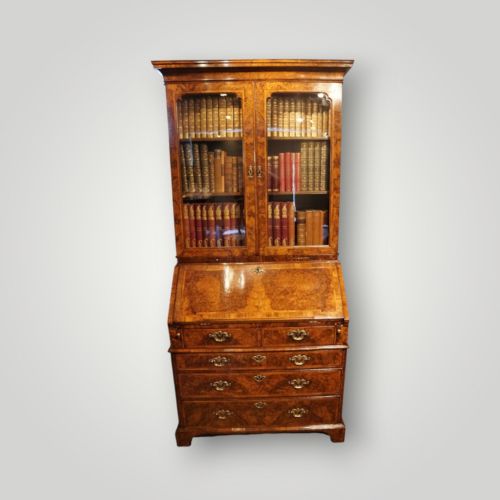
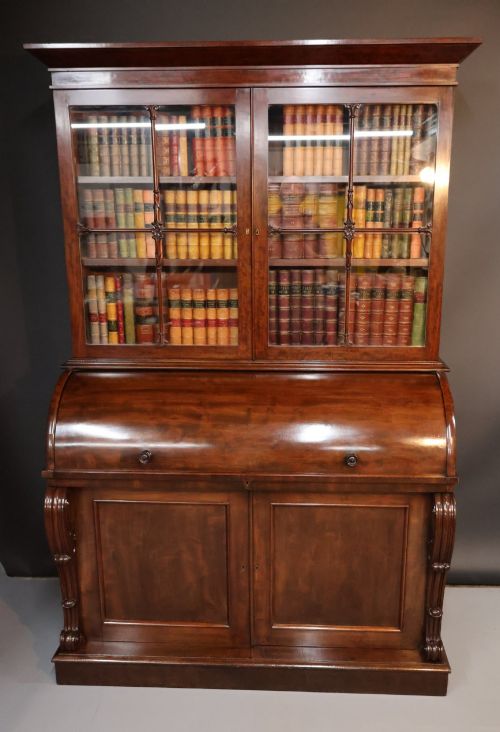
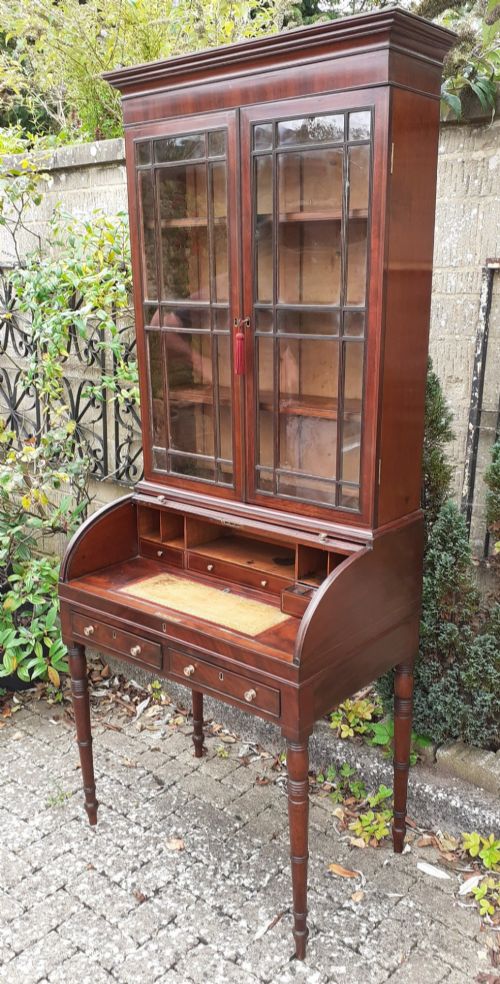
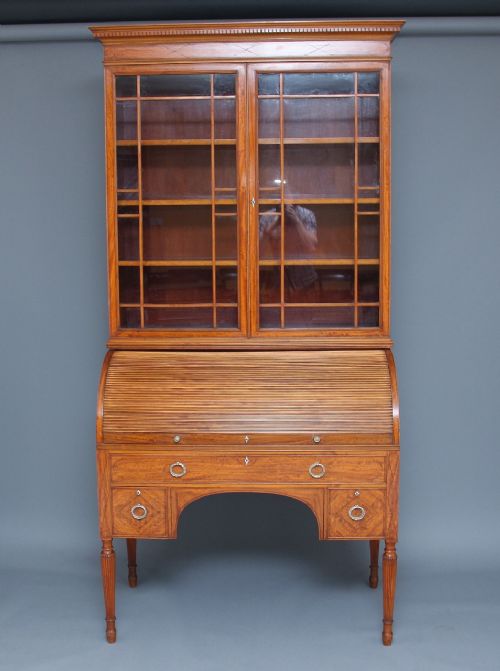
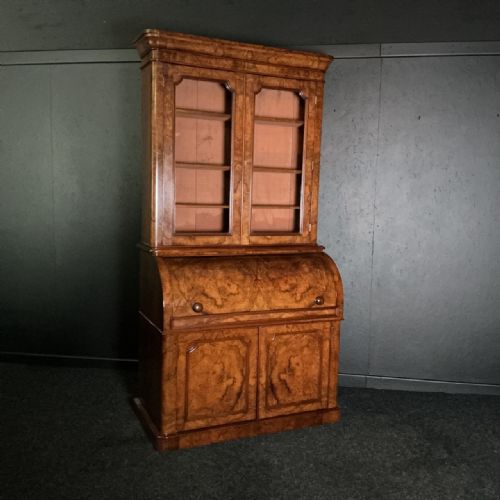
A secretary desk glazed top is a two-part form uniting a lower writing desk with an upper glazed bookcase. These tall combination pieces serve dual functions for storage and correspondence.
You will encounter bureau bookcases and secretaire bookcases spanning the eighteenth, nineteenth, and early twentieth centuries. The selection ranges from compact Edwardian oak models to substantial Georgian mahogany examples.
The upper section uses glass panelling to protect books while keeping them visible. Below, a fall-front flap, cylinder top, or tambour mechanism opens to reveal writing surfaces and small fitted drawers.
Materials and Construction
Cabinet makers utilised dense hardwoods including mahogany, walnut, oak, and rosewood for the primary carcase and drawer linings. Finer pieces often incorporated satinwood veneers and delicate brass inlays to embellish the exterior surfaces.
The upper glazed doors required precise joinery to hold individual glass panes securely within timber framing. Lower desk sections integrated hinged writing slopes, pull-out candle slides, and complex internal pigeonholes.
Secret compartments inside fitted interiors gave writers a private space to hide their most confidential notes and letters.
Standards of Execution
Quality rests upon the selection of timber figures, such as figured mahogany or rich walnut grain, matched across the drawer fronts and fall-front panels. Finer examples display meticulous cross-banding, precise string inlay, and well-figured internal joinery.
Structural integrity depends on the original hardware, drawer construction with proper dovetailing, and the smooth operation of moving elements like cylinder tops and tambour doors.
Tudor and Burrey·Edwards and Roberts
The Secretary Desk Glazed Top Glossary
- Bureau bookcase
- A writing bureau combined with an upper shelving unit enclosed by doors. This form provides a desk and bookcase in a single tall piece.
- Secretaire bookcase
- A cabinet featuring a dedicated writing drawer with a drop-front or sliding front beneath an upper bookcase. The internal fittings typically include small drawers and pigeonholes.
- Cylinder top
- A curved wooden shutter that rolls back into the desk body to reveal the writing surface and interior compartments. It operates on tracks recessed into the sides of the desk.
- Tambour
- A flexible shutter made from narrow strips of wood glued to a canvas backing. This mechanism slides along a groove to conceal desk interiors.
- Candle slide
- A pull-out shelf positioned just above the desk surface to hold lighting. These small boards slide back into the frame when not required.
Secretary Desk Glazed Top: Frequently Asked Questions
How do I use a cylinder desk?
The curved wooden cylinder rolls backward into the body of the cabinet to uncover the writing surface and internal compartments. Pulling the writing slide forward often extends the working area simultaneously.
Once finished, you roll the cylinder back down to conceal your papers and writing implements, keeping the desk tidy.
Where were candle slides placed?
Candle slides pull out directly beneath the upper bookcase doors and above the main writing surface. They provided illumination for writing before the invention of electric light.
You push the small boards back flush with the cabinet frame during daylight hours or when the desk is closed.
How do I date a secretary desk?
Dating relies on timber choices, construction methods, and stylistic details such as brass hardware and inlay patterns. Georgian pieces often display dense Cuban mahogany and refined proportions.
Later Edwardian versions frequently incorporate lighter satinwood veneers or oak construction with simpler internal fittings.