


Secretaire Drawer Writing Desk
A secretaire drawer writing desk provides hidden workspace within traditional furniture like chests and bookcases.
Secretaire Drawer Writing Desk
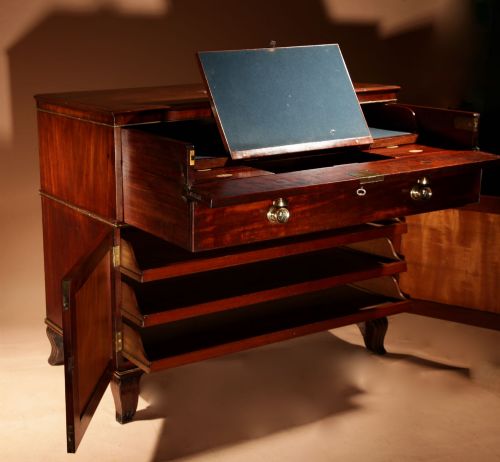
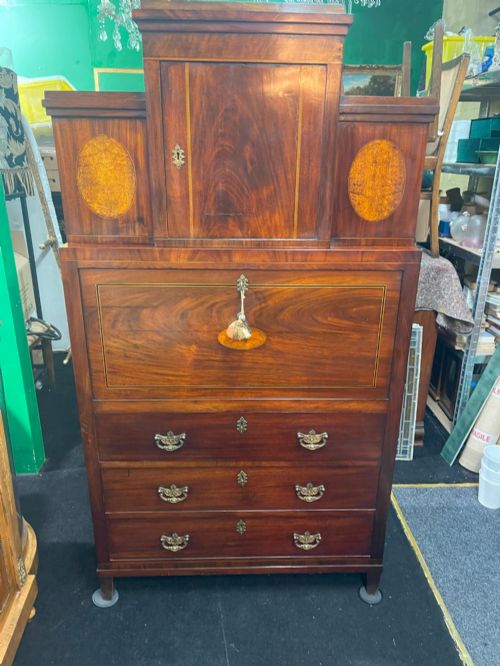
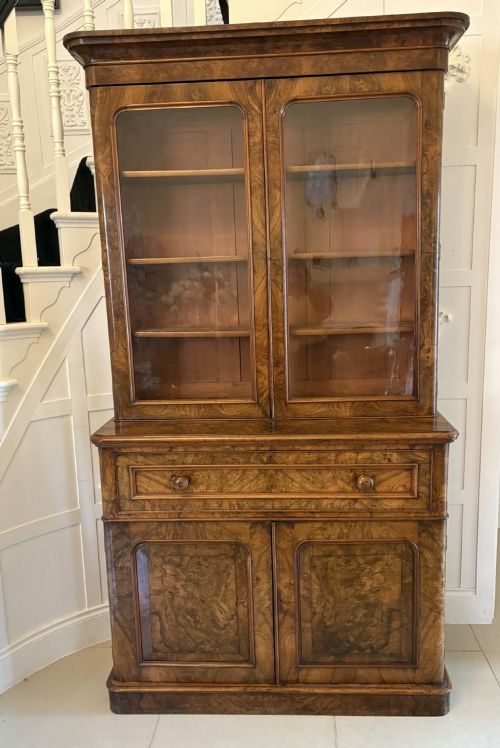
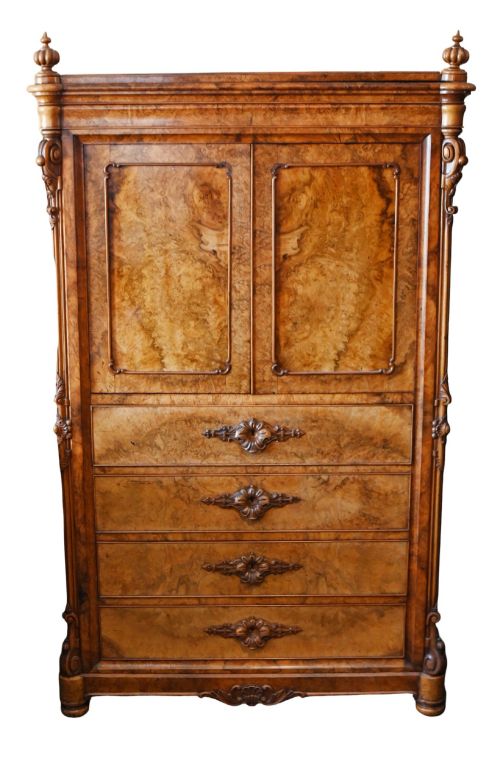
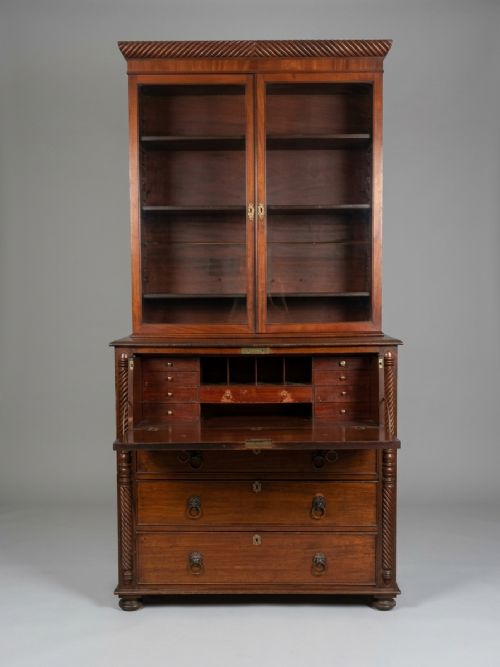
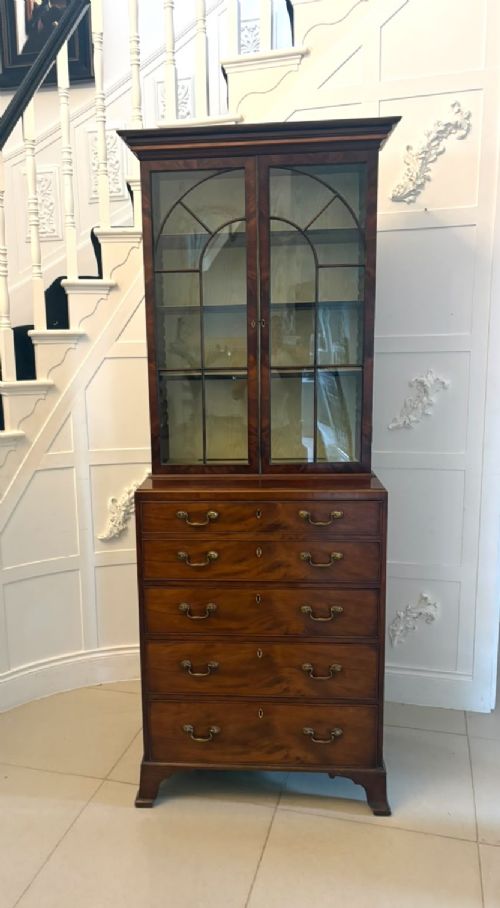
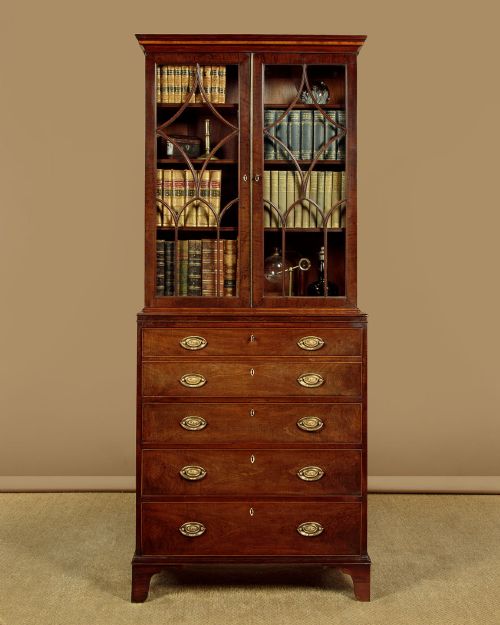
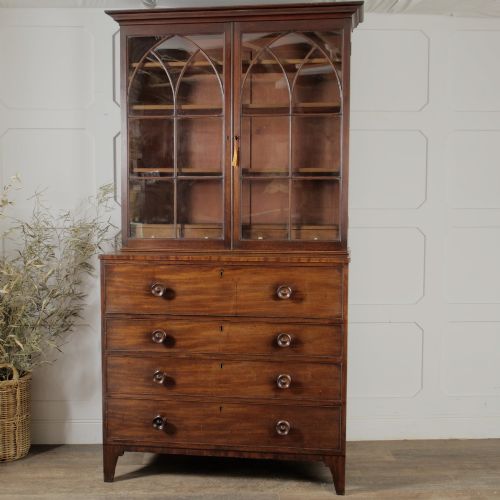
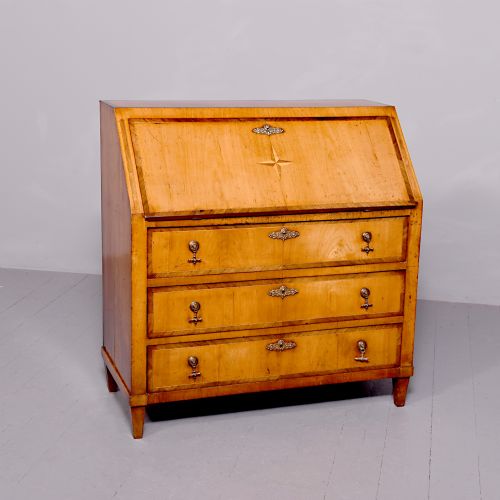
A secretaire drawer writing desk brings together functional storage and a drop-down writing surface, frequently encountered as part of a chest of drawers, bookcase, or cabinet. These pieces originate primarily from the 18th and 19th centuries, spanning the Georgian, Regency, and Victorian periods.
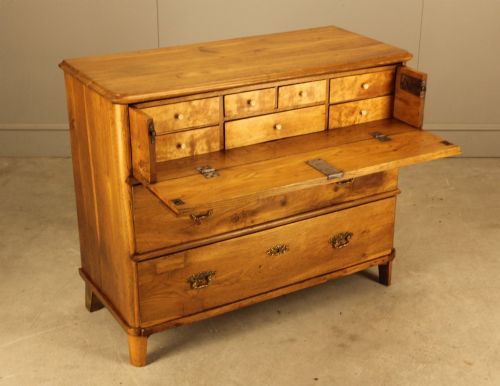
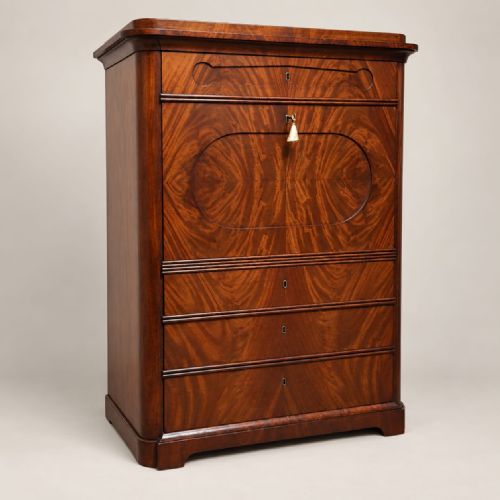
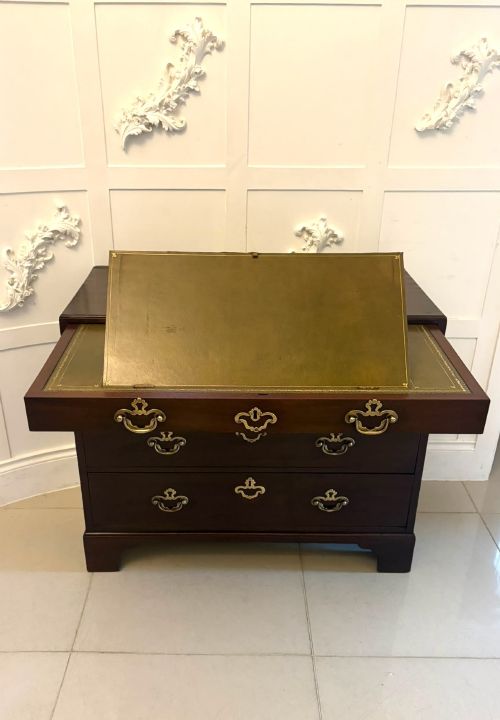
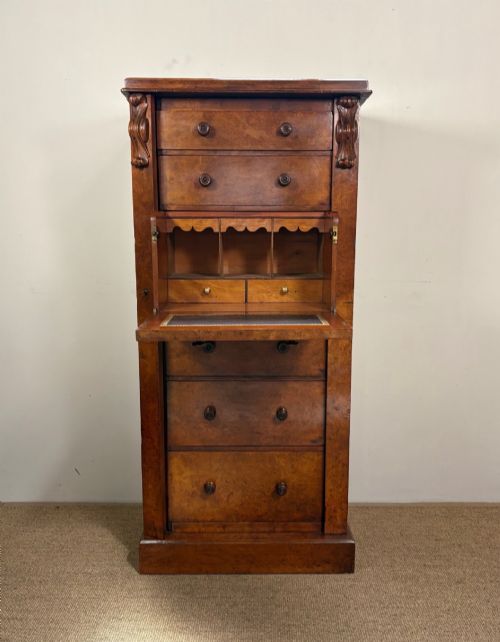
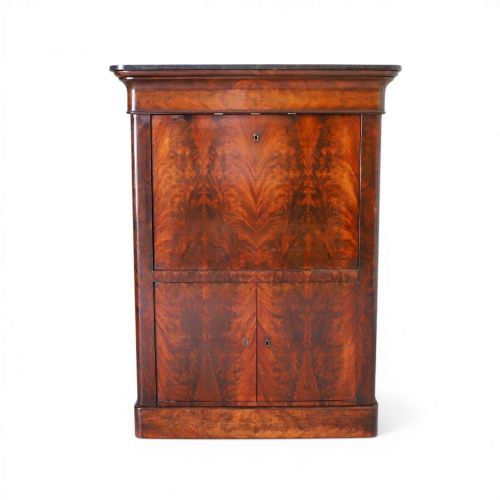
Buyers looking at this selection will find various interpretations, ranging from tallboys and military chests in camphor wood or mahogany to refined French cabinets with marble tops. The primary form conceals fitted writing compartments and small drawers behind a drop-front drawer panel.
Materials and Construction
Makers utilised dense timbers such as mahogany, walnut, rosewood, and oak, often applying fine veneers like satinwood or burr birch to primary surfaces. Brass handles, corner brackets, and ormolu mounts provide structural reinforcement and decorative contrast on military and continental examples.
Internal compartments incorporate leather writing inserts and secret drawers constructed with traditional joinery. Glass doors appear on bookcase variants, while marble tops finish specific French and continental cabinets.
Some cabinets hide secret compartments behind spring-loaded panels, requiring specific wooden pegs to unlock.
Craftsmanship and Proportion
Quality rests in the precision of the internal fittings, where hidden drawers operate smoothly and pigeonholes display careful timber selection. The alignment of veneers across the fall-front panel and the integration of the writing surface distinguish higher-grade examples.
Proportion and timber figure dictate the visual strength of the piece, particularly where satinwood stringing or marquetry inlay decorates mahogany and walnut carcases.
Maison Krieger
The Secretaire Drawer Writing Desk Glossary
- Secretaire
- A piece of furniture containing a drawer or compartment that drops down to form a writing surface. It conceals pigeonholes and small drawers within the main carcase.
- Fall-front
- A hinged panel that pulls down to a horizontal position for writing. This panel disguises the internal desk fittings when closed.
- Tallboy
- A chest of drawers stacked vertically, often comprising a lower chest and an upper section. Examples in this category include integrated writing drawers.
- Ormolu
- Gilded bronze mounted onto furniture for decorative effect. It appears frequently on continental cabinets from the 19th century.
- Campaign chest
- Portable furniture made in sections with brass hardware for military transport. These items often incorporate secretaire writing drawers.
Secretaire Drawer Writing Desk: Frequently Asked Questions
What is a secretaire drawer writing desk?
A secretaire drawer writing desk combines a standard furniture form, such as a chest of drawers or bookcase, with a hinged drawer front that drops down to reveal a fitted writing surface.
Inside, users find small drawers, pigeonholes, and compartments designed for correspondence and paperwork.
How were these desks used historically?
These pieces served as private writing spaces in domestic and military settings where dedicated desk room was limited.
The lockable drop-front allowed owners to secure sensitive documents and writing materials while keeping the room tidy.
How do I identify the period of a desk?
Dating relies on timber choice, construction methods, and prevailing stylistic details like Georgian bracket feet or Regency brass inlays.
Secondary woods inside the drawers and the style of the brass hardware offer further clues to the decade of manufacture.
Where should I place one at home?
These desks suit studies, living rooms, and bedrooms due to their dual function as storage units and compact work surfaces.
Allow enough clearance in front of the piece for the fall-front panel to open fully during use.