
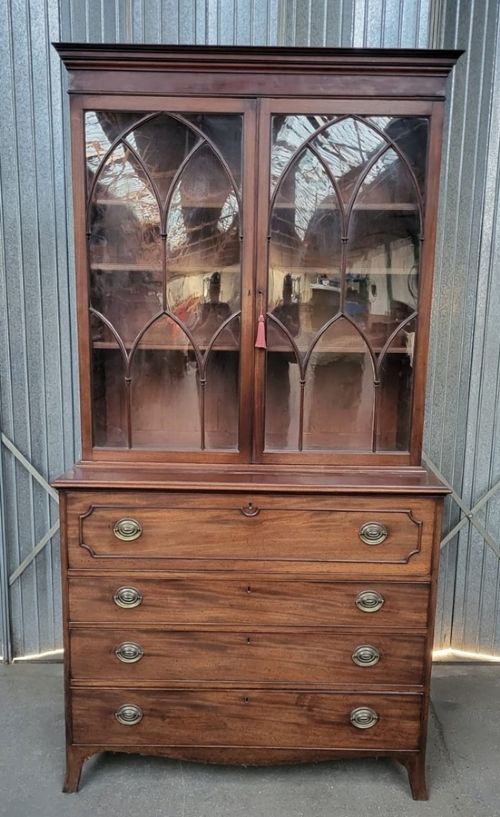
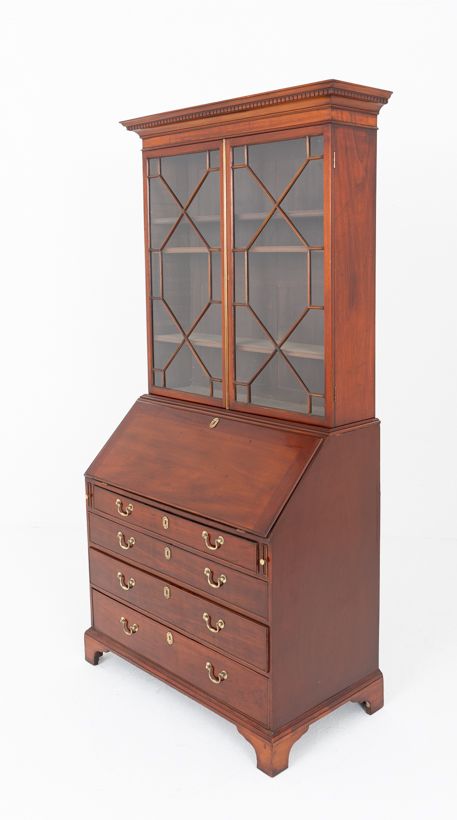
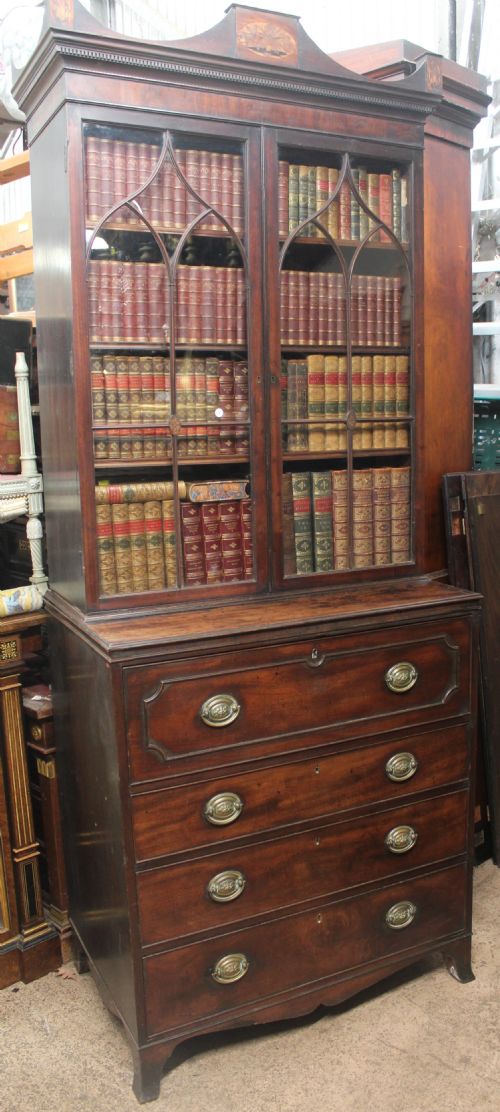
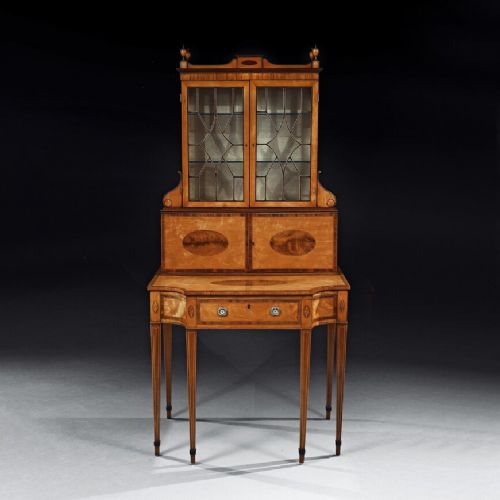




18th Century Secretaire Bookcase
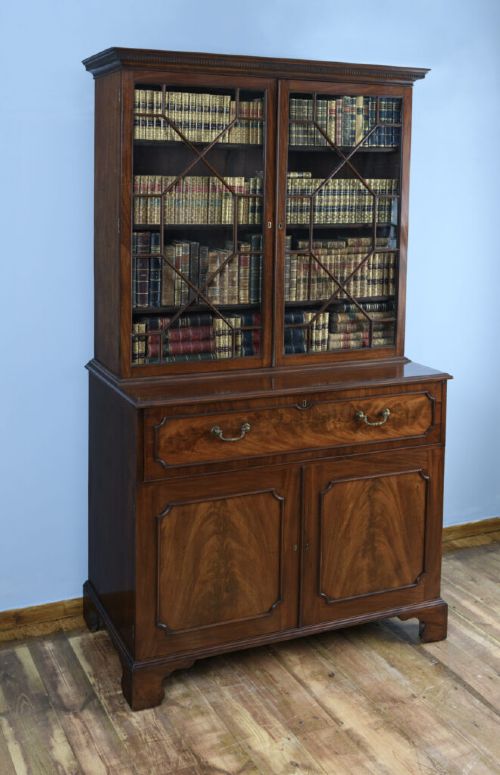
An 18th century secretaire bookcase combines a fitted writing drawer with shelved storage behind glass doors, offering both practical utility and architectural presence.
18th Century Secretaire Bookcase
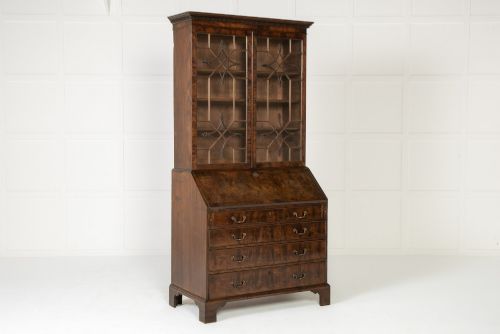
An 18th century secretaire bookcase combines a bureau writing compartment with an upper glazed bookcase, designed to serve both library and correspondence needs. The form is encountered primarily in Georgian and George III styles, spanning periods from the early 18th century through to 1800 and the Regency era.
Makers and cabinet-makers built these pieces to function as domestic architectural focal points, housing books behind glass panes above a fall-front or drawer-front writing surface. Bureau bookcases and secretaire cabinets vary in proportion, ranging from tall breakfront designs down to narrow formats.
The prevailing woods encountered on this page are mahogany, walnut, and oak, frequently embellished with satinwood or burr walnut veneers. Glazed upper doors use astragal bars to form geometric patterns, concealing adjustable shelving intended for substantial volumes.
How they were made
Cabinet-makers constructed carcasses using solid timbers such as oak for internal framing and primary surfaces of mahogany, walnut, or oak. Fine veneers like satinwood, burr walnut, and rosewood were applied to primary display surfaces to create figured grain patterns.
Glazing relied on individual panes held within delicate wooden astragal bars, while drawers incorporated hand-cut dovetails and oak linings. Writing drawers utilised brass pulls, escutcheons, and leather writing surfaces alongside internal pigeonholes and small compartments.
What varies in quality
The selection of timber grain largely dictates the visual hierarchy of an 18th century secretaire bookcase, with highly figured mahogany, burr walnut, and West-Indies satinwood commanding higher regard. Grain matching across drawer fronts and cabinet doors demonstrates the skill of the cabinet-maker.
Construction details such as the delicacy of the astragal glazing bars, the complexity of internal pigeonhole arrangements, and the preservation of original brass hardware separate standard utility pieces from exceptional examples.
The 18th Century Secretaire Bookcase Glossary
- Astragal
- Wooden moulding strips dividing glass panes in the upper bookcase doors. These bars form intersecting geometric patterns characteristic of Georgian case furniture.
- Secretaire drawer
- A fitted top drawer that pulls out and drops down to reveal a writing surface, small drawers, and pigeonholes. It conceals the working desk area behind a single drawer front.
- Breakfront
- A cabinet design where the central section projects forward from the flanking outer sections. This architectural arrangement adds depth and presence to larger bookcases.
- Burr walnut
- A prized wood veneer harvested from tree growths featuring convoluted grain patterns. It creates highly decorative swirling surfaces on cabinet doors and drawer fronts.
- Pigeonholes
- Small, open vertical compartments built inside the writing drawer for sorting letters and papers. They are often flanked by miniature drawers and concealed compartments.
18th Century Secretaire Bookcase: Frequently Asked Questions
What is an 18th century secretaire bookcase?
An 18th century secretaire bookcase is a tall dual-purpose piece of furniture featuring a glazed shelving section above a pull-down writing drawer and lower storage cupboards or drawers.
Cabinet-makers designed these pieces during the Georgian period to store libraries while providing a private, concealed desk for correspondence.
How do you use a secretaire drawer?
The secretaire drawer pulls straight out like a standard drawer, and the front hinges downward to form a horizontal writing desk.
Inside, users find an arrangement of small drawers, pigeonholes, and sometimes a leather-lined writing surface for letters and paperwork.
What woods were used for these bookcases?
Makers constructed these bookcases primarily using mahogany, walnut, and oak as structural and surface timbers. Finer examples incorporated satinwood, burr walnut, and rosewood veneers.
Secondary woods such as oak and pine were utilised for internal drawer linings and backboards.
How do I tell George I from George III pieces?
George I pieces, dating from the early 18th century, frequently showcase figured walnut veneers and simpler, heavier proportions. George III examples, spanning the later decades, often employ mahogany with satinwood inlay and refined classical detailing.
Stylistic influences shifted from Queen Anne curves toward neoclassical restraint and Chippendale or Sheraton forms as the century progressed.
Where should I place a secretaire bookcase?
These tall pieces require stable wall placement away from direct sunlight and strong heat sources that could dry out antique veneers. They suit libraries, studies, or principal reception rooms where their height and glazed upper doors can be fully appreciated.