

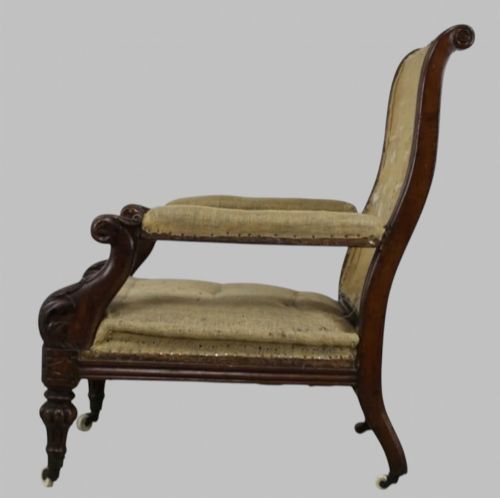
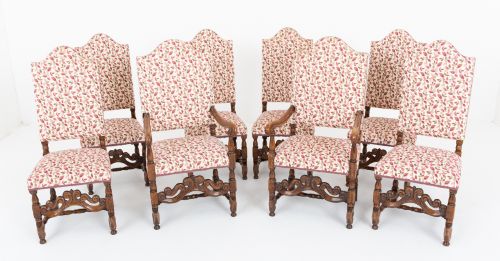
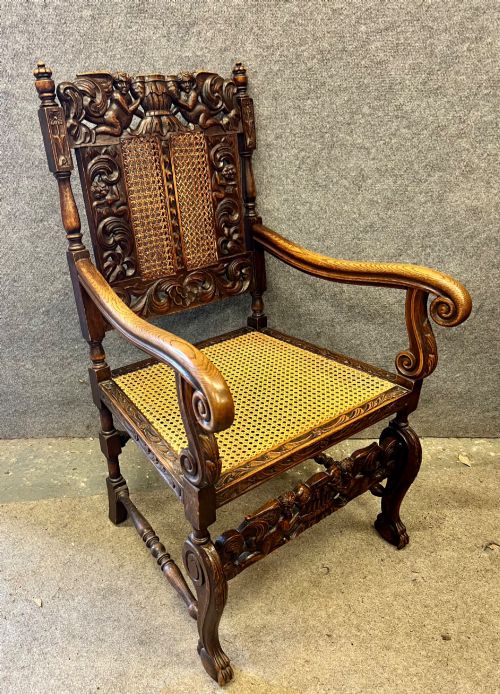
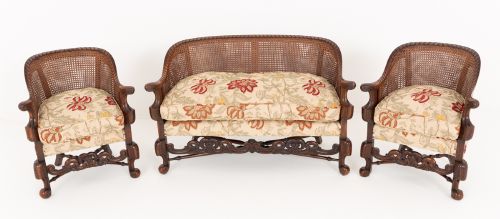
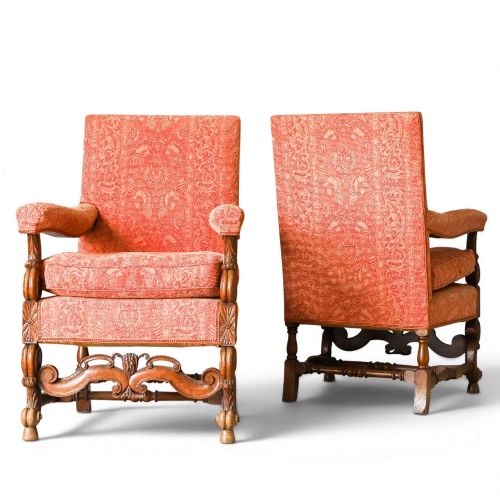


Scrolled Oak Chairs
These scrolled oak chairs bring tactile warmth and rich historical presence to any interior.
Scrolled Oak Chairs
When you search for scrolled oak chairs, you encounter seating spanning multiple centuries, from 17th-century backstools to 19th-century revival dining suites. These pieces combine robust timber construction with decorative carved scrolls.
The selections on this page lean heavily towards Victorian interpretations of earlier motifs, alongside genuine 17th-century pieces and Georgian variants. You will find armchairs, hall chairs, and larger dining sets.
Form follows function across these examples, appearing in elbow chairs, side chairs, and expansive seating suites. Oak remains the consistent structural constant throughout.
How they were made
Makers utilised solid oak, often shaped with detailed hand-carved scrollwork along the backs and legs. Joinery relied on traditional pegged mortise and tenon methods to ensure structural longevity.
Upholstery elements frequently incorporate fabric, velvet, or woven cane panels. These softer additions contrast with the rigid timber framework.
Scrolled Oak Chairs Retail Price Guide 2026
Typical asking prices for scrolled oak chairs among the pieces listed under this phrase on Sellingantiques today, from the lower quarter to the upper quarter. They describe what is for sale here now, not the wider market.
Listings feature oak alongside supplementary materials like cane, velvet, and woven fabric across Victorian and 17th-century periods.
What varies in quality
The depth and crispness of the scroll carving differentiate ordinary work from superior examples. Sharply defined chisel marks indicate a more skilled hand.
Timber selection and grain figure also dictate standard, with dense, well-figured oak holding a visual advantage. Original surfaces and retained patination elevate the standing of older items.
The Scrolled Oak Chairs Glossary
- Backstool
- An early form of chair without arms, generally featuring a tall upholstered or panelled back. They preceded standard dining chairs in domestic interiors.
- Carolean style
- A revival or period aesthetic dating to the reign of Charles II, characterised by rich carving, scrolling foliage, and cane panels. It heavily influenced 19th-century revival pieces.
- Bergere
- An enclosed upholstered armchair with wooden framing exposed. These often feature cane-work sides and a loose seat cushion.
- Cromwellian
- A utilitarian style from the mid-17th century, typically featuring straight lines and leather or fabric secured with brass studs. It represents a simpler aesthetic than preceding Elizabethan work.
- Cabriole leg
- A furniture leg that curves out and then in, resembling the leg of an animal. This form became prominent during the 18th century.
Scrolled Oak Chairs: Frequently Asked Questions
How do I date a scrolled oak chair?
Dating relies on examining construction marks, timber shrinkage, and stylistic indicators such as the profile of the turnings and the depth of the carving. Revival pieces from the 19th century often mimic earlier 17th-century forms but use machine assistance or different secondary woods.
Close inspection of the joints and fixings reveals the manufacturing era. Hand-cut pegs and irregular tool marks generally point to older origin, whereas uniform machine finishing suggests a later Victorian revival date.
Are these chairs suitable for daily dining?
Many of these pieces, particularly the sets of dining chairs and farmhouse variants, were built for daily use. Their sturdy oak frames provide reliable support for regular seating.
Consider the seat height and upholstery condition before daily placement. Antique seating often sits lower than modern equivalents and may require careful handling of fragile cane or historic fabric.
What is the difference between a hall chair and a dining chair?
Hall chairs were typically designed for entrance spaces rather than prolonged sitting, featuring solid wooden seats and decorative carved backs. They served to display family crests or aesthetic taste to arriving guests.
Dining chairs prioritise comfort, frequently including upholstered pads, cane inserts, or ergonomic elbow rests. Their proportions suit sitting around a table for extended periods.
How do I care for antique oak furniture?
Maintain oak furniture by keeping it away from direct heat sources and rapid humidity fluctuations, which cause the timber to split. Regular dusting with a dry, soft cloth preserves the surface patina.
Avoid modern silicone-based polishes that build up residue over time. Occasional application of traditional beeswax feeds the dry grain and protects the historic finish.