
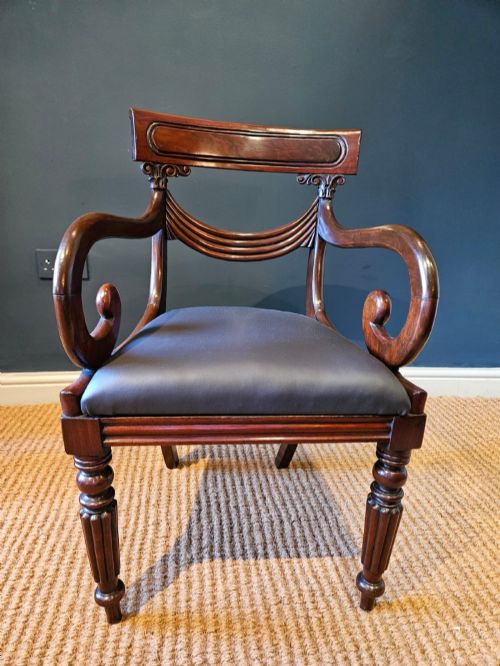
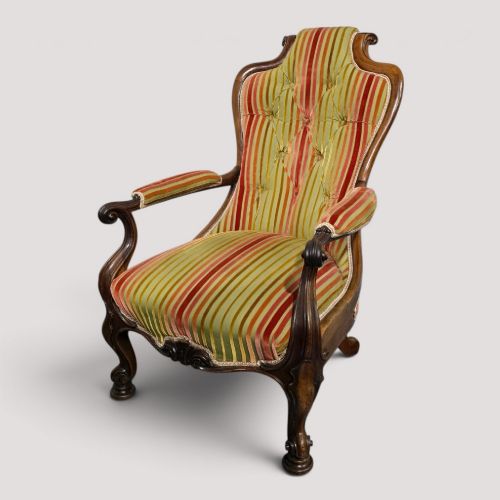
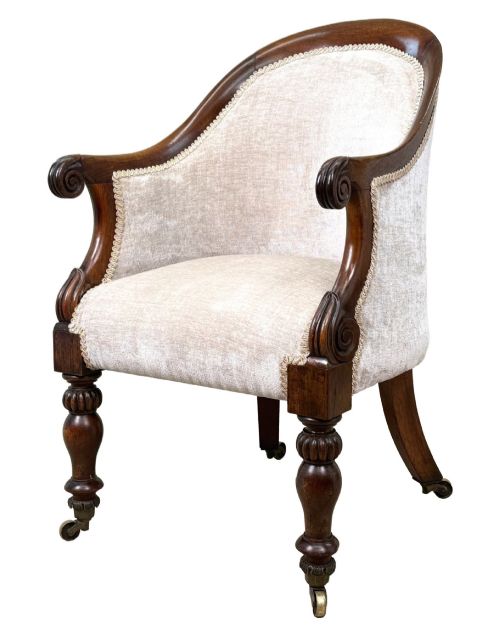
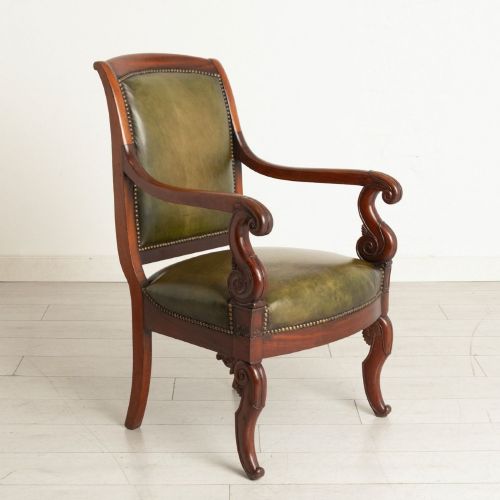


Scrolled Arm Library Chair
These scrolled arm library chair examples offer deep comfort and sturdy timber frames built for long hours of reading and writing.
Scrolled Arm Library Chair
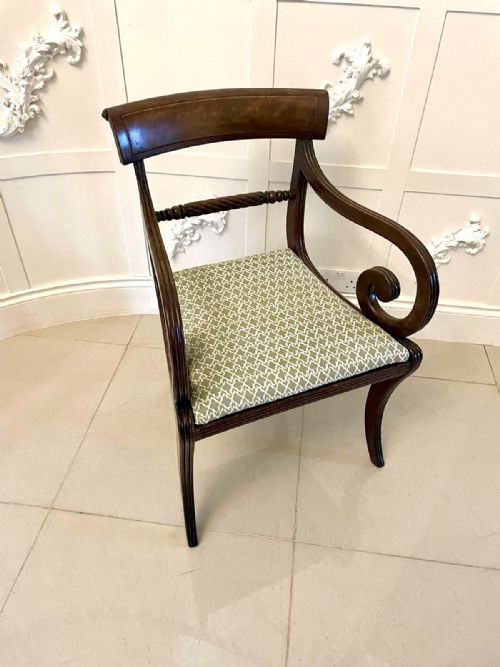
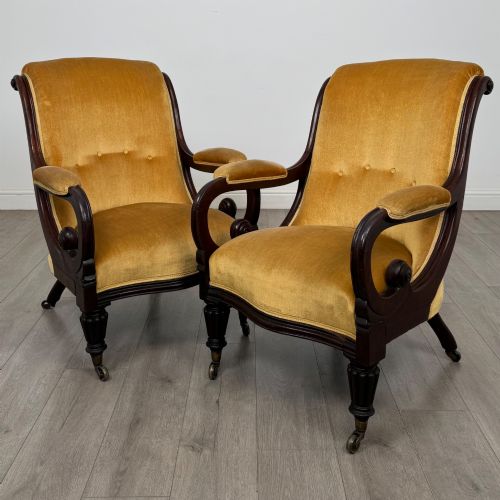
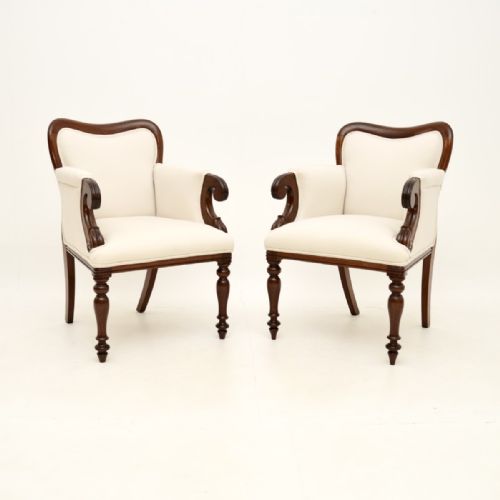
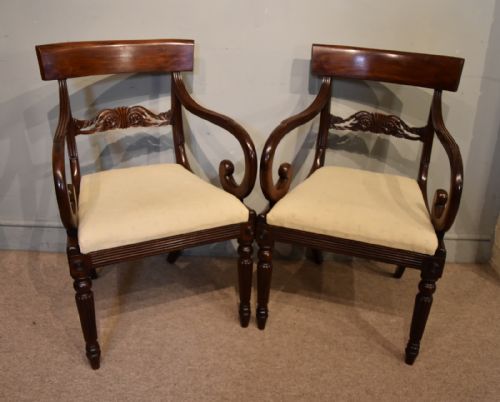
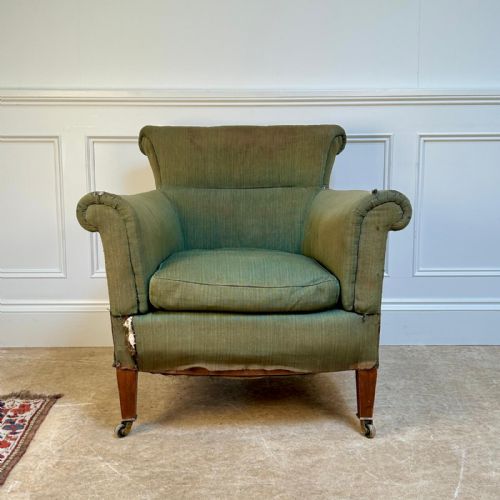
A scrolled arm library chair serves as a substantial seating choice found primarily in nineteenth-century studies and libraries. The selection centres heavily on Regency and William IV pieces, alongside Victorian examples dating from around 1850 to 1860.
Most entries take the form of armchairs or desk chairs, occasionally featuring specialist variants such as metamorphic steps, bergere seating, or reclining mechanisms. Mahogany forms the dominant timber framework across the inventory, supported by rosewood, walnut, and ash.
Makers and designers from the period created robust seating designed for practical utility as well as reception rooms. Buyers encounter everything from simple timber frames to grander gentleman's armchairs with elaborate scrollwork.
Materials and Technique
Cabinet makers constructed these frames predominantly using solid mahogany, rosewood, and walnut, often shaping the arms into characteristic scrolls through careful timber bending and carving. Brass details appear frequently on castors and desk mechanisms.
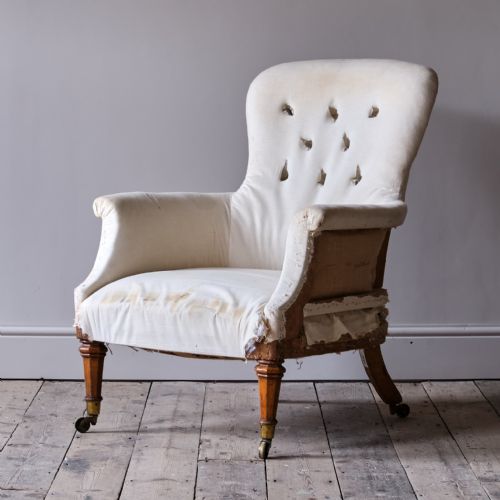
Upholstery forms an essential element of construction, utilising traditional stuff-over techniques finished in leather, velvet, fabric, or textile. Skilled craftspeople paired dense internal stuffing with durable outer coverings to withstand daily use.
Mahogany is the most frequent timber found across these nineteenth-century listings, alongside rosewood, walnut, and ash.
Quality and Distinction
The standard of timber selection and carving depth separates ordinary seating from exceptional examples. Superior items display crisp mouldings on the scroll arms and finely figured mahogany grain.
Design complexity also defines the upper tiers of the range, particularly pieces incorporating functional elements like sliding frames or metamorphic library steps. Original upholstery materials and surviving brass hardware elevate the historical integrity of a piece.
Howard and Sons·JC Loudon
The Scrolled Arm Library Chair Glossary
- Bergere
- An enclosed upholstered armchair with cane or upholstered sides. This form appears frequently in nineteenth-century library settings.
- Metamorphic
- Describing furniture designed to transform into another object, such as an armchair converting into library steps. These clever pieces showcase inventive nineteenth-century mechanical design.
- Sabre leg
- A concave sweeping leg tapering towards the foot, common on Regency chairs. This shape provides both stability and visual lightness.
- Tub armchair
- A comfortable chair featuring a rounded, enclosed back that flows continuously into the arms. It offers a secure and supportive seat for prolonged reading.
Scrolled Arm Library Chair: Frequently Asked Questions
How do I identify a Regency library chair?
Regency library chairs typically date from the early nineteenth century and feature classic timber frames in mahogany or rosewood. Look for characteristic scroll arms, sabre legs, and brass hardware.
These pieces often include leather upholstery suited for desk work or reading rooms. Their proportions tend to be broad and solid to accommodate long periods of sitting.
What is a metamorphic library armchair?
A metamorphic library armchair contains hidden mechanisms that allow the seat to unfold into a set of steps. This clever dual-purpose design helped scholars reach high bookshelves.
Makers built these items using sturdy timbers like mahogany to support the weight of a person climbing. They represent some of the most ingenious furniture engineering of the nineteenth century.
What is the difference between Regency and Victorian pieces?
Regency furniture generally dates from the early nineteenth century and displays clean classical lines, sabre legs, and restrained ornament. Victorian pieces from 1850 onward often feature heavier proportions and more elaborate scroll framing.
Mahogany remains popular across both eras, though Victorian workshops also utilised walnut and ebonised finishes. Examining the carving style and frame construction helps clarify the manufacturing decade.