


Scottish Highland Scene Artwork
Scottish highland scene artwork captures rugged northern terrain, misty lochs and pastoral life through nineteenth-century oils and watercolours.
Scottish Highland Scene Artwork
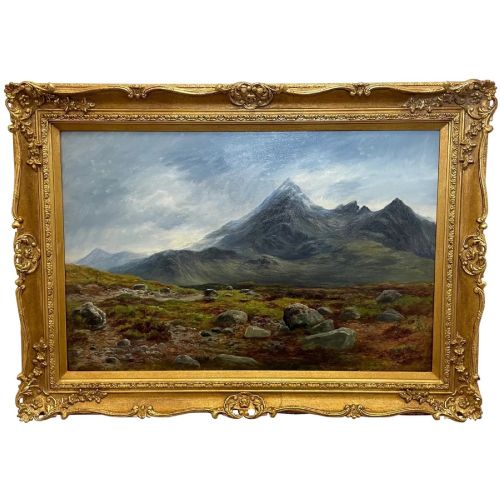
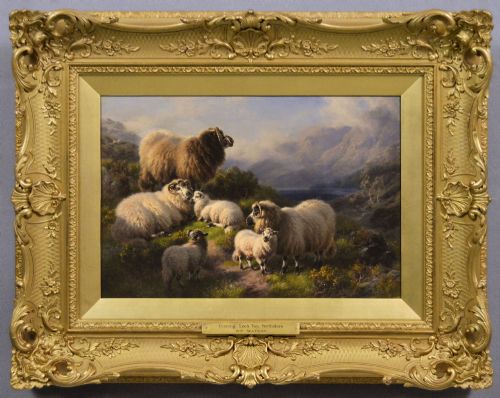
A scottish highland scene artwork records the dramatic topography, remote glens and indigenous fauna of Scotland through historical painting. These pieces range from intimate watercolour studies to expansive oil canvases housed in heavy frames. The selection centres heavily on nineteenth-century and Victorian expressions, capturing changing weather across mountains like Ben Lawers or Loch Tay.
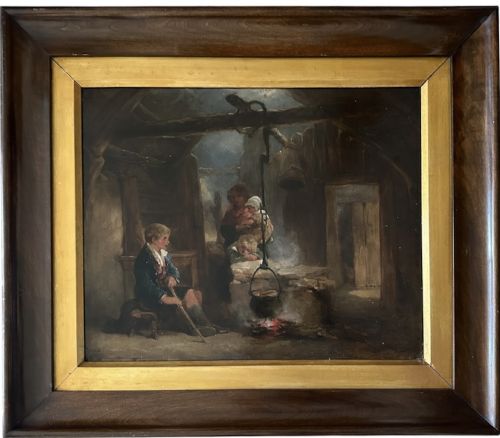
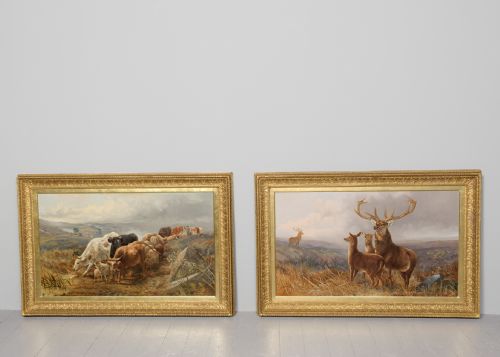
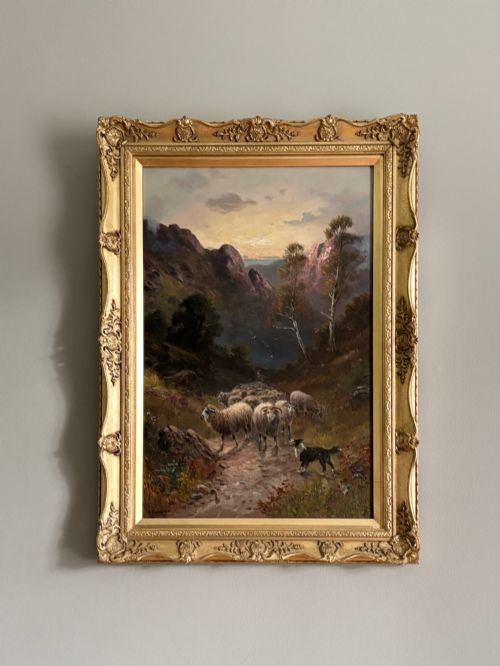
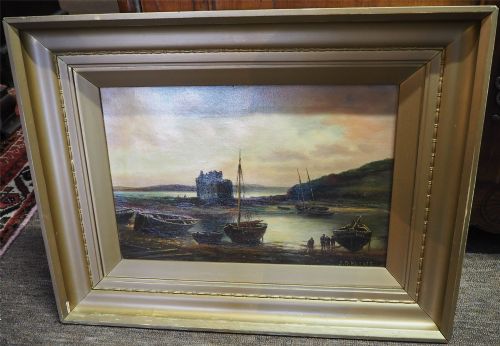
Subjects encompass pastoral depictions of highland cattle, sheep and pastoral workers alongside vast moody lochs and peaks. Artists frequently recorded specific locations such as Skye, Loch Awe or Braemar, grounding romantic landscapes in topographical reality. Many works balance the grandeur of open terrain with domestic scenes of crofts, spinning maids or fishermen.
Materials and methods
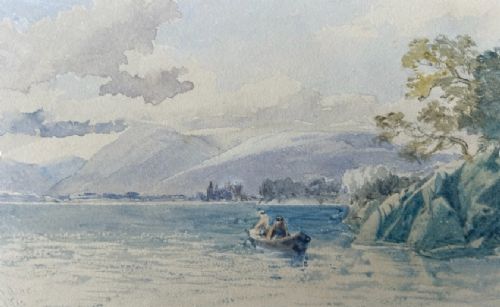
Painters relied predominantly on oil on canvas or panel, building up rich textures with brush and palette knife to render heavy skies and rugged terrain. Watercolours and gouache on paper appear frequently for lighter, more luminous topographical views. Canvases are typically stretched over wooden frames and often retained within deep, ornate giltwood and gesso surrounds.
Artists utilised varied priming and underpainting techniques to achieve atmospheric depth, capturing morning mists and twilight shadows. Touches of gold leaf occasionally accent the elaborate mouldings of the period frames accompanying these paintings.
Canvas and oil paint dominate the medium list, supplemented by watercolours on paper and gouache.
Judging quality in highland paintings
Quality rests primarily upon the sureness of the brushwork and the artist's ability to command atmospheric light rather than mere scale. Superior works render the specific quality of northern mists and cloud formations with conviction, while lesser examples fall into formulaic repetition.
The integration of figures and livestock into the broader landscape dictates compositional success. Stronger pieces demonstrate careful observation of anatomy and human activity, whereas weaker paintings treat cattle or figures as generic additions to fill space.
George Whitton Johnstone·William Beattie-Brown·Thomas Miles Richardson·William Watson Jnr·Robert Cleminson·Douglas Cameron·Archibald Kay·James Kyd·William Grant Murray·John Charles Tunnard·John W Morris·Daniel Sherrin·Frederick Richard Lee·Thomas Sidney Cooper·George Cole·Henry Birtles·Alfred de Breanski·Benjamin Williams Leader·Louis Bosworth Hurt·James Russell·Alfred Graham·William Crampton
The Scottish Highland Scene Artwork Glossary
- Gesso
- A plaster-like mixture applied to wooden frames before gilding or painting. It provides a smooth surface for intricate moulded ornament.
- Gouache
- An opaque watercolour medium containing gum arabic and white pigment. It allows for solid areas of colour and sharp detail in works on paper.
- Giltwood
- Timber carved and coated with a thin layer of gold leaf or metal powder. It creates the characteristic reflective frames found on nineteenth-century oils.
- Provenance
- The documented history of ownership tracing a painting from its creation to the present day. This record establishes authenticity and exhibition history.
Scottish Highland Scene Artwork: Frequently Asked Questions
How do I date a highland painting?
Dating relies on stylistic markers, framing conventions and artist biographical details recorded on the canvas or reverse. Nineteenth-century works often bear specific signatures, exhibition labels or stretcher stamps that narrow the period of creation.
Changes in canvas preparation and the style of accompanying giltwood frames also offer reliable clues to the decade of production.
Where should I hang these artworks?
These works require wall space away from direct sunlight and fluctuating heat sources to protect oil paint and paper mediums. Placing them where natural light enhances the atmospheric tones of the landscape maximises their visual impact.
Pairing them with period interiors or traditional wall colours complements the heavy gilt frames typical of Victorian painting.
What subjects are most common?
Highland cattle, sheep grazing by lochs and rugged mountain passes dominate the surviving corpus of these nineteenth-century paintings. Artists also recorded domestic croft life, fishermen returning home and deer stalkers traversing misty moorlands.
Topographical accuracy varies, with some painters recording specific peaks in Skye or Perthshire while others composed idealised pastoral panoramas.
How do I care for antique oil paintings?
Maintenance involves keeping canvases clean with a soft, dry brush to remove dust from the surface and frame crevices. Avoiding damp environments prevents mould growth and canvas slackening over the wooden stretcher.
Professional conservation should be sought if the paint layer shows signs of cracking or stabilization issues.