

Scottish Highland Oil Painting
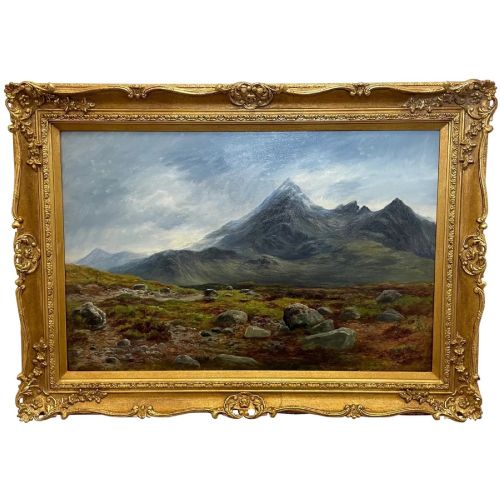
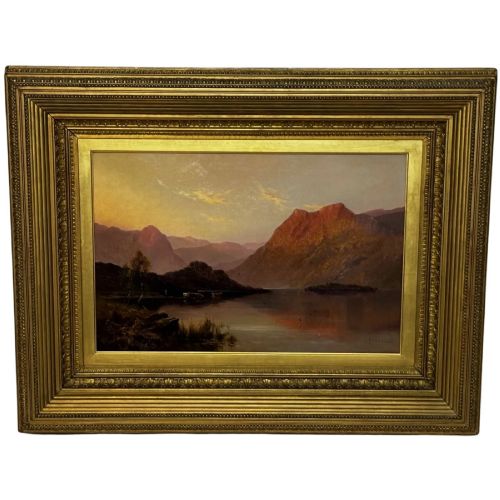
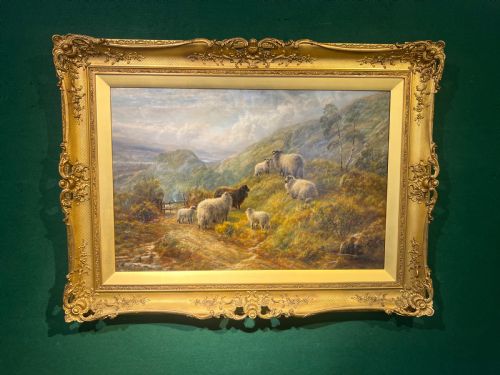
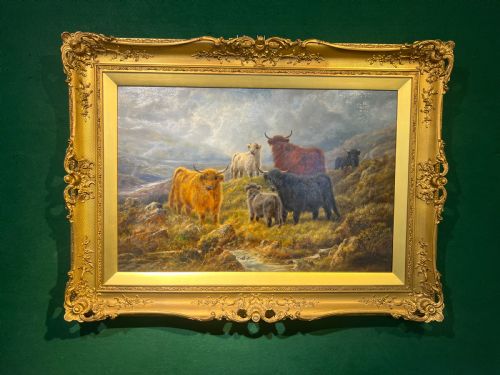
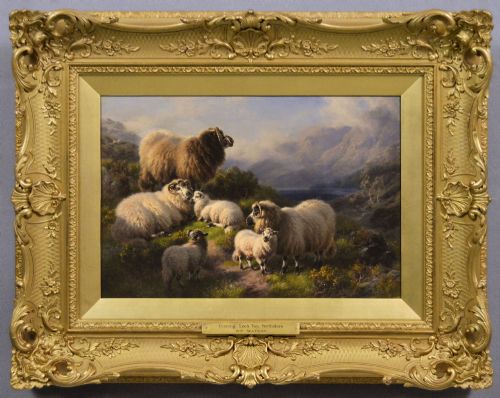
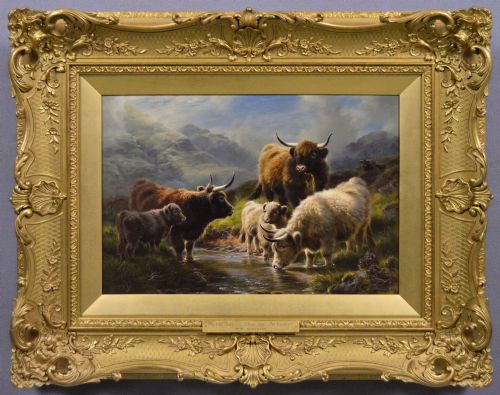
These canvases capture the rugged grandeur of the north, bringing misty lochs, dramatic mountains and hardy livestock into the room.
Scottish Highland Oil Painting
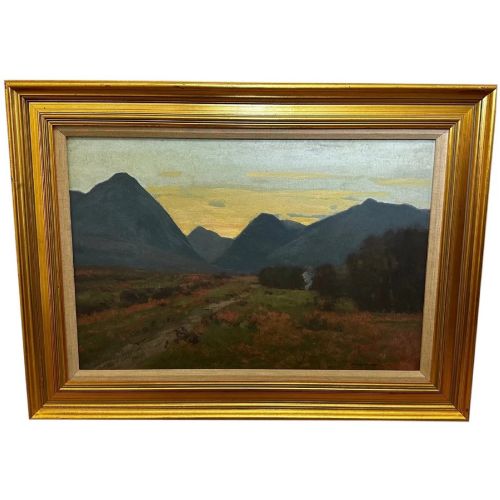
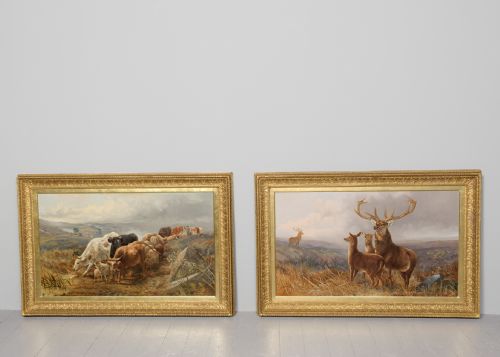
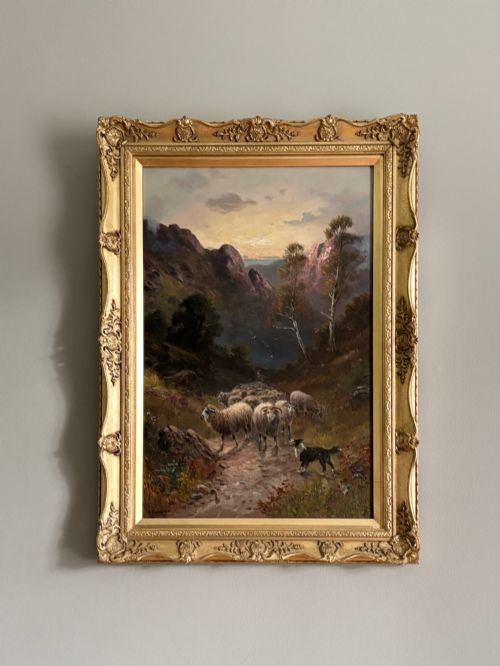
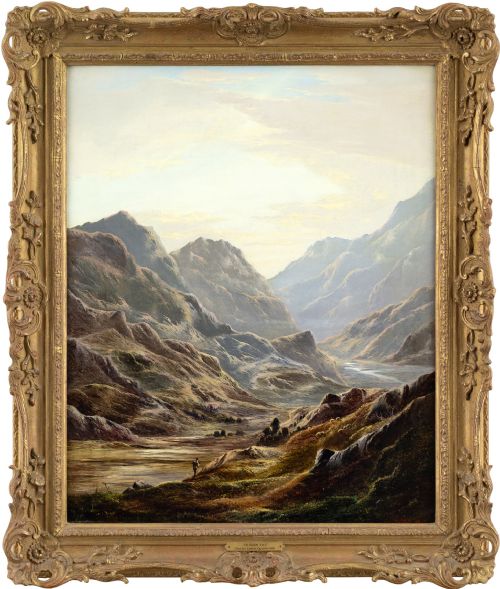
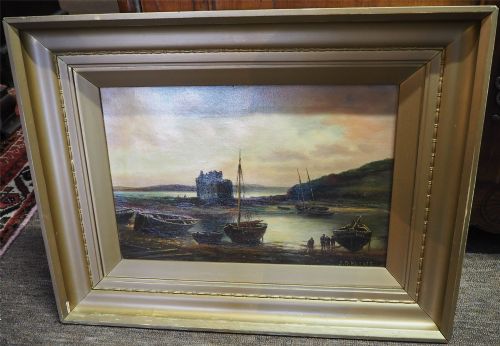
A scottish highland oil painting typically depicts the sweeping glens, quiet lochs and mountainous terrain of the north, frequently populated by Highland cattle, sheep or stags. These works document a romanticised vision of the landscape that gained immense popularity during the Victorian era and persisted well into the twentieth century.
The compositions on this page range from intimate water-colourist scenes on wood panel to large framed canvases that command an entire wall. Collectors encounter works produced across the nineteenth and early twentieth centuries, spanning the Victorian period through to early Scottish Impressionism.
Materials and Construction
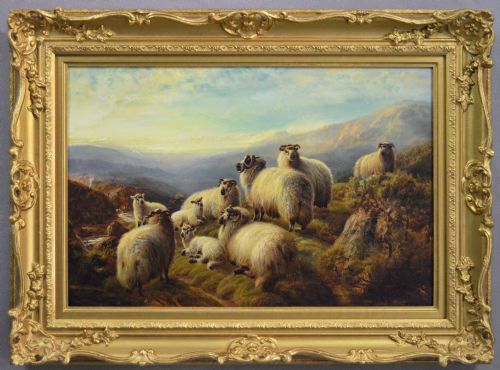
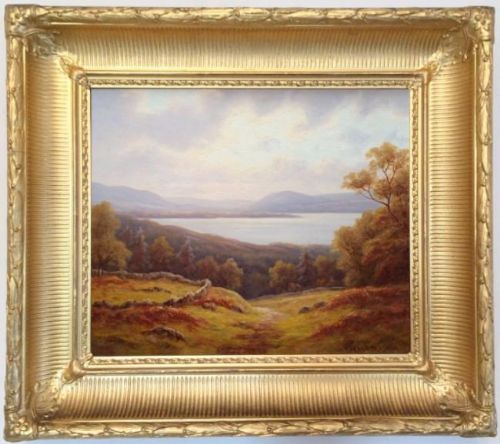
Artists painted primarily with oil paint applied to stretched canvas, though several works utilise wood panels or board. Canvases are frequently housed within heavy, decorative giltwood frames ornamented with moulded gesso detailing.
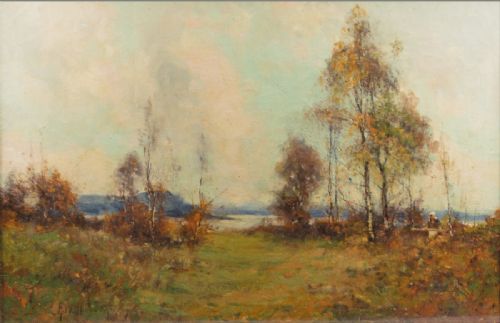
Brushwork varies from the tight, academic precision of the Victorian school to the looser, more atmospheric application seen in later impressionist and regional landscapes.
Scottish Highland Oil Painting Retail Price Guide 2026
Typical asking prices for scottish highland oil painting among the pieces listed under this phrase on Sellingantiques today, from the lower quarter to the upper quarter. They describe what is for sale here now, not the wider market.
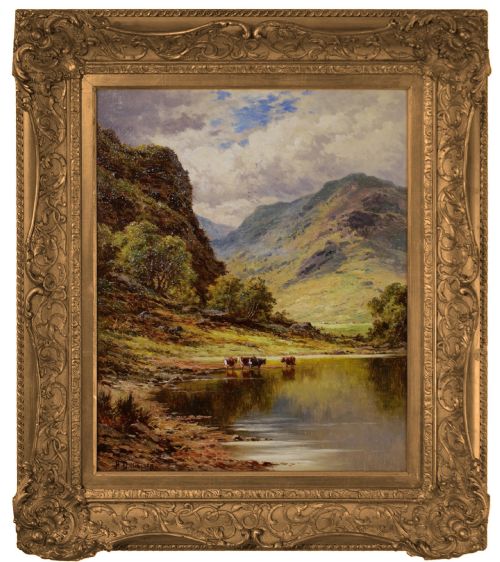
Several cattle appear to have spent hours posing patiently by the loch edge, perfecting their contemplative gazes for posterity.
Judging Quality and Execution
Quality rests in the handling of atmospheric light, the anatomical accuracy of animals such as cattle and stags, and the depth achieved within the mountain distance. Superior examples demonstrate a confident control of tone that separates a generic studio piece from an observant topographical study.
The integrity of the original giltwood and gesso frame contributes significantly to the overall standing of a piece, as does a clear signature, legible exhibition label or historical provenance on the reverse.
Francis E Jamieson·Henry H Parker·William Watson Jnr·Robert Watson·Clarence Roe
The Scottish Highland Oil Painting Glossary
- Giltwood
- Wood carved and coated with gold leaf. It forms the lustrous, reflective border common to period frames.
- Gesso
- A plaster-like mixture applied to wooden frames and moulded into decorative reliefs before gilding. It provides the crisp architectural detail around the edge of the painting.
- Impressionism
- A style of painting emphasising light and unblended brush strokes rather than meticulous detail. In a Scottish context, this translates to broader skies and looser rendering of heather and rock.
- Bothy
- A simple stone shelter found in the mountains. Its presence in a landscape often anchors the narrative of the scene.
Scottish Highland Oil Painting: Frequently Asked Questions
How do I date a Scottish highland oil painting?
Dating relies on examining the canvas weave, stretcher construction, artist signatures and framing techniques. Victorian works often feature tighter canvas tensioners and ornate moulded gesso frames.
Later twentieth-century examples shift towards board supports and looser impressionistic brushwork. Inscribed titles or signatures on the reverse provide definitive clues.
What subjects are most common?
The most frequent subjects include Highland cattle standing near lochs, flocks of sheep grazing on heather-covered moors, and stags surveying mountain valleys. Figures such as ghillies or fishermen occasionally appear alongside remote cottages and bothies.
These motifs reflect the Victorian fascination with the wild and untamed scenery of the north.
How should I care for an oil painting on canvas?
Keep paintings away from direct sunlight, high humidity and sudden temperature fluctuations that can cause the canvas to slacken or the paint layer to crack. Dust the surface and the giltwood frame gently with a soft, dry brush.
Avoid using water or chemical cleaners on either the paint or the gilded frame.
Are these works signed by the artists?
Many examples bear artist signatures, monograms or initials directly on the front canvas, whilst others carry inscriptions, titles or signatures on the reverse wood panel or stretcher.
Unsigned pieces attributed to the period are often classified under regional schools of painting based on style and palette.