




Scottish Georgian Clock
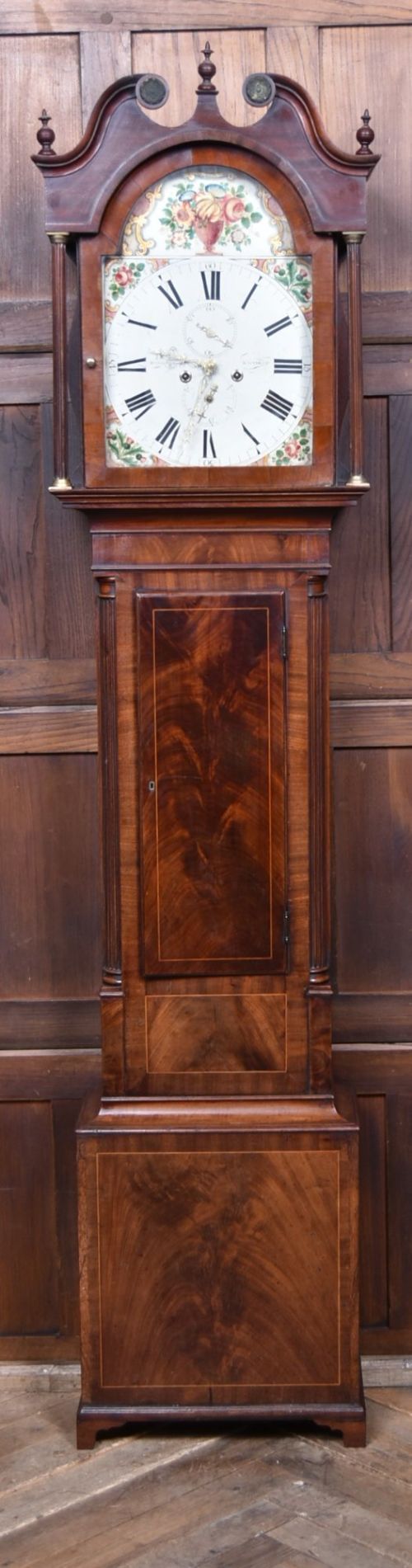
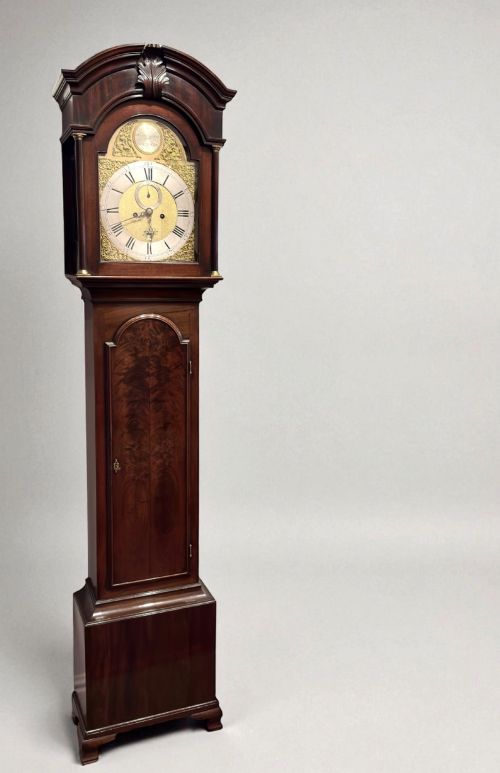
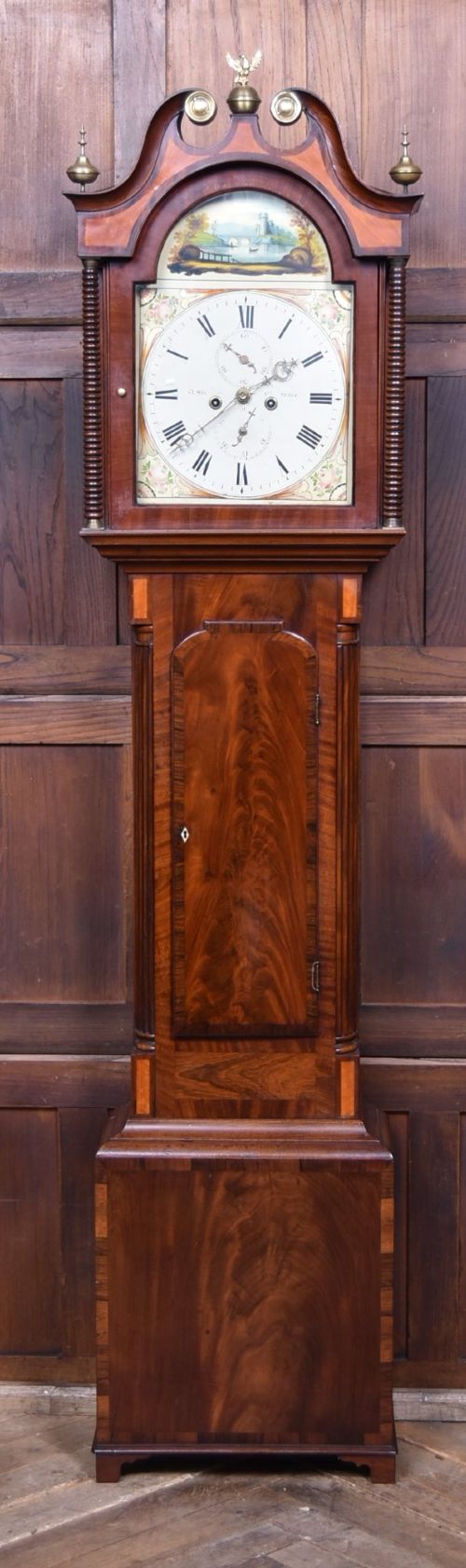
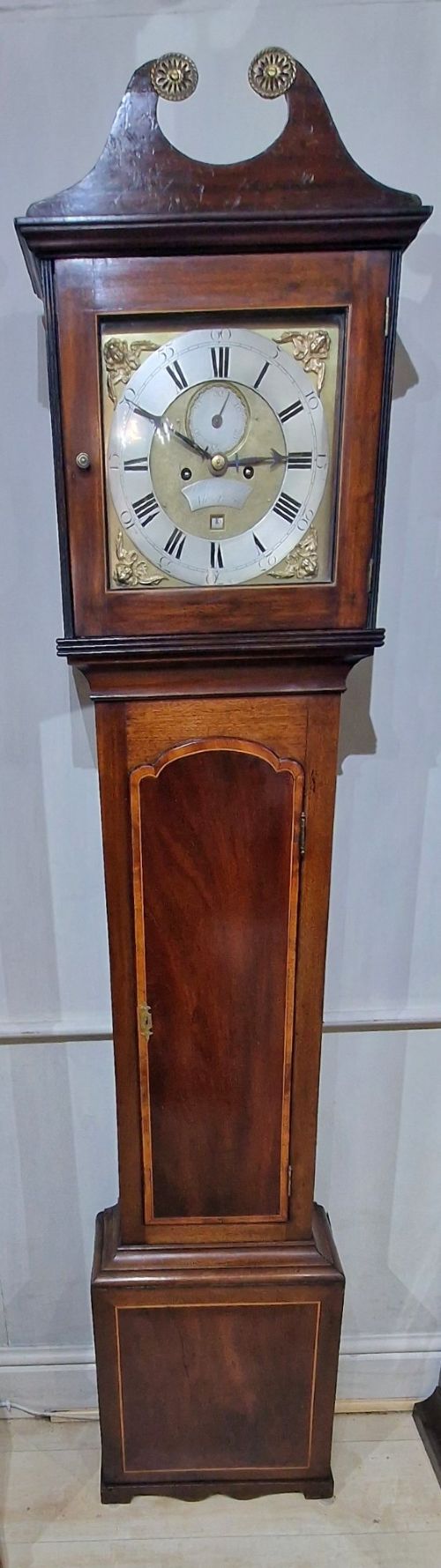
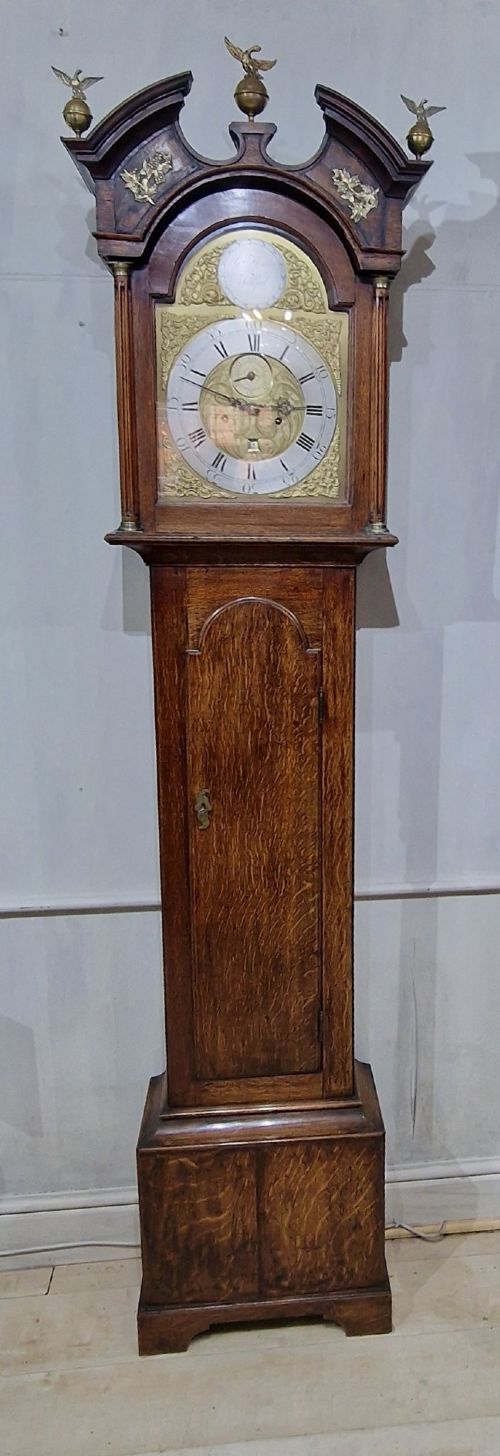
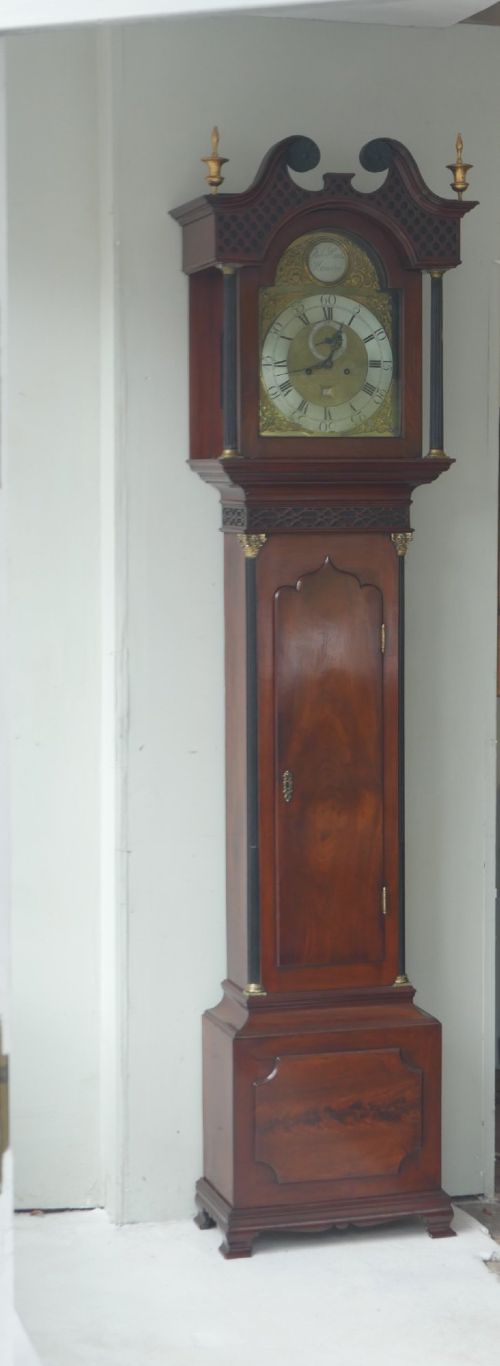
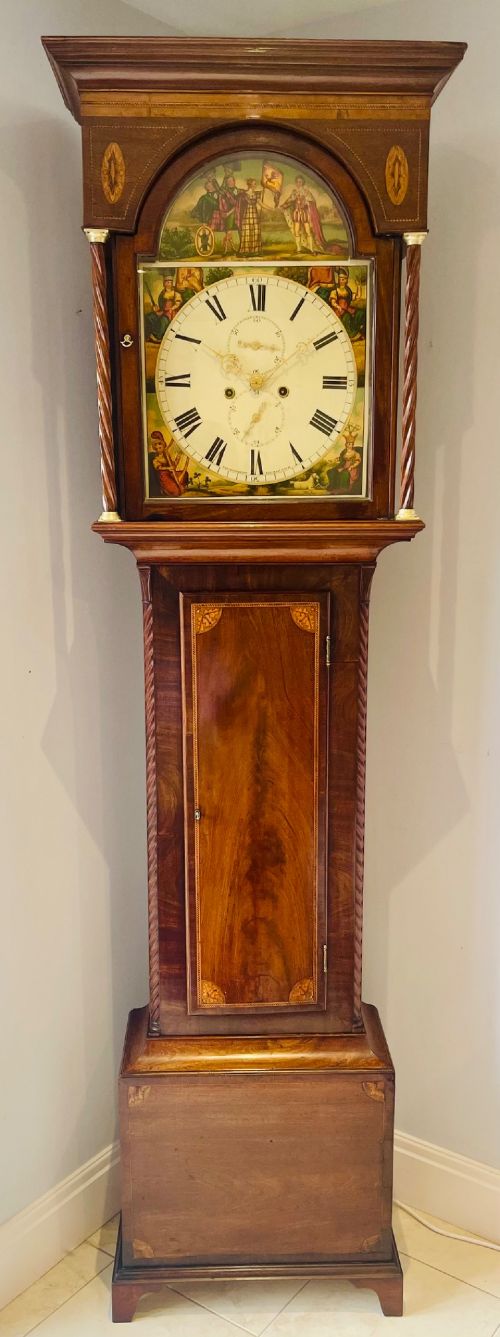
A Scottish Georgian clock stands as a towering piece of horological history, bringing substantial regional character and mechanical precision into a room.
Scottish Georgian Clock
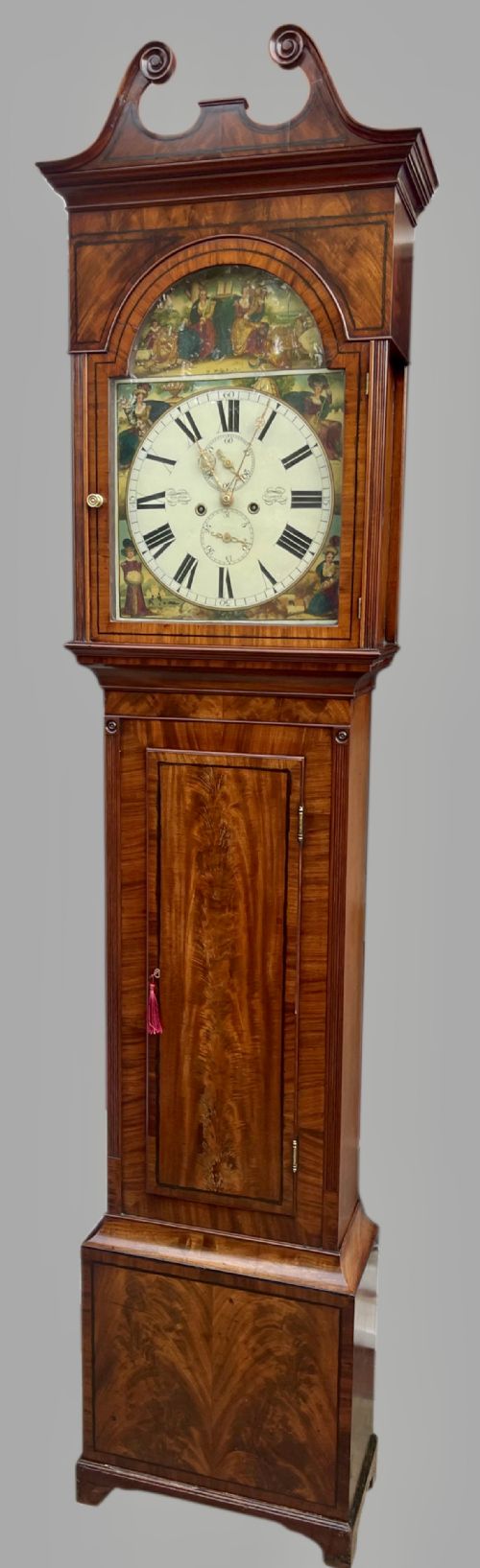
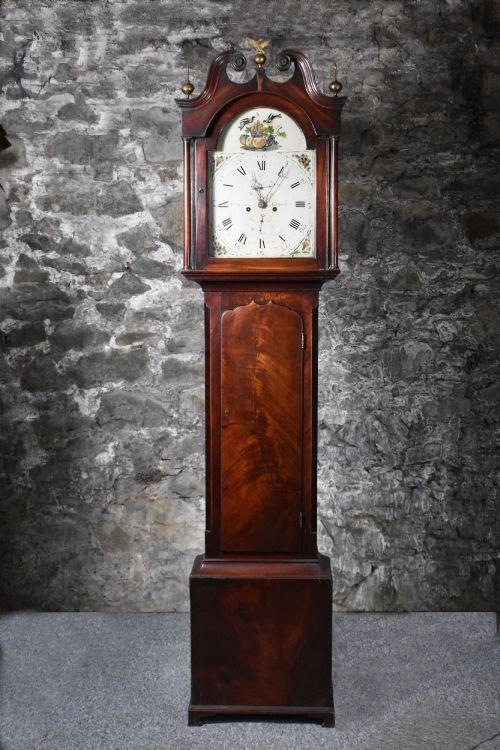
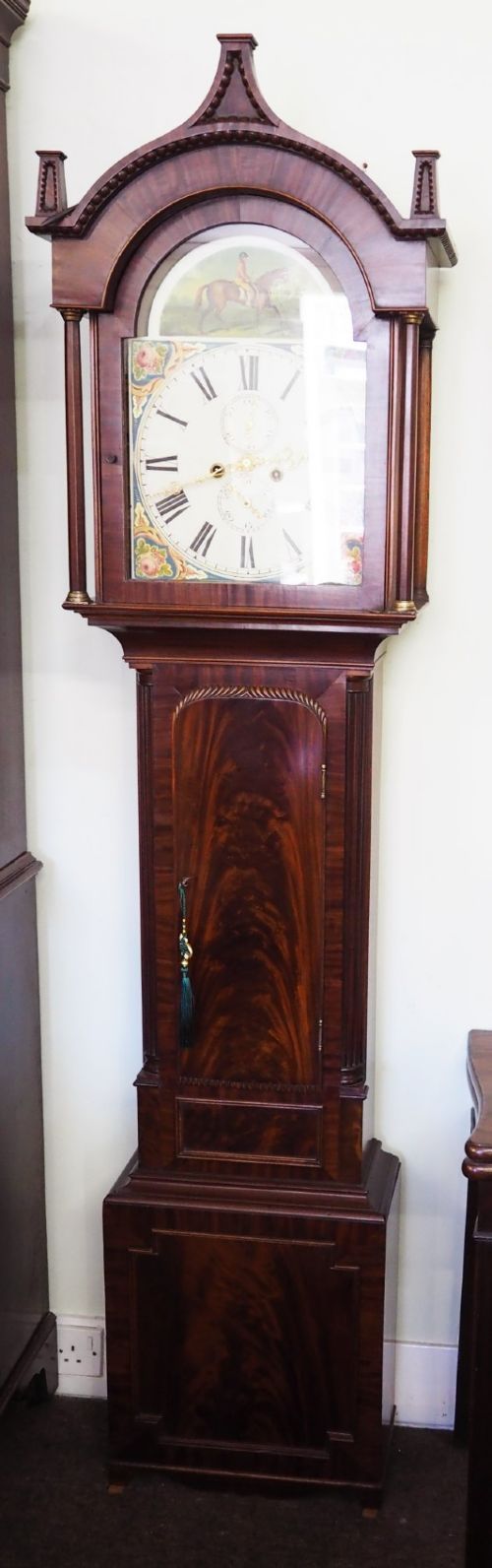
A scottish georgian clock typically takes the form of a tall longcase or grandfather clock, housing an eight-day movement within a timber case. These pieces originate from various Scottish towns and cities, bearing the signatures of regional makers on their dials.
The pieces on this page span the Georgian, Regency, and Victorian periods, alongside specific regional styles like Scottish Georgian and Gothic Revival. Mahogany and oak serve as the primary woods for the tall cases, while smaller bracket and mantel clocks also appear.
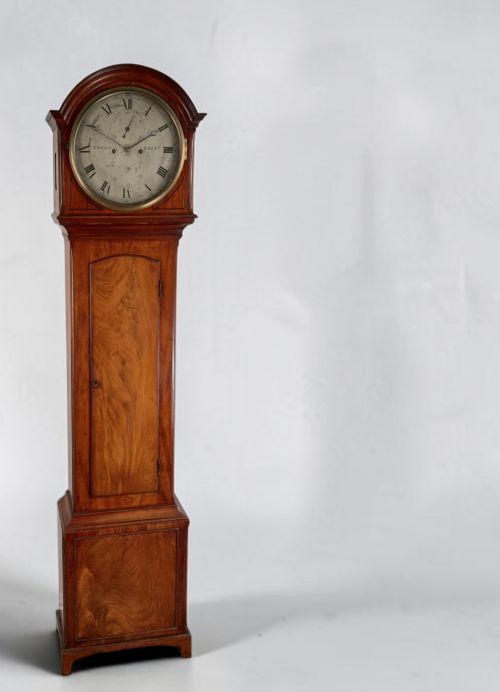
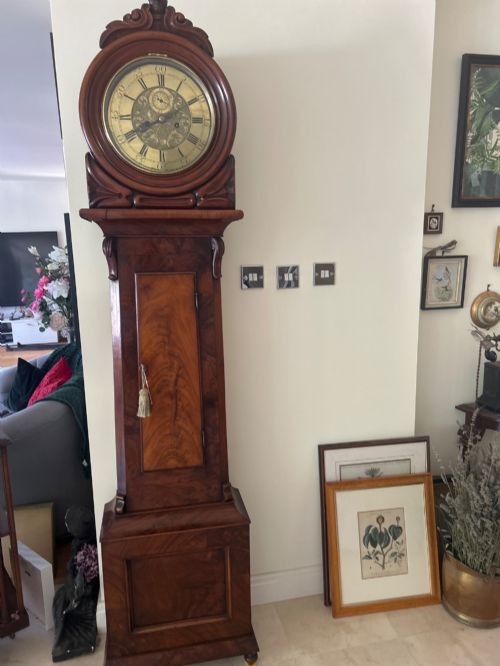
Regional variations include drumhead longcases and moon-dial models, reflecting the diverse output of Scottish horologists operating outside London. Longcase clocks dominate the selection, offering a commanding presence in domestic spaces.
How They Were Made
Cabinetmakers utilised mahogany, flame mahogany, and oak to construct the tall cases, frequently incorporating marquetry, inlay, or lacquered finishes. These timbers were selected for grain pattern and stability, housing the heavy weights and pendulum safely inside.
Dial construction combined brass, painted iron, and enamel, providing a contrasting surface for hands and maker signatures. Clockmakers fitted intricate gear trains, often regulating eight-day movements with twin fusees in bracket or mantel variations.
Listings feature mahogany, oak, and flame mahogany longcase clocks alongside bracket and mantel forms from the Georgian and 19th-century periods.
What Varies in Quality
Quality rests in the crispness of the cabinetwork and the fidelity of the dial execution, where regional makers displayed their individual mastery. Figured and flame mahogany cases with well-preserved marquetry distinguish the finer examples from simpler oak counterparts.
The integration between the maker's movement and the fitted case influences overall integrity, alongside the legibility and artistry of painted iron or brass dials. Signed dials by documented Scottish clockmakers elevate the historical interest of the piece.
Hendrie Ogg·Gordon of Aberdeen·Green of Edinburgh·D. Straiton·James Hendrie·William McEwan·Matt Wylie·Joseph Gibson·David Morice·John Breakenrig·Ninian Davidson·Robert Thomson·John McGregor·Robert Darling·W M Smith·Christie of Perth·G Brown·Alexander Oliphant·John Mill·G C Laurence·Robert Clidesdale·James Cuthbert·Coutts Burntisland·John Barr·D Stewart
The Scottish Georgian Clock Glossary
- Longcase clock
- A tall, freestanding pendulum clock enclosed in a wooden case, commonly known as a grandfather clock. These housing structures protect the weights and pendulum while displaying the dial at eye level.
- Moon dial
- A specialised clock face featuring a rotating disk that tracks the phases of the moon. This complication appeared frequently on eighteenth and nineteenth-century regional clocks.
- Bracket clock
- A portable table or mantel clock originally designed to sit on a wall bracket. They often feature twin fusee movements.
- Drumhead longcase
- A distinctive Scottish longcase variant featuring a circular clock head resembling a drum set atop a tall mahogany stem. This form emerged during the Regency period.
- Fusee
- A conical pulley used in mechanical clocks to maintain even tension on the gear train as the mainspring unwinds. This mechanism ensures consistent timekeeping across the duration of the wind.
Scottish Georgian Clock: Frequently Asked Questions
Where were these clocks made?
These clocks originated in workshops across Scotland, from major centres like Edinburgh and Aberdeen to smaller towns such as Montrose, Dunfermline, and Ecclefechan. Regional makers signed their work directly on the brass or painted iron dials.
Local cabinetmakers built the mahogany and oak cases to house the movements, resulting in distinct regional characteristics that set them apart from English horology.
How do eight day movements work?
An eight-day movement requires winding approximately once a week using a key inserted into holes on the dial. Weights suspended inside the trunk descend slowly over this period to power the gear train and pendulum.
This mechanism offered greater convenience than daily-wound clocks, becoming a standard feature for quality longcases of the Georgian period.
How do I fit a longcase clock?
A longcase clock requires a stable, level floor and must be secured to the wall through the back of the case to prevent tipping. The pendulum hangs inside the trunk, and the clock must be set 'in beat' so the ticking sounds even.
Allowing adequate clearance for the weights and pendulum ensures the mechanical movement operates without interruption in your living space.
What is a moonphase dial?
A moonphase dial displays the lunar cycle through a painted disk that rotates once every twenty-nine and a half days behind an arched opening in the clock face. This feature helped people track tides and moonlit nights in eras before street lighting.
Clockmakers painted detailed moons and starry skies on these disks, adding decorative complexity to the upper portion of the dial.