
Georgian Painted Dial Clock
A georgian painted dial clock stands as the mechanical heart of a traditional interior, combining precise timekeeping with hand-rendered artistry.
Georgian Painted Dial Clock
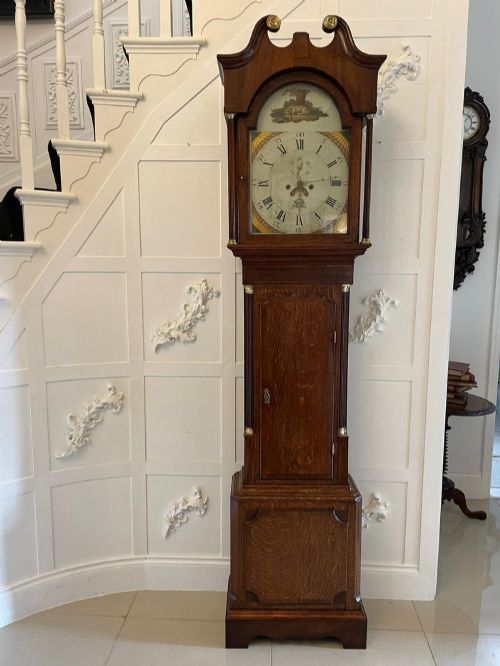
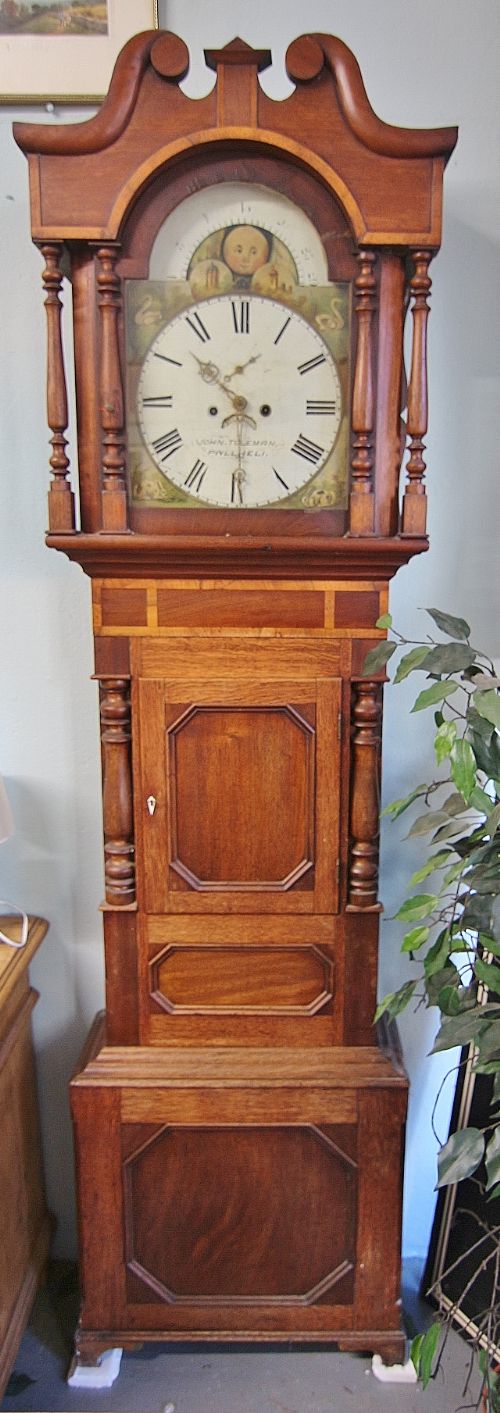
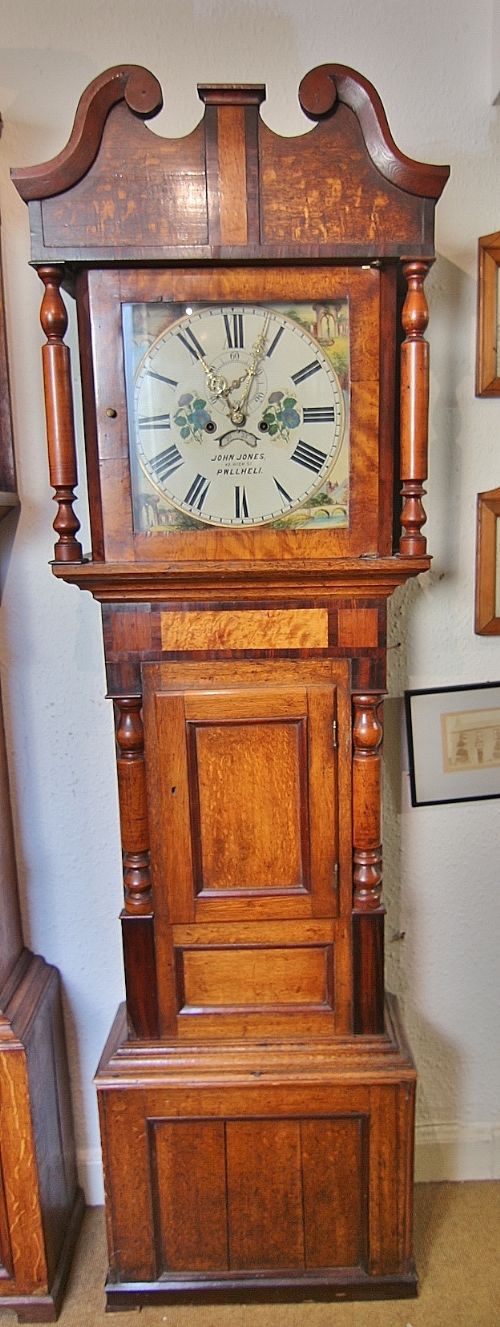
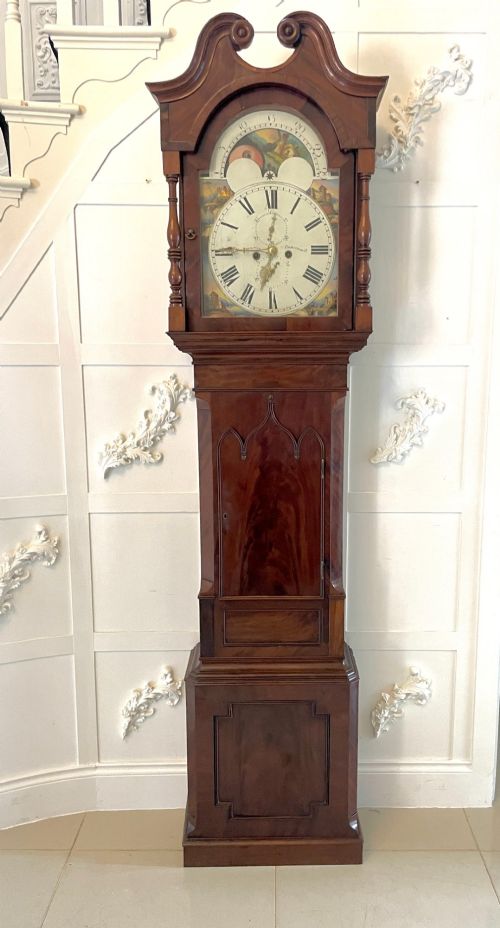
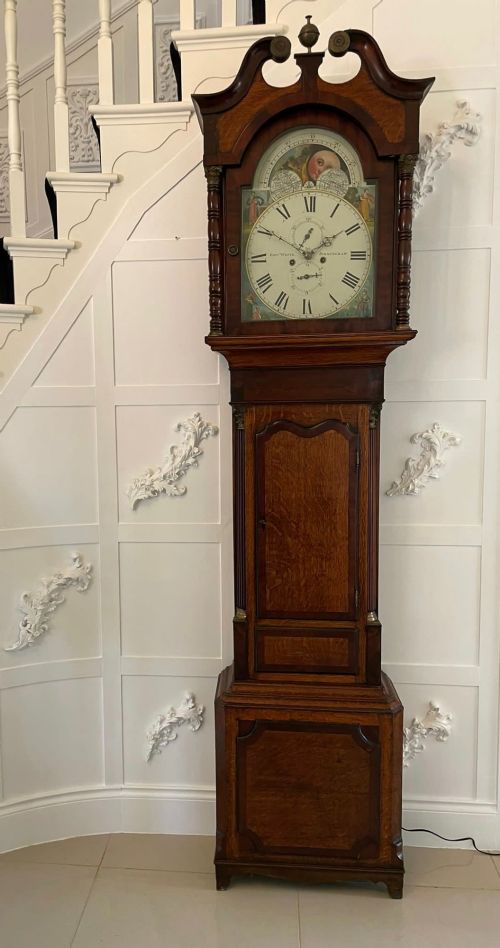
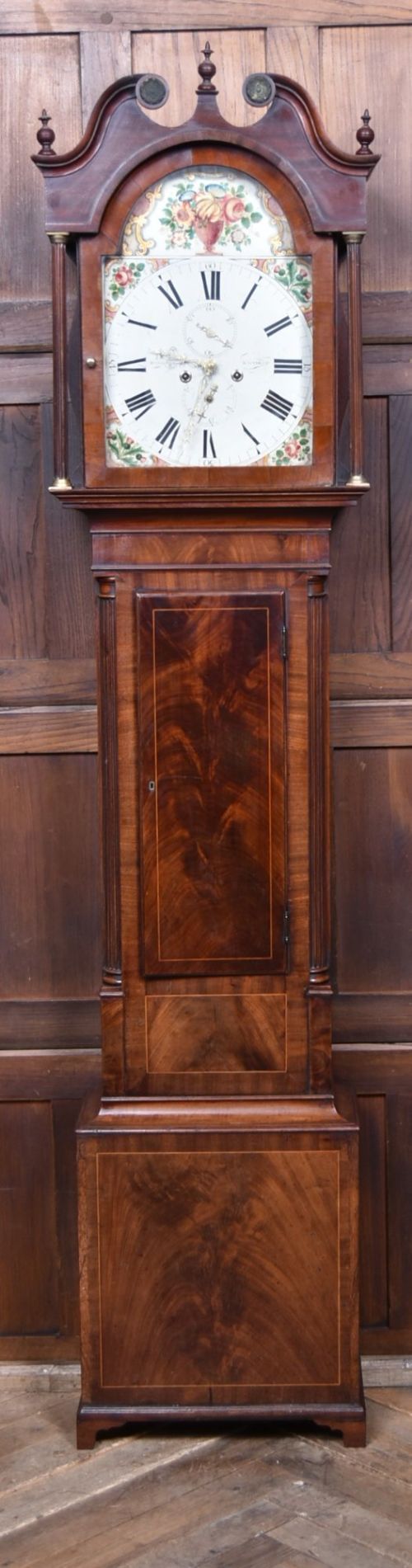
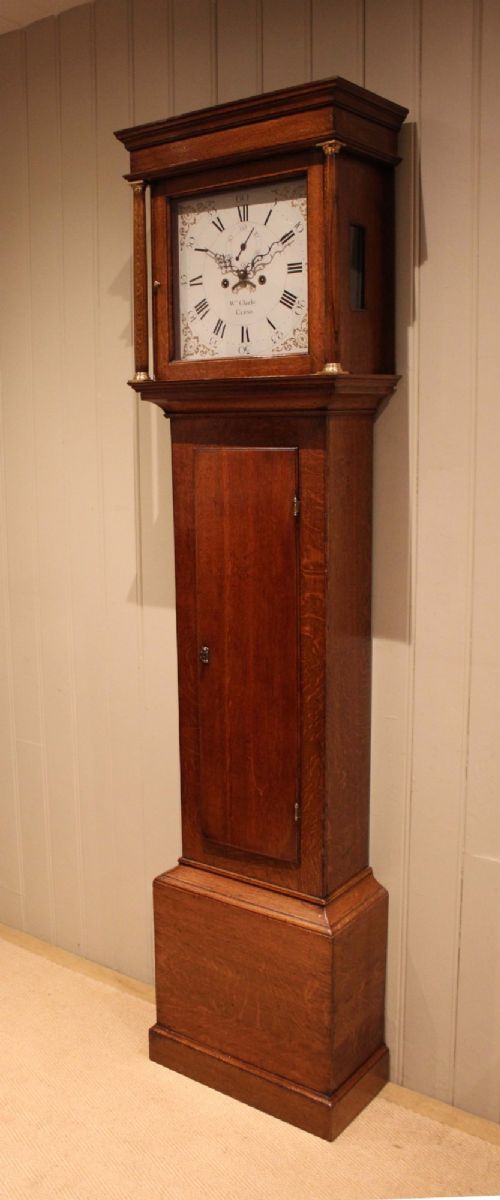
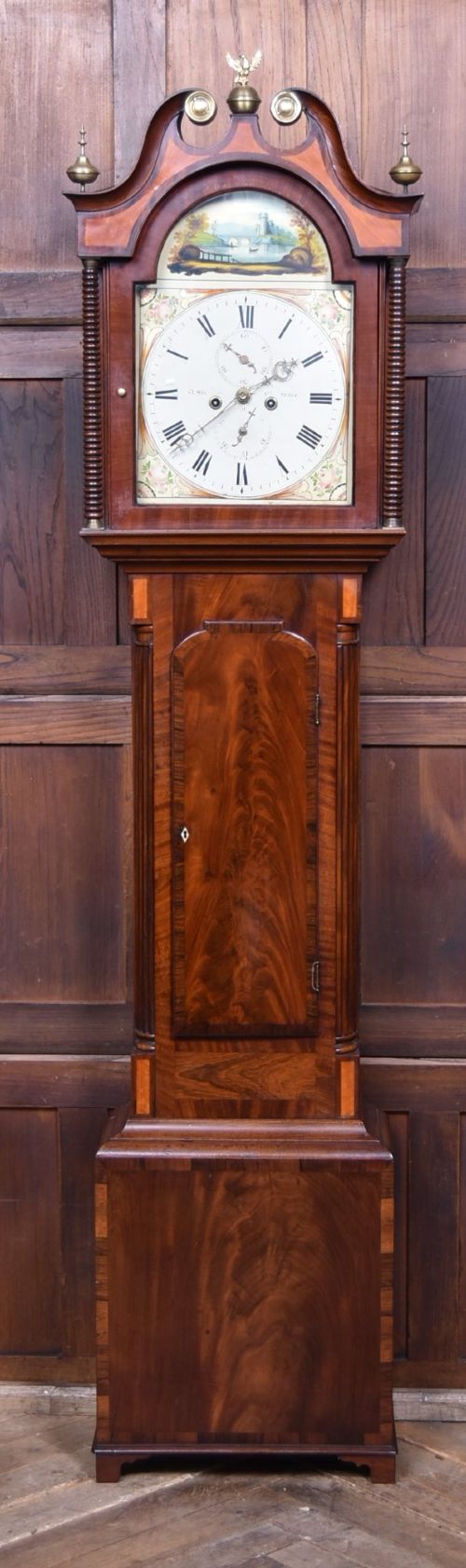
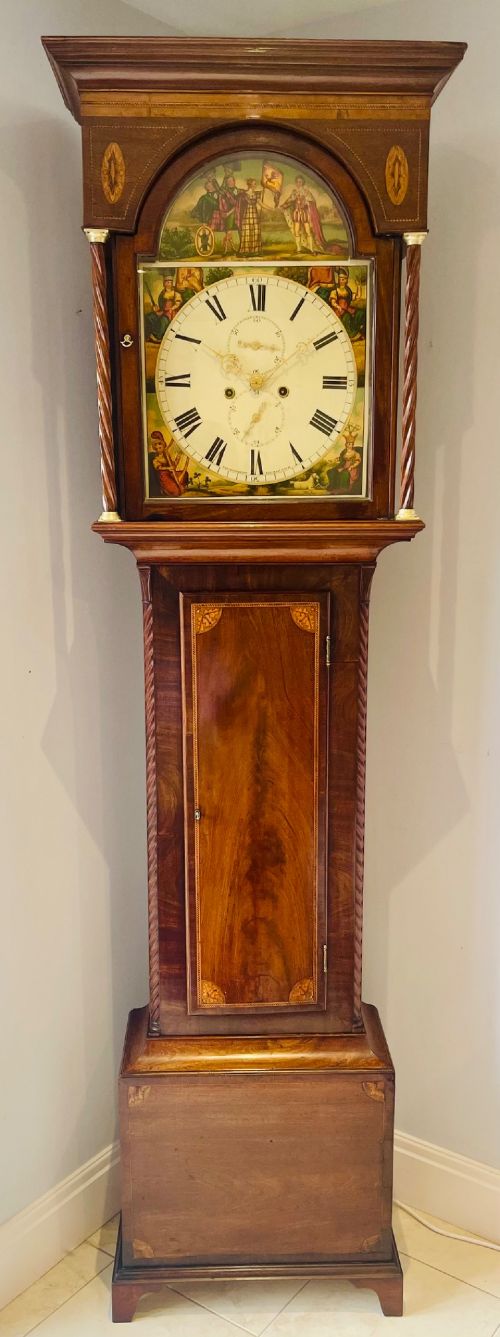
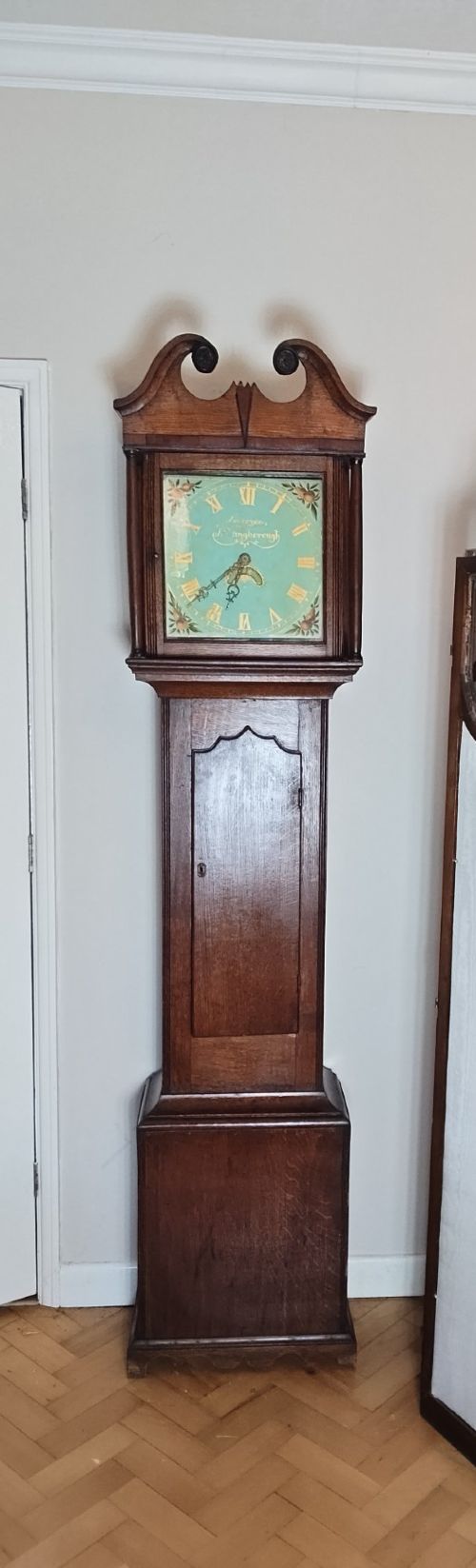
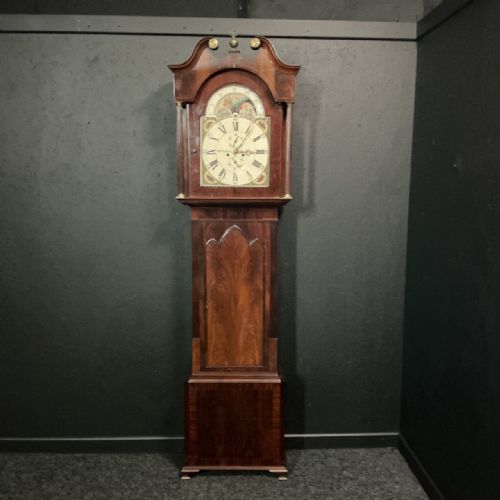
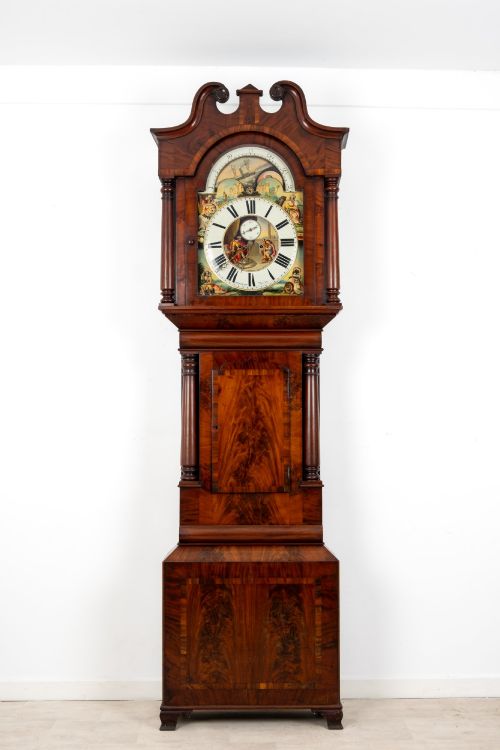
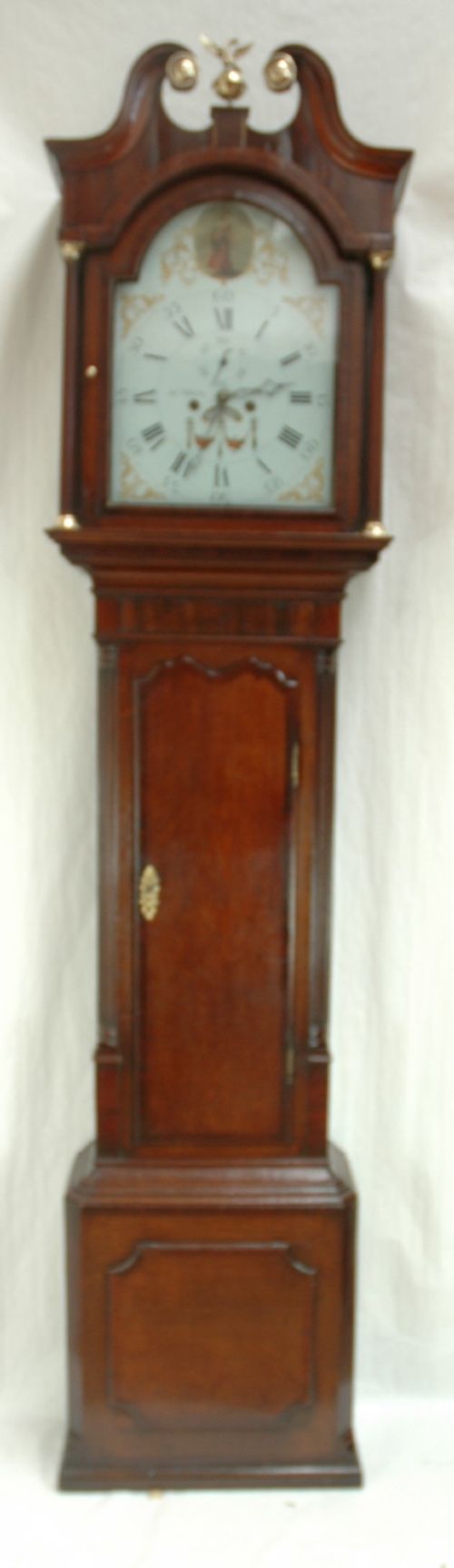
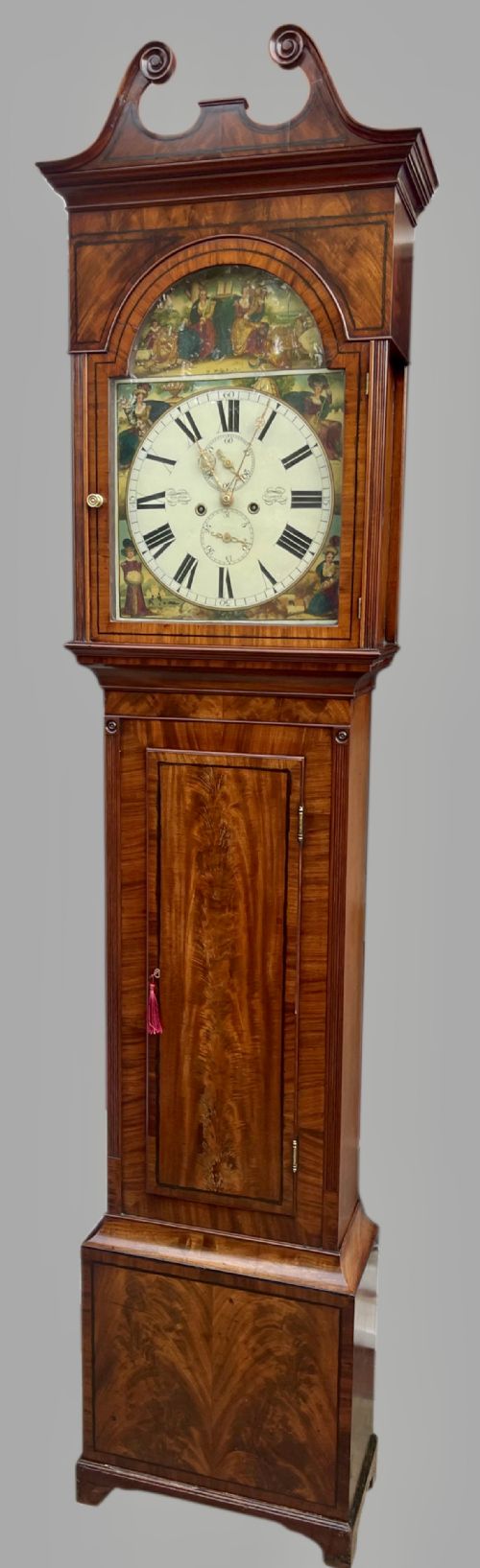
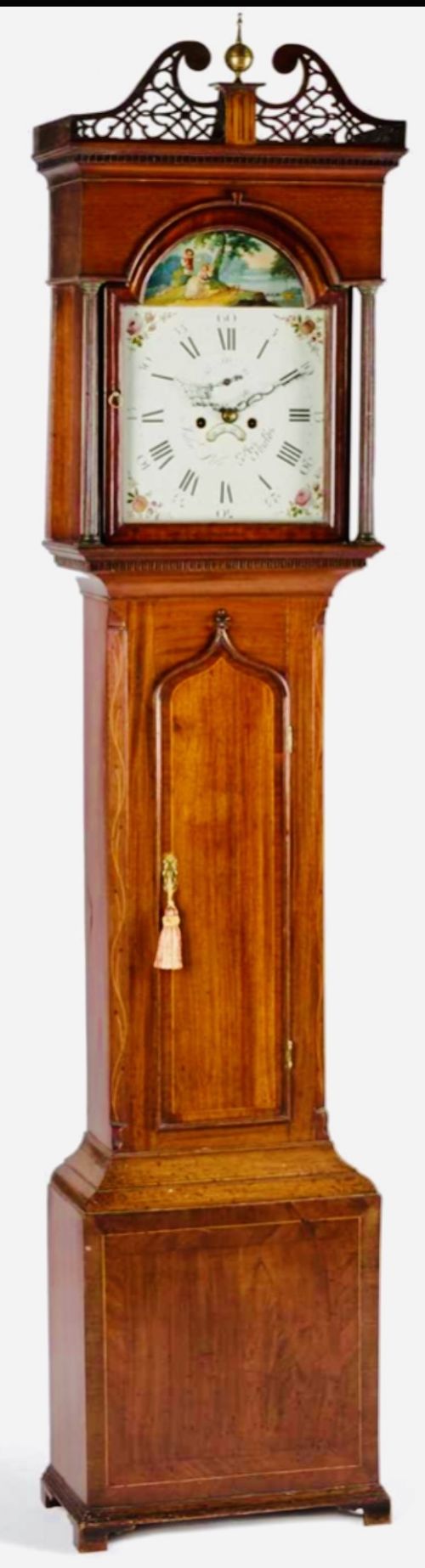
A georgian painted dial clock typically takes the form of a tall longcase or grandfather clock, designed to stand upright in domestic hallways and living spaces. These pieces span the eighteenth and nineteenth centuries, appearing in regional variations from Scottish workshops to Welsh and English towns.
The materials reflect the domestic woodworking of the period, pairing painted iron dials with cases of oak, mahogany, or lacquered wood. Wall-hung tavern clocks and smaller mantel formats also appear, though the tall floor-standing longcase remains the dominant silhouette on this page.
Makers ranged from provincial watchmakers signing their dials in regional towns to prominent London firms. Their work captures a shift away from brass dials toward legible, decorated iron faces featuring moon phases and calendar displays.
Materials and construction
The cases rely on solid timbers such as mahogany and oak, often finished with decorative veneers, cross-banding, or regional lacquer work. Cabinetmakers built these tall housings to protect the weight-driven or spring-driven brass movements housed within.
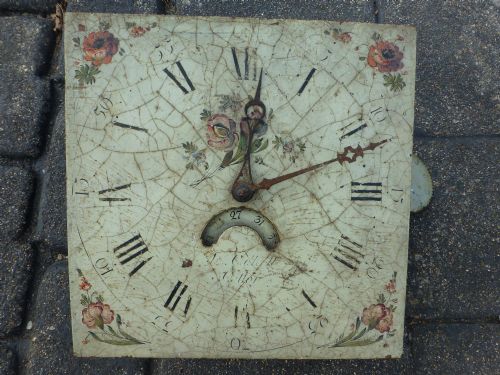
Dials were forged from iron plates and coated with a smooth ground layer before artists hand-painted the numerals, floral spandrels, and subsidiary dials. Glass doors protected the delicate hands and face from dust and damage in daily use.
Listings feature oak, mahogany, lacquered wood, and painted iron materials across Georgian and nineteenth-century periods.
Judging quality and execution
Quality rests heavily on the crispness of the hand-painted dial work and the fidelity of the cabinet timbers. Superior examples feature intricate subsidiary dials, such as moon phases or calendar hands, executed by skilled regional artists rather than factory templates.
The proportions of the timber case and the originality of the brass movement relative to the dial determine the integrity of the piece. Well-preserved surfaces retain their original patination and finish without heavy modern intervention.
John Fielder of Alton·Hendrie Ogg·D Straiton·Parkinson Bros Batley·D Williams of Crickhowell·William McEwan·Edward Shepley·Thomas Hedge·Thomas Webbe·Charles Dowsett·John Denbigh·Edward White·Will Lassell·John Hancock
The Georgian Painted Dial Clock Glossary
- Longcase clock
- A tall, weight-driven pendulum clock enclosed in a wooden case standing directly on the floor. These are frequently referred to as grandfather clocks by collectors.
- Painted iron dial
- A clock face made from a shaped iron sheet coated with a painted finish, replacing the earlier engraved brass square dials. They often feature floral corners and painted lunar calendars.
- Moon phase
- A mechanical display on the dial tracking the lunar cycle through a rotating disk behind a shaped aperture. This complication required specialised gearing within the movement.
- Tavern clock
- A large wall-mounted timepiece with a prominent painted dial and a long pendulum trunk below, designed for public houses and commercial spaces.
- Eight day movement
- A clock mechanism requiring winding only once a week rather than daily. This indicates a more complex gear train using twin weights or springs.
Georgian Painted Dial Clock: Frequently Asked Questions
What is a georgian painted dial clock?
A georgian painted dial clock is a tall floor-standing timepiece featuring a hand-painted iron face, produced during the eighteenth and early nineteenth centuries. These pieces combine mechanical brass movements with timber cabinetry in oak or mahogany.
They served as both essential domestic timekeepers and decorative room centerpieces, often signed by local clockmakers on the dial face.
How do I wind an eight day clock?
An eight day clock requires winding every week by inserting a key into the winding holes on the painted dial to lift the internal weights. Care must be taken not to overwind the mechanism.
Maintaining a regular winding schedule keeps the movement running accurately and prevents tension imbalances in the gear train.
Where were these clocks made?
These clocks were produced across Britain, from major urban centres like London to regional workshops in Scotland, Wales, and provincial English towns. Local makers sourced movements and dials, housing them in cabinetry typical of their region.
Regional signatures on the dial often reveal the specific town or maker responsible for the final assembly.
What is a moon phase dial?
A moon phase dial is a specialised display located on the upper arch of the clock face that tracks the phases of the moon. It uses a rotating painted disk behind two curved arches to show the lunar cycle.
This feature added complexity to the clockwork and served both practical and aesthetic purposes for households tracking tides and agriculture.