





Scottish Chest of Drawers
A Scottish chest of drawers brings robust proportions and striking timber figuring into a room, offering generous storage through deep, well-constructed drawers.
Scottish Chest of Drawers
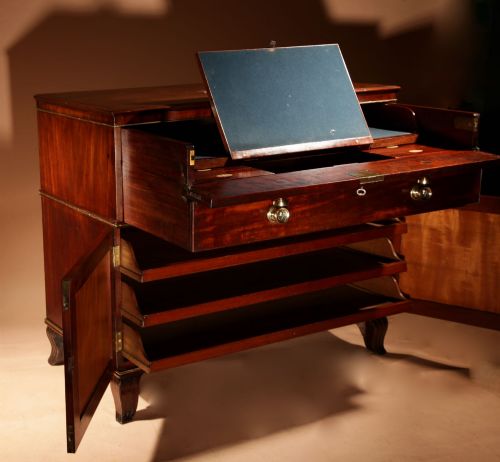
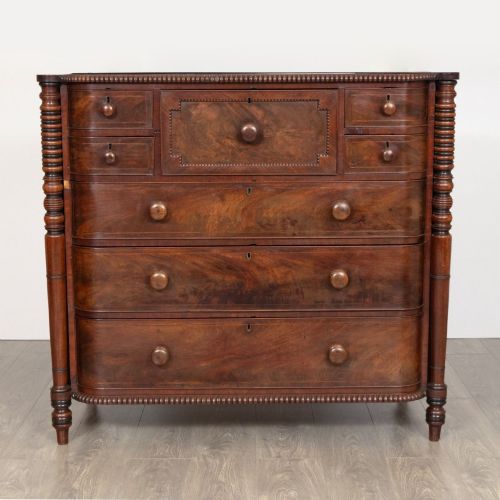
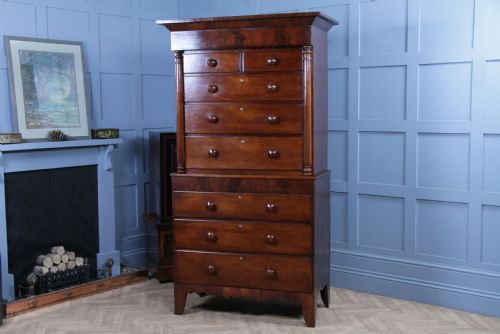
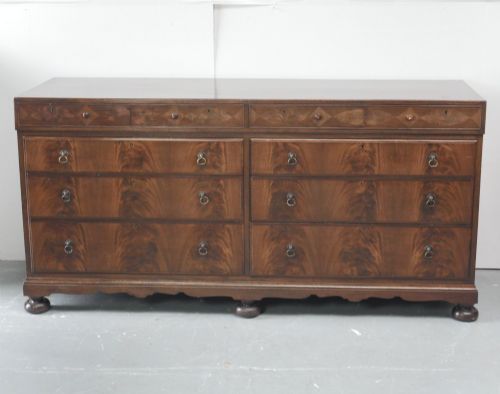
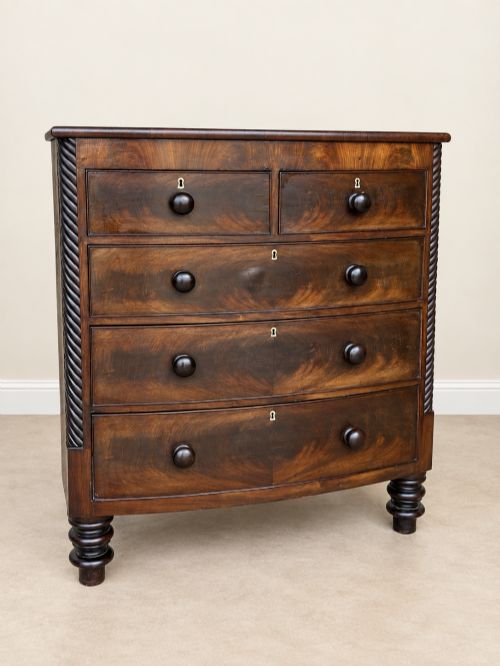
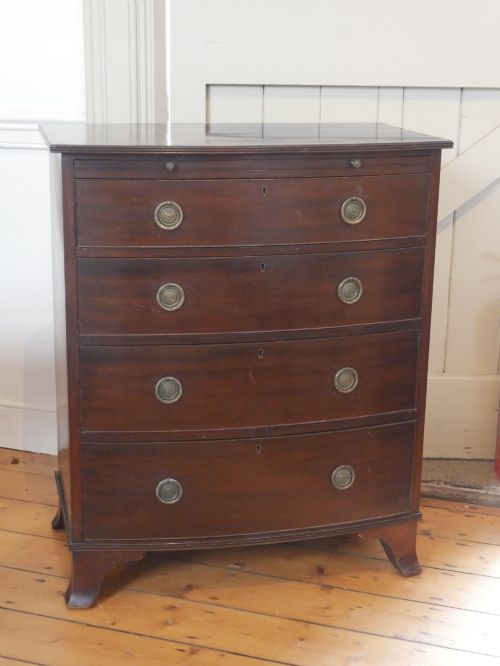
A Scottish chest of drawers is a substantial storage piece defined by generous proportions, often featuring a deep cushion drawer above standard graduated tiers. The pieces encountered here span from the Georgian and Regency periods through the Victorian era up to the early twentieth century.
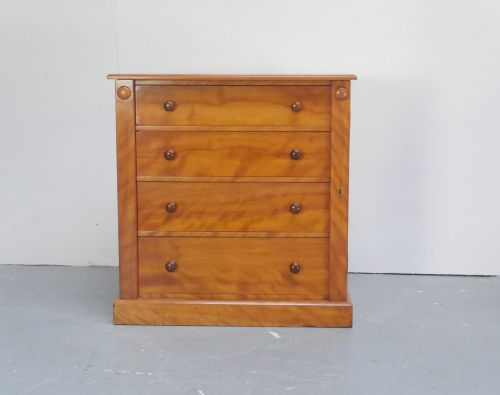
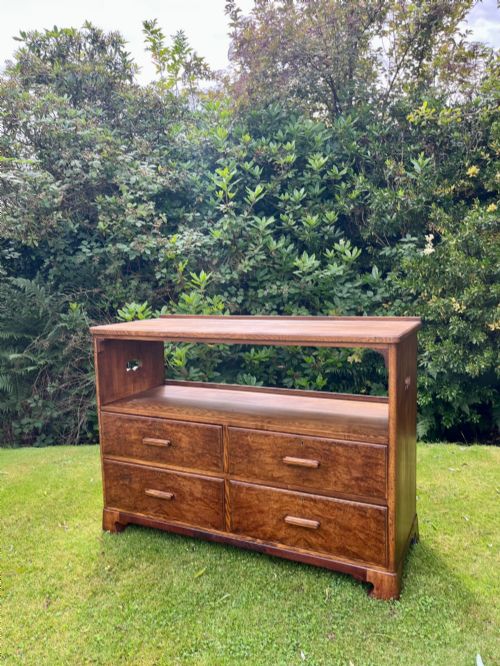
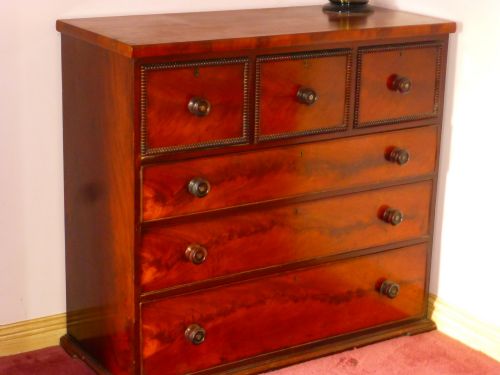
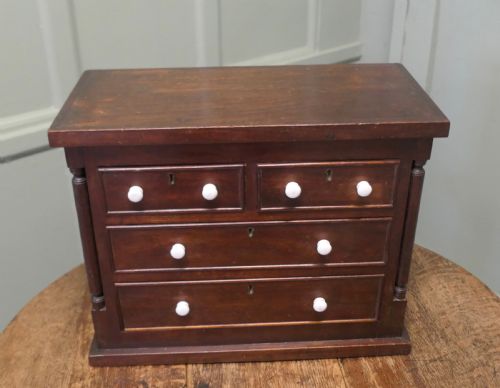
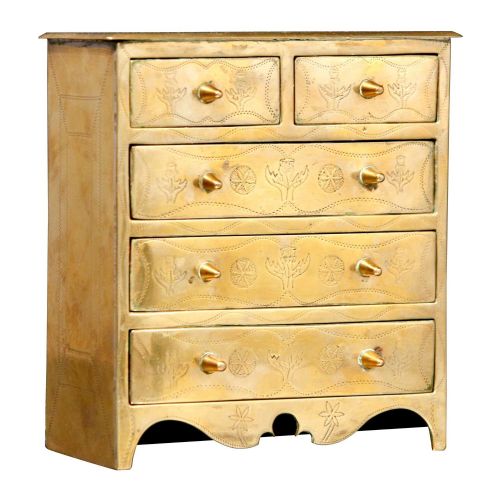
Makers utilised native and imported timbers, resulting in items ranging from grand flame mahogany examples to modest painted pine country pieces. Alongside full-sized variants, miniature apprentice pieces and specialised collector cabinets also appear within the selection.
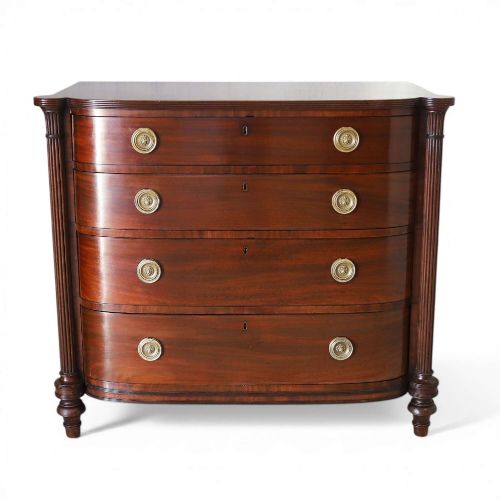
Regional variations often include ogee mouldings, bold column details, and deeply figured veneers that showcase the natural grain of the wood. These items serve as both practical storage furniture and focal points within traditional and contemporary interiors.
Materials and Construction Techniques
Cabinet makers constructed the carcases using sturdy secondary woods like pine or oak, lining the interiors with durable timber. Drawer frames typically employ hand-cut dovetail joints to ensure structural longevity under heavy daily use.
The outer visible surfaces received carefully selected veneers, particularly flame mahogany and fiddleback mahogany, arranged to mirror grain patterns across the drawer fronts. Solid timber mouldings, bobbin turnings, and turned wooden handles completed the exterior decorative scheme.
Scottish Chest of Drawers Retail Price Guide 2026
Typical asking prices for scottish chest of drawers among the pieces listed under this phrase on Sellingantiques today, from the lower quarter to the upper quarter. They describe what is for sale here now, not the wider market.
Current listings demonstrate a broad chronological spread from the eighteenth century through Victorian craftsmanship to twentieth-century workshops.
Assessing Quality and Craftsmanship
Superior examples display careful book-matching of flame mahogany veneer across every drawer front, creating a balanced and symmetrical visual rhythm. The depth and clarity of the wood finishing reveal the skill of the original polishers.
Structural integrity depends on the precision of the drawer joints and the smooth operation of each sliding tier within its housing. Original brass or turned wooden handles, well-preserved interior linings, and crisp ogee mouldings distinguish finer workshop production from standard utility pieces.
Whytock & Reid·William Trotter·R H & J Simpson·William Deans of Melrose
The Scottish Chest of Drawers Glossary
- Scotch chest
- An alternative regional term used to describe a substantial Scottish chest of drawers, typically featuring deep proportions and a prominent top cushion drawer.
- Cushion drawer
- A deep, convex top drawer situated directly beneath the top surface of the chest, often lacking visible external handles to preserve a clean architectural line.
- Ogee
- A double-curved architectural moulding shaped like an 'S', frequently employed around the upper framing or cornice of Victorian pieces.
- Graduated drawers
- A series of drawers arranged vertically from smallest at the top to largest at the bottom, creating a balanced visual progression.
Scottish Chest of Drawers: Frequently Asked Questions
What is a Scotch chest?
A Scotch chest is a traditional regional term for a large Scottish chest of drawers, known for its imposing height and deep top drawer.
These pieces often incorporate bold mahogany veneers and substantial turned feet that distinguish them from standard English equivalents.
How do I date a Scottish chest of drawers?
Dating relies on observing structural characteristics, timber choices, and hardware styles across different periods. Georgian examples display refined proportions and bracket feet, while Victorian versions often feature grand flame mahogany veneers, bobbin turnings, and ogee cornices.
Internal construction details, such as hand-cut dovetails and secondary woods like pine or oak, also provide chronological clues.
Where should I place a large chest in my home?
These substantial chests function exceptionally well as anchor pieces in bedrooms, hallways, or spacious living areas. Their generous storage capacity makes them practical for linens, clothing, or general household organisation.
Ensure adequate floor space and clearance for drawers to open fully without obstruction.
Why does the top drawer often lack handles?
The top drawer in many Scottish chests is a deep, convex cushion drawer designed to sit flush within the upper moulding. Cabinet makers often omitted visible handles on this specific tier to maintain an uninterrupted decorative wood grain pattern across the frieze.