


Scientific Instrument Barograph
A scientific instrument barograph records atmospheric pressure continuously on paper, offering a tangible link to historical weather tracking.
Scientific Instrument Barograph
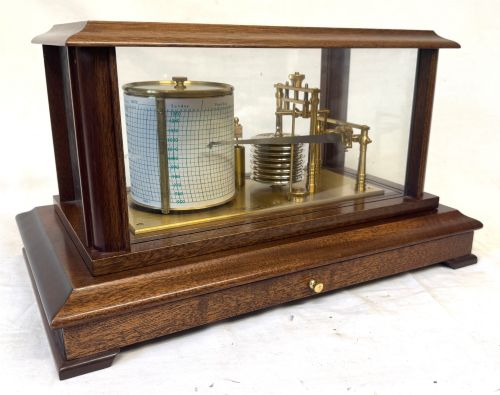
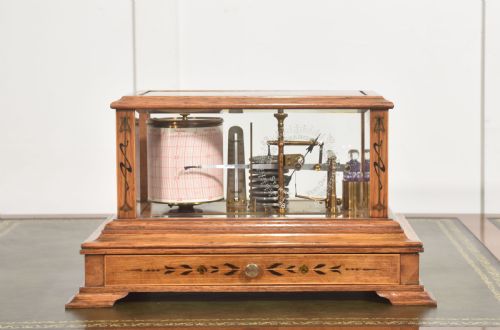
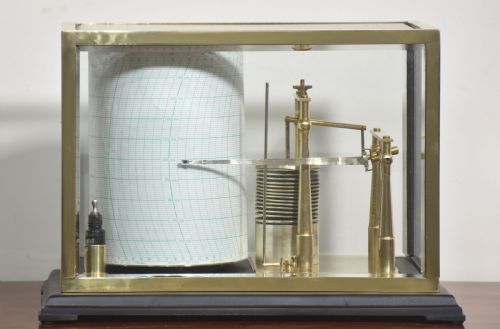
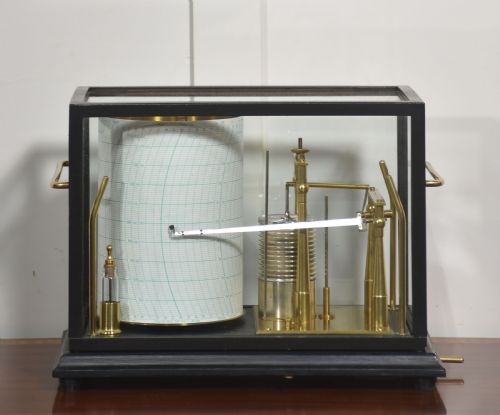
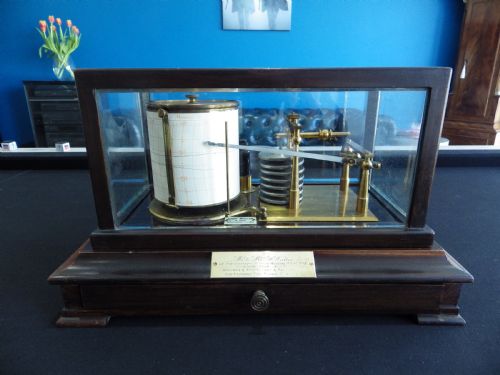
A scientific instrument barograph is a mechanical weather-recording device housed in a protective glazed case. These machines trace continuous barometric pressure readings onto paper charts using a clockwork drum and pen arm.
The versions most commonly met on this page date from the Victorian, Edwardian, and interwar periods. They typically combine timber cabinetry with delicate brass mechanisms and bevelled glass panels.
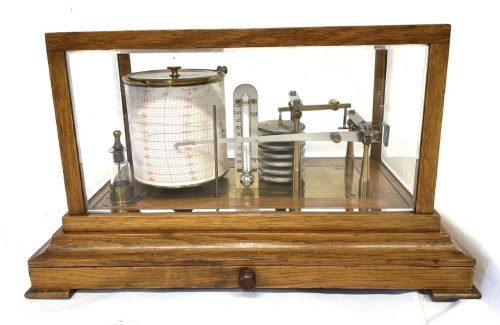
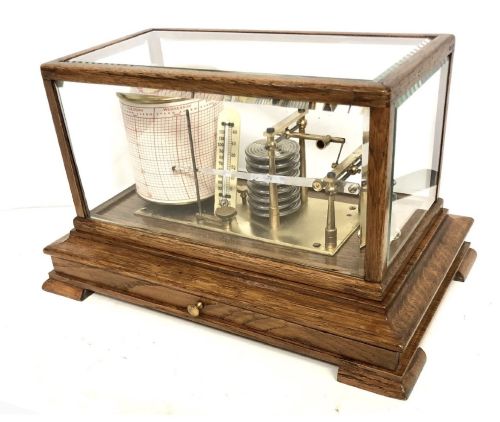
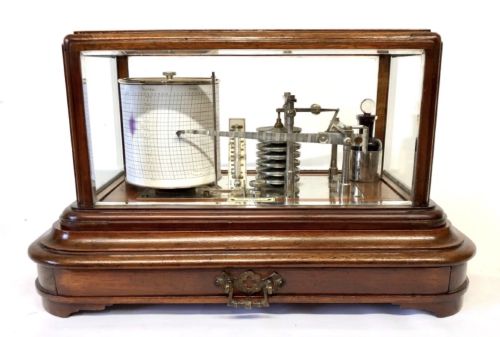
Many examples incorporate a thermometer or an integrated chart drawer beneath the main recording mechanism. Formats range from traditional table models to wall-mounted units.
Materials and Construction
Makers housed the delicate mechanisms in sturdy wooden enclosures made from mahogany, oak, or walnut. These timber cases often feature bevelled glass panes that protect the moving parts while allowing clear observation.
Internal components rely on polished brass and steel for the aneroid bellows, levers, and clockwork gear trains. Paper charts provide the recording surface for the inked arm, while select models display decorative Art Nouveau inlay.
Scientific Instrument Barograph Retail Price Guide 2026
Typical asking prices for scientific instrument barograph among the pieces listed under this phrase on Sellingantiques today, from the lower quarter to the upper quarter. They describe what is for sale here now, not the wider market.
Listings span periods from the nineteenth century through the nineteen-sixties, incorporating timber varieties such as mahogany, oak, and walnut.
Assessing Craftsmanship
Superior examples distinguish themselves through the precision of the clockwork movement and the weight of the brass components. Maker signatures from established firms often indicate higher standards of mechanical execution.
Cabinetry detail separates standard production models from finer pieces. Bevelled glass, fitted chart drawers, and integrated thermometers elevate the overall build quality of the enclosure.
Short and Mason·Negretti and Zambra·Jules Richard·Casella London·Russell Norwich
The Scientific Instrument Barograph Glossary
- Barograph
- A self-recording barometer that graphs atmospheric pressure over time. It uses a series of aneroid metal vacuum capsules connected to an inked arm.
- Aneroid
- Containing no liquid. These barometers and barographs measure pressure changes via expanding and contracting metal chambers.
- Bevelled glass
- Glass with edges ground and polished to an angle. This treatment adds depth and catches light across the frame of the case.
- Chart drawer
- A built-in compartment positioned beneath the main instrument base. It served to store spare paper recording sheets.
- Clockwork movement
- A mechanical spring-driven system that rotates the recording drum. It regulates the speed at which the paper chart passes beneath the pen.
Scientific Instrument Barograph: Frequently Asked Questions
How do I change the paper chart?
Lift the hinged glass cover and release the pen arm gently from the drum surface. The paper chart wraps around the cylinder and secures with a simple clip.
Wind the clockwork mechanism carefully before placing a fresh chart aligned with the correct day and time. Lower the pen back onto the paper to resume recording.
How did people use barographs historically?
Households and businesses relied on these machines to track impending weather changes over a full week. Farmers, mariners, and meteorologists studied the rising and falling ink lines to anticipate storms or fair conditions.
The continuous record provided insights that standard dial barometers missed by showing the rate of pressure change.
Where should I place a barograph at home?
Position the instrument on a stable, level surface away from direct sunlight, radiators, and drafts. Sudden temperature shifts can interfere with the sensitivity of the metal aneroid chambers.
A study, hallway, or living room shelf provides a secure environment where the mechanical action can be observed safely.
How can I tell the period of a case?
Victorian and Edwardian models frequently feature rich mahogany or dark oak with substantial brass fittings and bevelled glass. Later pieces from the interwar period often display lighter oak tones or simpler joinery.
Makers' plaques, paper label instructions inside the lid, and style details like Art Nouveau inlay help narrow down the decade of manufacture.