




Scientific Balance Scale
These scientific balance scale pieces are precision measuring instruments crafted from brass and mahogany, offering genuine historical utility for collectors.
Scientific Balance Scale
When you search for a scientific balance scale, you encounter precision instruments designed for measuring mass with exactness. The selection here spans periods from Georgian and Regency eras through the Victorian age into the twentieth century, including items dated from 1800 to 1940.
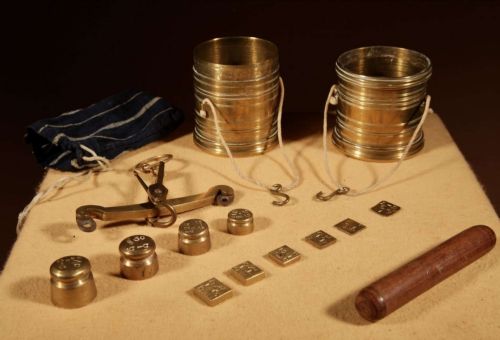
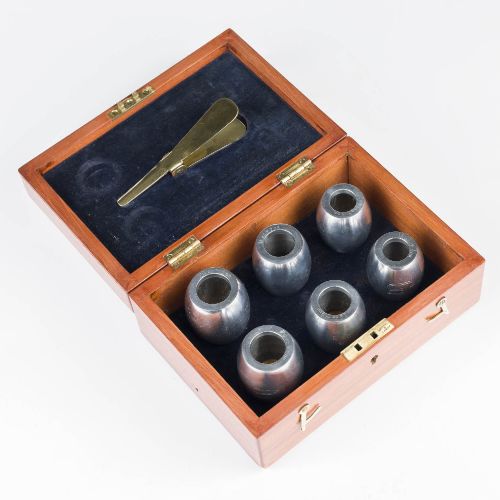
The forms on this page include apothecary balances, verification balances, pocket folding gold balances, and portable chondrometers housed in wood cases. Makers such as De Grave Short & Co., Day & Millward, and Robert Brettell Bate appear frequently across these listings.
You will also find specialist equipment like egg graders and sets complete with original brass weights and velvet-lined or paper-labelled compartments. These objects reflect the rigorous standards of nineteenth-century commerce, chemistry, and official inspection.
How they were made
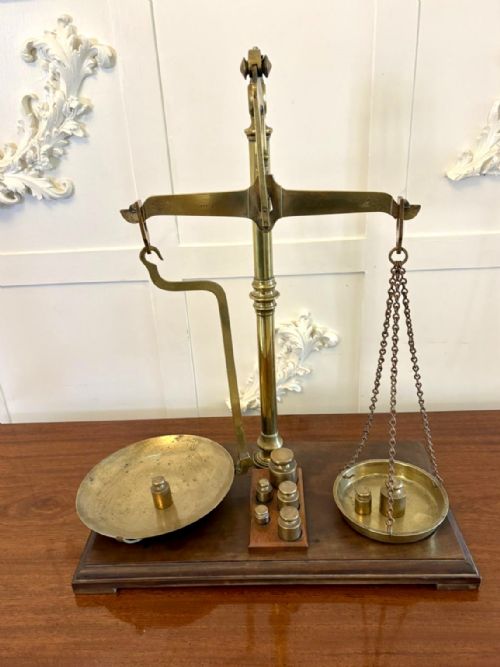
Makers constructed these instruments primarily using polished brass for beams, pans, and pillars, combined with seasoned mahogany for protective cases and base boxes. Glass panels often enclose the sensitive balance mechanisms to prevent air currents from disturbing the reading.
Fine craftsmanship is evident in the engraved maker signatures, paper instructional labels inside lids, and precise calibration marks. Textile elements like velvet appear in fitted compartments designed to hold delicate fractional weights securely.
Scientific Balance Scale Retail Price Guide 2026
Typical asking prices for scientific balance scale among the pieces listed under this phrase on Sellingantiques today, from the lower quarter to the upper quarter. They describe what is for sale here now, not the wider market.
Listings feature brass, mahogany, glass, and paper materials spanning the Georgian, Regency, Victorian, Edwardian, and twentieth-century periods.
What varies in quality
Quality in a scientific balance scale lies in the original integrity of the beam, the crispness of the maker's engraved signature, and the completeness of the accompanying weight set. Instruments retained in their fitted mahogany cases with legible paper labels command greater historical interest.
Examples produced by renowned makers like Oertling or De Grave Short & Co. demonstrate superior mechanical precision compared to unmarked utilitarian workshop pieces. The survival of auxiliary components such as original brass weights and verification stamps elevates the standard of the piece.
De Grave Short And Co·Robert Brettell Bate·Day And Millward·Oertling·Stephen Houghton And Son
The Scientific Balance Scale Glossary
- Verification balance
- A scale utilised by official inspectors to check commercial weights and measures for accuracy. These instruments bear regional or municipal authority inscriptions.
- Apothecary balance
- A sensitive scale designed for weighing medical ingredients and pharmaceuticals. They are frequently housed in glass-panelled mahogany cases.
- Beam scale
- A traditional weighing instrument consisting of a central fulcrum and equal arms supporting suspended pans. Precision versions measure minute quantities for chemistry.
- Gold balance
- A compact pocket instrument designed for weighing precious coins and bullion. Regency examples often feature ingenious folding mechanisms.
Scientific Balance Scale: Frequently Asked Questions
What are scientific balance scales?
These are historical measuring instruments utilised in commerce, chemistry, and official inspection to determine precise mass. They combine brass mechanisms with fitted wooden cases.
Examples range from portable nineteenth-century pocket gold balances to large Victorian apothecary and verification scales complete with original weight sets.
How do I date an antique scale?
Dating relies on maker signatures, engraved stamps, patent dates, and stylistic details of the mahogany cabinetry. Many instruments bear specific years or maker addresses.
Official verification marks and regional inscriptions also help place an instrument within periods such as the Georgian, Victorian, or Edwardian eras.
Are original weights usually included?
Some listings include complete sets of brass weights housed in fitted compartments within the base or case. These often match the maker and period of the balance.
When present, complete weight sets with correct fractional pieces enhance the historical completeness of the scientific instrument.
How should I display these scales?
These instruments suit display on wooden surfaces, within glass cabinets, or on dedicated tabletops where their brass and mahogany construction is visible. Enclosed glass cases protect the delicate beams from dust.
Positioning them away from direct sunlight and excessive moisture preserves the original paper labels, textiles, and polished metal surfaces.