



Weights and Measures
Weights and measures are precision tools of trade and governance, prized by collectors for their historical accuracy and honest industrial craftsmanship.
Weights and Measures
When searching for weights and measures, a buyer explores instruments designed for trade, science, and municipal verification. These objects range from delicate scales to heavy verification balances and complete sets of standard weights.
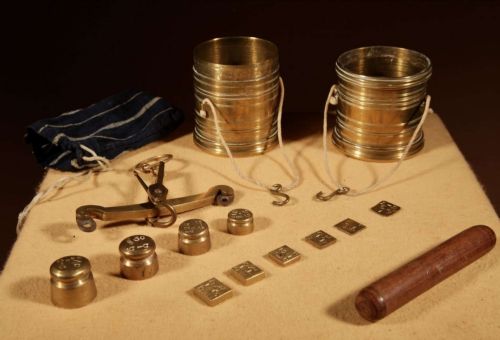
The most common examples on this page are brass weights, balance scales, and imperial measuring instruments produced during the Victorian and Edwardian eras. Many carry specific regional associations, having served counties, boroughs, and cities across Britain.
Collectors encounter specialised apparatus such as chondrometers, egg graders, and official yardsticks alongside stacking weight sets. These functional items reflect the strict standards required for commerce and local government oversight in the nineteenth and twentieth centuries.
How they were made
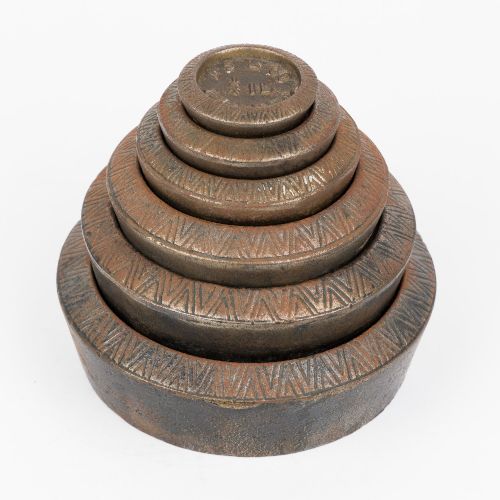
Makers utilised durable metals including brass, copper, and cast iron to ensure stability and accuracy during frequent use. These hard-wearing materials were shaped, cast, and turned to meet exacting governmental tolerances.
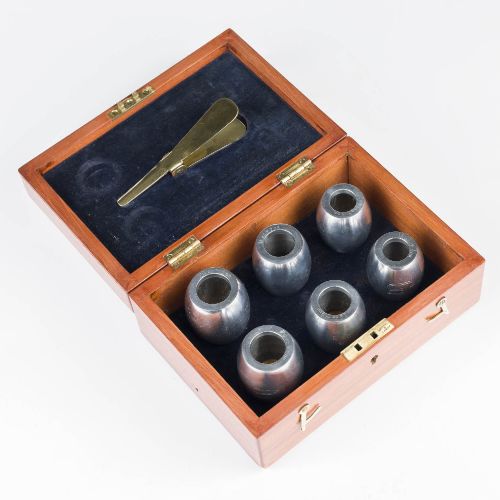
Wooden elements such as mahogany feature in custom cases designed to protect delicate scales and calibrated instruments from environmental wear. Velvet linings frequently cushion individual weights within their fitted compartments.
Precision engineering defined the production of these objects, particularly in the construction of beam scales and verification balances. Makers engraved or stamped official markings directly into the metal to denote standard measures and inspection authorities.
Weights and Measures Retail Price Guide 2026
Typical asking prices for weights and measures among the pieces listed under this phrase on Sellingantiques today, from the lower quarter to the upper quarter. They describe what is for sale here now, not the wider market.
Object forms on this page include beam scales, chondrometers, bushel sets, and standard floor plaques.
What varies in quality
The distinction between standard commercial pieces and top-tier instruments lies in their precision, provenance, and maker reputation. Items produced by prominent firms such as De Grave or W&T Avery demonstrate superior mechanical adjustment and finish.
Completeness significantly affects the standing of a set, as original fitted cases and matching component weights retain higher historical integrity. Surviving verification documentation or clear municipal inscriptions elevate the interest of a piece considerably.
The condition of the metal surfaces and the legibility of stamped governmental markings dictate visual appeal. Examples that retain their original unpolished patination and complete sets of graduated weights represent the pinnacle of this collecting field.
De Grave Short And Co·W And T Avery·De Grave And Co
The Weights and Measures Glossary
- Chondrometer
- A scientific instrument used for determining the weight and quality of grain. It operates by measuring a specific volume of corn against a standard balance.
- Avoirdupois
- The system of weights based on a pound of sixteen ounces, commonly used for everyday goods and commerce. This standard forms the basis for many standard weight sets encountered by collectors.
- Troy ounce
- A system of units of mass traditionally used for precious metals and gems. Sets calibrated to this standard are distinct from standard avoirdupois collections.
- Standard weight
- An officially verified mass used by inspectors to check commercial scales and ensure fair trade. These items often bear municipal or county inscriptions.
- Beam scale
- A weighing device consisting of a horizontal lever with arms of equal length, suspended from the centre. It relies on precise equilibrium to determine mass.
- Bushel
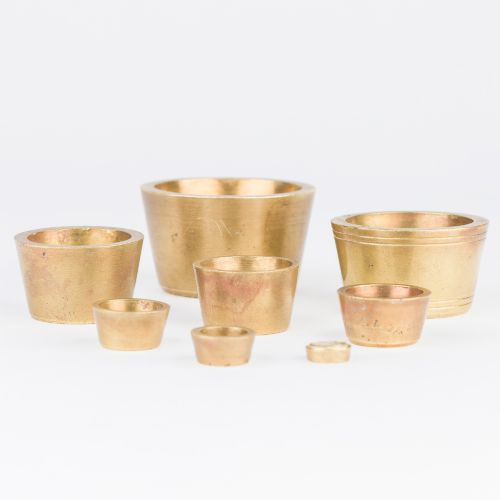
- A measure of capacity for dry goods, typically grain or fruit. Complete sets associated with this volume include calibrated brass vessels.
Weights and Measures: Frequently Asked Questions
What are weights and measures?
Weights and measures comprise physical standards, scales, and instruments used to regulate trade and scientific testing. They include official sets issued for cities, counties, and boroughs.
These items served practical roles in verifying commerce, ensuring that local markets adhered to strict national standards of mass and length.
How were beam scales used?
Beam scales operated by suspending items from equal arms to determine exact mass against verified standard weights. Inspectors utilised them in the field to test commercial equipment.
Precision was paramount, requiring sturdy construction from metals like brass and iron housed within protective wooden cabinetry.
How do I identify periods?
Periods are identified through material composition, maker stamps, and official inscriptions detailing the governing authority or reigning monarch. Victorian pieces frequently display cast brass construction with specific regional engravings.
Twentieth-century examples often incorporate updated regulatory markings and industrial finishes typical of later standardisation.
Where should I display these?
These items suit studies, libraries, or kitchens where their industrial heritage and tactile materials can be appreciated up close. Fitted mahogany cases and polished brass weights provide strong visual focal points.
Stable indoor environments help protect delicate wooden housings and maintain the natural patination of copper and brass components.