




Scandinavian Rustic Seating
Scandinavian rustic seating brings solid regional form and painted pine into a room, offering sturdy benches and armchairs built for everyday utility.
Scandinavian Rustic Seating
Scandinavian rustic seating encompasses a distinct group of wooden benches, armchairs, rocking chairs, and settles originating primarily from Sweden during the nineteenth century. These pieces reflect the functional demands of domestic life in rural Scandinavia, utilising local timber resources for practical domestic use.
The objects available on this page lean heavily towards nineteenth-century production, spanning periods from the Victorian era down to around nineteen hundred. Buyers encounter forms such as dug out chairs, children's highchairs, nursing chairs, and large storage benches that retain their original character.
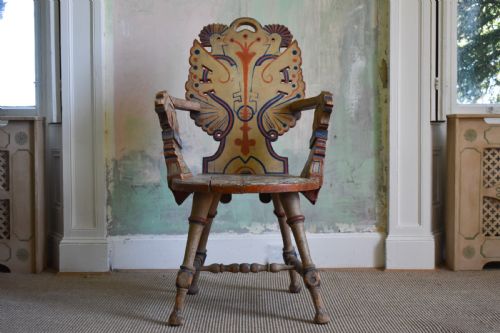
Styles represented across the selection focus heavily on Scandinavian country and folk art traditions, often displaying surviving layers of paint or simple stained finishes. These forms range from modest low chairs to monumental settles and matching pairs of long benches designed for communal seating.
How they were made
Makers constructed these chairs and benches predominantly from solid pine and birch, occasionally incorporating beechwood or iron components for structural reinforcement. Wood stain or flat paint finishes were applied directly to the timber surfaces, preserving the natural grain while providing colour and protection.
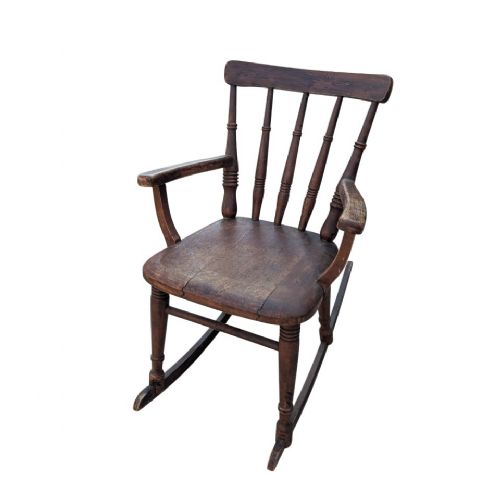
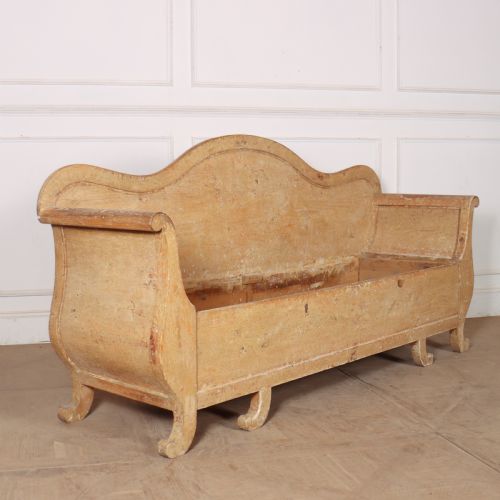
Construction techniques rely on straightforward regional carpentry, visible in solid dug out seats, bobbin turnings, and pegged joints designed to withstand heavy daily wear. Many benches incorporate storage boxes beneath the seat, uniting simple joinery with practical household storage.
A tiny child's armchair sits right alongside towering settles, proving that even rural homesteads kept miniature seating by the fire.
What varies in quality
Quality in these pieces rests upon the integrity of the original construction, the balance of the proportions, and the survival of early painted surfaces. Pieces that retain their genuine historic paint layer carry significantly more visual depth than those stripped down to bare wood.
Structural robustness also marks the difference between standard utilitarian output and finer regional craftsmanship, particularly in turned elements like bobbin arms or robustly carved settles. The retention of original hardware, such as hinges on storage benches, influences the overall integrity of the piece.
The Scandinavian Rustic Seating Glossary
- Settle
- A wooden bench featuring a high back to block drafts and solid arms, often designed with a hinged seat revealing a storage compartment beneath. This form served as a primary seat near the hearth in traditional homes.
- Dug out chair
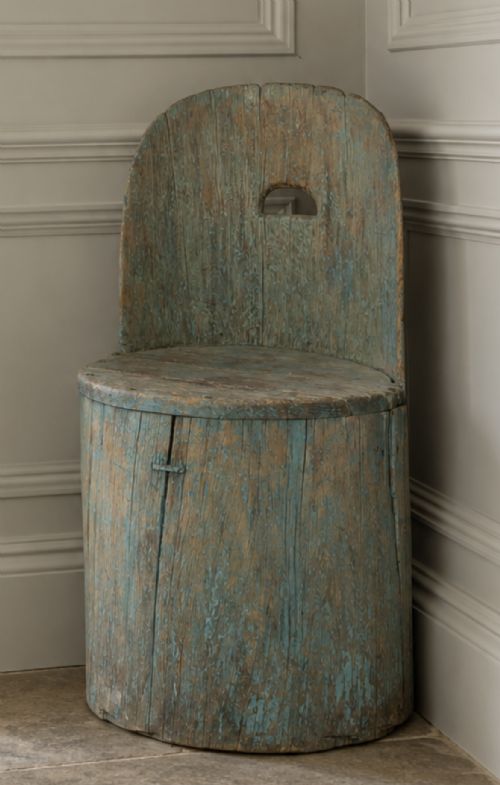
- A heavy seat hewn directly from a single solid log, representing an ancient woodworking tradition where the lower section forms a deep, bucket-like basin. These pieces rely on massive timber blocks rather than assembled frame construction.
- Bobbin turning
- A decorative lathe technique producing a series of rounded wooden spheres or discs linked along the length of a spindle. This detail frequently appears on the arms and stretchers of nineteenth-century chairs.
- Folk art
- Applied artistic traditions rooted in regional culture and executed by local makers rather than academic workshops. In these listings, it describes pieces adorned with traditional paint treatments and vernacular decorative details.
Scandinavian Rustic Seating: Frequently Asked Questions
How were storage benches used?
Storage benches served dual purposes in traditional homes, functioning as communal seating during the day and practical chests for textiles or provisions.
The hinged seat allowed quick access to the compartment below, keeping domestic items contained in smaller living spaces.
Are painted finishes original?
Many pieces retain surviving layers of early paint or original stained treatments applied to the pine and birch timbers.
Surviving paint adds considerable character and historical depth to the surface, reflecting regional decorative preferences of the period.
How do I date these pieces?
Dating relies on construction methods, timber selection, and stylistic markers recorded across the nineteenth century and into the early twentieth century.
Specific forms like Victorian children's rockers or dated settlements provide clear benchmarks for establishing the manufacturing era.
Can I use these chairs daily?
These functional wooden seats were built for robust everyday utility and remain entirely suitable for modern domestic use.
Their solid construction in pine, birch, and beechwood ensures structural stability for regular seating in contemporary interiors.