
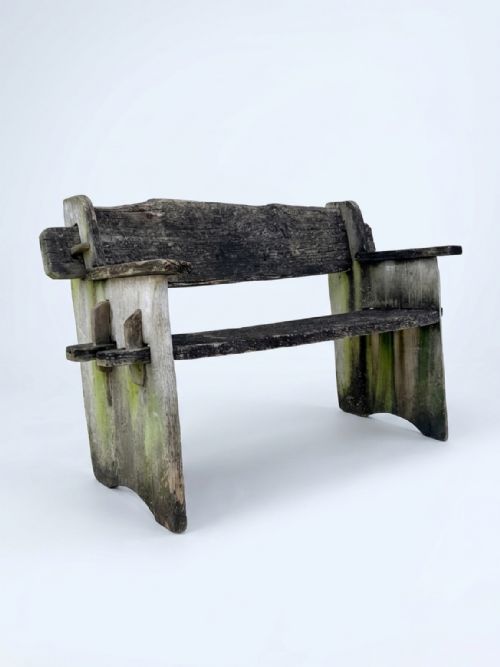
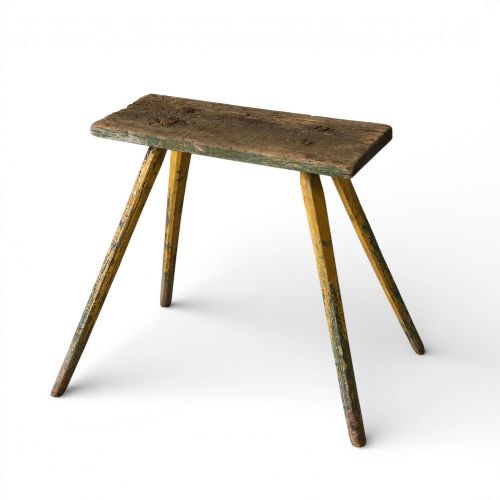
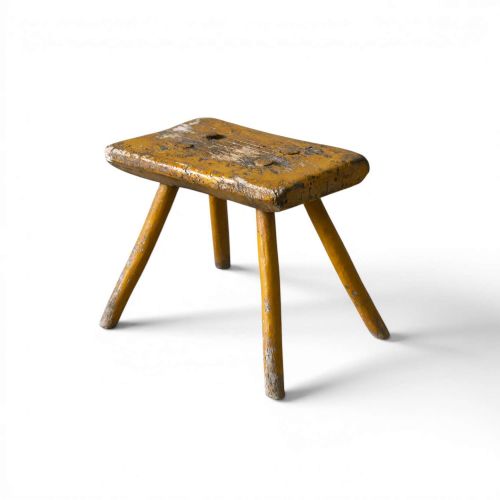
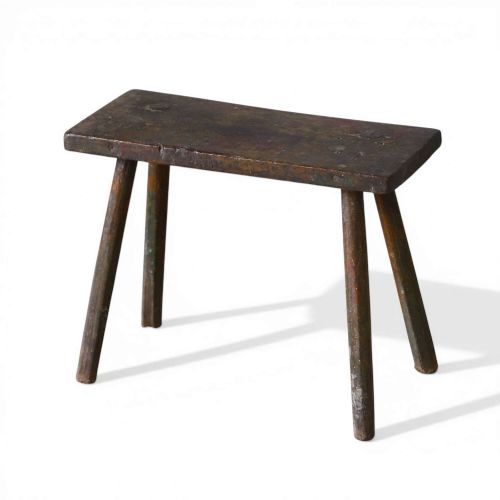





Primitive Pine Bench
A primitive pine bench offers unpretentious utility, bringing honest country craftsmanship and weathered charm to modern rooms.
Primitive Pine Bench
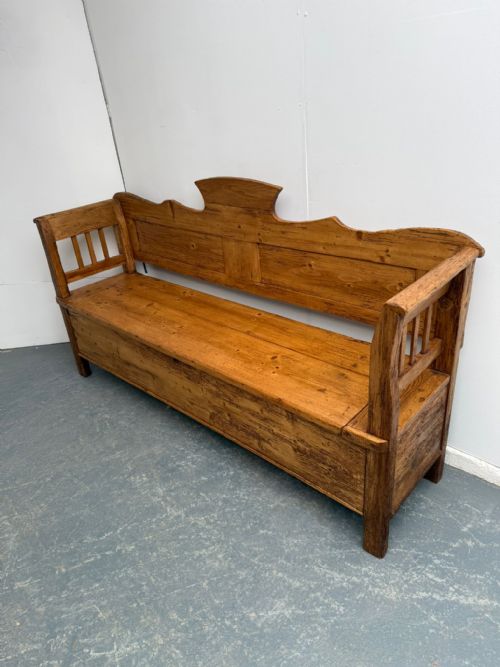
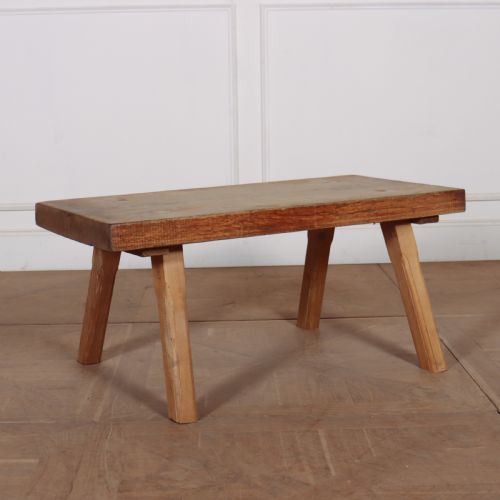
A primitive pine bench represents domestic utility shaped by local hands, taking forms from simple boards set on legs to high-backed settles designed to keep out drafts. These pieces originate across diverse regions, including England, France, Hungary, and Scandinavia, reflecting local rural needs.
On this page, a buyer most frequently encounters examples spanning the eighteenth, nineteenth, and early twentieth centuries. Forms range from long seating benches and box settles to smaller milking stools and occasional tables.
The aesthetic is distinctly rustic, drawing on folk art traditions and country farmhouse styles. Surfaces often show the character of decades of use through aged timber and remnants of old paint.
How they were made
Makers utilised solid timber, predominantly pine alongside elm and oak, constructing pieces with straightforward joinery suited to rural workshops. Surfaces were either left to weather naturally or finished with coatings such as ochre paint, green paint, or scumble glazes.
Iron fixings and hardware were integrated where necessary for structural stability, particularly in larger seating forms and garden pieces. The construction relies on practical carpentry rather than ornate decoration, prioritising sturdy daily service.
The selection includes pieces spanning the Georgian period, the nineteenth century, and the early twentieth century.
What varies in quality
Quality rests in the integrity of the timber and the survival of original surface finishes, such as early layers of paint or rich wax patination. Pieces that retain their uncompromised structural proportions and honest signs of age stand apart from heavily altered examples.
The distinction between ordinary utility items and exceptional survivals lies in regional character and unusual forms, such as box settles or cobblers benches with distinct local traits. Honest patination earned through decades of genuine service defines the upper tier of these domestic pieces.
The Primitive Pine Bench Glossary
- Pine
- A softwood commonly used in vernacular furniture making due to its availability and ease of working. It takes paint and wax finishes readily, developing a warm patina over time.
- Settle
- A wooden bench with a high back, solid arms, and often a storage box beneath the seat. Designed to block cold draughts in traditional farmhouses.
- Scumble
- A decorative painting technique involving a translucent top layer dragged over a lighter base colour to simulate grain. It was frequently applied to pine furniture to imitate more expensive hardwoods.
- Patina
- The surface sheen and texture developed through years of handling, polishing, and natural wear. It serves as a visual record of an object's age and history.
Primitive Pine Bench: Frequently Asked Questions
Where were primitive pine benches used?
These pieces originated in domestic farmhouses, cottages, and rural workshops across Europe, serving as practical seating near hearths or in gardens.
Their robust construction made them suitable for heavy daily use by families and workers alike.
How do I care for original paint on pine?
Keep wooden furniture away from direct sunlight and dramatic temperature fluctuations to protect fragile historical surfaces.
Dust gently with a dry cloth and avoid harsh chemical cleaners that can strip away original pigments.
What is a box settle?
A box settle combines a high-backed wooden seat with an enclosed storage compartment accessed beneath the hinged lid.
This dual-purpose form provided secure storage for household goods while keeping sitters warm by the fire.
How do I identify a Georgian piece?
Georgian items display proportions and construction methods characteristic of the eighteenth and early nineteenth centuries.
Look for hand-tooled joinery and timber surfaces that have darkened naturally over generations of use.