
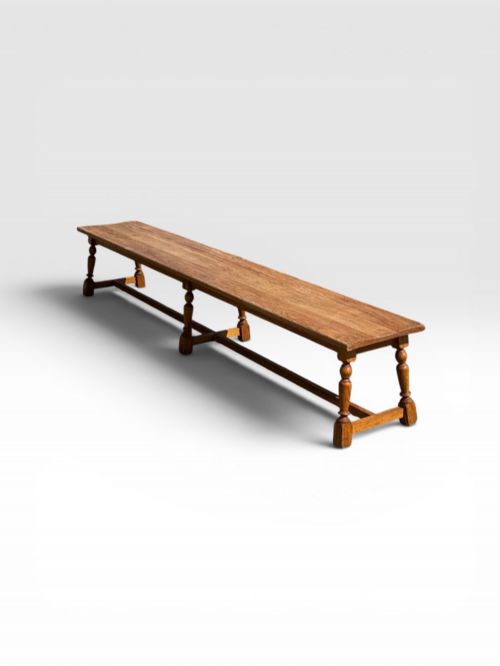
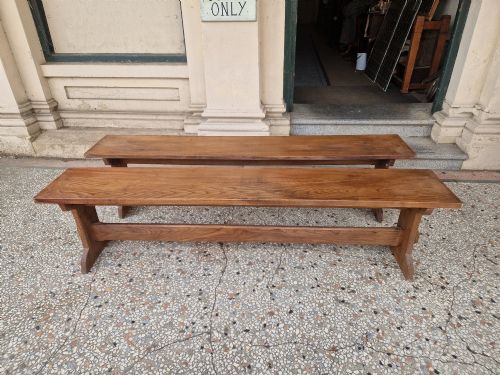

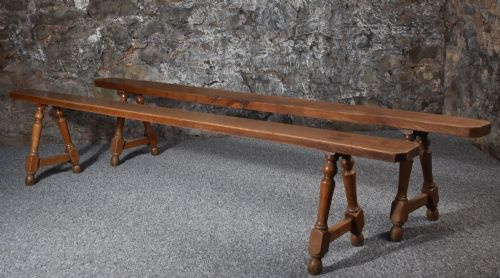


Long Rustic Hall Bench
A long rustic hall bench grounds an entrance with honest timber, offering generous seating fashioned from solid oak, pine, and elm.
Long Rustic Hall Bench
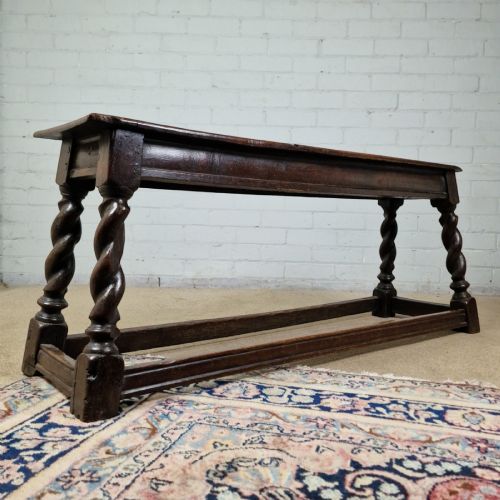
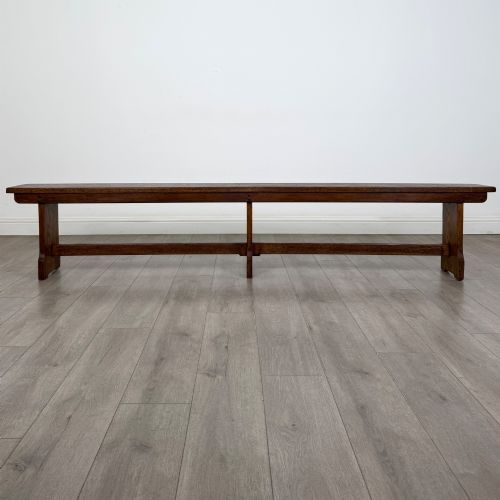
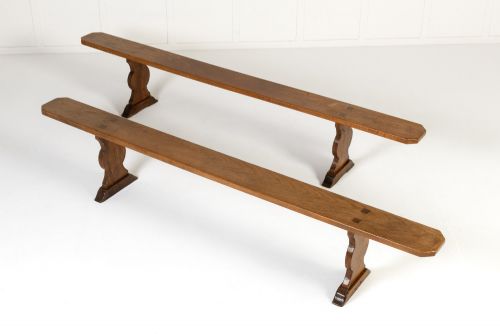
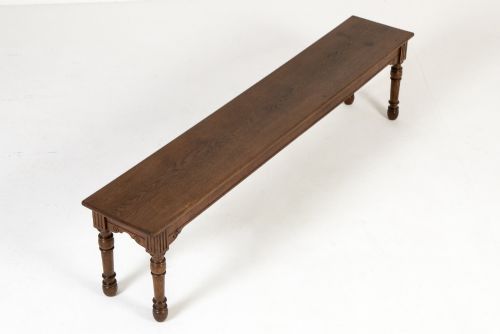
A long rustic hall bench provides extended seating for hallways and kitchens, drawing on styles from English country houses and French provincial farms. These pieces range from eighteenth-century Welsh oak forms to nineteenth-century pine school benches and tavern seating.
Most examples found here span considerable lengths, often accommodating multiple sitters along narrow corridors or beside large dining tables. Buyers frequently encounter sturdy oak and pine builds shaped by utilitarian needs rather than courtly ornament.
Materials and construction
Construction relies heavily on dense native timbers like oak, pine, elm, and cherry wood, chosen for structural endurance. Joinery methods prioritise stability and strength, utilising thick planks for seats and robust stretchers to brace the legs.
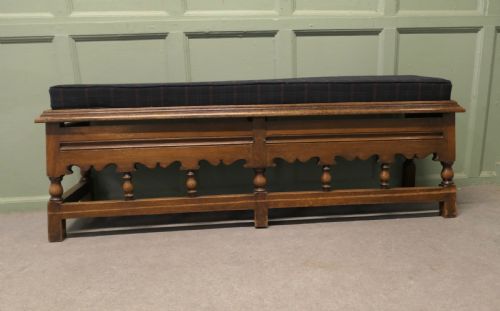
Surfaces bear the marks of simple hand tools and decades of daily use, showing the natural grain of hardwood and softwood alike. Occasional additions like wool tweed upholstery appear on seated versions designed for boot stores and window seats.
Listings feature timbers including oak, pine, elm, cherry wood, and hardwood, spanning the eighteenth and nineteenth centuries into the early twentieth century.
Factors determining quality
Quality rests in the original integrity of the timber and the proportion of the frame, where substantial length requires expert bracing to prevent sagging. Pieces originating from specific historic locations or notable institutional contexts command distinct interest.
The degree of honest patina and the retention of original surface finishes separate utilitarian work from later alterations. Solid construction without excessive replacement parts distinguishes the finer examples in this category.
The Long Rustic Hall Bench Glossary
- Tavern bench
- A long, narrow seating form historically used in public houses, featuring sturdy wooden construction and simple backrests or plain tops.
- Stretcher
- A horizontal wooden rail connecting the legs of a bench to provide rigidity and structural support.
- Patina
- The surface sheen and colour developed over centuries through handling, wear, and exposure to light and wax.
- Welsh oak
- A dense local hardwood prized by cabinet makers in Wales for its rich grain and exceptional durability in large furniture.
- School bench
- A long, utilitarian form originally built for educational use, characterised by robust pine planks and practical proportions.
Long Rustic Hall Bench: Frequently Asked Questions
Where should I place a long rustic hall bench?
These pieces suit wide corridors, boot rooms, and large dining spaces where extended seating is required. Their narrow depth allows them to sit flush against walls without obstructing passage.
Ensure the length matches the available wall space, leaving adequate clearance at either end for movement.
How do I care for historic pine and oak benches?
Maintain the timber by applying natural beeswax periodically to nourish the dry wood and preserve the surface sheen. Avoid placing wooden benches near direct heat sources to prevent the planks from splitting.
Clean surfaces gently with a dry or slightly damp cloth, avoiding harsh chemical sprays that strip the aged finish.
Can these benches be used for daily dining?
Many of these long forms function effectively alongside large refectory tables or kitchen islands. Their generous proportions provide ample seating for families and guests.
Check the seat height relative to your table to ensure comfortable positioning during meals.
How can I tell an eighteenth-century bench from a nineteenth-century one?
Earlier eighteenth-century pieces often display deeper colouration in the oak and hand-cut joinery specific to regional cabinet making. Nineteenth-century examples frequently utilise pine or elm in school and tavern settings with machine-sawn elements.
Examine the underside and fixings for clues regarding the age of the timber and construction methods.