



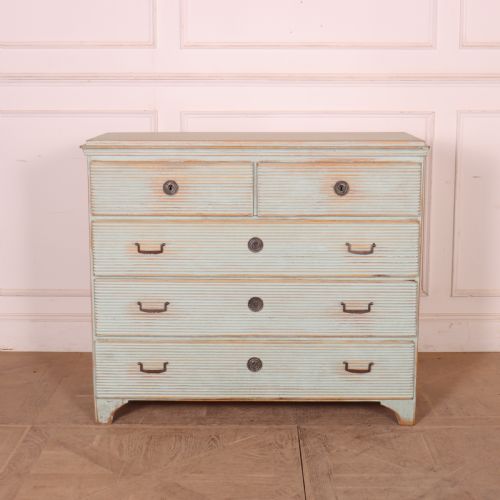
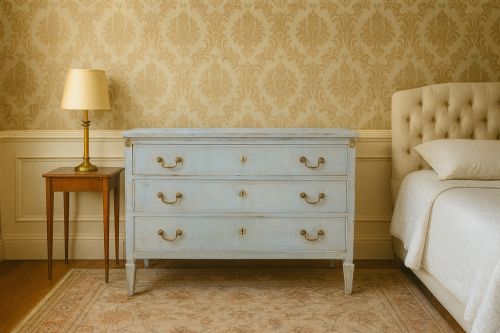


Scandinavian Painted Dresser
A scandinavian painted dresser brings practical storage and regional folk artistry into a room, offering enduring utility alongside decorative character.
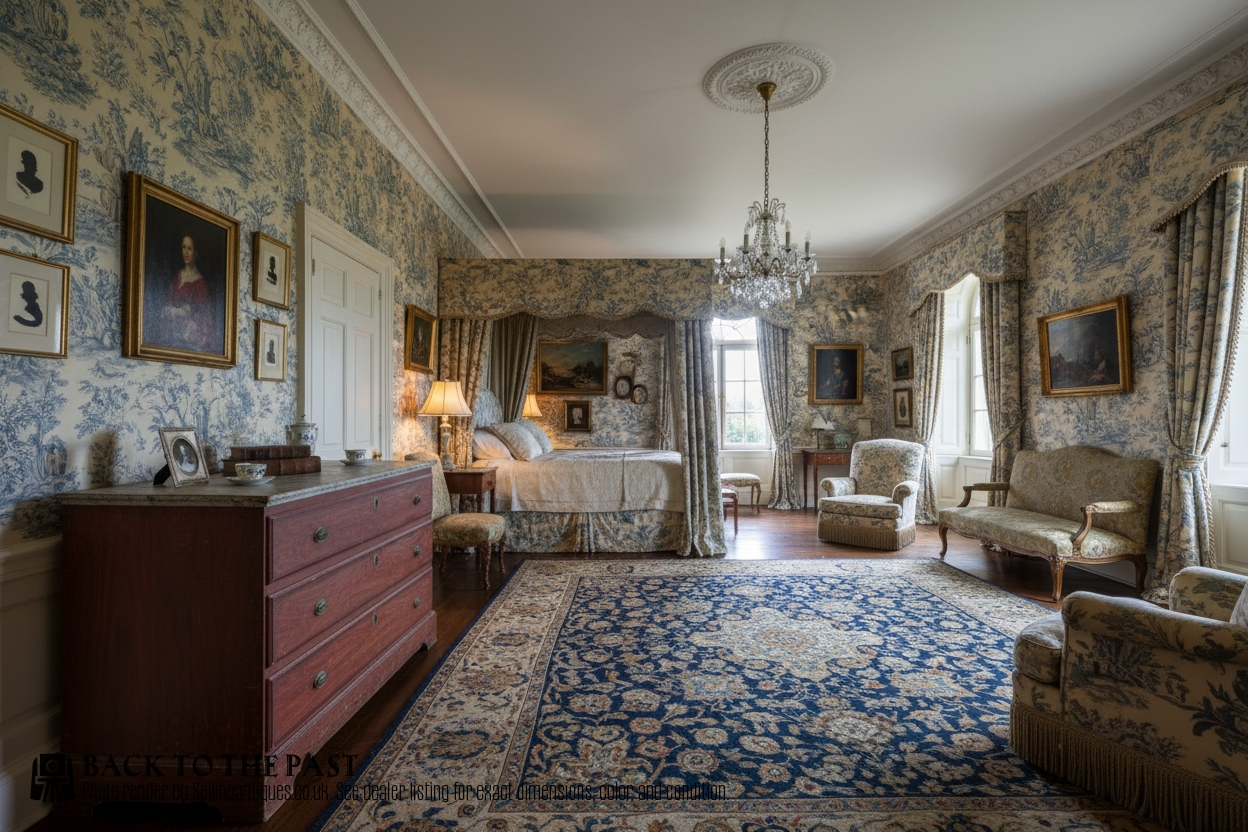
Scandinavian Painted Dresser
A scandinavian painted dresser encompasses various forms designed for domestic storage, spanning kitchen cabinets, cupboards, and chests of drawers. Most examples found here originate from the nineteenth or eighteenth centuries, reflecting regional traditions across Sweden, Denmark, and the wider Baltic region.
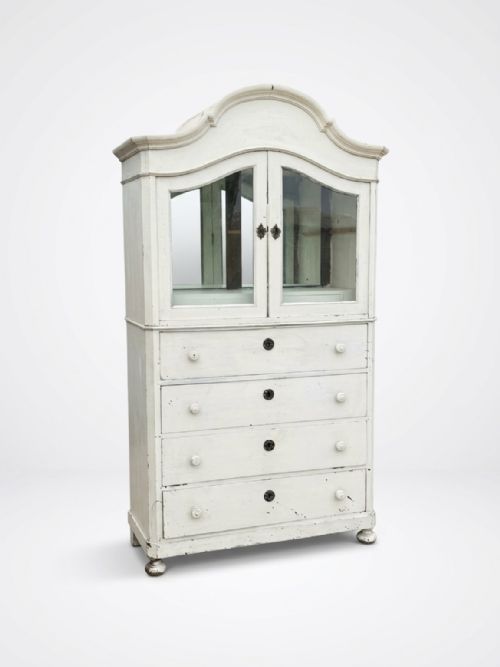
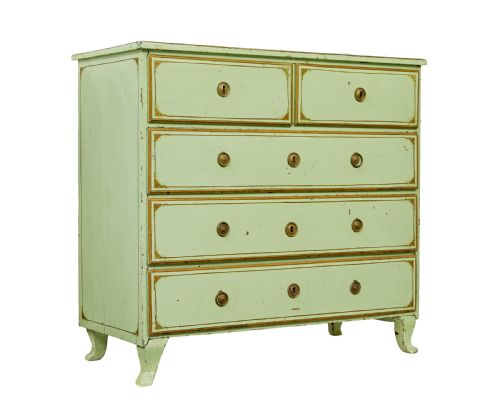
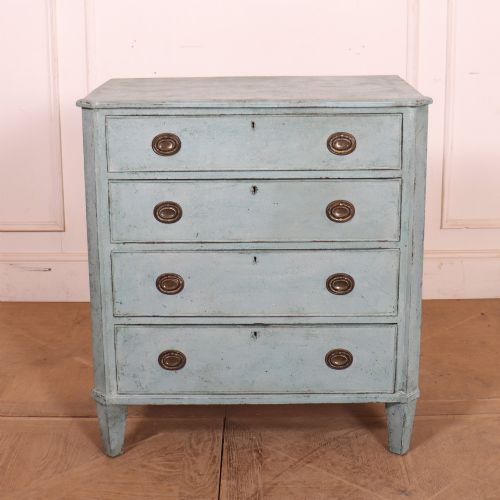
The inventory leans heavily towards pine chests of drawers and painted cupboards rather than open plate racks, often displaying influences from Gustavian neoclassical design, baroque revival, or rustic folk art. These items served functional roles in northern European homes, evolving from utilitarian storage into decorative focal points.
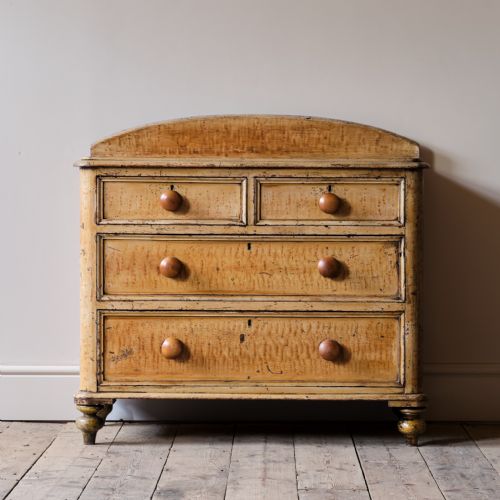
Makers and regional artisans utilised native softwood, applying decorative surface treatments that ranged from restrained single tones to simulated wood grains and intricate folk motifs.
What varies in quality
Quality rests significantly on the integrity of the painted surface, distinguishing pieces retaining original scraped or hand-painted decoration from those with later repainting. The subtlety of decorative techniques, such as simulated birch graining or folk art motifs, dictates visual distinction.
Proportion and stylistic detail also separate standard utility items from finer examples, such as those exhibiting Gustavian fluted drawer fronts or serpentine shapes. The handling of mouldings, brass or iron hardware, and overall structural preservation complete the hierarchy.
Stylistic influences range from Swedish Gustavian neoclassicism and baroque revival to continental folk art.
GEMLA FABRIKERS
The Scandinavian Painted Dresser Glossary
- Gustavian
- Pertaining to the Swedish neoclassical style popular during the late eighteenth century, characterised by restrained symmetry and classical motifs. It draws inspiration from French Louis XVI design adapted to northern tastes.
- Ragwork
- A decorative painting technique where fabric or rags are used to manipulate wet paint on a surface, creating mottled or textured patterns. This method often simulated richer woods or added visual depth to pine furniture.
- Commode
- A low chest of drawers, often standing on legs, originating from French furniture forms but widely adopted across Denmark and Sweden. These pieces frequently feature serpentine fronts or detailed drawer configurations.
- Bonnet top
- A raised, curved hood or upper canopy on a cabinet or cupboard, adding height and architectural presence. This form is often associated with tall storage furniture from the nineteenth century.
- Scraped paint
- A conservation or discovery term describing the process of revealing original historical paint layers by carefully removing overlying coats. This technique exposes the authentic early colour and finish of the piece.
Scandinavian Painted Dresser: Frequently Asked Questions
Are these pieces made of solid pine?
Most items utilise native pine or softwood as the primary construction material, chosen for its availability and workability by regional cabinetmakers. Secondary timbers might appear in internal framing or drawer linings.
The widespread use of pine suited the application of paint finishes, which protected the softwood and provided a smooth canvas for decorative folk art or simulated wood grains.
How should I care for original paint surfaces?
Preserving historic paint requires keeping pieces away from direct sunlight and maintaining stable indoor humidity levels to prevent flaking or drying. Cleaning should be limited to gentle dusting with a dry, soft cloth.
Avoiding harsh chemical cleaners or abrasive polishes ensures the surviving historical finish remains intact. Professional conservation advice should be sought if structural or surface stabilisation becomes necessary.
What is the difference between Gustavian and folk art styles?
Gustavian design reflects a refined Scandinavian interpretation of French neoclassical taste, featuring symmetrical lines, fluted details, and pale, restrained palettes. It prioritises architectural dignity and classical proportion.
Folk art pieces, by contrast, embrace more rustic charm, vibrant hand-painted motifs, and regional decorative traditions. These items lean into local craftsmanship rather than courtly neoclassical influences.