


Scandinavian Folk Art Chair
These scandinavian folk art chair examples bring rustic warmth into a room through honest timber work and traditional country forms.
Scandinavian Folk Art Chair
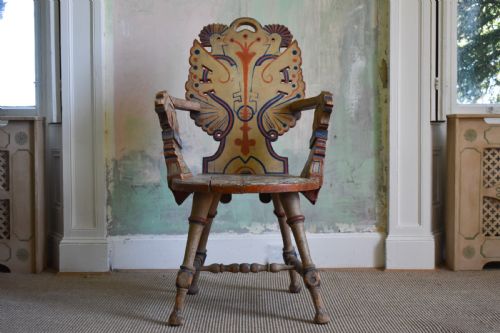
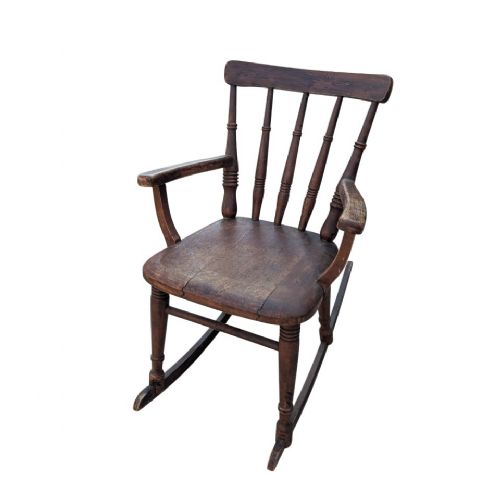
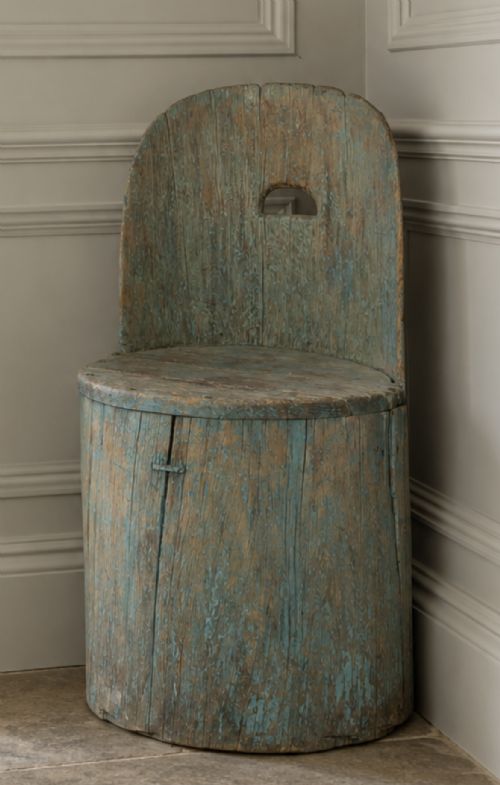
Forms vary from robust dug out chairs hewn from single logs to elegant turned bobbin country throne armchairs and children's rockers. Makers utilised native woods like pine and birch, often finishing the surfaces with paint or wood stain to protect the timber and decorate the interior. The resulting seating combines sturdy utility with charming rustic character, making them popular additions to contemporary country interiors.
How They Were Made
Constructed primarily from native softwoods such as pine and birch, these pieces rely on traditional joinery methods suited to rural workshops. Master makers turned spindles and uprights on lathes, whilst others laboriously hollowed out solid timber logs to form the heavy dug out chair seats. Iron components occasionally reinforce high-stress joints or provide functional pivot points on rocking variants.
Surfaces were frequently finished with layers of paint or applied wood stain, which often survives in an original or patinated state. Fabric upholstery appears on select examples, adding a soft textile element to the otherwise rigid wooden structures. Every technique prioritises durability and straightforward utility over elaborate ornamentation.
Listings for this phrase are dominated by nineteenth-century Swedish pieces, featuring pine and birch materials shaped into dug out chairs, rockers, and highchairs.
What Varies in Quality
The distinction between ordinary and exceptional examples rests upon the integrity of the original surface finish and the preservation of the structural timber. Pieces retaining their authentic historic paint schemes hold greater aesthetic interest than those stripped down to raw wood or repainted in later decades. The depth of character in carved or turned details also separates standard utility seating from finer vernacular expressions.
Proportion and structural balance dictate the visual success of each piece, particularly in smaller child's highchairs and rocking chairs where scale is easily compromised. The survival of uncompromised joinery, despite centuries of domestic use, indicates the original maker's skill and the subsequent care taken by generations of owners.
The Scandinavian Folk Art Chair Glossary
- Bobbin
- A style of turned woodwork characterised by a series of rounded, spool-like shapes carved along the uprights or stretchers. This decorative turning technique was widely favoured in country vernacular furniture.
- Dug Out Chair
- A primitive seating form created by hollowing out a single massive log to form the seat and low back. These heavy, monolithic pieces represent the most rustic end of folk furniture production.
- Pine
- A common softwood native to northern European forests, utilised extensively for its workability and abundance. It forms the primary body of most regional country seating.
- Turned
- Shaped on a lathe by rotating the timber against a cutting tool to create symmetrical cylindrical or spindle components. This method produced sturdy legs, stretchers, and arm supports.
- Painted Pine
- Timber coated with traditional mineral or oil-based pigments to seal the wood and introduce colour to domestic interiors. Original surviving coats provide crucial historical evidence.
Scandinavian Folk Art Chair: Frequently Asked Questions
What defines a scandinavian folk art chair?
These pieces are traditional rural seats made by local woodworkers using native timber, straightforward joinery, and practical regional designs. They reflect the domestic needs of nineteenth-century farmhouses rather than formal urban workshops.
Most examples feature solid pine or birch construction, often enhanced with turned spindles or original painted surfaces that give them their distinctive folk character.
How were these chairs used historically?
Families utilised these sturdy seats around the farmhouse hearth, at the dining table, or in dedicated child-friendly forms like highchairs and small rockers. Their robust build ensured they could withstand the rigours of daily domestic life.
Rocking chairs and armchairs provided comfort for resting or tending to children, whilst smaller side chairs served multiple functions across the home.
How do I style a folk chair at home?
These chairs work well as standalone accent pieces in modern or traditional rooms, adding texture and historical contrast to minimal spaces. Their natural wood tones and painted finishes ground a corner or sit comfortably beside contemporary sofas.
Avoid placing them in areas of high humidity or direct sunlight to protect the fragile historic timber and original painted surfaces.
How can I tell the age of these chairs?
Dating relies on observing construction methods, tool marks, timber shrinkage, and the composition of any remaining paint layers. Nineteenth-century pieces often display hand-turned elements and specific regional joinery traits.
Comparing the form and wear patterns with documented examples from the same period helps establish a reliable timeline for each individual piece.