

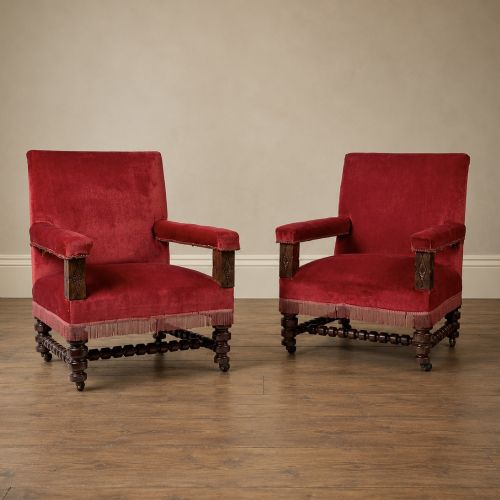


Traditional Bobbin Armchair
These traditional bobbin armchairs combine turned wooden spindle framing with deep seating, offering both sturdy vernacular comfort and striking architectural presence.
Traditional Bobbin Armchair
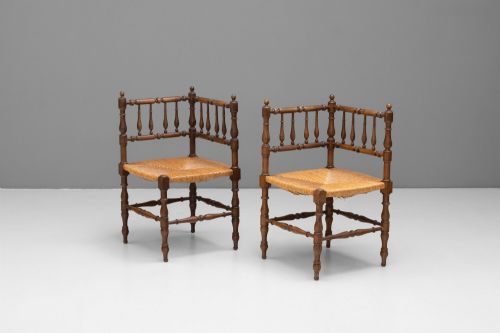
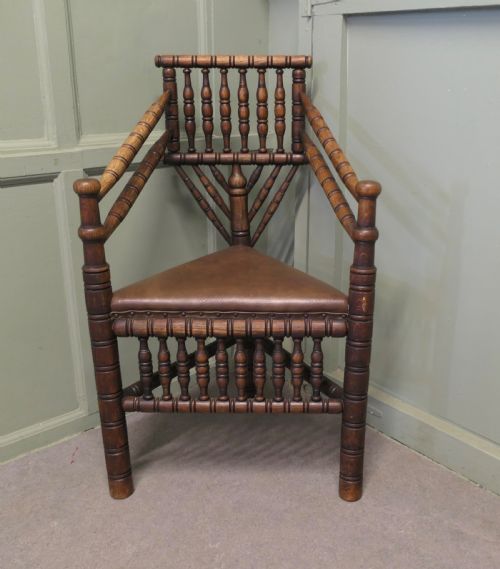
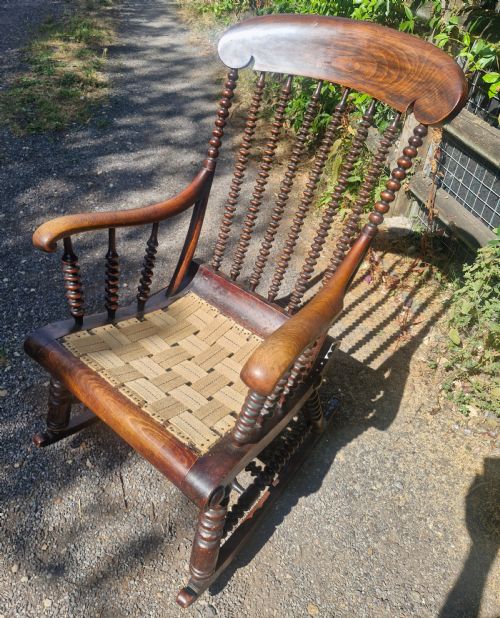
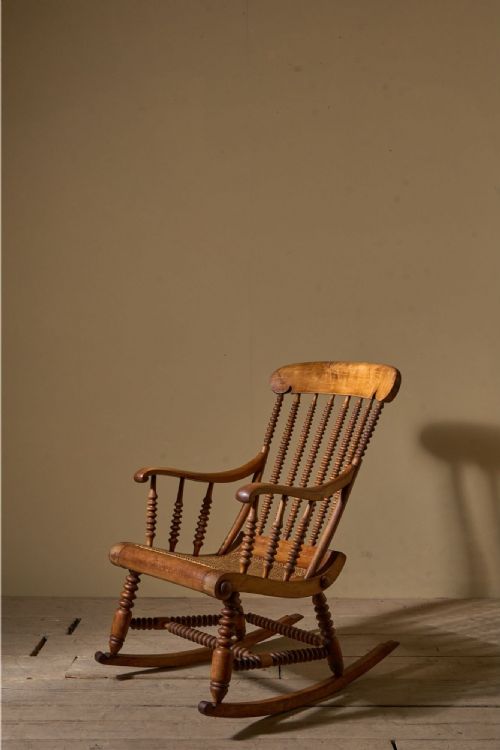
A traditional bobbin armchair draws on centuries of domestic seating design, spanning from early oak turners' chairs to later nineteenth-century vernacular revivals. The listings here contain a broad variety of forms, including rocking chairs, corner chairs, open armchairs and country thrones.
Most examples date across the nineteenth century, with Victorian interpretations alongside pieces influenced by earlier seventeenth-century styles and Swedish country folk art. Buyers will encounter both substantial oak frames and lighter turned structures fitted with cane, rush or upholstered pads.
Materials and construction
Makers constructed these chairs primarily using native hardwoods such as oak, beech, birch and walnut, turning the characteristic bobbin or spool motifs on a lathe. Individual components fit together through traditional joinery, creating rigid frameworks capable of supporting daily use.
Seating areas utilise woven cane and rush alongside solid wood or dropped-in upholstered cushions covered in velvet, leather and plain fabric. Brass fittings occasionally appear on specific nineteenth-century library and country house iterations.
Some chairs come scaled down for nursery use, proving that even toddlers required serious architectural seating during the Victorian era.
Judging quality
Quality rests in the crispness of the lathe turning and the structural integrity of the interlocking joints across the frame. Firmer, more deeply figured timber and tightly woven cane or well-sprung upholstery indicate careful workshop production.
The visual balance of the turned spindles and the preservation of original patination on the wood separate standard vernacular seating from finer decorative library and country house examples.
The Traditional Bobbin Armchair Glossary
- Bobbin turning
- A form of woodturning that creates a series of rounded, spool-like shapes along the length of a spindle. This decorative technique defines the entire framework of the chairs found in this selection.
- Turner's chair
- An early form of seating constructed entirely from turned wooden members and triangular seats. These heavy oak pieces form the ancestral root of the later bobbin-turned armchair tradition.
- Cane seat
- A seating surface formed by weaving split rattan or reed through holes drilled in the wooden frame. It provides a lightweight, resilient base often supplemented by a loose cushion.
- Vernacular furniture
- Domestic objects made by local craftspeople for everyday use rather than high-style court workshops. These pieces reflect regional traditions and readily available local timbers.
- Wainscot chair
- An early wooden armchair characterised by panelled backs and solid construction. They represent the heavier, architectural precursor to spindle-turned seating.
Traditional Bobbin Armchair: Frequently Asked Questions
Are these chairs comfortable for daily sitting?
Most examples provide an upright, supportive sit derived from their sturdy wooden frames and high backs. Many feature fitted cushions or woven cane bases to soften the seating experience.
While historic vernacular seating differs from modern upholstered armchairs, models equipped with velvet or leather pads offer a more relaxed posture.
How do I care for a bobbin-turned wooden frame?
Maintain the timber by applying a microcrystalline wax polish occasionally to nourish the grain and protect the aged surface. Keep the chairs away from direct heat sources and strong sunlight to prevent the wood from drying out.
Regular dusting with a soft, dry cloth prevents grime accumulation in the deep recesses of the turned spools.
What is the difference between a turners chair and a bobbin armchair?
A traditional turner's chair typically relies on heavy structural spindles and a triangular wooden seat echoing seventeenth-century designs. Bobbin armchairs encompass a broader nineteenth-century revival scope featuring four-legged bases and open armrests.
Both styles share the defining spool-turned woodwork, but turners' chairs generally present a more archaic, monolithic silhouette.
How do I identify a Victorian bobbin chair?
Victorian interpretations often utilise machine-turned accuracy on oak, walnut or ebonised beech, paired with rich upholstery fabrics like red velvet. They frequently replicate earlier seventeenth-century Jacobean or Saxon styles while maintaining nineteenth-century proportions.
Look for evidence of machine lathe work and period upholstery stuffing methods beneath the fabric.