
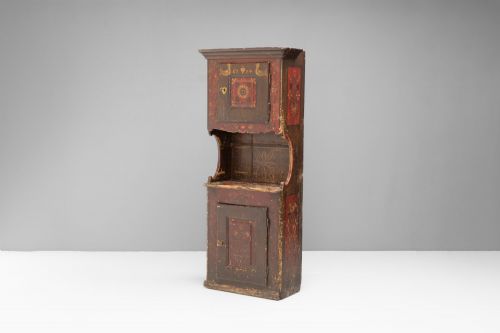


Scandinavian Folk Art Cabinet
These scandinavian folk art cabinet pieces offer hand-painted rustic charm, bringing authentic period storage into modern interiors.
Scandinavian Folk Art Cabinet
A scandinavian folk art cabinet comprises regional storage pieces from the eighteenth and nineteenth centuries, including wall cupboards, floor-standing cupboards, dressers, and kitchen cabinets. These pieces originate predominantly from Sweden, alongside Baltic and Finnish examples, reflecting rural craftsmanship.
Buyers will most frequently encounter nineteenth-century painted pine cupboards and wall cabinets on this page. Forms range from compact wall-hanging units to substantial hall wardrobes and cupboards on stands designed for domestic storage.
The aesthetic is defined by country traditions rather than courtly polish, featuring regional decorative treatments and vernacular proportions. Such pieces suit contemporary spaces seeking characterful storage with historical presence.
Materials and construction methods
Construction relies primarily on pine, a durable softwood readily available across northern Europe. Joinery is straightforward and robust, serving the practical demands of rural domestic life.
Surfaces are finished with paint, mineral paint, and traditional ragwork techniques to create textured, decorative finishes. Metal hardware such as iron and brass provides functional hinges, latches, and escutcheons.
Geographic origins span Sweden, Finland, and the wider Baltic area, encompassing Gustavian styles and rustic country forms.
Judging quality in regional furniture
Quality rests upon the integrity of the original painted surface and the survival of distinct regional decorative treatments. Pieces exhibiting untouched traditional ragwork or early hand-painted schemes command greater interest.
Structural proportion and the preservation of original iron or brass fittings also influence the character of an item. Surviving stands, cornices, and original backboards elevate the integrity of the piece.
The Scandinavian Folk Art Cabinet Glossary
- Ragwork
- A decorative painting technique using rags or cloths to apply or texture paint. This method creates distinctive mottled or patterned surfaces on country furniture.
- Gustavian
- The Swedish neoclassical style spanning the late eighteenth and early nineteenth centuries. It simplifies continental forms with restrained proportions and lighter palettes.
- Wall Cupboard
- A small storage cabinet designed to be mounted directly onto a wall. These units save floor space and often feature single doors.
- Pine
- A common softwood utilised extensively in northern European vernacular furniture. It accepts paint readily and provides a stable base for folk art decoration.
Scandinavian Folk Art Cabinet: Frequently Asked Questions
Where were these cabinets made?
The pieces originate primarily from Sweden, with additional examples coming from the Baltic region and Finland.
They reflect rural Scandinavian traditions rather than urban workshops.
What wood is used?
Pine serves as the primary timber across the selection, valued for its availability and workability.
Makers painted the softwood surfaces to protect the wood and add decoration.
How do I date a piece?
Dating relies on construction methods, hinge types, and the style of the painted finish.
Most items date from the nineteenth century, with occasional eighteenth-century examples.
Can I hang a wall cabinet?
Wall cupboards are designed for suspension, though weight varies according to size and timber thickness.
Check the internal hanging points and backboards before mounting securely.