
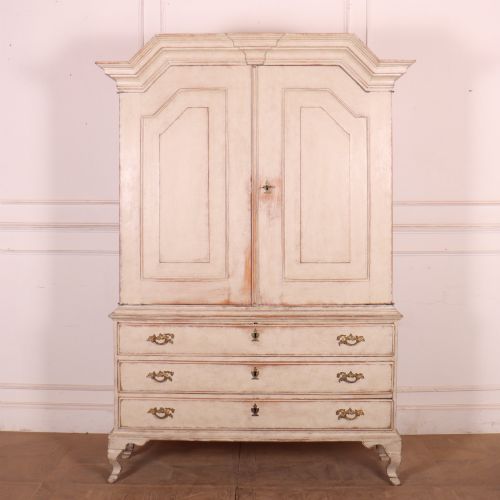


Scandinavian Country Linen Press
A Scandinavian country linen press brings robust utility and calm rural charm into a modern home.
Scandinavian Country Linen Press
A scandinavian country linen press primarily comprises tall storage cupboards and cabinets originating from 18th century, 19th century, and 1920 periods. These pieces serve to store household textiles and garments within domestic spaces.
Buyers most frequently encounter painted softwood and pine examples finished in regional styles like Gustavian, Scandinavian folk art, and traditional Swedish ragwork. These forms range from simple single-door cupboards to elaborate presses on stands.
Materials and construction methods
Craftsmen built these pieces using solid pine and birch timber, occasionally applying birch veneer for decorative surfaces. Iron and brass hardware such as hinges and locks secure the heavy wooden doors.
Makers applied surface colour through traditional paint methods, creating the characteristic painted wood finishes seen across Swedish and broader Scandinavian country workshops.
Ragwork paint finishes let 19th-century painters turn ordinary pine into grand marble using little more than a dirty cloth.
Distinguishing quality in rural cabinetry
Quality rests upon the preservation of original painted surfaces and the integrity of the timber framework. Pieces retaining early or original paint schemes command greater interest than later stripped or repainted examples.
Proportion and structural balance also distinguish finer items. Well-executed corner mouldings, stable stands, and cleanly fitted panel doors indicate superior regional carpentry.
The Scandinavian Country Linen Press Glossary
- Gustavian
- The Swedish neoclassical style spanning the late 18th and early 19th centuries. It applies restrained classical symmetry to simpler rural furniture forms.
- Pine
- A softwood commonly utilised throughout Scandinavian cabinetry for its availability and workability. It forms the core structure of most regional cupboards.
- Ragwork
- A decorative paint technique mimicking marble or patterned textiles using rags or cloths. It creates textured, mottled surface designs on rural pine furniture.
- Satin Birch
- A pale hardwood derived from the birch tree, prized for its golden lustre and grain. Cabinetmakers used it selectively for fine veneers and polished details.
- Linen Press
- A tall piece of furniture designed specifically for storing household linens and garments. It typically combines interior shelving with enclosed cupboard doors.
Scandinavian Country Linen Press: Frequently Asked Questions
What is a scandinavian country linen press?
A scandinavian country linen press is a tall wooden storage cupboard built to hold household textiles and clothing. These pieces originate mainly from Sweden and date across the 18th and 19th centuries.
They utilise regional timber like pine and birch, often finished with painted surfaces that reflect traditional folk art aesthetics. The interiors typically feature sturdy shelving suited for folded fabrics.
How do I date an antique painted cupboard?
Dating relies on examining construction marks, timber types, and the layering of paint finishes. Earlier 18th century examples often display hand-cut joinery and authentic period pigments.
Later pieces from the 19th century and 1920 incorporate machine-sawn elements and different hardware styles. Analysing wear patterns around handles and hinges helps confirm the age of the piece.
Where were these cupboards originally used?
These cabinets belonged in rural domestic dwellings, farmhouses, and estate utility rooms across Sweden and Scandinavia. Families used them to protect hand-spun linens from dust and damp.
Their substantial storage capacity made them central fixtures in daily domestic life. They stood in bedrooms, hallways, and dedicated linen storage spaces.
How do I care for painted pine furniture?
Maintaining painted pine requires stable indoor humidity and protection from direct sunlight. Excessive heat can dry out old softwood and cause historic paint layers to flake.
Dust the surfaces gently with a dry, soft cloth rather than chemical polishes. Preserving the original painted finish ensures the long-term character of the piece remains intact.
What is the difference between Gustavian and folk styles?
Gustavian design draws inspiration from French neoclassical court taste, featuring lighter proportions and restrained classical motifs. It represents a more formal urban influence on rural making.
Scandinavian folk art embraces bolder, vernacular expressions of colour and pattern. These pieces showcase local artistic traditions rather than strict classical academic rules.