




Gustavian Two Door Cupboard
A gustavian two door cupboard brings calm symmetry and muted colour to a room, offering generous storage behind panelled doors.
Gustavian Two Door Cupboard
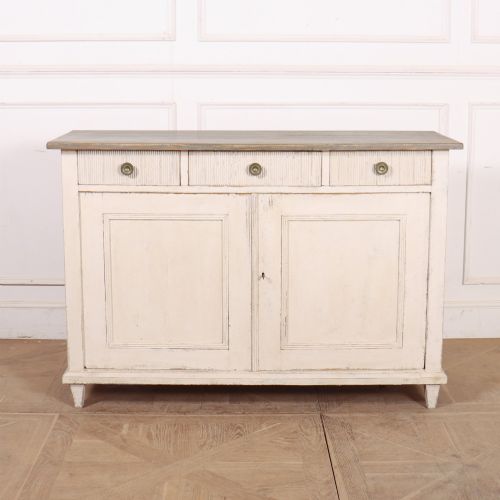
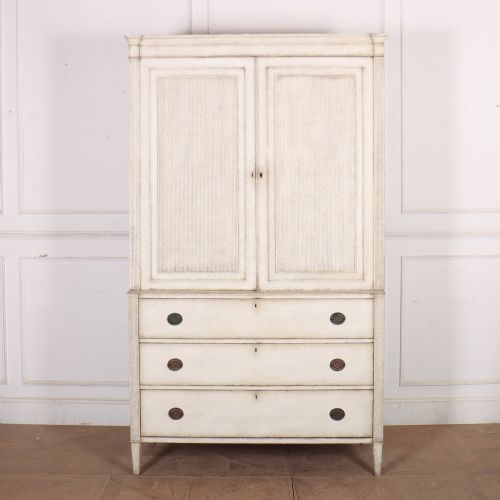
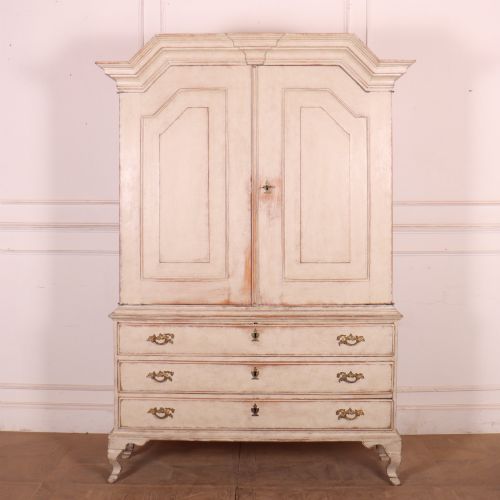
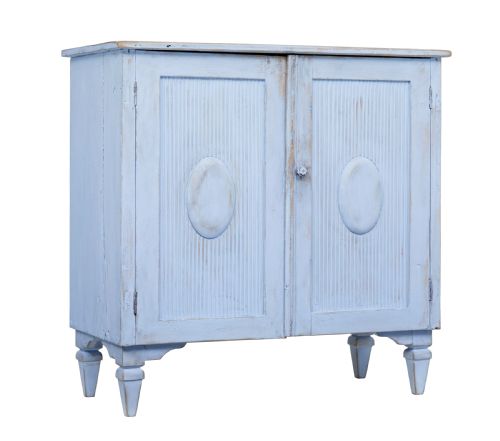
A gustavian two door cupboard sits among the most sought-after forms of Scandinavian country furniture, combining utilitarian storage with classical restraint. These pieces serve primarily as linen cupboards, wardrobes, and sideboards, anchoring a hallway or bedroom with quiet presence.
The versions met most often on this page date from the eighteenth and nineteenth centuries, originating predominantly from Sweden. They typically take the form of painted pine cupboards featuring two doors that conceal shelved or hanging interiors.
Regional variations span Scandinavian country and French country styles, alongside pieces bearing the distinct hallmarks of nineteenth-century revivalism. Despite these stylistic overlaps, the core silhouette remains practical, upright, and defined by restrained mouldings.
How They Were Made
Construction relies heavily on solid pine, shaped by regional joiners using traditional frame-and-panel techniques to accommodate timber movement. Iron and brass hardware, including hinges and keyplates, secure the doors and provide functional contrast to the wooden body.
The defining characteristic of these pieces is their surface treatment, typically consisting of layered painted finishes in muted tones. Over generations, this paint layer has aged to create a soft patina unique to each cupboard.
Materials recorded across the inventory include pine, painted wood, painted finish, brass, and iron.
What Varies in Quality
Quality rests significantly on the integrity of the painted finish, where original or early surfaces hold far more visual depth than later repainting. The handling of proportions and the crispness of classical mouldings also separate standard utilitarian storage from finer regional pieces.
Structural honesty plays an equal role, distinguishing cupboards that retain their original backs, shelves, and hardware from those altered over time. The balance between the heavy pine carcass and the lightness of the painted decoration dictates the overall success of the piece.
The Gustavian Two Door Cupboard Glossary
- Gustavian
- The Swedish interpretation of neoclassical style, characterised by lighter proportions, fluted columns, and restrained ornamentation derived from French and Italian design.
- Pine
- A softwood commonly utilised across Scandinavian cabinetmaking due to its availability and ease of working, forming the structural carcass of painted furniture.
- Painted Finish
- A surface treatment applied to timber, ranging from flat historical pigments to layered washes that age into a distinct craquelure.
- Linen Cupboard
- A tall storage piece traditionally dedicated to household textiles, featuring internal shelving enclosed by two full-length doors.
Gustavian Two Door Cupboard: Frequently Asked Questions
How do I clean a painted cupboard?
Dust the surface regularly with a soft, dry cloth to prevent the accumulation of grit on the historic paint layers.
Avoid commercial cleaning sprays and water, which can soften or lift fragile nineteenth-century finishes.
Can I use these for modern clothing?
Many of these pieces offer deep shelves or hanging space suited to contemporary wardrobes and linen storage.
Check the internal depth before purchase, as eighteenth-century dimensions can occasionally prove shallow for modern hangers.
Are these pieces made of solid wood?
Construction typically employs solid pine throughout the carcass, panels, and internal shelving of the cupboard.
This robust softwood construction allowed regional joiners to build substantial furniture that remains stable over centuries.
How do I date an antique cupboard?
Examine the construction methods of the backboards, drawer linings, and internal fixings alongside the style of the mouldings.
Hand-forged iron hardware and early layered paint finishes often provide reliable indicators of eighteenth or nineteenth-century origin.